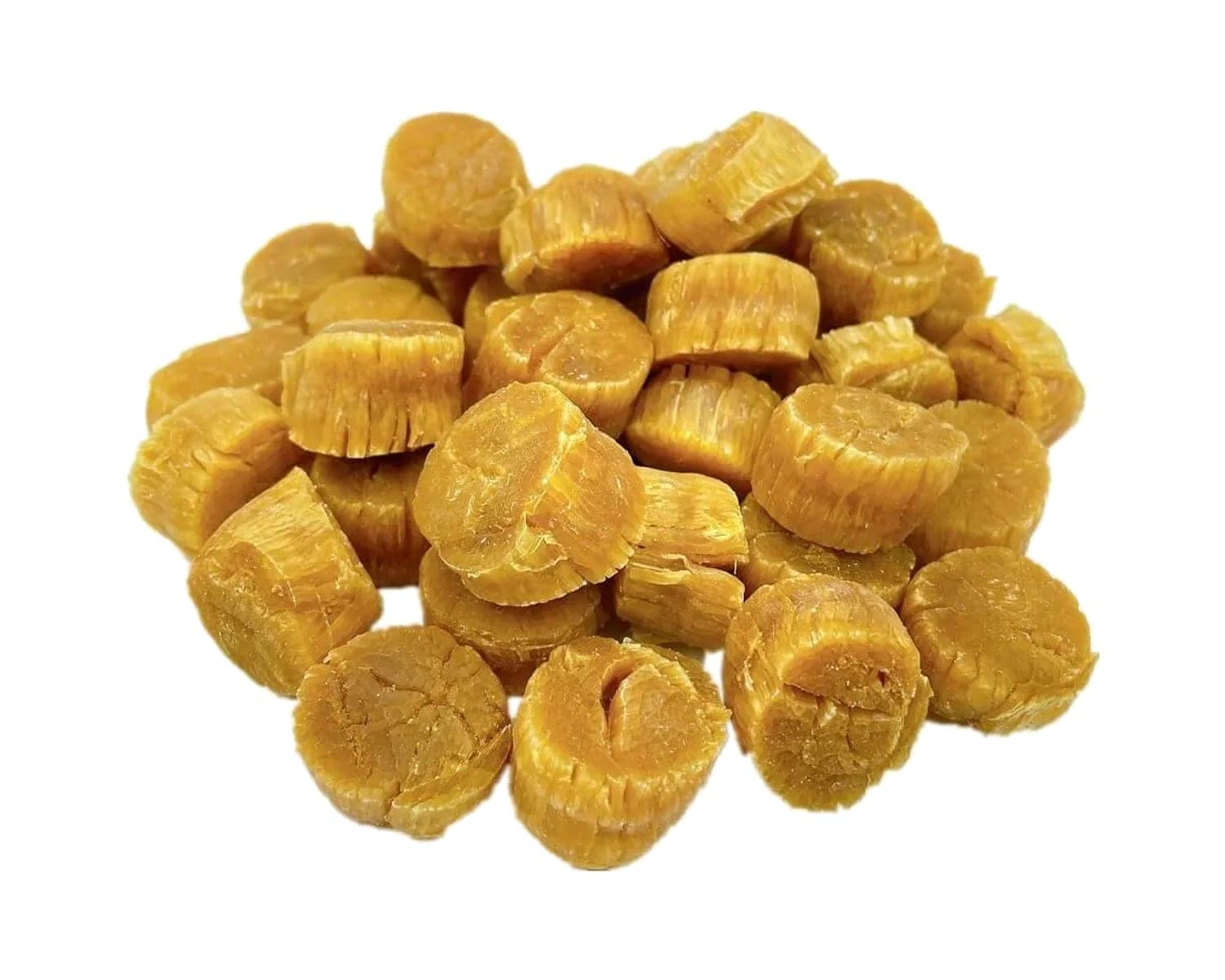
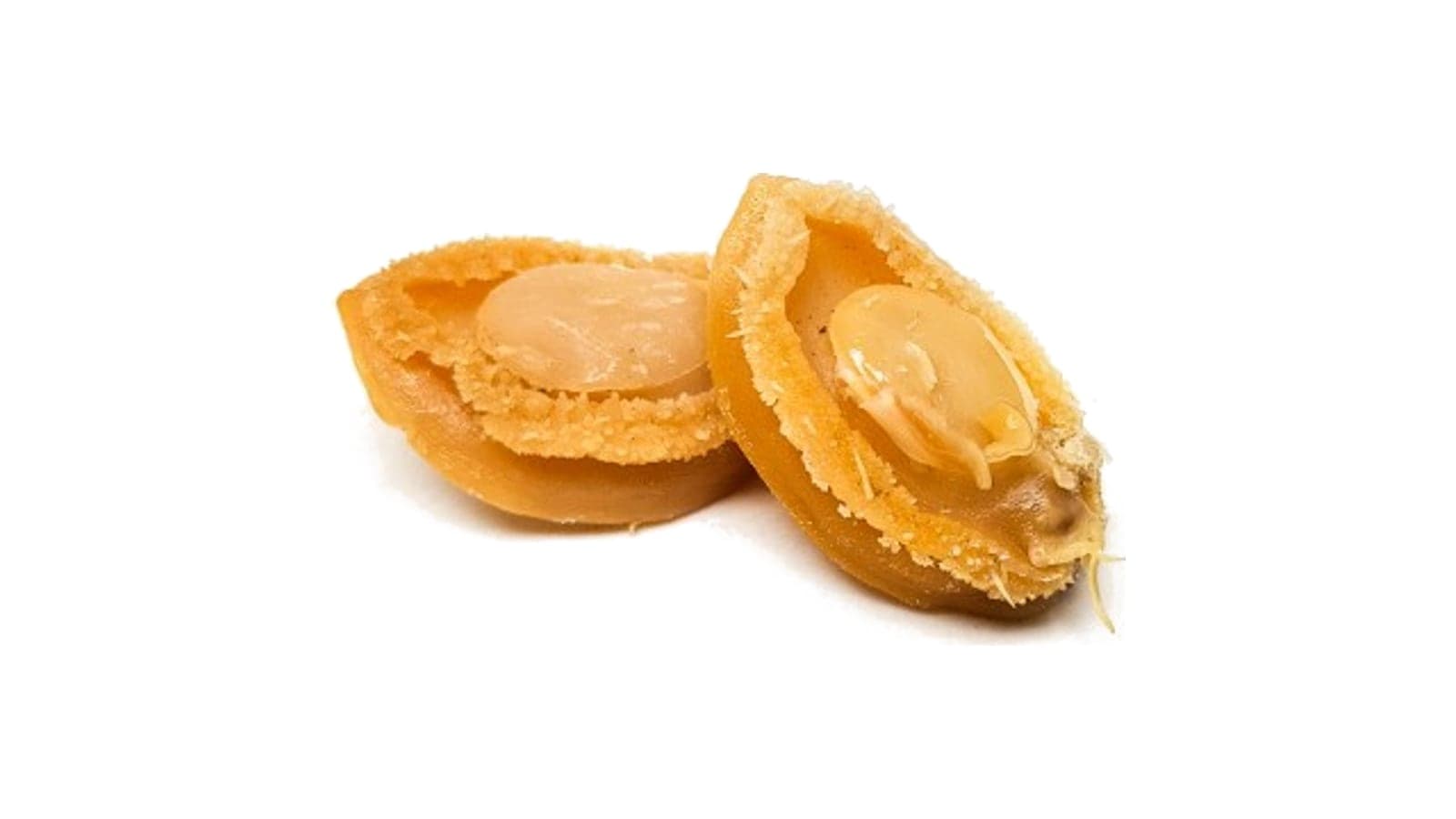
Conpoy is the dried adductor muscle of the scallop, the dense, round muscle that closes the shell. Boiled and slowly dried, it concentrates into an amber cylinder with a sweet, savory depth that Cantonese kitchens use to build stocks, sauces and braises, and that retailers sell as both a gift item and a pantry staple. A small quantity carries a great deal of flavor, which is one reason buyers specify the grade so carefully.
This guide explains how species, origin and processing shape quality, how size grades and broken grades are used, what to check when a lot arrives, and how to plan packs for retail and private label. Current grades and origins are listed on our dried scallops and conpoy page.
Key takeaways
- Conpoy is the dried adductor muscle of the scallop; confirm the species, since adductors from other bivalves are also traded.
- Convert every grade name to a count per kilogram and a diameter range before comparing offers.
- Broken conpoy is a sensible, lower-cost choice wherever the muscle is shredded, as in XO sauce, congee and fried rice.
- Judge condition on color, aroma, sweetness, firmness, salt and surface, using pieces from several cartons.
- Choose packs that protect fragile whole pieces, and check labels, including allergen declarations, against each destination’s rules.
Species and origins
The benchmark for premium conpoy is the yesso or Japanese scallop, Mizuhopecten yessoensis, still often listed under its older name Patinopecten yessoensis. Japanese supply comes mainly from Hokkaido and Aomori, where the scallops are seabed-ranched or hanging-cultured in cold water, and Japanese-style processing typically relies on a long, staged drying regime. The same species is farmed in northern China and harvested in smaller volumes in Korea and the Russian Far East.
Chinese origins also produce conpoy from other farmed species, including the bay scallop (Argopecten irradians) and the Zhikong scallop (Chlamys farreri). Their adductors are smaller, so the dried product is mostly sold in small whole grades and broken grades for value-oriented packs. Other origins in the Americas and elsewhere dry scallop in smaller quantities, with availability that varies by season.
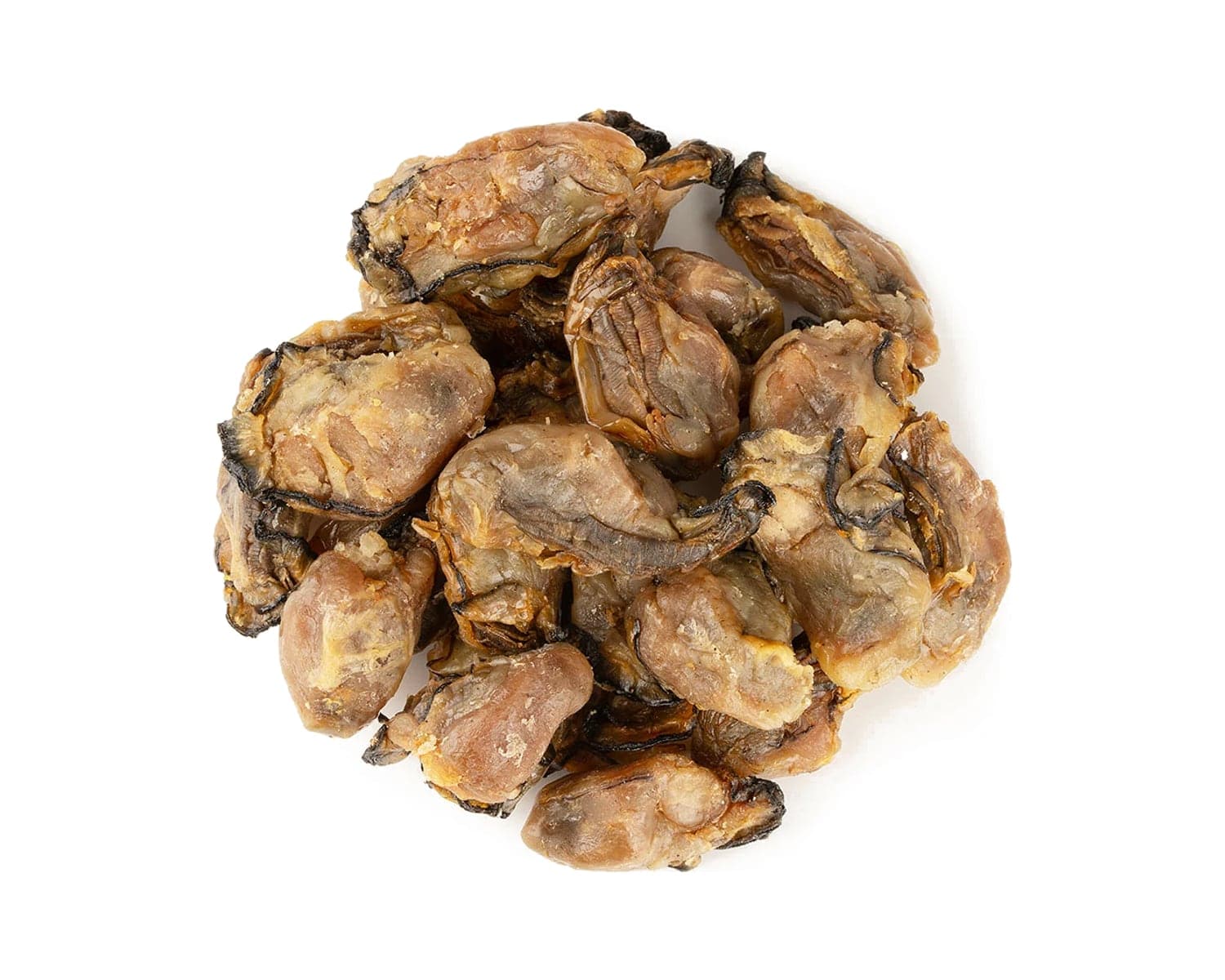
In some markets, dried adductors from other bivalves, such as pen shells, are also traded. They are a legitimate product in their own right, but they should be declared under their own name and species rather than as scallop, so ask for the scientific name on both the offer and the label.
Grading by size, and whole versus broken
Whole conpoy is graded by diameter or by count per kilogram, and grade names vary between packers and origins: some use letter or number codes, others Japanese size classes or simply large, medium and small. Convert every offer to a count range per kilogram and a diameter range in millimeters before comparing. As a rough orientation, large yesso grades may run to well under 100 pieces per kilogram while small grades and small-species conpoy can reach several hundred, but each packer sets its own bands and they should be confirmed per lot.
Broken conpoy (碎瑤柱) consists of split and fragmented pieces from drying and grading. Sold as such, it is not a defect grade: in XO sauce, congee, fried rice, soups and dumpling fillings the muscle is shredded anyway, and broken pieces from a good lot can deliver comparable flavor at a lower cost per kilogram. What matters is that broken stock comes from the declared species and origin, matches whole grades for dryness and aroma, and is free of dust, shell fragments and foreign matter.
Within whole grades, check size and shape uniformity across the pack, the share of cracked or flattened pieces, and whether smaller pieces have been blended in to make up weight.
Quality attributes to check
Size sets the grade, but condition decides whether a lot deserves it. Examine pieces from several cartons in good daylight, and break a few open.
- Color: an even golden amber to light brown, slightly translucent at the edges. Very dark, dull pieces may be over-dried or long stored; pale, chalky ones may be under-processed.
- Aroma: sweet, clean and savory at the broken face. Rancid, sour or strongly fishy notes are grounds for rejection.
- Sweetness and flavor: taste a rehydrated piece. Good conpoy shows a pronounced natural sweetness balanced by savoriness, rather than overt saltiness.
- Firmness: whole pieces should be dense and intact, with fibers that separate cleanly when shredded after soaking. Crumbling or powdery pieces suggest poor drying or age.
- Salt: some processes boil the muscle in salted water, so moderate salt is normal. A salty crust or white bloom adds weight and can overwhelm delicate dishes.
- Surface sheen: a light natural sheen is typical. A tacky or oily-looking surface can indicate incomplete drying or surface treatment and should be queried with the supplier.
How processing shapes quality
The basic sequence is similar everywhere, but pace and control differ markedly. Scallops are shucked and the adductor separated, then boiled, sometimes in lightly salted water, and cooled. The muscles are dried by sun, hot air or both. Higher-grade processing typically alternates drying with resting periods, during which moisture inside the muscle migrates outwards before the next drying stage; the cycle may be repeated several times over a period of weeks. Faster, single-stage drying costs less but can leave a dry exterior over a moister center, affecting both texture and storage stability.
Drying also shapes how conpoy ages in storage. Pieces with an even moisture profile from surface to core tend to keep their color and aroma for longer, while unevenly dried stock is more likely to soften, darken or develop off odors once cartons are opened in a humid store or kitchen.
Comparing types and matching grades to applications
| Type | Typical form and size | General character | Typical applications |
|---|---|---|---|
| Japanese yesso, whole | Medium to large whole pieces, graded by count and diameter | Even amber color, dense texture and pronounced sweetness when well processed | Whole braised presentations, premium gift packs, banquet soups |
| Chinese yesso, whole | Small to large whole pieces across a wide grade range | Varies with the processor; good lots come close to Japanese-style character | Restaurant soups and braises, mid-range retail |
| Bay and Zhikong scallop, whole | Small whole pieces at a high count per kilogram | Generally lighter flavor; softens quickly when soaked | Congee, steamed dishes, value retail packs |
| Broken conpoy (碎瑤柱), any species | Split and fragmented pieces, not size graded | Depends on the source species and processing | XO sauce, fried rice, fillings, food manufacturing |
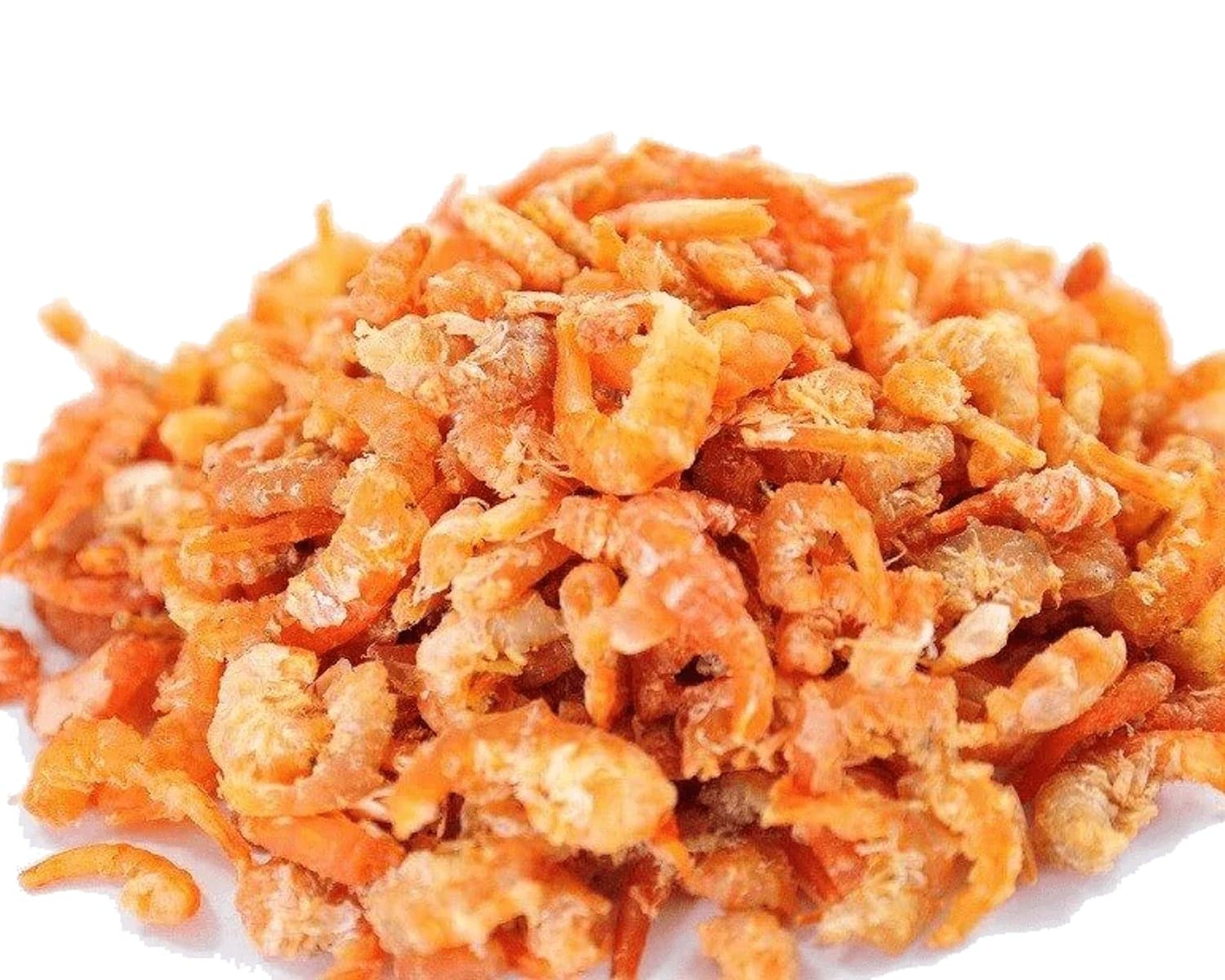
Chefs tend to separate presentation use from flavor use. Where conpoy appears whole on the plate, larger and more uniform pieces justify their cost; where it is shredded into a sauce or stock, broken or small grades from a well-processed lot often make better sense. XO sauce producers, for example, commonly pair broken conpoy with dried shrimp and specify both by moisture and flavor rather than by size.
Retailers face a different choice. Gift packs depend on visual uniformity and color, so a tight size band matters more than absolute size, while everyday pantry packs sell on value and are well served by small whole or broken grades with clear labeling. Our guide to choosing premium seafood ingredients for restaurants and retail looks at these channel decisions across the wider range.
Storage, packing and labeling
Conpoy picks up moisture and odors readily, and once it has absorbed moisture it can soften, lose aroma and become vulnerable to mold. Keep it sealed, cool, dry and away from light and strong-smelling goods, and move stock intended for longer holding into chilled storage. Our guide to storing dried abalone, fish maw and dried seafood sets out temperature, humidity and stock rotation practice in more detail.
For retail and private label, the pack has to protect a fragile product and carry the information each market requires. Common formats include bulk cartons with sealed inner bags for distributors, rigid jars and tins that limit breakage, and zip pouches or gift boxes with an oxygen absorber or desiccant where appropriate. Hard vacuum packing can crack whole pieces, so it is better suited to broken grades. Labels typically need:
- Product name and, where required, the scientific name of the species
- Country of origin, net weight and lot code
- Ingredients, including salt where used, and allergen information; molluscs, for example, are a declarable allergen in the EU
- Date marking and storage instructions
- Importer or distributor details in the form the destination market requires
Labeling rules vary by market, so have final artwork checked against current requirements in each country of sale. Our wholesale and private-label service can supply packed, labeled conpoy to your specification.
This guide is general trade information, not legal or regulatory advice. Requirements differ by market and change over time; confirm current rules with your customs broker or competent authority before ordering.