- Private-label packing
- Export documentation
Frozen Fish
Frozen Skipjack Tuna Supplier: Whole Round, Loins and Steaks
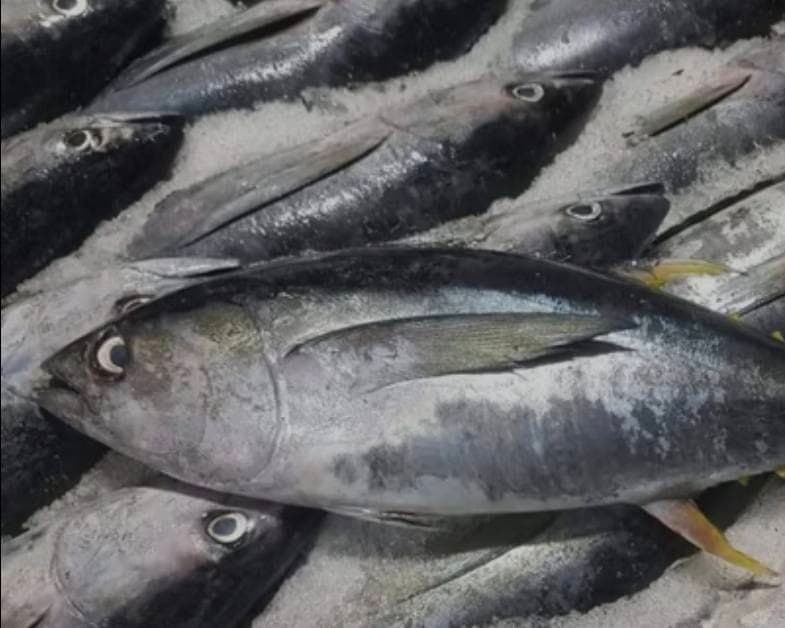
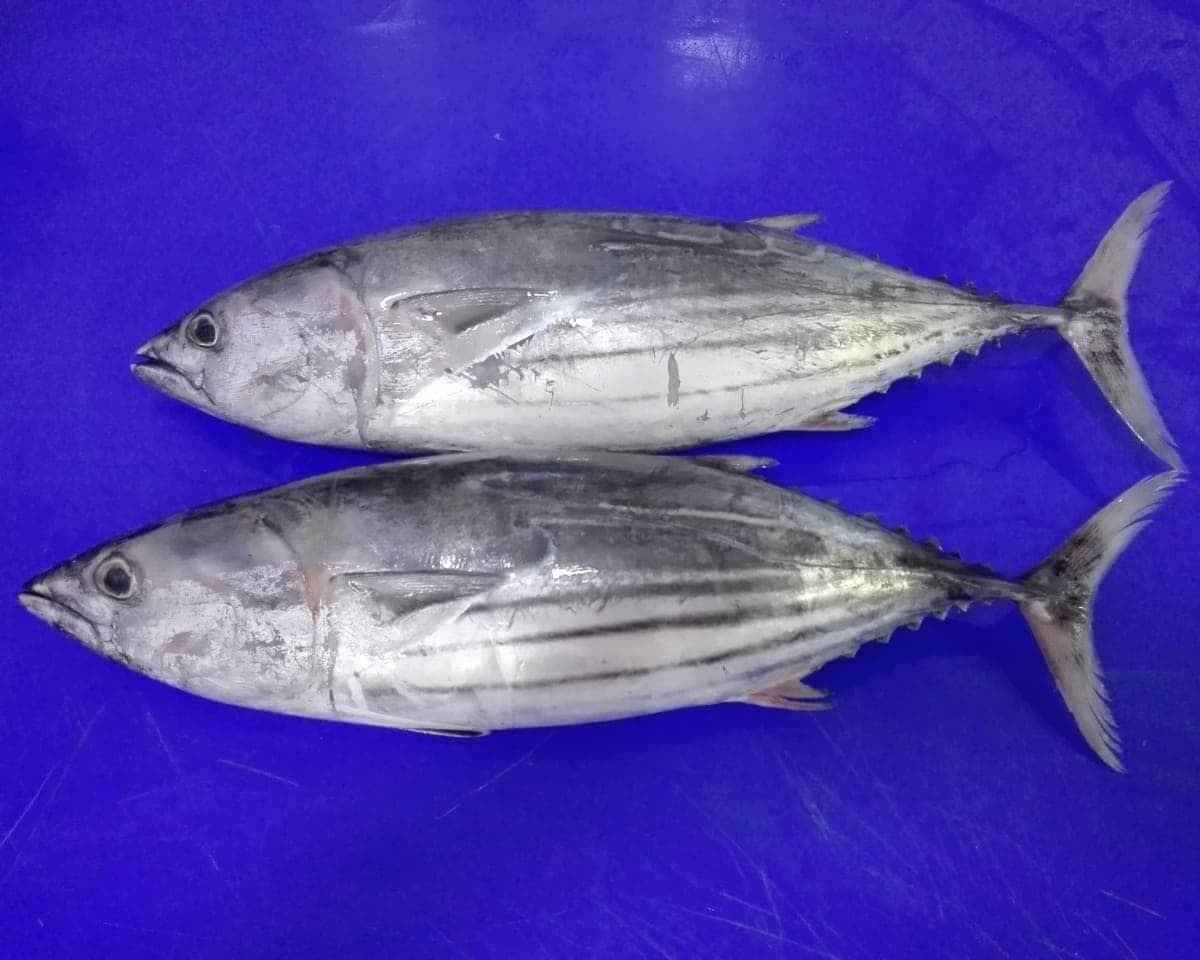
Skipjack tuna (Katsuwonus pelamis) supplied as brine-frozen whole round fish for canning, as precooked or raw loins for can and pouch lines, and as steaks, with species, ocean, gear and histamine results declared for every lot.
- Brine-frozen whole round skipjack, graded by fish weight
- Precooked and raw loins for can and pouch lines
- Ocean, FAO area, gear and vessel flag declared per lot
- Species mix checked for juvenile yellowfin and bigeye
- Histamine and salt results reported against each lot code
- Bandsaw-cut steaks for foodservice and retail
Product Specifications
Indicative; confirmed per lot on each quotation.
- Origin
- Mainly Western and Central Pacific and Indian Ocean purse-seine fisheries, landed for processing in Thailand, with pole-and-line skipjack from partner origins on request; ocean, FAO area and vessel flag declared per lot.
- Grade / Size
- Whole round by individual fish weight (e.g. 1.4–1.8 kg, 1.8–2.5 kg, 2.5–3.4 kg, 3.4 kg up); loins by piece weight and grade; steaks by thickness or portion weight agreed per order.
- Form & Processing
- Whole round, brine-frozen at sea; precooked loins (steamed, cleaned, vacuum-packed and frozen); raw frozen loins; bandsaw-cut steaks, IQF or interleaved.
- Storage
- Hold at -18 °C or colder with minimal fluctuation; thaw loins and steaks under refrigeration and keep thawed fish cold, since warmth allows histamine to form.
- MOQ
- Whole round by the full reefer container; loins and steaks from one pallet per grade, combinable with other frozen fish in a mixed container.
- Lead Time
- Typically 3–6 weeks once the specification is agreed; purse-seine landings and seasonal FAD closures can shift the availability of particular sizes.
Product overview
Skipjack is the volume tuna of world trade, and most of the catch ends up in a can or a retort pouch. Thailand is one of the leading tuna canning centers in the world: purse-seine carriers discharge frozen skipjack in Bangkok for loining and canning plants, many of them close to the capital, and the Bangkok skipjack price is followed across the industry as a reference. Our offers serve buyers along that chain, from canners and pouch packers who need raw material by species and size, to loin buyers who would rather not butcher whole fish, to distributors placing steaks with foodservice and retail customers.
Katsuwonus pelamis is a fast-growing tropical tuna caught mostly by purse seine, either on free-swimming schools or around fish aggregating devices (FADs), with a smaller pole-and-line catch from fisheries such as the Maldives and parts of Indonesia. Most raw material reaching Thai processors comes from the Western and Central Pacific, the largest skipjack fishery, with further lots from the Indian Ocean, landed by vessels on the authorized lists of the relevant tuna commission, WCPFC or IOTC. Every offer names the ocean, FAO area, gear and vessel flag, because those details decide which catch documents your market needs and tell you how the fish were handled on board.
Whole round fish are frozen in brine in the vessel’s wells and graded by individual weight, in bands such as 1.4–1.8 kg, 1.8–2.5 kg, 2.5–3.4 kg and 3.4 kg and up, since yield and cannery throughput both change with size. Precooked loins are made by thawing, steaming and cooling the fish, then removing skin, bones and dark meat before the loins are vacuum-packed and frozen; raw loins and bandsaw-cut steaks are frozen without cooking. Lots are checked for species mix, since purse-seine sets can include juvenile yellowfin and bigeye, and for size spread, salt taken up from the brine, burst bellies, crush damage and histamine. Precooked loins are also assessed for color, texture, bone fragments and leftover dark meat.
Canneries in Europe and other markets buy precooked loins to fill cans and pouches locally, and Japanese makers of katsuobushi and dashi flakes buy whole frozen skipjack as their raw material. For sashimi and steak menus that call for deeper red, firmer meat, see frozen yellowfin tuna. Heads, frames and other streams from tuna loining are covered under fish processing by-products, and the guide to reefer containers and cold chain explains set points and the records a claim depends on.
Specification sheet
Frozen Skipjack Tuna: full specification
Indicative values. Final specifications are confirmed per lot on the quotation and certificate of analysis.
| Species | Katsuwonus pelamis (skipjack tuna) |
|---|---|
| Fishing area | Ocean, FAO area, gear and vessel flag named per lot |
| Formats | Whole round, precooked loins, raw loins, steaks |
| Size | Whole fish by weight band, e.g. 1.4–1.8 kg up to 3.4 kg and above |
| Freezing | Brine-frozen at sea; loins and steaks frozen after processing |
| Histamine | Tested per lot against the destination’s limits |
| Salt | Salt uptake from brine checked on whole round lots |
| Glaze | Declared where applied; net weight stated ex-glaze |
| Shelf life | Typically up to 24 months at -18 °C, as dated by the packer |
| Documents | Catch certificate and processing statement for the EU, NOAA Form 370 for US entry, health certificate, lab reports |
| Minimum order | Whole round by the full reefer container; loins and steaks from one pallet per grade, combinable with other frozen fish in a mixed container. |
| Lead time | Typically 3–6 weeks once the specification is agreed; purse-seine landings and seasonal FAD closures can shift the availability of particular sizes. |
FAQ
Frozen Skipjack Tuna: questions from buyers
What is the difference between precooked and raw skipjack loins?
Precooked loins have already been steamed, cooled and cleaned of skin, bone and dark meat, so a cannery or pouch packer can fill them straight into containers without thawing, butchering and cooking whole fish itself. That saves labor, water and waste handling at destination, which is why loins travel to canneries working on imported raw material. Raw loins are frozen without cooking and suit steaks, seared tataki-style dishes and recipes where the buyer controls the cooking step. Each offer states which type is supplied, since tariff classification and handling differ between them.
Why does brine freezing matter for skipjack?
Purse seiners freeze their catch in refrigerated brine wells, which copes with very large sets quickly but lets some salt move into the flesh, more so when fish stay in brine longer than needed. Salt content affects the taste and the sodium figure of the finished can or pouch, so canners often set a ceiling on it. We report salt on sampled fish from whole round lots, alongside size and histamine, and buyers working to a sodium target should include that figure in the specification.
How do you handle juvenile yellowfin and bigeye in skipjack lots?
Purse-seine sets, particularly those made around drifting FADs, catch small yellowfin and bigeye together with skipjack, and at small sizes yellowfin and bigeye are hard to tell apart. The species are sorted at discharge or at the plant, and each lot is offered under the species it actually contains, because labeling rules require the correct name and catch documents record the catch by species. If you need skipjack only for a single-species label, set a maximum allowance for other tunas in the specification and we will check samples against it.
What histamine controls apply to frozen skipjack?
Skipjack muscle is rich in free histidine, which bacteria convert to histamine when fish are held too warm after capture, and once histamine has formed, cooking, canning and freezing do not remove it. Control therefore rests on rapid chilling on board and an unbroken cold chain from then on. Every lot is tested against the limits of your destination, for example the EU criteria in Regulation (EC) No 2073/2005 or the levels the US FDA applies, and the laboratory report carries the lot code printed on the cartons.
Related
Related products
Marine Ingredients
Fish-Processing By-products for Industrial Use
Heads, frames, trimmings and viscera for industrial processing
Frozen
Buyer guides
Species Profiles8 min read
Skipjack Tuna, the Small Tuna Behind Cans, Katsuobushi and Maldive Fish
A profile of the tuna landed in the largest volumes: how to recognize skipjack, what it is called from Tokyo to Malé, how it is fished, and why most of it ends up canned or dried.
Read the guide
Import & Compliance8 min read
Shipping Seafood: Reefer Containers, Cold Chain and Incoterms
A logistics guide for seafood buyers: reefer and dry-container shipping, temperature records, air freight for chilled and live product, where Incoterms 2020 place cost and risk, and the evidence a claim needs.
Read the guide
Import & Compliance7 min read
What Importers Need to Know Before Ordering Dried Seafood
The market-access, species, documentation, classification and commercial checks an importer should complete before placing a first order for dried seafood.
Read the guide
Request a quote
Request a quote for frozen skipjack tuna
Share your target grade, packing, volume and destination. We confirm availability, documentation for your market and a formal quotation, usually within one business day.
- Grade, size or count required
- Packing format and labeling language
- Estimated volume and order frequency
- Destination port or airport and Incoterm
- Reference: Frozen Skipjack Tuna