- Private-label packing
- Export documentation
Frozen Fish
Frozen Barramundi: Whole, Gutted and Scaled, Fillets and Portions
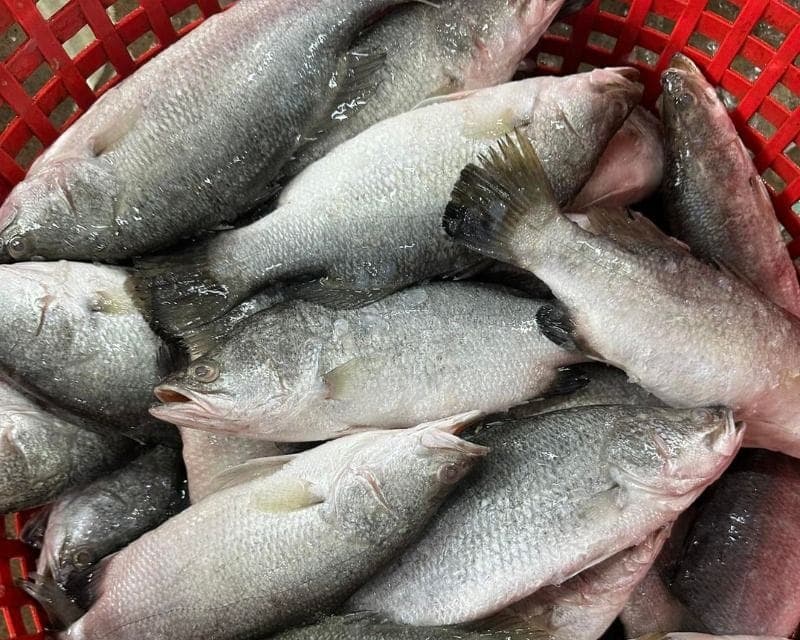
BSA Food Products supplies farmed barramundi, also traded as Asian sea bass, from Thai farms and partner farms elsewhere in South-East Asia, frozen whole, gutted and scaled, as fillets or as fixed-weight portions graded by fish or piece weight.
- Farmed Lates calcarifer from Thai and partner South-East Asian farms
- Plate-size whole fish from 300 g up to fillet-size fish over 2 kg
- Whole round, gutted and scaled, HGT, fillets and fixed-weight portions
- Pond or sea-cage farming stated on every offer
- Cooked taste test on samples to screen for earthy off-flavor
- IQF, vacuum-packed or block-frozen, with private label on request
Product Specifications
Indicative; confirmed per lot on each quotation.
- Origin
- Farmed in Thailand, with further supply from partner farms in Indonesia, Malaysia and Vietnam; country, farm region and pond or cage system declared per lot.
- Grade / Size
- Whole fish by individual weight (e.g. 300–500 g, 500–800 g, 800 g–1.2 kg, 1.2–2 kg, 2 kg up); fillets by weight band; portions to fixed weights agreed per order.
- Form & Processing
- Whole round; gutted and scaled with gills removed; headed, gutted and tail-off; skin-on (scaled) or skinless pin-bone-out fillets; fixed-weight portions. IQF, blast-frozen or vacuum-packed.
- Storage
- Keep at a steady -18 °C or colder; thaw barramundi overnight in the refrigerator and cook it promptly once thawed.
- MOQ
- A trial can start at one pallet per size and form, building to 20 ft or 40 ft reefer loads; barramundi can share a container with other frozen fish.
- Lead Time
- Usually 2–4 weeks for Thai-farmed fish once the specification is confirmed; 4–6 weeks for partner origins and new private-label packs.
Product overview
Barramundi (Lates calcarifer) is a large perch native to the coasts, estuaries and rivers of the Indo-West Pacific, from the Arabian Sea through South and South-East Asia to northern Australia. It moves between fresh, brackish and sea water, which lets farmers raise it in freshwater or brackish ponds as well as in floating sea cages. In Thailand, where it is known as pla kapong, it has been farmed for decades and is one of the species in this range that we can supply from Thai farms. Partner farms in Indonesia, Malaysia and Vietnam add volume and larger sizes, and every offer states the country, the farm region and whether the fish was raised in a pond or a cage.
Whole barramundi is graded by individual fish weight. The 300–500 g and 500–800 g bands are the plate sizes that restaurants steam, grill or deep-fry whole, 800 g–1.2 kg and 1.2–2 kg fish go to sharing platters and smaller filleting lines, and fish of 2 kg and up feed fillet and portion programs. Whole fish can be packed whole round, gutted and scaled with the gills removed, or headed, gutted and tail-off. Fillets are sold skin-on with the scales removed or skinless, pin-bone-out and graded by weight band, while portions are cut to a fixed weight, mostly from the thick loin end so that they cook evenly.
The quality point buyers raise most often with farmed barramundi is an earthy or muddy taste. It comes from geosmin and 2-methylisoborneol, compounds produced by algae and soil bacteria in some ponds and absorbed into the fat, and well-run farms move fish into clean water and stop feeding for a period before harvest to purge it. We encourage a cooked taste test on samples before a program starts. Beyond flavor, inspectors check that flesh is white to off-white with no yellowed fat, that scaling is complete and the belly cavity is clean on gutted fish, and that fillets show no gaping, bruising or stray bones. Glaze is checked by weighing samples before and after deglazing, and our export quality assurance page shows how glaze and net weight are recorded for each lot.
Plate-size whole barramundi is a staple of Thai, Chinese and Vietnamese restaurant menus, steamed with lime, chili and garlic or with soy and ginger, and it is often fried whole for sharing. Skin-on fillets suit the crisp-skinned, pan-seared presentation common in Australian and European restaurants, and skinless portions go into retail freezer packs, curries and battered fish. Buyers building a warm-water whitefish range often list barramundi beside red snapper and grouper, which cover the same dishes at different price points.
Specification sheet
Frozen Barramundi: full specification
Indicative values. Final specifications are confirmed per lot on the quotation and certificate of analysis.
| Species | Lates calcarifer (barramundi, Asian sea bass), farmed |
|---|---|
| Origin | Thailand; Indonesia, Malaysia and Vietnam through partner farms |
| Farming system | Freshwater or brackish ponds, or sea cages, as stated on the offer |
| Whole fish size | 300–500 g, 500–800 g, 800 g–1.2 kg, 1.2–2 kg, 2 kg up |
| Forms | Whole round, gutted and scaled, HGT, skin-on or skinless fillets, portions |
| Fillet grade | Barramundi fillets by weight band, pin-bone-out, fully scaled when skin-on |
| Freezing | IQF or blast-frozen barramundi, glaze percentage declared and net weight excluding ice |
| Shelf life | Barramundi lots usually keep 18–24 months at -18 °C or colder; the packer’s date governs |
| Documents | Export health certificate, certificate of origin and packing list for each barramundi shipment; residue reports to your market’s limits |
| Minimum order | A trial can start at one pallet per size and form, building to 20 ft or 40 ft reefer loads; barramundi can share a container with other frozen fish. |
| Lead time | Usually 2–4 weeks for Thai-farmed fish once the specification is confirmed; 4–6 weeks for partner origins and new private-label packs. |
FAQ
Frozen Barramundi: questions from buyers
Is barramundi the same fish as Asian sea bass?
Yes. Barramundi and Asian sea bass are two trade names for Lates calcarifer, and you may also see giant sea perch or the Thai name pla kapong. It is not the European sea bass (Dicentrarchus labrax) and has nothing to do with Chilean sea bass, which is Patagonian toothfish. Because naming rules differ between markets, the scientific name appears on every invoice and we follow the name your destination accepts on cartons and labels.
How do you deal with muddy or earthy flavor in farmed barramundi?
The taint comes from geosmin and 2-methylisoborneol, natural compounds produced in some pond environments, and it is controlled at the farm rather than the plant. Farms purge fish in clean water without feed before harvest, and sea-cage fish are generally less exposed. We ask for a cooked sample from each new farm or season, and if your customers are sensitive to it, the purging practice and a taste-test record can be written into the specification.
Which whole barramundi size suits restaurant service?
For one fish per diner, most kitchens order the 300–500 g band, while 500–800 g fish suit a plate shared between two. Larger fish from 1.2 kg are better filleted or served as a centerpiece. Gutted and scaled fish with the gills out saves prep time, while whole round fish is cheaper per kilogram but needs cleaning in your kitchen. Some destinations limit imports of ungutted fish under their biosecurity rules, so we check the form against your market before quoting.
Should I buy skin-on or skinless barramundi fillets?
Skin-on fillets are the choice for crisp-skinned, pan-seared dishes: the skin holds the fillet together and browns well, provided the scales have been removed completely. Skinless fillets suit retail packs, curries, battered fish and any dish where the skin would go soft. Both are cut pin-bone-out, and fillets from larger fish give thicker, more even portions, so tell us your target portion weight and cooking method and we will suggest a fish size to match.
Related
Related products
Buyer guides
Species Profiles6 min read
Barramundi, the Asian Sea Bass: Names, Biology and Farming
An estuary fish that changes sex as it grows, barramundi is now farmed from Thailand to Australia. This profile sorts out its many names, its relatives and the forms kitchens buy.
Read the guide
Buying Guide7 min read
Choosing Premium Seafood Ingredients for Restaurants and Retail
How chefs, foodservice buyers and brand owners match grade and format to the application, compare suppliers on cost per portion, and keep quality consistent across orders and channels.
Read the guide
Import & Compliance8 min read
Shipping Seafood: Reefer Containers, Cold Chain and Incoterms
A logistics guide for seafood buyers: reefer and dry-container shipping, temperature records, air freight for chilled and live product, where Incoterms 2020 place cost and risk, and the evidence a claim needs.
Read the guide
Request a quote
Request a quote for frozen barramundi
Share your target grade, packing, volume and destination. We confirm availability, documentation for your market and a formal quotation, usually within one business day.
- Grade, size or count required
- Packing format and labeling language
- Estimated volume and order frequency
- Destination port or airport and Incoterm
- Reference: Frozen Barramundi