Fish maw is the dried swim bladder of large fish, and in the Cantonese dried seafood trade it sits alongside abalone and sea cucumber as a banquet ingredient bought on close inspection. Two lots sold under the same trade name can behave very differently in the pot: one keeps a thick, springy bite after hours of braising, while another slumps into a slippery film. Most of that difference can be predicted before purchase.
This guide sets out the attributes professional buyers use to grade dried maw, the processing questions worth raising with suppliers, and a simple evaluation protocol that turns a visual impression into recorded numbers. It is written for importers, wholesalers and chefs comparing offers for our dried fish maw range or any other supply, and it starts from one fixed condition: every lot must be a declared, legally traded species.
Key takeaways
- Grade on thickness first: it is the strongest visible predictor of texture after long cooking.
- Convert every offer to the same size basis and check uniformity through the whole carton, not just the top layer.
- The trade generally favors male and aged maw, but both should be declared and supported by records rather than inferred.
- Ask for written declarations on drying method and any additives or processing aids, and question unnaturally white stock.
- Approve lots on a recorded soak-and-cook trial, and accept only declared, legally traded, non-protected species.
What fish maw is and how it is traded
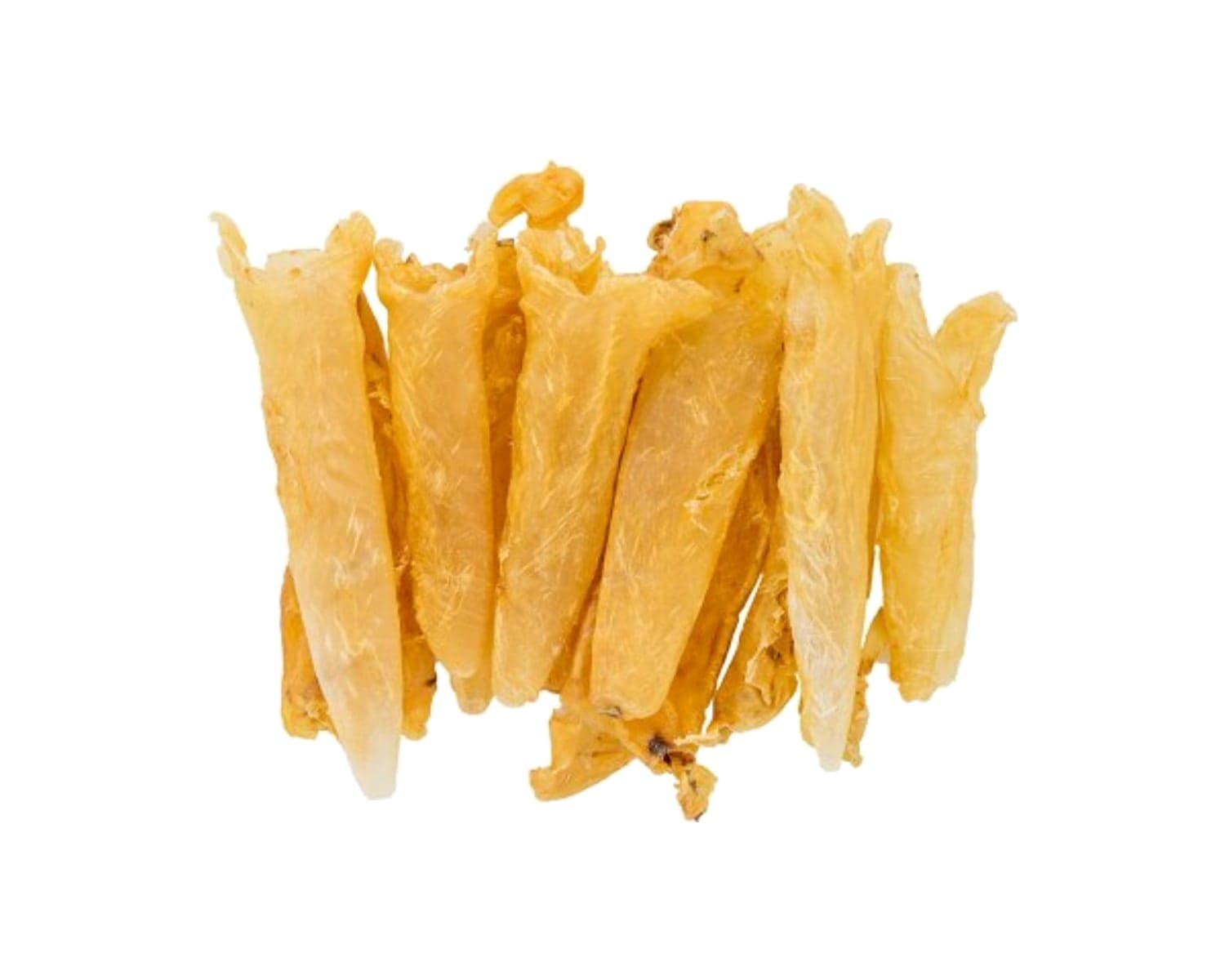
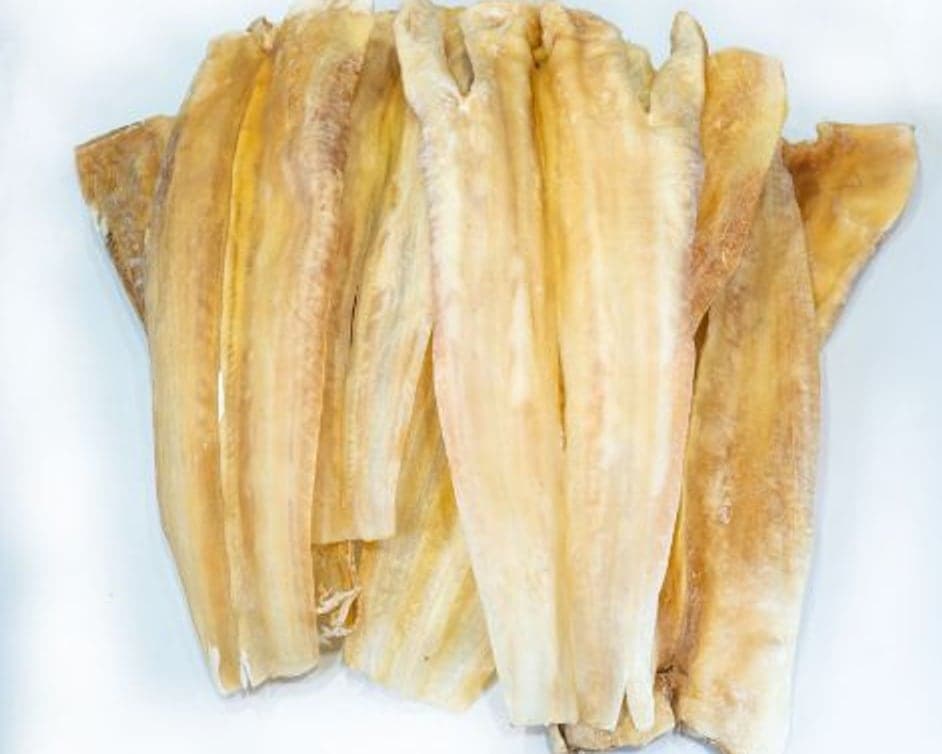
Many bony fish use a gas-filled swim bladder to control buoyancy. After landing, the bladder is removed, cleaned of blood vessels and membrane, opened out or left as a tube depending on species and local practice, and dried until rigid. The finished product is light, hard and usually translucent, from pale cream to deep amber. Its value lies almost entirely in texture: a gelatinous, resilient chew that takes up the flavor of the braise or soup around it.
Because maw is sold by weight but served by the piece, the trade grades it on species, piece size, thickness and condition. Values between grades differ widely, so consistent grading stops a buyer paying a premium for a lot that will not deliver premium texture.
The main commercial types
Trade names differ between markets, and one name is sometimes applied to more than one species. Treat the groups below as orientation rather than a species key, and rely on the scientific name in the offer, not the carton label.
- Croaker-family maws (Sciaenidae): the group most closely associated with traditional premium maw. Legally traded croaker species from several oceans supply pieces from small and thin to large and thick, with wide quality variation.
- Nile perch maw (Lates niloticus): a freshwater species from the African Great Lakes region and a mainstay of volume trade. It typically yields large, fairly thick pieces at accessible grades and is common in foodservice and retail programs.
- Pike-conger or eel maw (Muraenesox species): long, tubular maw that is often sold puffed (pre-fried) as well as plain dried, and widely used in thickened soups and braises where a lighter, more open texture is wanted.
- Threadfin maw (Polynemidae): traded in a range of sizes, with pieces that are often flatter and thinner than croaker maw, although this depends on species and origin.
Some fish whose swim bladders were traded historically are now protected under national law or international agreements. Protected species are excluded from legitimate trade, and no reputable supplier offers them under any name. A clear scientific name on the offer and on the shipping documents, consistent with the declared origin and catch area, is the buyer’s first safeguard.
Grading attributes that drive value
Each attribute can be checked separately and written down. The table summarizes what to examine and the signs that a lot is weaker than its grade label suggests.
| Attribute | What buyers check | Warning signs |
|---|---|---|
| Thickness | Wall thickness at the thickest and thinnest points; evenness across the piece | Papery edges, thin patches, or a thick center with very thin margins |
| Size and weight | Weight per piece or pieces per kilogram; uniformity through the carton | Wide size spread within one grade; small pieces packed beneath large ones |
| Shape and completeness | Whole pieces with clean trimming and a natural shape for the species | Tears, holes, splits, heavy trimming, or fragments pressed together to look larger |
| Color and translucency | Even cream-to-amber tone; light passes through evenly when held up | Dark patches, blood spots, opaque chalky zones, or an unnaturally uniform white |
| Dryness | Rigid and light; does not flex under gentle pressure | Flexibility, tackiness, soft spots, or condensation inside the packaging |
| Odor | Clean, mild marine smell; aged stock may smell faintly sweet | Sour, ammoniacal, rancid or chemical notes |
| Sex of fish (where sorted) | Male or female maw, as declared by the packer | Mixed lots sold as a single premium grade without any declaration |
Thickness governs texture after cooking more than any other visible trait. The trade generally pays more for thick maw since it keeps its bite through long cooking, while thin maw tends to soften sooner. Measure rather than estimate: a calliper reading at three points per piece makes supplier comparisons far more reliable.
Size is quoted in several ways, including weight per piece, pieces per kilogram or per catty, and length bands. Convert every offer to one basis before comparing, and inspect the bottom layer of a carton as well as the top.
Male, female and aged maw
For several croaker-family and related maws, traders separate bladders from male and female fish. The trade generally values male maw more highly, mainly because it tends to be thicker and to hold its shape through extended braising, whereas female maw is often thinner and can soften or partly break down in long cooking. Telling them apart by eye takes experience, the cues differ between species and some species are not sorted this way at all, so ask the packer to declare it.
Aged maw forms a separate premium category. Many traditional buyers prefer maw held for several years, as aging is generally considered to mellow the sharper marine odor, and the color tends to deepen towards amber. Age cannot be confirmed from the product itself, so treat it as a claim to be supported by lot records, and grade aged stock on the same criteria as recently dried maw. Stock held damp or warm can develop off odors or mold; our guide to storing dried abalone, fish maw and other dried seafood covers the conditions that keep stock in grade.
Processing: drying methods and whitening
Sun drying is still common in many origins and, done carefully, gives good color, but it is weather dependent and lots can carry uneven moisture or dust. Machine drying in heated, ventilated chambers gives more control over temperature and final moisture, which suits buyers who need repeatable lots for a program; many producers start outdoors and finish in a dryer. Neither method is automatically superior, so ask how the lot was dried and judge the result on dryness, evenness of color and odor.
Excessive heat can case-harden the surface while leaving the interior under-dried, and may darken the maw. Under-drying is the more common commercial risk because it adds salable weight, so check moisture on arrival as well as relying on the origin report.
Evaluating a trial lot
Visual inspection narrows the field, but the decision should rest on a controlled soak and cook. Base the decision on product from the actual lot, ideally a small trial order, and run one protocol on every supplier’s product. Fish maw trial orders start at 10 kg per species and grade, enough to run this protocol properly.
- Record the dry weight and calliper thickness of each test piece, and photograph it against a neutral background.
- Rehydrate using your kitchen’s standard method, kept identical for every lot you test. A common approach is an overnight soak in cold water, a brief blanch with ginger and spring onion, then a return to cold water until fully softened; thick pieces may need longer.
- Drain and weigh the soaked pieces and calculate the soaked-to-dry ratio. Yield varies widely by species and thickness, so the figure is most useful as a comparison between lots.
- Trim any hard or discolored sections and record the usable weight.
- Cook a portion in your standard dish for its full normal time. Note whether pieces hold their shape, how resilient the bite is, and whether any odor persists.
- Score each lot on a simple sheet filed under the lot reference, so later deliveries can be checked against the approved trial lot.
If bulk deliveries fall short of the trial lot, this written record turns a disagreement into a claim that can be settled.
Documentation and species declaration
Each offer should state the scientific name, the country of origin and, for wild-caught fish, the catch area. Buyers commonly expect a commercial invoice, packing list and certificate of origin, plus a health certificate and catch documentation where the importing authority requires them. Requirements differ between markets and change over time, so confirm the current position with your customs broker or competent authority before the first order.
- Scientific name shown consistently on the offer, invoice and carton label
- Lot or batch code linking each carton to its processing record
- Written statement on additives or processing aids, including a nil declaration where none are used
- Grade definition covering thickness, size basis and, where sorted, sex
Our export quality assurance process explains how lots are checked and documented before dispatch, and the guide on what importers need to know before ordering dried seafood shows how paperwork differs between destinations.
This guide is general trade information, not legal or regulatory advice. Requirements differ by market and change over time; confirm current rules with your customs broker or competent authority before ordering.