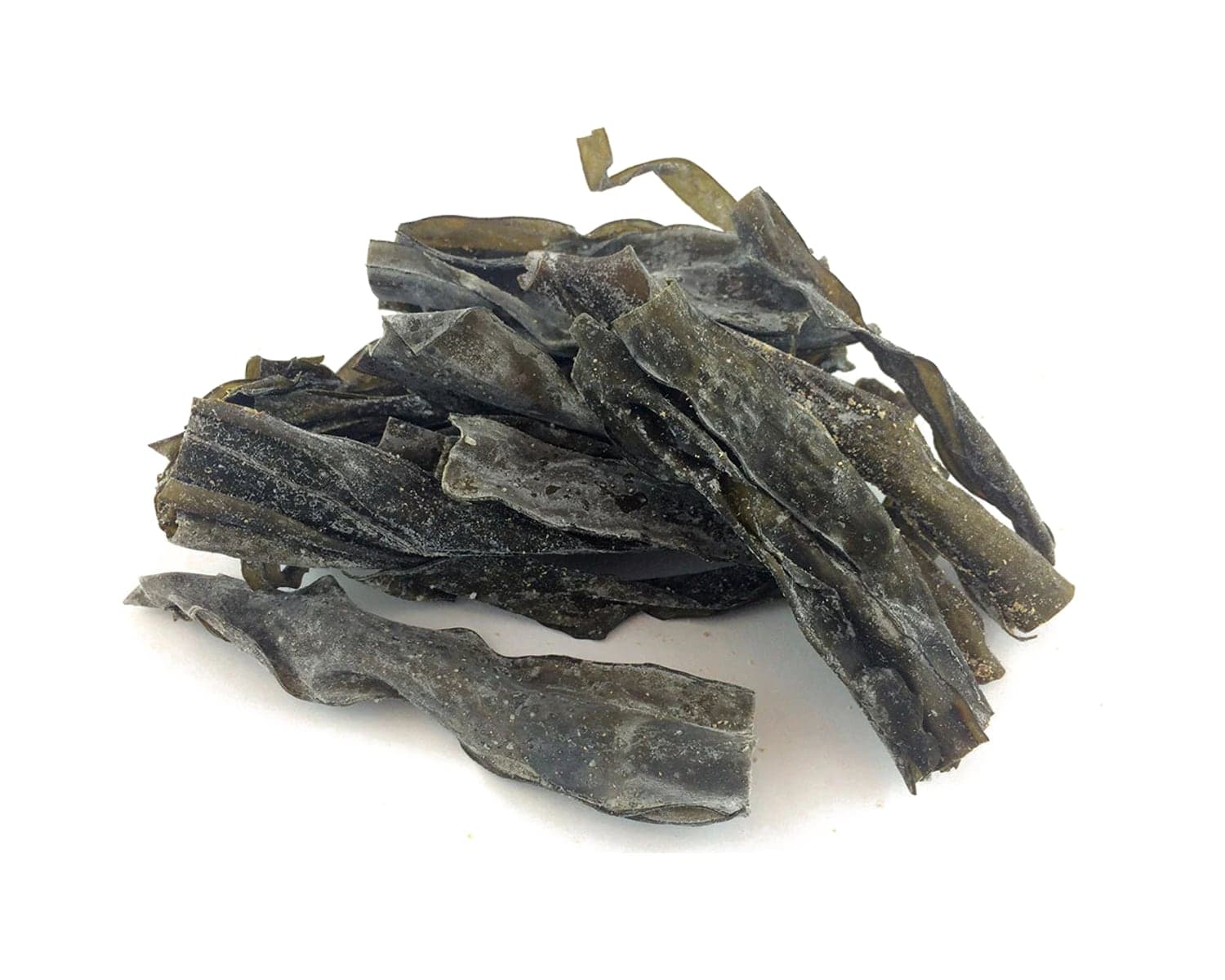
Kombu is the Japanese name for dried kelp, chiefly Saccharina japonica, a large brown seaweed of the cold north-western Pacific. It is the backbone of Japanese stock-making, and the same plant is eaten across China as haidai and in Korea as dasima, in soups, braises, salads and snacks. Our kelp and kombu page lists the sheets, dashi cuts, knots and shreds we supply.
This profile explains the plant behind the product: how kelp is classified, why Hokkaido’s regional kombu types are traded under their own names, how wild harvesting compares with the vast farmed crops of China and Korea, how the fronds are dried, which forms suit which dishes, and which other seaweeds are sold alongside kombu or mistaken for it.
Key takeaways
- Kombu is dried kelp, mainly Saccharina japonica (formerly Laminaria japonica) and close relatives.
- Hokkaido’s regional types, including ma-kombu, Rishiri, Rausu and Hidaka, are tied to specific species, varieties and coasts, and each suits different dishes.
- China is by far the largest grower of kelp, farming it on rope rafts for knots, shreds and sheets, while Hokkaido grades are bought mainly for stock.
- Keep kombu dry, wipe rather than wash it, and confirm the seaweed rules of your destination before the first order.
What kombu is: Saccharina japonica and its relatives
Kelps are large brown algae of the order Laminariales. The main kombu species was long known as Laminaria japonica and was moved to the genus Saccharina in 2006; the old name is still common in trade documents and older literature, and Japanese call the type form ma-kombu. A kelp plant has a root-like holdfast that grips the rock, a short stalk called the stipe, and a long, strap-like blade that can grow several meters long. That thick blade, dried, is kombu.
In the wild the plant is biennial, and Japanese harvesters traditionally wait until fronds are in their second year, about 20 months old, when they are thick and full-flavored. The genus name derives from the word for sugar, fitting for a plant whose tissue holds sweet-tasting mannitol, the fine white bloom seen on dried kombu. Kombu also has a place in food science: in 1908 the Japanese chemist Kikunae Ikeda isolated glutamic acid from kombu stock and named its savory taste umami.
Japan sells kombu by regional type, and each type corresponds to a species or variety from a particular stretch of the Hokkaido coast. Botanists now treat several of them as varieties of S. japonica, but the trade names remain the ones buyers use.
| Trade name | Species or variety | Hokkaido coast | Typical use |
|---|---|---|---|
| Ma-kombu | Saccharina japonica | Southern Hokkaido, from the Tsugaru Strait to Uchiura Bay | Clear, refined dashi; the classic stock kombu of Osaka |
| Rishiri kombu | S. japonica var. ochotensis | Rishiri and Rebun islands and the coast around Wakkanai | Clear, delicate dashi, favored in Kyoto cooking |
| Rausu kombu (oni-kombu) | S. japonica var. diabolica | Rausu, on the Shiretoko Peninsula | Rich, aromatic, full-bodied dashi |
| Hidaka kombu (Mitsuishi kombu) | Saccharina angustata | Pacific coast of the Hidaka region | Softens quickly, so it is the usual kombu for kobumaki and is also eaten in tsukudani and oden; everyday dashi |
| Naga-kombu | Saccharina longissima | Kushiro and the eastern Hokkaido coast | Very long fronds produced in large volumes, much of them used as raw material for processed kombu products |
Where kelp and kombu come from: wild and farmed supply
Japan’s kombu traditionally came from wild beds along the Hokkaido coast, and the island still accounts for about nine-tenths of the country’s production, most of the rest coming from northern Honshu. As demand grew in the 1960s, Japanese researchers developed ways to cultivate kombu, and in the 1970s forced cultivation cut the growing period to a single year, so Japanese supply is now a mix of wild and farmed kombu. Wild plants are cut from June to October by harvesters working from small boats with hooked poles that twist the fronds free of the rock, while farmed kombu in Japan is mostly lifted between mid-June and early July.
China’s kelp industry started from plants that arrived in Dalian in 1927 on imported timber. In the 1950s Chinese scientists worked out how to raise young plants through the summer in cooled seawater, so that sporelings could go out to sea in autumn and be grown on ropes hung from floating rafts through the winter. China is now by far the largest grower of this kelp, with major farming areas in Shandong, Liaoning and Fujian. Much of its crop is eaten as a vegetable, and part is processed into alginate. In Korea, most dasima is likewise cultivated.
In broad terms, the regional Hokkaido types are bought for stock-making and premium Japanese cooking, while the large farmed crops of China and Korea supply knots, shreds, sheets and processed kelp for everyday cooking and for food manufacturers. Both are Saccharina; what differs is the variety, growing conditions, thickness and the grade a lot achieves.
Harvesting, drying and grading kombu
Freshly cut fronds are heavy with water, so drying starts on the day of harvest. In Hokkaido they are laid out in the sun on gravel drying grounds by the shore, or dried by machine when the weather turns, then trimmed, cut to length, folded or pressed flat, and sorted into grades. Japanese suppliers grade by producing area and then by thickness, width, length, color and the condition of the frond, and the best-known coasts command a premium.
Dried kombu should be dark olive-green to brown-black, depending on type, with an even color and no damp patches, sand or broken edges. The white bloom that forms on the surface is mostly crystallized mannitol, which contributes sweetness to stock, so kitchens wipe kombu with a damp cloth rather than washing it. The specification points we check on each lot are listed on the kombu product page.
Kombu market forms and their uses
Kombu is sold in a wider range of forms than most seaweeds, from whole fronds to shavings and powder. The table covers the main ones found in general trade; our product page states which we currently supply.
| Form | What it is | Main uses |
|---|---|---|
| Whole dried fronds and sheets | Fronds dried flat or folded and cut to length | Dashi, simmered dishes, kombu-jime curing |
| Dashi cuts | Squares and strips cut from graded fronds | Restaurant stock, dashi packs and instant broth |
| Tororo and oboro kombu | Kombu softened in vinegar and shaved into fine threads or thin sheets | Clear soups, udon toppings, wrapping rice balls |
| Tsukudani and shio kombu | Kombu simmered in soy sauce and mirin, sometimes dried to a salty coating | Rice accompaniments and seasoning |
| Su-kombu | Kombu cured in vinegar | A chewy snack |
| Knots and shreds | Farmed kelp tied in knots or cut into strips, dried or blanched and salted | Chinese braises and cold salads, oden, Korean side dishes |
| Powder | Kombu ground fine | Seasonings, sauces and soup bases |
How kombu is cooked in Japan, China and Korea
In Japan, kombu’s main job is dashi. Kitchens soak the kombu in cold water, from half an hour to overnight, then warm it gently and lift it out just before the water boils, because boiling draws out a slippery texture and harsher flavors. Kombu dashi on its own is the base of vegetarian temple cooking; combined with bonito flakes it becomes awase dashi, the all-purpose stock of Japanese cooking. Kombu also cures raw white fish in kombu-jime, a specialty of Toyama in which fillets are pressed between sheets of kombu, and it is rolled around fish such as herring or salmon and simmered to make kobumaki for New Year meals. Toyama and Okinawa, both far from any kombu coast, became heavy kombu users through the old shipping routes from Hokkaido, and Okinawan cooks stir-fry it with pork in kūbu irichī.
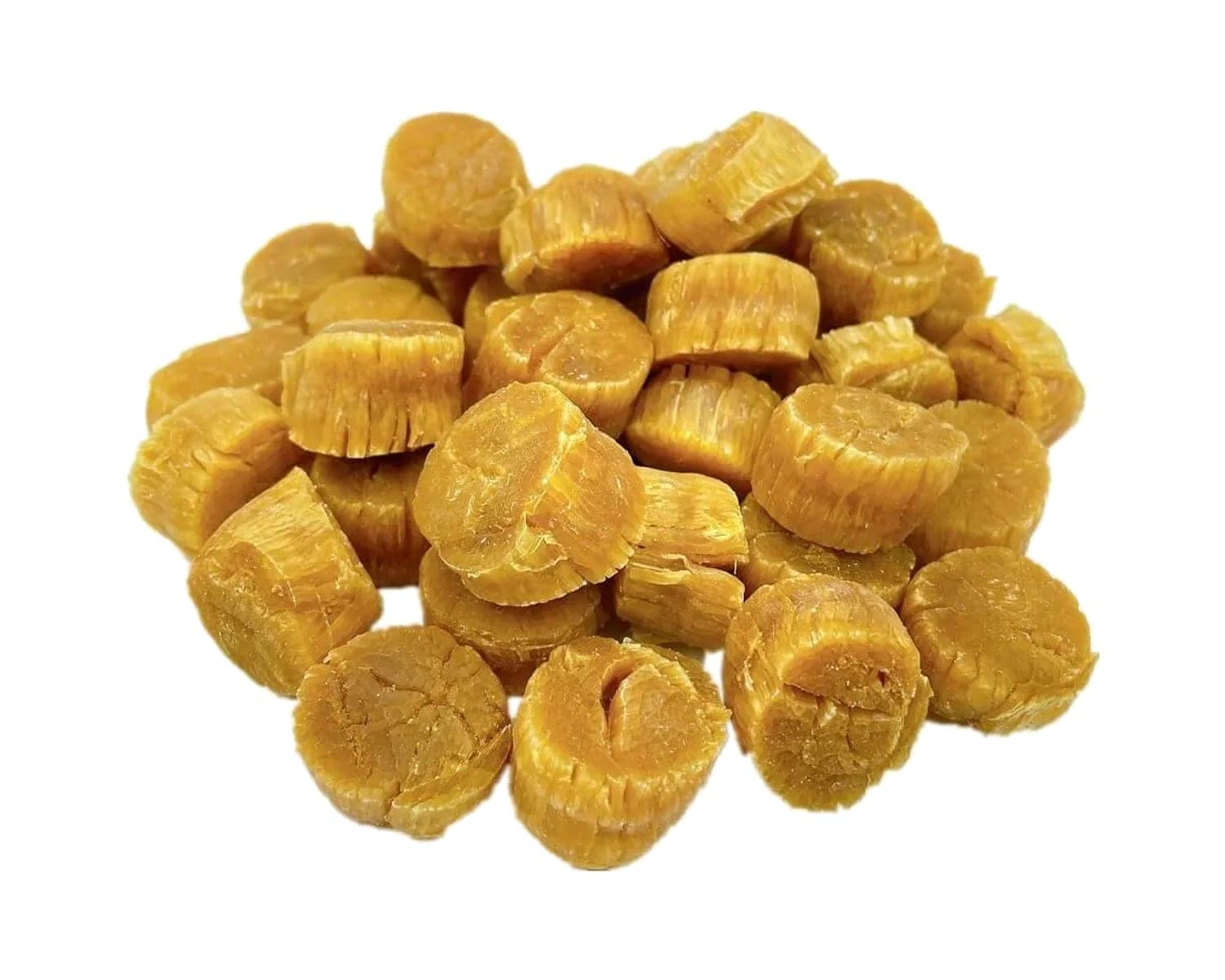
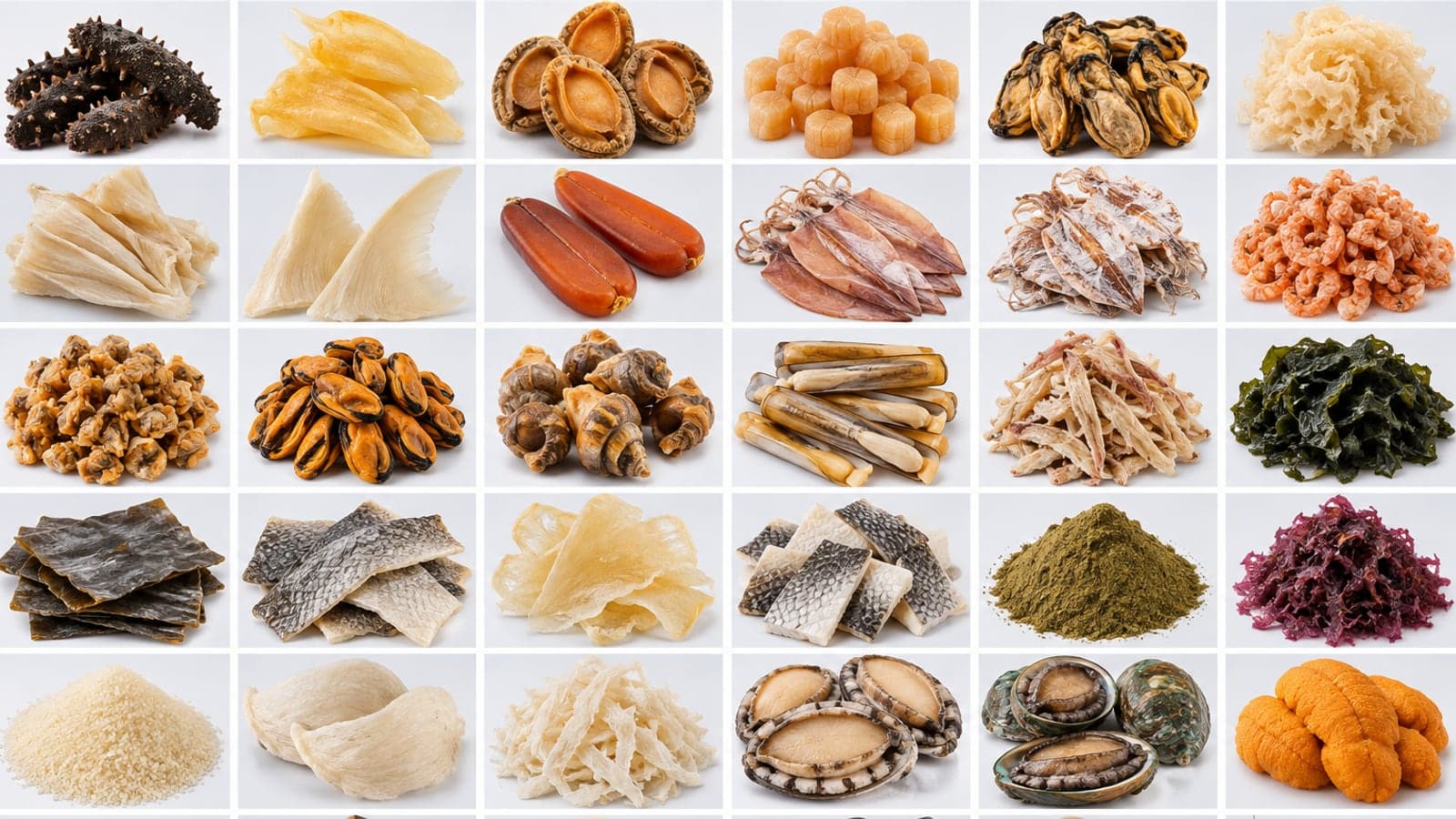
In China, haidai appears as cold shredded kelp dressed with vinegar, garlic and chili, served as an appetizer, as braised kelp knots, and in long-simmered soups such as pork rib and kelp soup. Stock makers in Chinese and Japanese kitchens often layer kombu with dried seafood, and dried scallops are a common partner in rich broths. In Korea, dasima flavors the anchovy-based broths behind many soups and stews, is deep-fried into crisp twigak snacks, pickled, or blanched and used to wrap rice in ssam.
Spent kombu from the stockpot is still good to eat: Japanese cooks slice it and simmer it into tsukudani rather than throwing it away.
Related kelps and seaweeds sold alongside kombu
Several other brown seaweeds are sold near kombu or confused with it:
- Sugar kelp (Saccharina latissima): a close relative found in the North Atlantic and North Pacific, known in Japan as karafuto-kombu, and increasingly farmed on a small scale in Europe and North America.
- Other Laminaria kelps, such as oarweed (Laminaria digitata): North Atlantic species gathered mainly as raw material for alginate, a thickening and gelling agent, though small amounts are eaten.
- Winged kelp (Alaria esculenta): a thinner North Atlantic kelp eaten on a small scale, closer in use to wakame than to kombu.
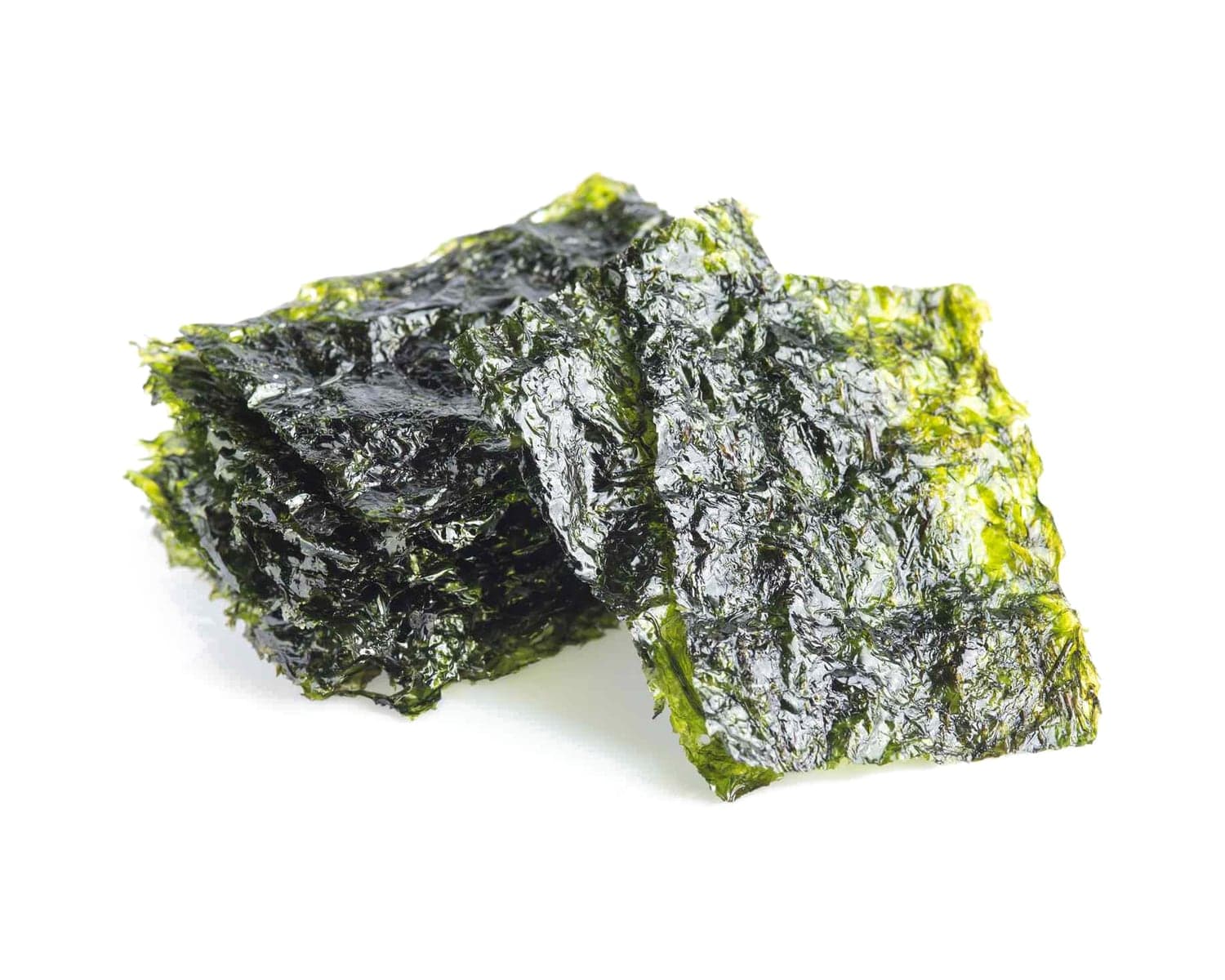
- Wakame (Undaria pinnatifida): a different brown seaweed with a thin, tender blade, eaten as a vegetable in soups and salads rather than used for stock. Our edible seaweed species guide covers it with nori and hijiki.
Because the word kombu can describe regional Hokkaido grades, farmed Chinese or Korean kelp, or a different Saccharina species, the species, growing area and form should be stated on every lot declaration. Laver, wakame and hijiki from our edible seaweed range can travel in the same consignment as kombu.
Storage, testing and import notes for kombu buyers
Dried kombu keeps well for long periods if it stays dry. Damp kombu turns limp, loses its white bloom and can grow mold, so keep it sealed in a cool, ventilated store well away from strong smells; our guide to storing dried seafood explains how to set up and monitor a dry store.
Import rules for seaweed differ widely, and for kelp the point most often raised is iodine. Australia checks imported brown seaweed at the border against a maximum iodine level; the EU, which asked member states in 2018 to monitor metals and iodine in seaweed, has been discussing a maximum of 1 g of iodine per kilogram of dried seaweed; and Germany’s Federal Institute for Risk Assessment (BfR) recommends that ready-to-eat seaweed products be labeled with their iodine content. Limits for heavy metals, and the need for a health certificate or prior registration, also vary by destination, so confirm the current rules for your market. Testing against its limits can be arranged per lot, and our guide to importing dried seafood walks through the wider document checks. If you already buy kombu, send us your current specification and we will match it against the lots available.
This guide is general trade information, not legal or regulatory advice. Requirements differ by market and change over time; confirm current rules with your customs broker or competent authority before ordering.