Edible seaweed is a kitchen category, not a botanical one. The crisp sheet around a sushi roll is a red alga, the silky leaves in miso soup are a brown kelp relative, the black threads in a Japanese side dish are a different brown seaweed again, and the dried weeds sold as sea moss are other red algae with uses of their own. Our edible seaweed range covers laver, wakame, hijiki and red seaweeds in leaf, cut and flake grades.
This guide profiles each of those plants in turn: the current scientific names and the names used in the main markets, how each is farmed or gathered, how it is processed and graded, the forms the trade uses and how kitchens cook them. Kombu, one of the largest seaweed crops, has its own profile in our kelp and kombu species guide.
Key takeaways
- Edible seaweeds come from three unrelated groups: red algae such as laver, brown algae such as wakame and hijiki, and green algae such as aonori.
- Nori is made mainly from Pyropia yezoensis and P. haitanensis, formerly placed in Porphyra, and is farmed on nets through the winter.
- Wakame blade, stem and mekabu are separate products, and hijiki is sold as me-hijiki buds or naga-hijiki stems.
- Red seaweeds such as Gracilaria, Eucheuma and Irish moss are traded for gelling uses as well as food, and hijiki needs a market-access check first.
Edible seaweeds at a glance: red, brown and green
Seaweeds are grouped by their pigments into red algae, brown algae and green algae, three lineages that are only distantly related. Laver and the agar and carrageenan seaweeds are red; wakame, hijiki and kombu are brown; aonori and sea lettuce are green. Most of the food seaweed in international trade today is farmed, much of it on ropes and nets in the coastal waters of China, South Korea and Japan, while the red seaweeds used for carrageenan are farmed mostly in South-East Asia.
| Seaweed | Main species | Group | Main sources | Names by market |
|---|---|---|---|---|
| Laver (nori) | Pyropia yezoensis, P. haitanensis (formerly Porphyra) | Red | Farmed in Japan, South Korea and China | Nori (Japan), gim (Korea), zicai (China), laver (Britain) |
| Wakame | Undaria pinnatifida | Brown | Farmed in South Korea, China and Japan | Wakame (Japan), miyeok (Korea), qundaicai (China), sea mustard (English) |
| Hijiki | Sargassum fusiforme (formerly Hizikia fusiformis) | Brown | Farmed in South Korea and China; gathered wild in Japan | Hijiki (Japan), tot (Korea) |
| Irish moss | Chondrus crispus | Red | Gathered wild on North Atlantic shores | Irish moss, carrageen; part of the sea moss trade |
| Gracilaria | Gracilaria species | Red | Farmed and gathered in warm and temperate seas | Ogonori (Japan), ogo (Hawaii), sea moss (Caribbean) |
| Eucheuma and Kappaphycus | Eucheuma denticulatum, Kappaphycus alvarezii | Red | Farmed in the Philippines, Indonesia, Tanzania and elsewhere | Spinosum and cottonii in the carrageenan trade |
Laver and nori: the Pyropia seaweeds
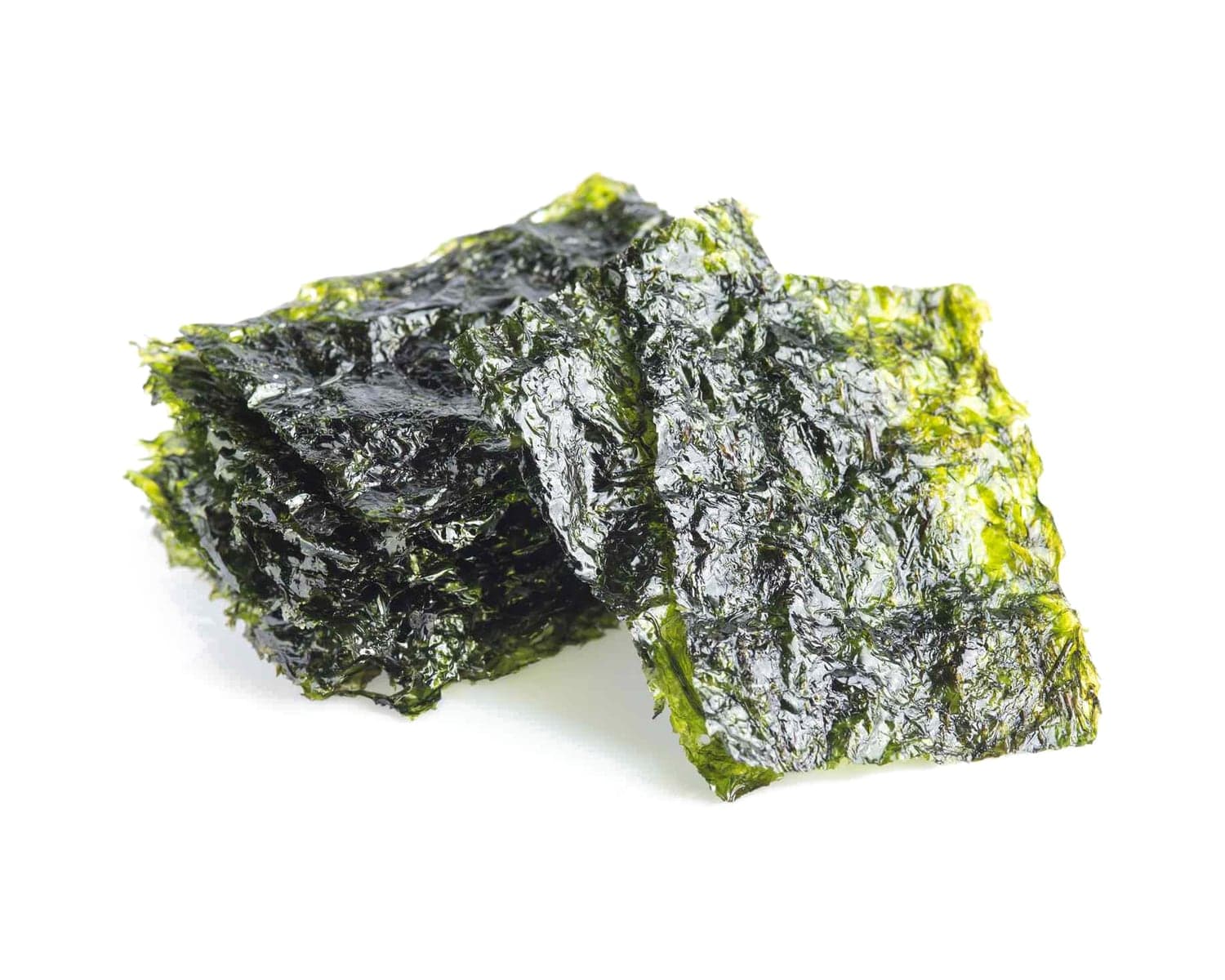
Nori is made from thin, membrane-like red seaweeds that were long placed in the genus Porphyra. In 2011 the main farmed species were reassigned to Pyropia: Pyropia yezoensis, formerly Porphyra yezoensis, is the cool-water nori of Japan, Korea and northern China, and Pyropia haitanensis is the warmer-water species farmed along China’s south-east coast. The Welsh and Irish laver, Porphyra umbilicalis, kept the old genus name.
Laver has an unusual life cycle with two very different phases: the leafy blade that grows in winter, and a microscopic filamentous stage that lives through the summer bored into mollusk shells. Japanese growers had farmed nori since the 1600s by relying on wild spores to settle on the stakes or nets they set out, but the life cycle stayed a puzzle until 1949, when the British phycologist Kathleen Drew-Baker, working on the laver Porphyra umbilicalis, showed that a shell-boring filament then known as Conchocelis was one of its stages. Japanese scientists used her findings in the early 1950s to put nori farming, which had collapsed after the Second World War, on a controlled footing, and she is still honored in Uto, Kumamoto, as the “Mother of the Sea.” Today farmers seed nets from shell cultures in autumn, when shorter days and cooler water trigger spore release, and cut the blades several times through the winter.
Sheet nori dates from around 1750 in the Asakusa district of Edo, today’s Tokyo, and is still made like paper: the harvested blades are washed, chopped, poured as a slurry onto frames, dried and peeled off as sheets roughly 20 cm square, then bundled in tens. Plain dried sheets are hoshi-nori; toasted sheets, greener and crisper, are yaki-nori; and seasoned sheets are ajitsuke-nori. Korean gim is often brushed with sesame or perilla oil and salt before toasting, while Chinese zicai is frequently dried loose or pressed into round cakes for soup.
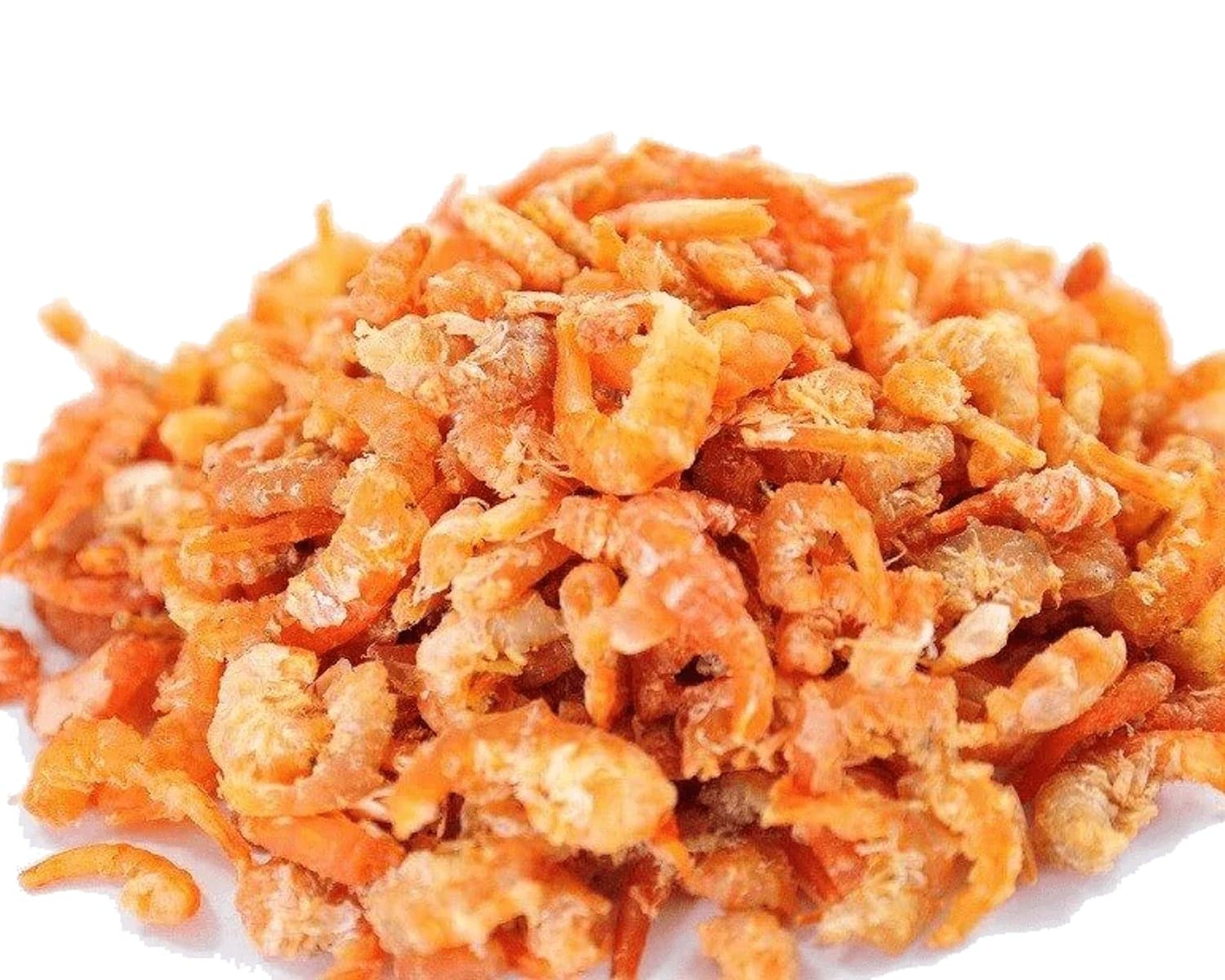
Kitchens use nori to wrap maki and hand rolls, rice balls and Korean gimbap, crumble it over noodles and rice, and sell seasoned gim as a snack. Chinese cooks drop zicai into quick soups with egg or with dried shrimp. In South Wales, laver is boiled for hours to a dark purée, laverbread, often fried with oatmeal for breakfast.
Wakame: Undaria pinnatifida
Wakame is Undaria pinnatifida, a brown seaweed of the kelp order native to the cold-temperate coasts of Japan, Korea, China and the Russian Far East. It has been eaten in Japan for well over a thousand years, and today most of the crop is farmed on ropes in South Korea, China and Japan. It is an annual plant with a broad, deeply divided blade around a firm midrib, a short stem, and frilled reproductive leaves along the stem near the base.
Seed is produced in spring and held through the summer, young plants go out on ropes in autumn once the water cools, and harvest runs through late winter and spring, finishing around April in Korea, between March and May in southern Japan and from May to July in Hokkaido. Outside its native range, wakame has spread on ship hulls to Europe, Australasia and the Americas, and it appears on the IUCN invasive species group’s list of 100 of the world’s worst invasive alien species. In Europe it has also been farmed on a small scale in Brittany.
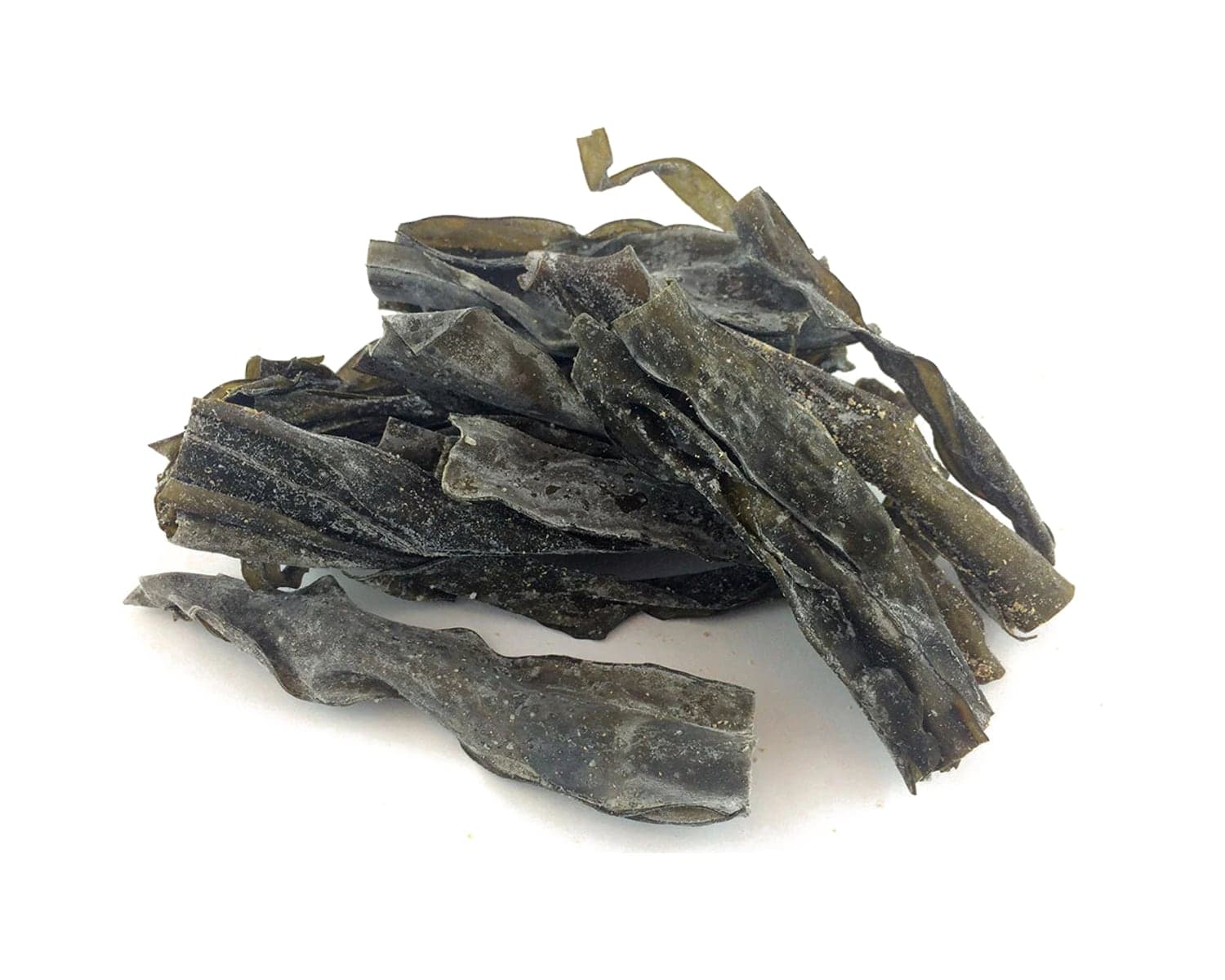
Each part of the plant is a separate product. The blade is sold as leaf or cut wakame; the stem and midrib, kuki wakame, is cut into crunchy strips and often simmered in soy; and the frilly reproductive leaves, mekabu, are chopped into a slippery, savory side dish. Processing styles range from plain sun-drying and the traditional haiboshi method, in which fronds are coated in plant ash so they hold their deep green color, to blanched and salted wakame kept chilled or frozen, and dried cut wakame, the small flakes that rehydrate in seconds in instant soups and noodle cups.
In Japan, wakame goes into miso soup, vinegared sunomono salads with cucumber, and noodle toppings. In Korea, miyeok-guk, a beef or seafood broth with wakame, is the traditional birthday soup. Chinese kitchens use it in soups and cold dressed salads.
Hijiki: Sargassum fusiforme
Hijiki is Sargassum fusiforme, formerly Hizikia fusiformis, a small, bushy brown seaweed with short, cylindrical branches that grows on rocky shores around Japan, Korea and China. In Japan it is mostly gathered wild from the shore at low tide, while South Korea and China farm it on ropes, and much of the hijiki eaten in Japan is imported from those two countries.
Fresh hijiki is astringent, so it is boiled for several hours, sometimes together with other brown seaweeds, then steamed and sun-dried. The process strips out astringent compounds and turns the seaweed black and brittle. The trade separates short buds and leaf tips, me-hijiki, from the longer stems, naga-hijiki; both swell several times over when soaked before cooking. The classic Japanese dish is hijiki no nimono, simmered with soy sauce, sugar, carrot, fried tofu and sometimes soybeans; in Korea, tot is dressed as a seasoned side dish or cooked into rice.
Red seaweeds: Irish moss, Gracilaria and Eucheuma
Apart from laver, the red seaweeds in trade are valued above all for the gels they form. Gracilaria species are a major source of agar, while carrageenan comes mainly from Kappaphycus alvarezii, known in the trade as cottonii, and Eucheuma denticulatum, known as spinosum. Chondrus crispus, Irish moss, was the original carrageenan seaweed and is still gathered from wild stocks on the shores of Canada, the United States and France, though it now supplies only a small share.
Cultivation of Eucheuma and Kappaphycus began in the Philippines and Indonesia in the 1970s and has spread to other countries, most successfully to Zanzibar in Tanzania and to Viet Nam. Many farmers tie small cuttings to lines staked just off the seabed, while others use floating rafts. The crop is harvested after six to eight weeks and sun-dried for two or three days. Buyers of the dried weed check moisture and look for foreign matter such as sand, stones, coral fragments and excess salt.
These seaweeds are eaten too. Irish moss has long been boiled with milk to set puddings such as blancmange; in Hawaii, fresh ogo is mixed with raw fish; Gracilaria is gathered for salads and jellies in South-East Asia; and in the Caribbean, dried red seaweed sold as sea moss is the base of a sweetened drink. Under that trade name, our edible seaweed range offers Chondrus, Gracilaria and Eucheuma, each declared by species.
Buying and labeling notes for edible seaweed
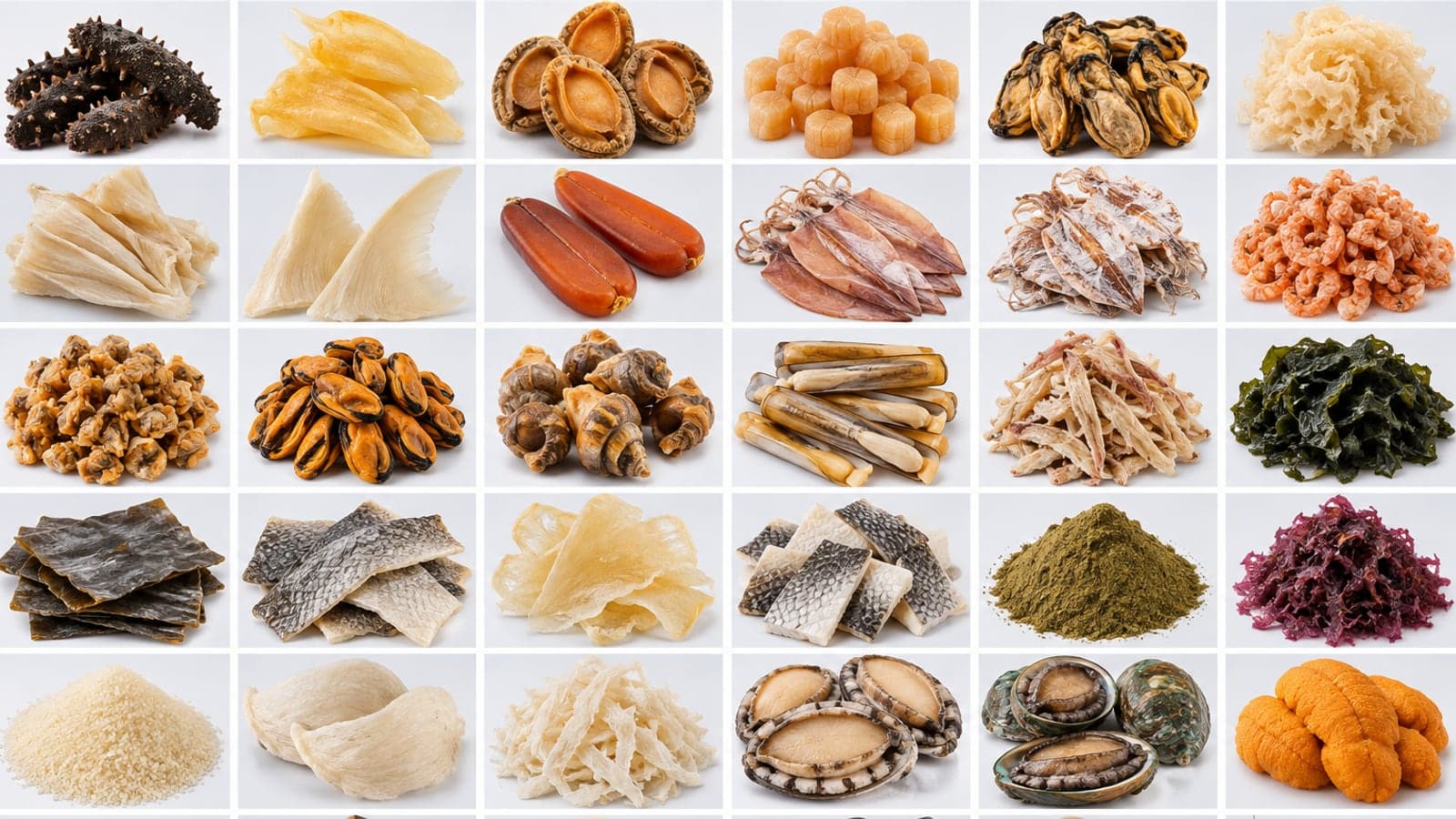
A seaweed offer is only comparable when it states the species, growing area and harvest season, the form, such as full sheets, cut leaf, flakes or whole dried plants, the processing, whether raw, roasted, salted or ash-dried, and the limits for moisture and foreign matter like shell, sand and other algae. Dried seaweed takes up moisture from the air, and roasted laver turns limp within minutes once a pack is open, so sealed, desiccated packs and a dry store matter; our guide to storing dried seafood applies equally to seaweed.
Rules for seaweed differ from one market to the next. Limits for heavy metals and iodine vary by destination, with iodine mattering most for brown seaweeds such as kelp and wakame, as our kombu guide explains; hijiki faces the specific checks described above; and in the EU, a seaweed species not eaten to a significant degree there before May 1997 is treated as a novel food that needs authorization. Our guide to importing dried seafood covers the document side. For a seaweed program built around a particular dish or product, share the species, form and pack you need.
This guide is general trade information, not legal or regulatory advice. Requirements differ by market and change over time; confirm current rules with your customs broker or competent authority before ordering.