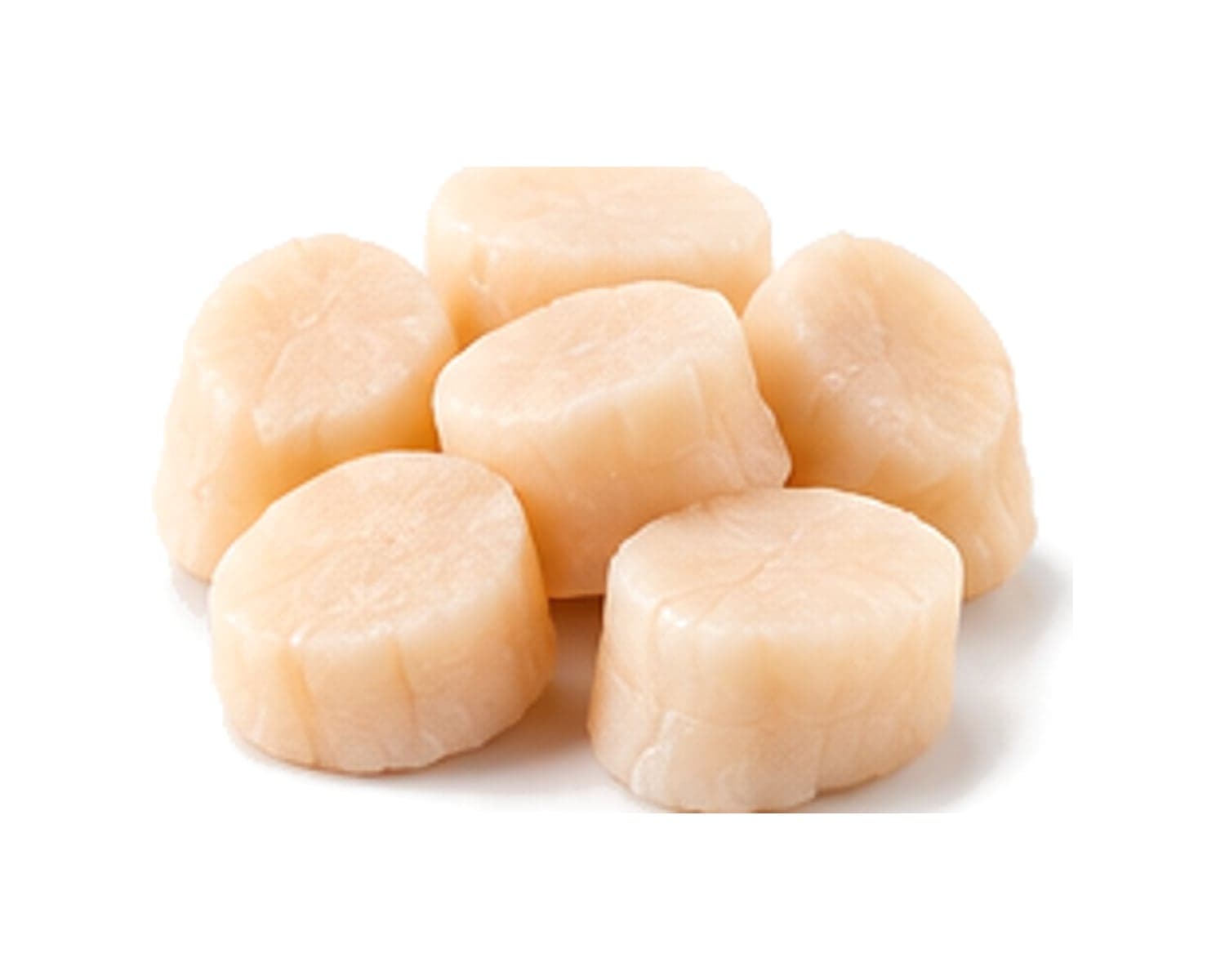
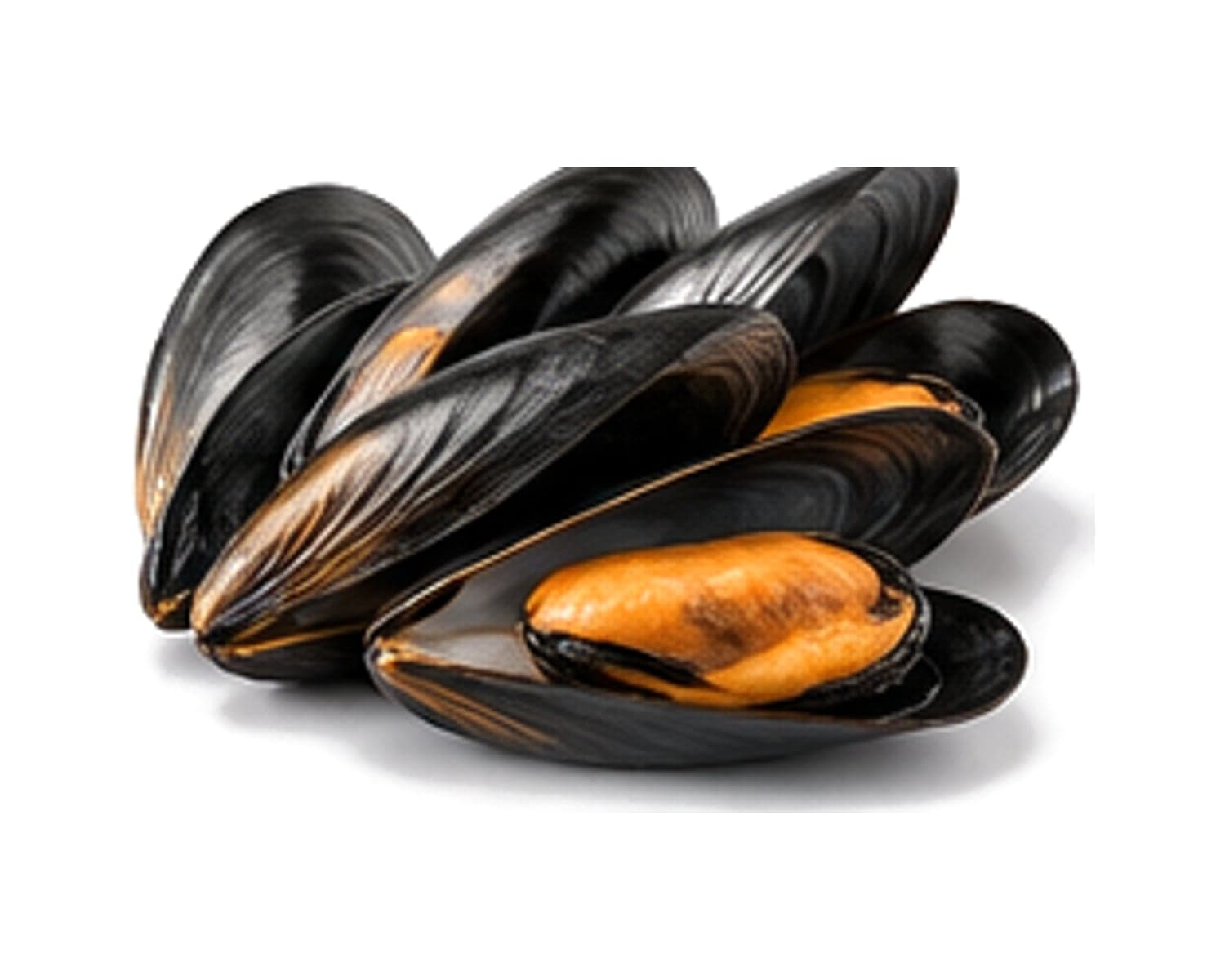
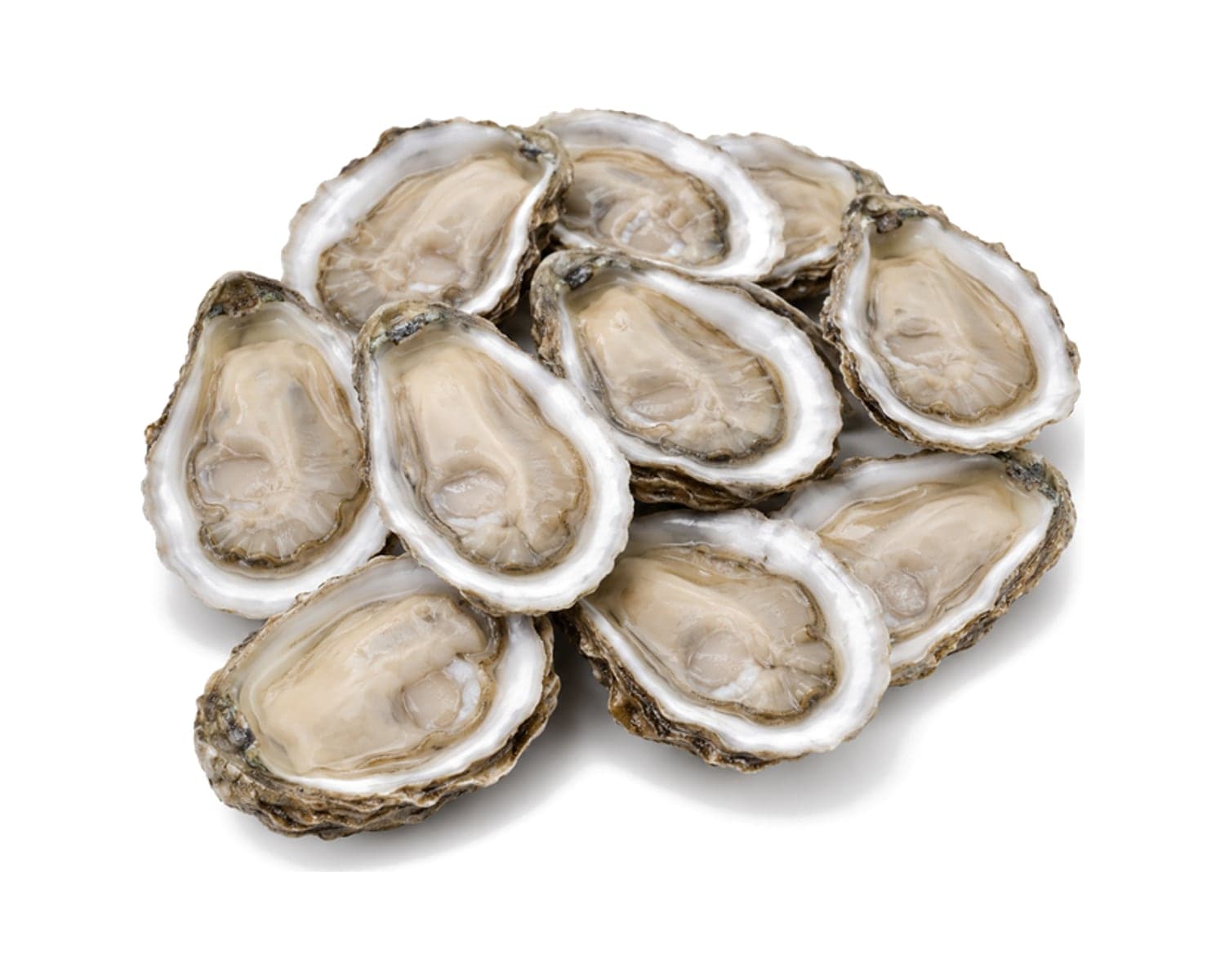
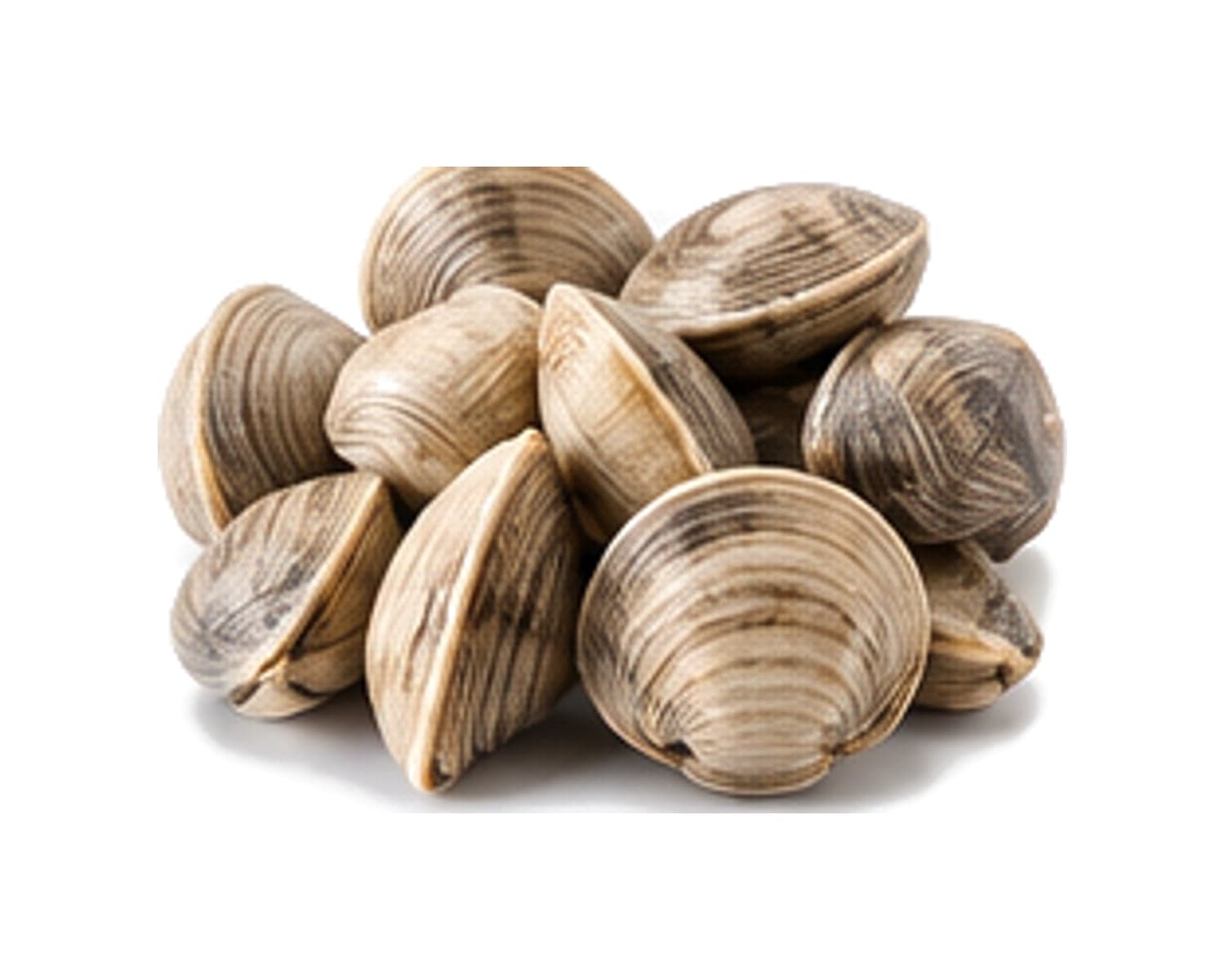
A carton labeled scallops might hold dry-packed adductor meat, phosphate-treated meat or roe-on half-shells. Mussels arrive whole and cooked, on the half-shell or as loose meat, while clams and oysters can be raw or cooked, in the shell or out of it. Each format has its own grading basis and food-safety profile, so an offer that leaves them vague cannot be compared fairly with the next.
This guide works through the main formats for scallops, mussels, oysters and clams, with brief notes on surf clam and whelk. It covers freezing methods, glaze, treated scallop meat, count grading, raw and cooked handling and the harvest records every bivalve lot needs, ending with a specification checklist. Species and current formats for each line appear on our frozen and chilled shellfish overview.
Key takeaways
- Pin down species, format, raw or cooked status and roe-on or roe-off before comparing prices.
- Insist on net weight quoted without glaze, and deglaze a sample from every delivery.
- Treated scallop meat must be declared; verify dry-pack claims through paperwork, appearance and a sear test.
- Grade on count measured after deglazing, and agree uniformity terms as well as the count band.
- Every bivalve lot should arrive with harvest-area, classification and test records linked to its lot code.
Formats by species
Scallops are traded mainly as adductor meat, the round muscle cut free of the shell, either roe-off or roe-on with the coral still attached. Half-shell scallops keep the meat, with or without roe, on one shell for grilling and baking, and some packers boil whole scallops in the shell. Japanese scallop (Mizuhopecten yessoensis), Atlantic sea scallop (Placopecten magellanicus) and Peruvian scallop (Argopecten purpuratus) are the familiar species; the frozen scallops page lists current origins and counts.
Mussels are normally cooked before freezing and sold as whole cooked mussels, loose or in vacuum packs that may hold juice or a sauce; as half-shell mussels, where green-lipped mussel (Perna canaliculus) is the usual choice; and as cooked meat. Oysters, chiefly the Pacific oyster (Magallana gigas), are frozen raw on the half-shell or shucked as meat. Clams come whole, on the half-shell or as meat, raw or cooked.
Arctic surf clam (Mactromeris polynyma) is cooked and frozen as tongues for sushi, and Atlantic surf clam becomes strips and chowder meat. Whelk is usually boiled, shelled and frozen as meat with the operculum removed, or frozen whole.
| Product | Main frozen formats | Usual grading basis | Typical uses |
|---|---|---|---|
| Scallops | Meat roe-off or roe-on; half-shell; whole boiled | Count per lb, or pieces per kg | Searing, gratins, stir-fries; raw use only from designated lots |
| Mussels | Whole cooked, loose or vacuum-packed; half-shell; cooked meat | Pieces per kg in shell; meat count per kg | Moules, paella, pasta, ready meals |
| Oysters | Raw half-shell; raw meat, IQF or block | Pieces per kg or size band; meat count per kg | Grilled and baked oysters, frying, omelettes, soups |
| Clams | Whole raw or cooked; half-shell; raw or cooked meat | Pieces per kg in shell; meat count per kg | Pasta, broths, chowder, baked half-shell dishes |
| Surf clam | Cooked tongues, whole or sliced; strips and meat | Pieces per kg; slices per tray | Sushi toppings, fried strips, chowder |
| Whelk | Cooked meat, IQF or block; whole cooked in shell | Pieces per kg in agreed bands | Dressed salads, hot pot, seafood platters |
IQF, block and glaze: what you are paying for
IQF (individually quick frozen) product is frozen piece by piece, so a kitchen can take out one portion and return the bag to the freezer. The pieces are then dipped in or sprayed with water to form a thin coat of ice, the glaze, that shields them from drying and oxidation in storage. Block-frozen product is frozen as a solid slab, often with water filling the gaps; it suits processors who thaw a whole block at once but is awkward for foodservice. Interleaved blocks, often called shatter packs, break apart in layers.
Glaze is ice, and it should never be invoiced as shellfish. In many markets, the EU and the United States among them, the declared net weight of glazed seafood has to exclude the glaze. Ask each supplier to state the glaze percentage and quote net weight, then check on arrival by deglazing a sample: weigh it frozen, rinse it under a gentle spray of cold water until the ice has gone, drain briefly and weigh again. Too little glaze invites freezer burn, seen as dry, pale, spongy patches; too much means paying shellfish prices for water.
Where a vacuum pack contains cooking juice or sauce, agree in writing whether the stated weight covers the whole contents or the shellfish alone, since conventions differ between markets.
Dry versus treated scallop meat
Scallop meat is sold either dry, with no water or moisture-retaining agent added, or treated, which the trade often calls wet. Treated meat has been soaked in a solution, commonly based on phosphates, that makes it hold extra water, so it weighs more, looks whiter, releases liquid in the pan and browns poorly. Where a destination permits the treatment, it must be declared under that market’s labeling rules, and some destinations also expect added water to be named on the label, among the ingredients or in the product name itself.
Buyers weigh several signals together:
- Paperwork: the specification, ingredient list and invoice should name the treatment, or state plainly that the meat is untreated.
- Appearance: untreated meat usually shows a natural ivory, beige or slightly pink tone that varies piece to piece; treated meat often looks bright white, glossy and very even.
- Drip and cooking: heavy, milky drip during thawing and meat that steams instead of searing both point to added water.
- Laboratory checks: moisture and phosphate analysis can settle a doubt, read against the natural range for the species and season.
Count and size grading
Atlantic and South American scallop meat is usually graded by count per pound: a 20/30 lot holds twenty to thirty meats per pound, and U/10 means under ten. Japanese packers more often use pieces per kilogram under their own letter codes. Half-shell and in-shell items are sold by pieces per kilogram, shucked meat in count bands per kilogram, and whelk and surf clam in bands agreed with each buyer.
Three habits prevent most count disputes. Agree that count is measured on deglazed net weight, because counting a pound of glazed product makes the pieces seem larger than they are. Convert offers to one unit before comparing them. And agree how uniformity will be judged, since a lot can meet its average count while mixing very large and very small pieces. Bigger meats, with low count numbers, earn their price in plated dishes; smaller meats in the higher count bands usually suit fillings, sauces and processing better.
Raw or cooked: handling and food-safety differences
Whether a lot is raw or cooked decides how it is labeled, stored and used, so the offer and every carton should say which. Raw shellfish is handled as a raw protein: it needs full cooking by the end user unless the packer has designated the lot for raw consumption, and it must be kept apart from ready-to-eat food. Cooked lines such as mussels, clam meat, whelk and sushi surf clam are often only reheated or served cold, with no later cooking step to fall back on.
For cooked product, the emphasis shifts to hygiene after cooking and to cold-chain discipline. Some markets apply stricter microbiological criteria to ready-to-eat seafood, and Listeria monocytogenes can grow slowly even at chiller temperatures once a pack is thawed. Two hazards apply to both forms: ordinary cooking does not break down marine biotoxins, and freezing cannot be relied on to eliminate norovirus. Neither format replaces clean, monitored harvest waters, a point that matters most for frozen oysters on the half-shell.
Harvest areas, biotoxins and lot records
Bivalves feed by filtering seawater, so they can concentrate algal toxins, bacteria and viruses from the water around them. Countries that export bivalves generally run national shellfish sanitation and monitoring programs through a competent authority: harvest areas are classified through microbiological monitoring of the growing water or of the shellfish themselves, may require depuration or relaying, and are monitored for the paralytic, amnesic and diarrhetic toxin groups, with closures when results exceed set limits. Some importing markets accept bivalve products only from countries whose shellfish controls they have formally recognized.
Program details differ between countries and change over time, so check current conditions for your origin and product with the destination authority or your customs broker. In any market, ask for records that tie each carton to its harvest:
- The harvest or growing area, its classification on the harvest date, and the date itself
- Whether depuration or relaying was carried out, where the classification calls for it
- Biotoxin and microbiological results bearing the same lot code as the cartons
- The official sanitary or health certificate issued for the destination market
For scallops, whole, half-shell and roe-on product deserves the closest attention, because toxins gather in the viscera and roe more than in the adductor muscle. Our export quality assurance page explains how test reports are matched to lot codes.
Thawing and handling for foodservice
Thaw frozen shellfish in the chiller, ideally overnight, covered or on a perforated tray over a drip pan so the meat does not sit in its own liquid. When time is short, sealed packs can be thawed under cold running water, provided the water cannot reach the product. Never thaw at room temperature or in warm water, and keep thawed stock out of the freezer.
- Scallop meat: drain and pat dry before searing, as surface water prevents browning.
- Cooked whole mussels and clams: heat only until piping hot, since a second full cook toughens the meat; where the packer allows, vacuum packs can go straight from frozen into the pan.
- Half-shell items: many can be grilled or baked from frozen or after a short thaw, following the pack instructions.
- Oyster meat: drain and dry it before battering so the coating holds.
- Ready-to-eat lines such as sliced surf clam: keep chilled once thawed and use within the packer’s stated time.
At receiving, check product temperature, seal integrity and signs of thawing and refreezing, such as clumped IQF pieces or heavy frost inside the bag, and record lot codes so any complaint can be traced to its harvest.
A specification checklist for frozen shellfish
Before confirming an order, make sure the written specification covers each point below; it then becomes the reference for arrival inspection and any claim.
- Species by scientific name, country of origin and harvest or growing area
- Format: meat, half-shell or whole; roe-on or roe-off for scallops; IQF, block or vacuum pack
- Raw or cooked, and whether the lot is designated for raw consumption or for cooking only
- Size basis (count per lb or kg, or pieces per kg) with tolerance and uniformity terms
- Glaze percentage, with net weight quoted excluding glaze
- Treatment status: dry, or phosphate and added water declared
- Defect limits for sand, shell fragments, broken pieces, residual byssus or operculum
- Biotoxin and microbiological testing panel set to your market’s limits
- Pack size, labeling, allergen statement and lot coding
- Shelf life, storage temperature and the full document set
A small trial order checked against this list shows how a packer performs before you commit volume. Market access and the wider document set are covered in our guide to importing dried seafood, much of which applies to frozen lines as well.
This guide is general trade information, not legal or regulatory advice. Requirements differ by market and change over time; confirm current rules with your customs broker or competent authority before ordering.