Frozen shrimp is traded in large volumes against tight specifications, and many disputes between buyer and packer come down to three numbers on the carton: count, glaze and net weight. A carton marked 16/20 holds very different shrimp depending on whether the count is per pound or per kilogram, and an offer priced on gross weight delivers less shrimp once the protective ice is removed. Neither is necessarily bad faith, but both cost money when the specification leaves them open.
This guide covers species and product forms, count notation, glazing and net weight, IQF and block formats, defects and treatment declarations, then sets out a specification sheet and an arrival routine. BSA sources large shrimp and prawns to a written brief rather than from stock, and the same framework applies to any supplier’s offer.
Key takeaways
- State every count with its unit and form: 16/20 per pound and 16/20 per kilogram are very different shrimp.
- Price offers on net weight after deglazing, and ask how the glaze percentage is calculated.
- Use IQF for portioning and block-frozen for processing, and verify net weight as each format requires.
- Agree written defect allowances and a declaration of every treatment used, including a nil declaration.
- Inspect every lot with the same deglazing, counting and cooking routine, recorded against the lot code.
Species, origin and production method
Names such as prawn, tiger or king shrimp vary between markets, so the scientific name and production method belong on every offer. Three species account for much of the trade in larger sizes:
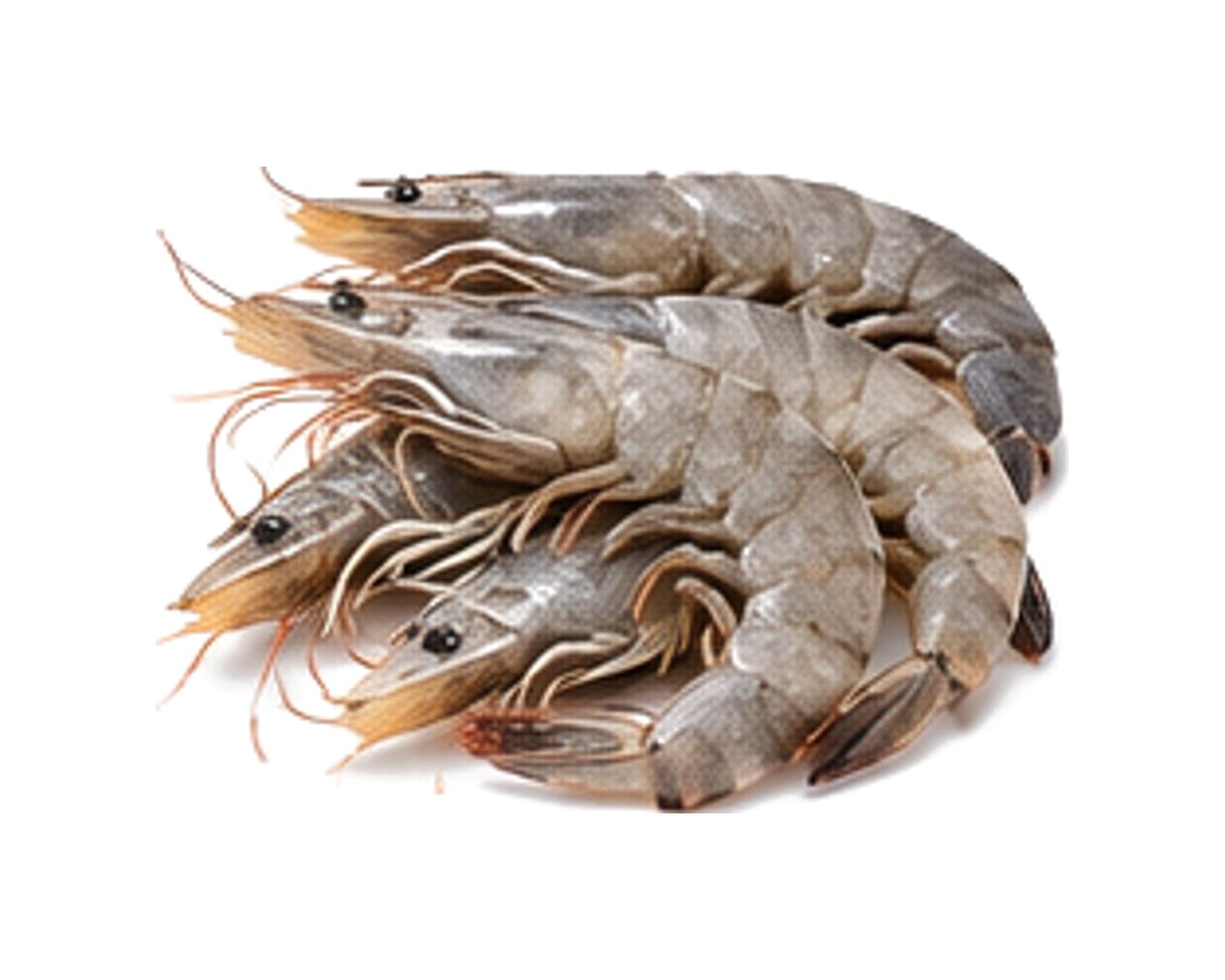
- Whiteleg shrimp (Penaeus vannamei, often listed as Litopenaeus vannamei): the most widely farmed species, raised across Latin America and Asia and offered in almost every cut and size with fairly steady availability.
- Black tiger shrimp (Penaeus monodon): mostly farmed in South and Southeast Asia, with some wild catch. It grows very large, and its banded shell suits head-on and shell-on presentation.
- Argentine red shrimp (Pleoticus muelleri): wild-caught in the South-West Atlantic, red even when raw and often frozen on board. It cooks faster than most farmed shrimp, which kitchens should be told.
For wild shrimp, ask about the fishing area, whether it was frozen at sea or ashore, and which catch documents the destination expects. For farmed shrimp, ask about the farm region, harvest handling and residue testing for veterinary drugs against the destination’s limits.
Product forms, from HOSO to nobashi
The cut changes count, yield and price, so an offer is incomplete until the form is stated next to the size.
- HOSO (head-on, shell-on): the whole shrimp, for grilling and display. The head is heavy and usually darkens first, so head-on lots need fast freezing.
- HLSO (headless, shell-on): the traditional base for further processing and shell-on dishes.
- PUD (peeled, undeveined): vein left in, a lower-cost form for fillings and chopped preparations.
- PD (peeled and deveined): vein removed, usually through a cut along the back. PDTO keeps the tail fan and last shell segment for cocktails and fried dishes.
- Nobashi: peeled, deveined, tail-on shrimp scored and pressed to stay long and straight when fried, packed in trays by piece count for tempura.
- Cooked: any of these, cooked and then frozen. Many markets treat cooked shrimp as ready-to-eat, with stricter microbiological expectations, and the specification must say whether the count applies before or after cooking.
Count size: reading the numbers
A shrimp count tells you how many pieces make up one unit of weight, so the smaller the number, the bigger the shrimp: 16/20 means 16 to 20 pieces per unit, and U/10 (or U10) means fewer than 10. North American trade usually counts headless and peeled shrimp per pound, while head-on shrimp and much of the European and Asian trade use pieces per kilogram.
The unit changes the product. A 16/20 count per pound means roughly 23–28 g per piece; 16/20 per kilogram means roughly 50–63 g, more than twice the size. Since one pound is about 0.4536 kg, 16/20 per pound equals about 35–44 pieces per kilogram. The risk lies in the abbreviation, not the math, so the unit must appear beside every count on the offer, contract, carton and invoice.
Count also depends on form. Removing the head and shell takes weight from each piece, so head-on and peeled counts cannot be compared, and the head-on grade letters used for Argentine red shrimp should be translated into pieces per kilogram. A count range is also an average, which a carton can meet by mixing large and small pieces. Buyers who need even sizing add a uniformity requirement, such as a maximum weight difference between the largest and smallest pieces in a sample.
Glazing, net weight and gross weight
Glazing is a thin coat of ice applied by dipping or spraying frozen shrimp with chilled water. It seals the surface against air and slows dehydration and oxidation in cold storage, so a correct glaze is good practice, not a trick. The trouble starts when water is sold at the price of shrimp.
Gross or glazed weight is shrimp plus ice; net weight is the shrimp alone after the glaze is removed. Many markets require the label’s net weight to exclude glaze, but invoices and price lists do not always follow suit. Packers also calculate the glaze percentage differently, some as a share of glazed weight and others relative to net weight. Ask which basis applies, buy per kilogram of net product, and check that carton net weight matches the invoice. Overglazing is a common source of weight disputes, and the answer is a deglazing check on arrival, described below.
IQF or block frozen
IQF (individually quick frozen) shrimp is frozen piece by piece, glazed and packed loose in bags. Kitchens take out only what they need, but loose pieces depend on the glaze for protection and suffer quickly if bags are left open or the cold chain wavers. Pieces fused into clumps can point to partial thawing and refreezing somewhere in the cold chain.
Block-frozen shrimp is frozen in a carton filled with water. The ice protects the shrimp well through long storage, and the format suits processors and repackers who use a whole block at once. The declared net weight refers to the shrimp, so checking it means thawing a block completely, draining it and weighing what remains.
Quality defects and treatment declarations
Condition decides whether shrimp can be sold at the price its size commands. Agree written allowances for each defect before ordering, expressed as a share of pieces or weight in a sample.
- Black spot (melanosis): darkening of the head, shell joints and tail from a natural enzyme reaction that starts soon after harvest. Not in itself a safety hazard, it still cuts value sharply in shell-on product.
- Broken pieces: shrimp missing segments or split during peeling, which belong in a separate, cheaper grade.
- Soft shell: thin, papery shells on recently molted shrimp that peel poorly and damage easily.
- Dehydration and freezer burn: dry, chalky white patches caused by moisture loss when glaze fails or temperatures swing; cooking cannot reverse it.
- Other points: loose heads in head-on packs, residual shell or vein in peeled product, discoloration, foreign matter and off or ammonia-like odors after thawing.
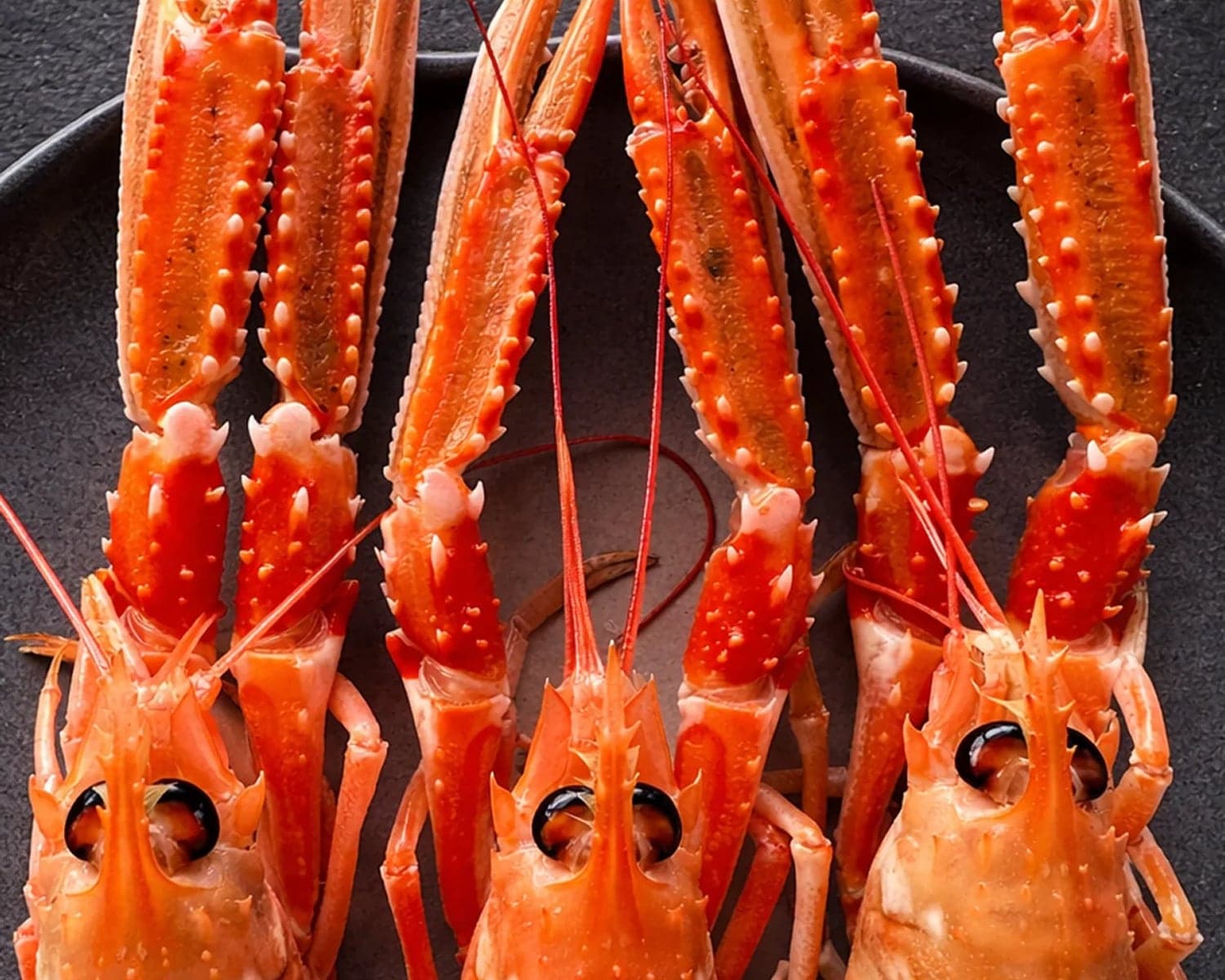
Treatments are legitimate when disclosed. Sulfites are a long-established defense against black spot, particularly on wild shrimp, and many markets require labeling once residues pass a set level. 4-hexylresorcinol is an alternative whose approval and conditions of use differ between markets. Phosphates and other moisture-retaining agents help peeled shrimp hold water; rules range from conditional use to restriction, and any use should be disclosed because excess water is paid for at shrimp prices. Ask for a written statement for each lot, including a nil declaration where nothing was used, and confirm current rules with the destination’s food authority or your customs broker. Langoustine and other crustaceans are often given similar treatments, so one declaration format can serve a whole frozen range.
The specification sheet: fields to insist on
A complete specification makes every point above checkable. A supplier who cannot fill in these fields before confirmation is telling you something.
| Field | What it should state | Why it matters |
|---|---|---|
| Species and production | Scientific name; wild or farmed; country and fishing area or farm region | Eligibility, documents and price follow species and origin |
| Form | HOSO, HLSO, PUD, PD, PDTO or nobashi; raw or cooked | Count, yield and hygiene expectations depend on it |
| Count | Range with its unit, on net weight; uniformity where needed | The same numbers mean different shrimp on another unit |
| Freezing | IQF or block; frozen at sea or ashore | Sets handling and the net weight check |
| Glaze | Percentage and its calculation basis | Shows how much of the gross weight is ice |
| Net weight | Per inner pack and master carton, excluding glaze | The quantity paid for and verified |
| Treatments | Each agent used, or a nil declaration | Labeling and market access depend on it |
| Defect allowances | Maximum black spot, broken pieces, soft shell and dehydration | A written standard for inspection |
| Packing and labels | Inner and master format, label content, lot code | Traceability and a basis for claims |
| Storage and documents | Temperature, shelf life, certificates and test reports | Fewer clearance delays |
For shrimp sourced to brief, as BSA’s large sizes are, this sheet is the brief: send it with a quote request and the offer comes back on the terms you will inspect against.
Checking a shipment on arrival
Agree the method in the contract, apply it the same way to every lot, sample cartons from several pallets and record results against the lot code.
- Review the container’s temperature record or logger and probe core temperatures at several positions in the load.
- Check cartons for crushing or damp, and bags for heavy frost or fused IQF pieces.
- Match labels to the invoice and packing list: species, form, count and unit, net weight, glaze and lot code.
- Weigh a frozen sample, rinse it in a sieve under a gentle cold-water spray until the surface feels rough rather than glassy, without thawing the shrimp, then drain for a fixed time and weigh again.
- Count the deglazed pieces: pieces divided by net kilograms gives the count per kilogram, and dividing that by 2.2046 gives the count per pound.
- For block-frozen packs, thaw a whole block, drain it, then weigh and count the shrimp.
- Score black spot, broken pieces, soft shells, dehydration, residual shell or vein, and odor.
- Cook a few pieces by a standard method and note texture, flavor, color and shrinkage.
- Photograph findings with lot codes visible and notify the supplier within the contract’s claim period.
If a result sits near a limit, test more cartons before drawing conclusions. The same deglazing routine suits crab and other glazed shellfish, as our king crab and snow crab guide explains, and our export quality assurance page describes the checks made before goods leave origin.
This guide is general trade information, not legal or regulatory advice. Requirements differ by market and change over time; confirm current rules with your customs broker or competent authority before ordering.