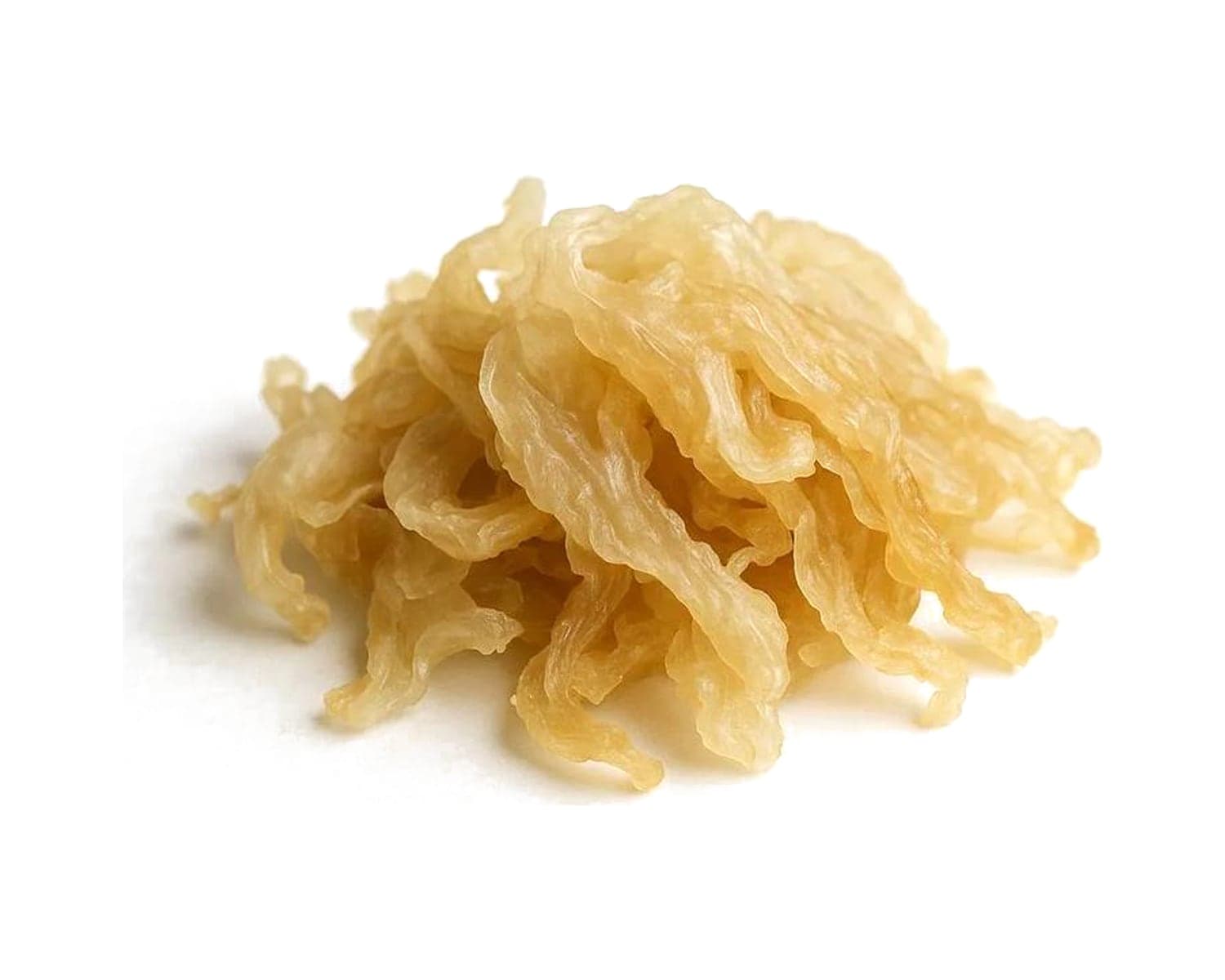
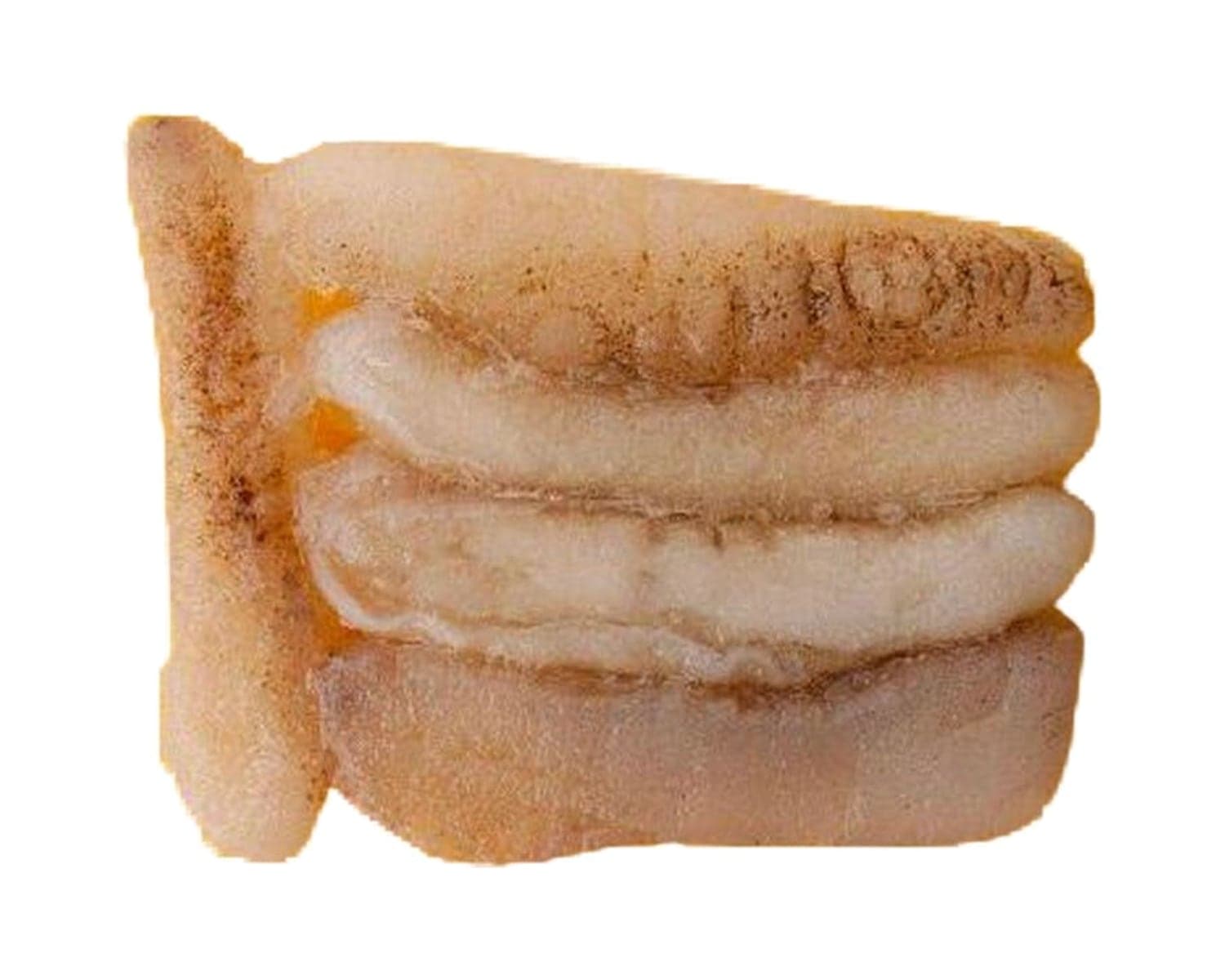
Edible jellyfish come from a small group of large, firm-bodied species in the order Rhizostomeae, and they are eaten for their crunch rather than their flavor. Fresh jellyfish spoil quickly, so nearly everything that reaches the trade has been cured with salt and alum into a dense, translucent product that keeps for months. Our edible jellyfish page covers the salted and ready-to-eat formats, parts and species we currently supply.
This profile explains which species are used and what they are called, where the fisheries are and why their catches swing so widely, how curing turns a jellyfish into a food, which parts and forms are sold, and how cooks across Asia serve it. Shipping documents for preserved seafood are covered separately in our guide to importing dried seafood.
Key takeaways
- Edible jellyfish are large rhizostome species, led by Rhopilema in China, Lobonemoides and its relatives in Southeast Asia and the cannonball jellyfish in the Americas.
- Fisheries are short and depend on blooms, so volumes and prices can swing sharply between years.
- Traditional salt-and-alum curing takes several weeks and leaves aluminum residues that some markets limit.
- Specify species, part, cut and curing style, and confirm the residue result against your market’s limit before shipment.
What edible jellyfish are
Jellyfish are not fish but cnidarians, relatives of corals and sea anemones. The edible kinds belong to the rhizostomes, the “root-mouth” jellyfish of the class Scyphozoa, and they differ from the familiar trailing-tentacle jellyfish in useful ways. A rhizostome has no long tentacles around the rim of its bell; instead it has eight thick, heavily branched oral arms beneath, which carry many small openings that take in plankton in place of a single central mouth. The bell itself is thick and comparatively rigid.
Size is what makes a fishery worthwhile. In Liaodong Bay, studies of the flame jellyfish, Rhopilema esculentum, record bells of about 25 to 45 cm across within two to three months of release and recaptured animals weighing roughly 1.5 to 2.5 kg, while the cannonball jellyfish of the Americas, Stomolophus meleagris, has a firm, dome-shaped bell up to about 25 cm across. Like other scyphozoans, these species spend part of their life as small polyps fixed to hard surfaces on the seabed, which release young medusae that grow quickly through a single season.
That life cycle explains the fisheries. When conditions favor the polyps, a coast can see enormous blooms, and in a poor year the same grounds may hold few jellyfish at all. Chinese cooks have used rhizostome jellyfish for more than 1,700 years, and demand across East and Southeast Asia now draws on wild blooms from the Yellow Sea to the Gulf of California.
Edible jellyfish species and their market names
Relatively few species are used as food, and a handful of them supply most of the trade. Cured product rarely shows the features that separate them, so the species name has to come from the processor’s records.
| Species | Common name | Main fishing areas | Trade notes |
|---|---|---|---|
| Rhopilema esculentum | Flame jellyfish | Chinese coast from the Yellow Sea to the South China Sea; Vietnam; Ariake Sea, Japan | Thought to be the Red or China type that China and Japan favor most; also stocked from hatcheries in Liaodong Bay |
| Rhopilema hispidum | Sand type | Southern China, Vietnam, Java; Ariake Sea, Japan | Named in the trade for the sand-like warts on its bell |
| Lobonemoides and Lobonema species | White type | Southeast Asia, from the Philippines and Vietnam to Myanmar | Bells often cut from the oral arms at sea and semi-dried for export |
| Nemopilema nomurai | Nomura’s jellyfish | East Asian seas | Very large; bloom catches have even become novelty foods in Japan |
| Stomolophus meleagris | Cannonball jellyfish, cabbagehead, jellyball | Southeastern United States, Gulf of Mexico, Pacific coast of Mexico and Central America | Trawled off Georgia and fished in Sonora, Mexico, for export to Asia |
In Chinese the product is 海蜇 (hǎizhé), with 海蜇皮 (hǎizhé pí) for the cured bell, sold as jellyfish skin, and 海蜇頭 (hǎizhé tóu) for the oral arms, sold as jellyfish head. Japanese menus use kurage and Korean menus haepari, both simply the word for jellyfish. In Georgia the cannonball is known locally as the jellyball.
Where edible jellyfish are fished
Most of the world’s catch comes from Asia. China is the largest producer, and Southeast Asian countries including Indonesia, Malaysia, Myanmar, the Philippines, Thailand and Vietnam have expanded their fisheries since the 1970s, driven by demand from China, Japan and Korea, which buy almost all of the region’s output. Processing starts soon after the catch is landed, because the animals begin to break down almost at once. Fishers use set nets, drift nets, small trawls and even hand-held hooks, and on some grounds only the bells are brought ashore.
China manages its flame jellyfish more actively than most. Experimental releases of hatchery-reared juveniles into Liaodong Bay began in 1984 and became large-scale from 2005, with releases in late May and June. The best catches come around mid-August, before the medusae mature in late August and September, and in some recent years the open season has lasted only a few days.
The Americas supply cannonball jellyfish. Off Georgia, trawlers catch it in a fishery that began experimentally in 1998 and now ranks among the state’s largest by weight. In Sonora, Mexico, it has become one of the state’s main fishery resources, with a short spring season and processing plants around Guaymas, Bahía de Kino and Puerto Peñasco. Most of this catch is cured and sold to Asian buyers, so the catch country and the packing country on a label may differ.
How edible jellyfish is cured
Fresh jellyfish is mostly water held in a gelatinous matrix, and curing exists to draw that water out and firm what remains. The traditional sequence varies by region but follows the same outline:
- The bell is cut from the oral arms, and the two parts are washed in seawater and scraped to remove the gonads and mucus.
- Any remaining tentacles and appendages are trimmed away.
- A mixture of salt and alum is sprinkled over the pieces, the brine that forms is drained, and the treatment is repeated with fresh mixture in stages.
- The pieces are stacked to drain, turned and gradually dried until they are dense, pliable and translucent.
- The cured jellyfish is graded and packed salted, or later desalted, cut and packed ready to eat.
From fresh animal to finished product the process takes several weeks, depending on the processor and the species. Alum lowers the pH and firms the tissue, giving the characteristic crisp bite, while salt pulls out water and preserves the product. Because alum contains aluminum, some markets limit aluminum residues in food, so buyers increasingly ask for residue results; our product page explains how they are confirmed for each lot.
Market forms and quality signs in edible jellyfish
Cured jellyfish is sold by part, cut and stage of preparation. Salted skin comes as whole sheets or shreds; salted head comes as chunky pieces; and ready-to-eat product has already been desalted, cut and often seasoned, so it goes straight onto the plate. Salted forms suit importers and processors who repack or season locally, while ready-to-eat packs suit restaurants and delis without time for soaking.
- Texture: after desalting, good jellyfish should snap and spring back when bitten, not tear softly or feel rubbery.
- Surface and smell: pieces should be clean and free of slime, with a neutral marine smell and no sour or ammonia notes.
- Cut and size: sheets, shreds or head pieces should match the agreed dimensions, with few broken fragments.
- Salt and residue: salt level and aluminum results should be stated for each lot, against the limits of the destination market.
Each lot should also name the species and catch country, because different species and curing styles give noticeably different thickness and crunch. A small trial lot is the surest way to compare them, and you can request a quotation for a trial lot.
How edible jellyfish is served
Jellyfish has very little taste of its own, so cooks treat it as a texture ingredient and season it boldly. In Chinese cooking it is served cold, cut into thin strips and dressed as a salad, a fixture of banquet cold platters, and it is also paired with shredded chicken. Japan and Korea are the other big consuming markets, where it is mostly served as a cold side dish or salad.
Southeast Asia, which exports most of its catch, has some local uses as well: the Melanau people of Sarawak in Malaysia make umai, a raw salad usually based on fish that is also made with jellyfish. In Japan, catches of Nomura’s jellyfish from large blooms have even been turned into novelty foods such as ice cream. On restaurant menus jellyfish usually shares the cold course with seaweed salads, and our kelp and kombu profile and edible seaweed page cover those partners, while our sea cucumber profile looks at another seafood valued mainly for texture.
This guide is general trade information, not legal or regulatory advice. Requirements differ by market and change over time; confirm current rules with your customs broker or competent authority before ordering.