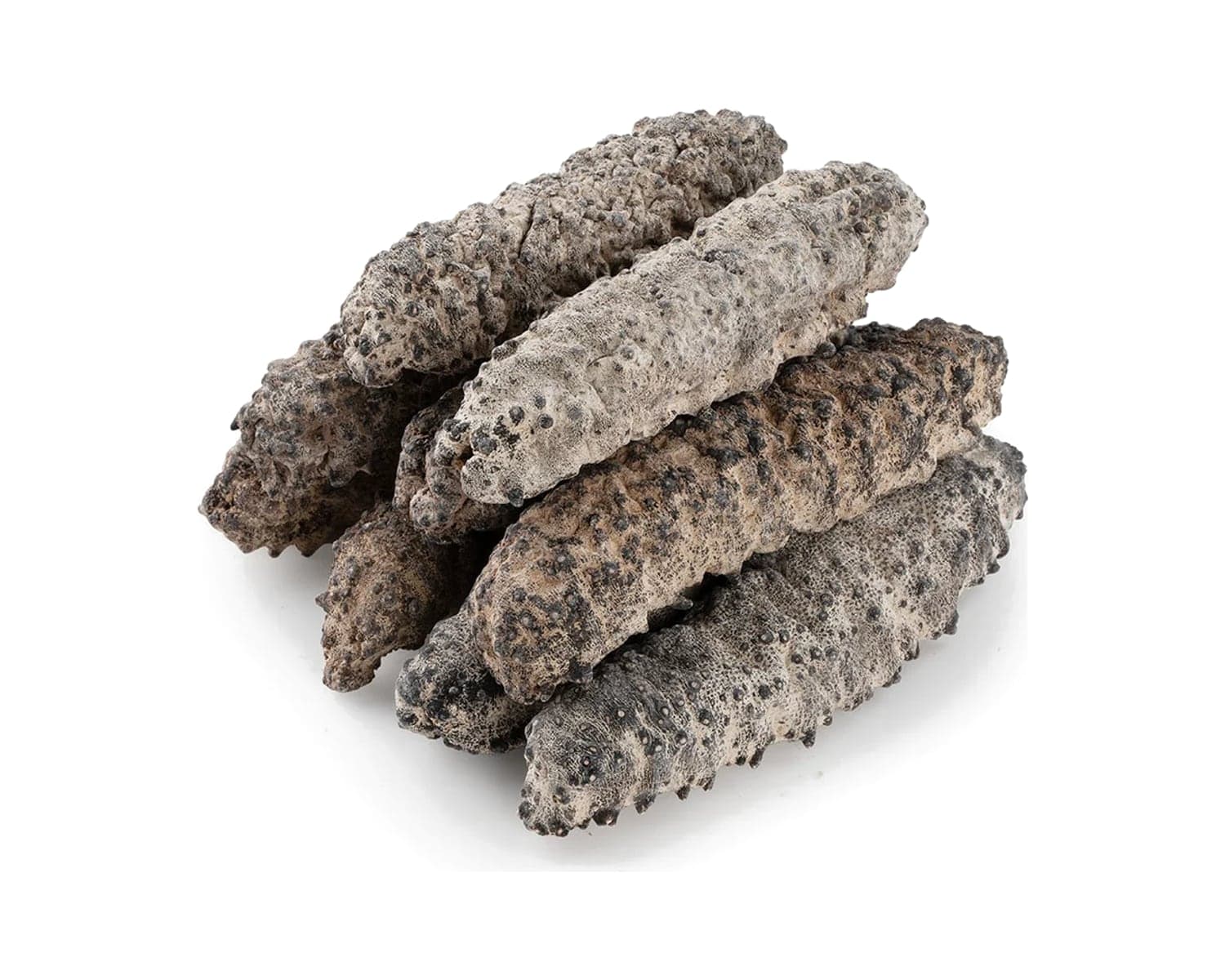
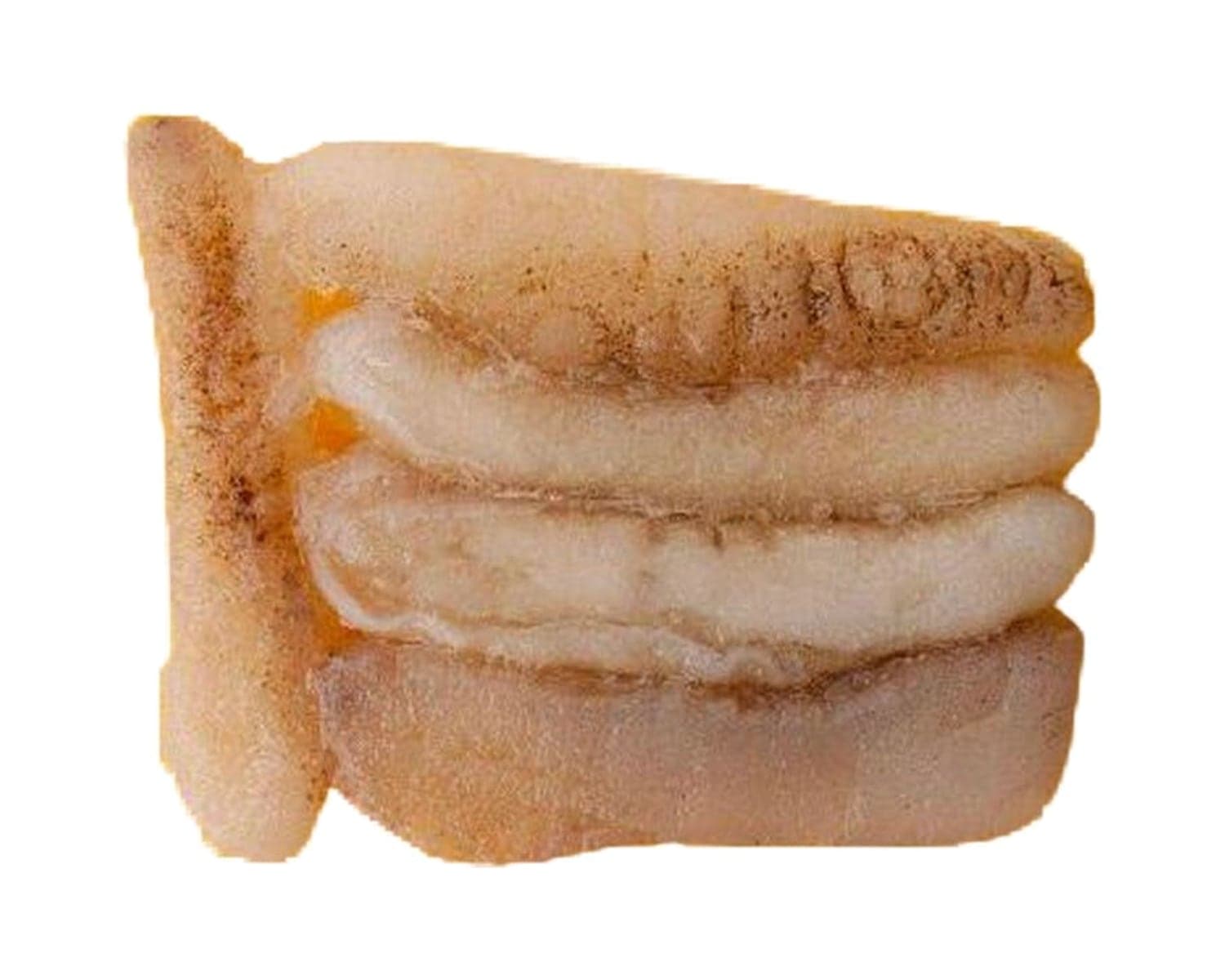
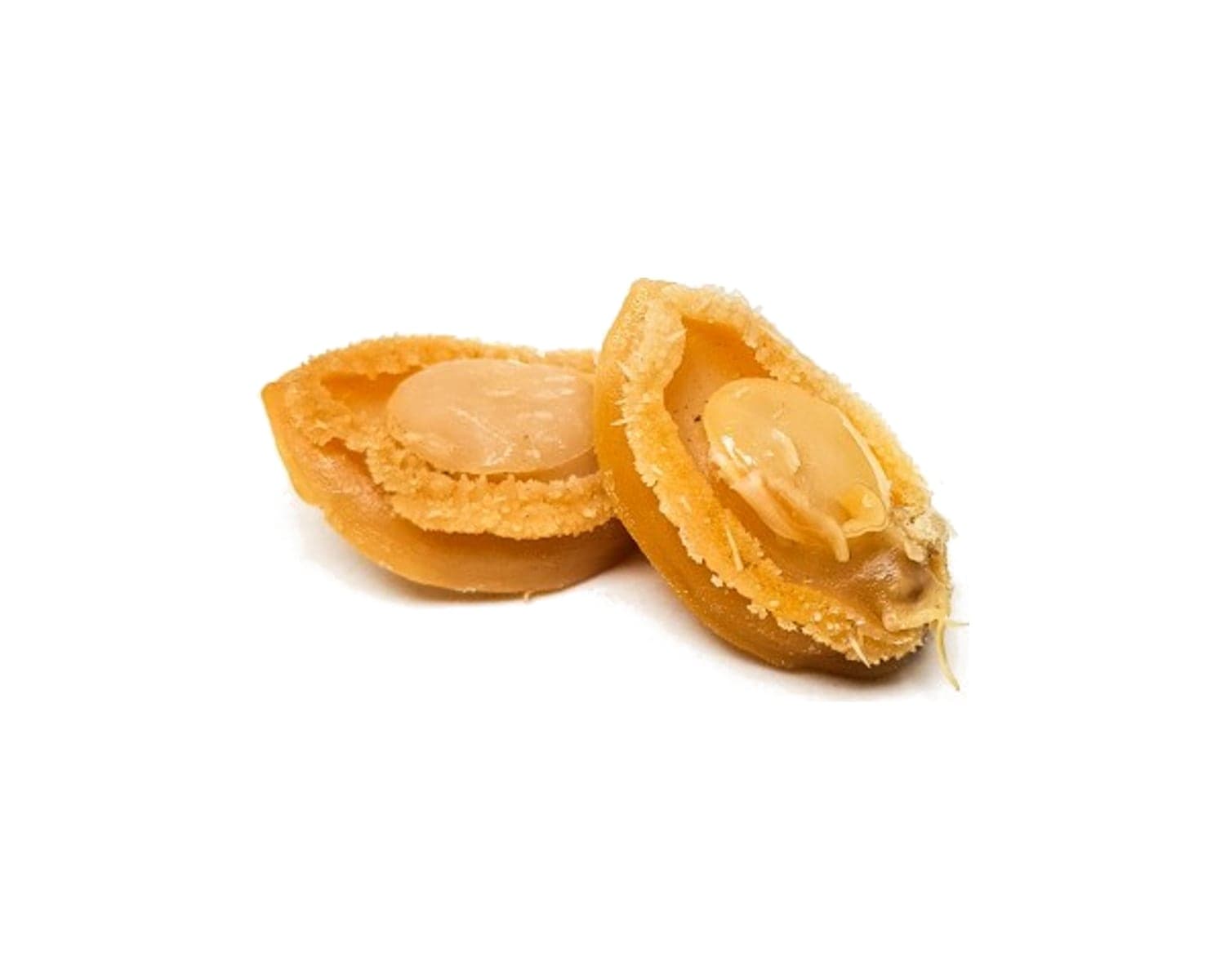
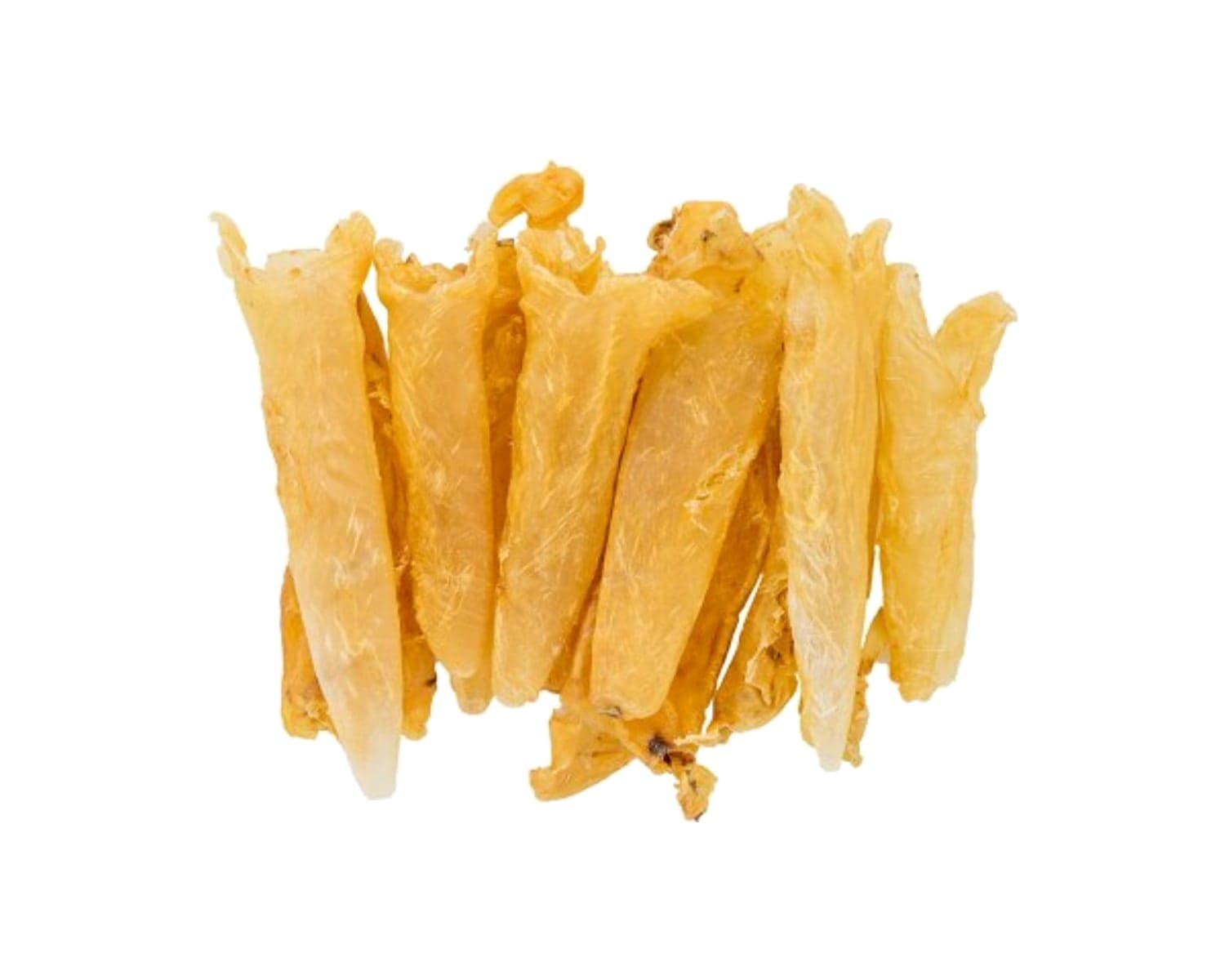
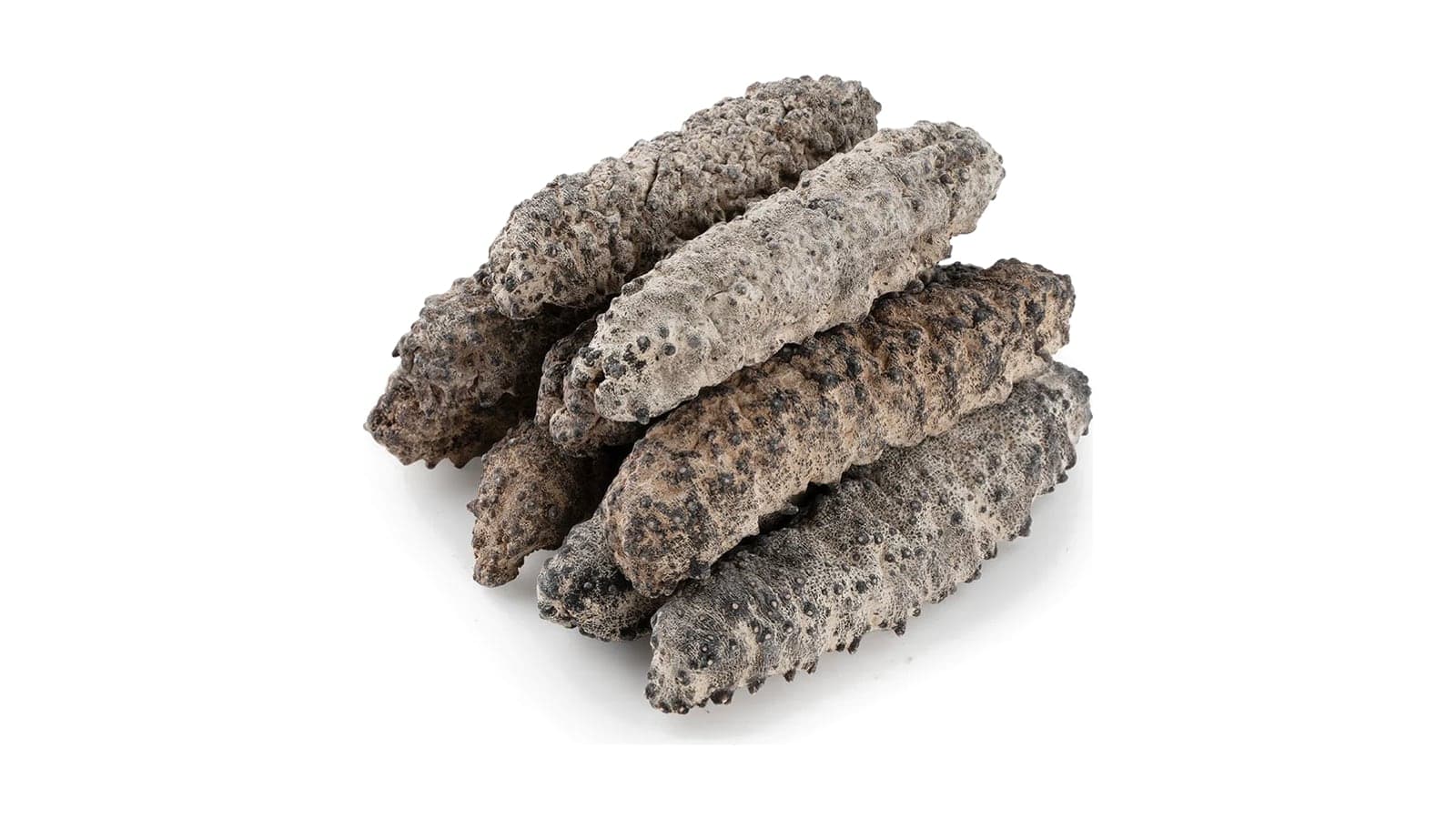
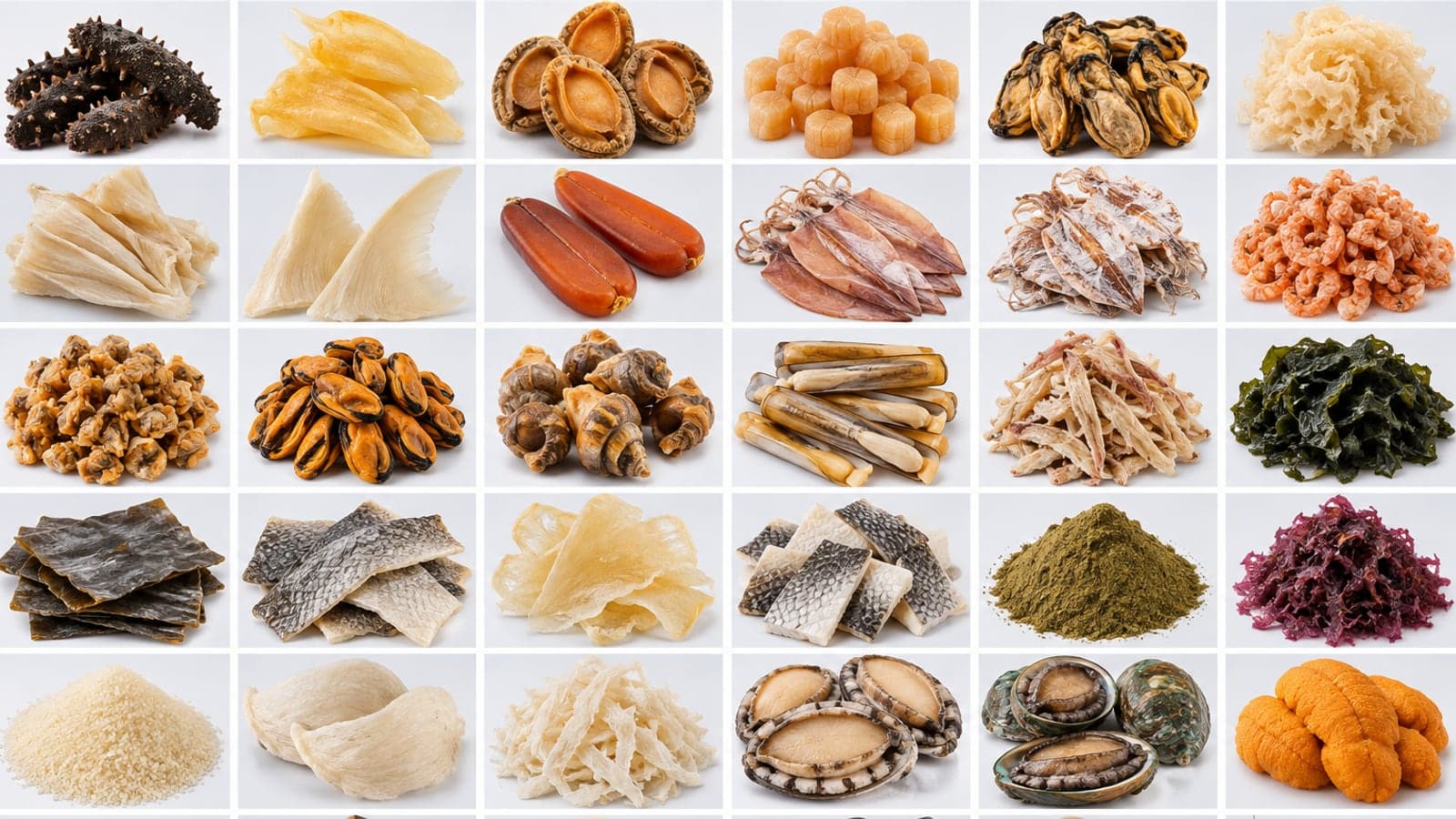
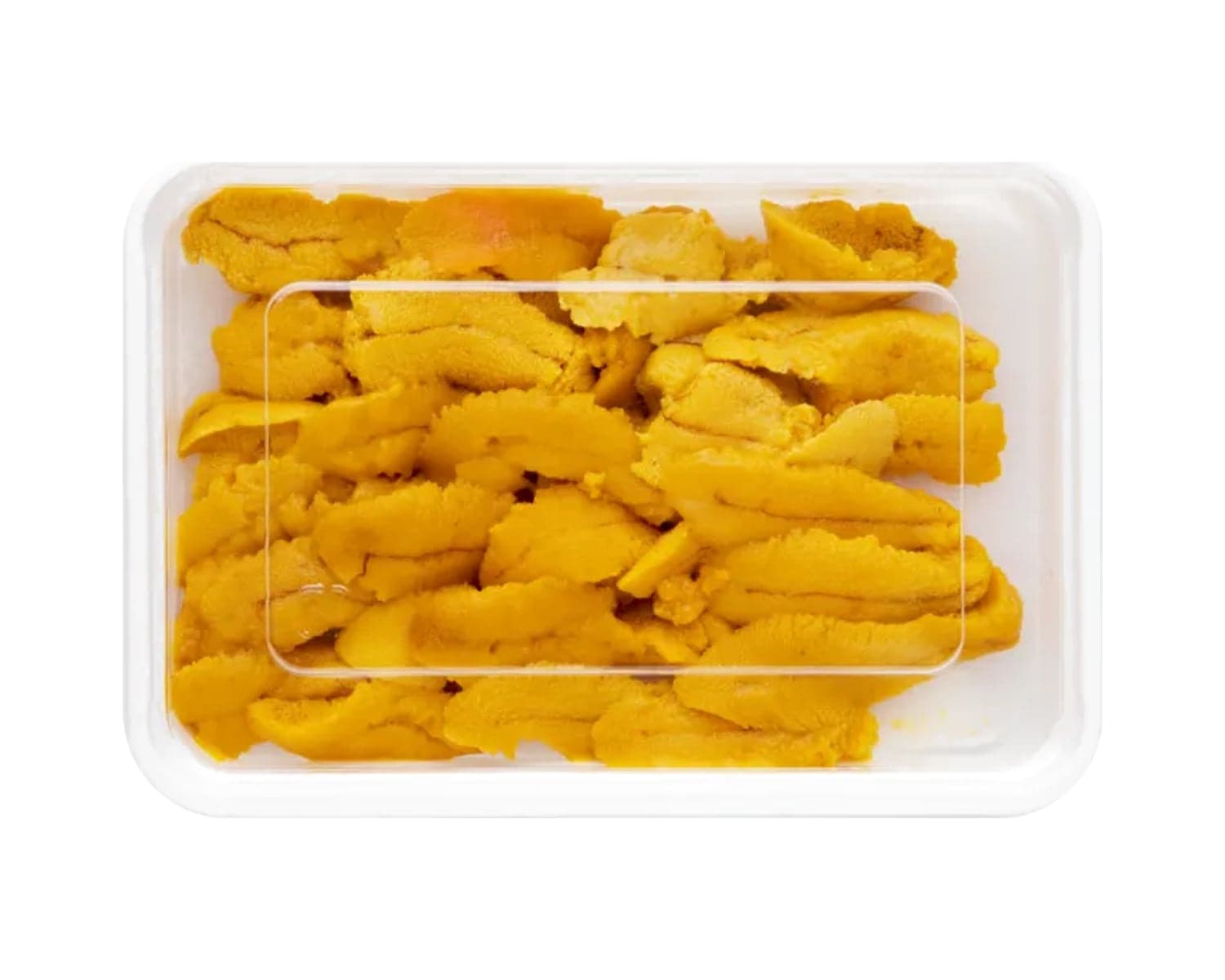
Sea cucumbers are echinoderms, soft-bodied relatives of sea urchins and starfish that live on the seabed in every ocean. The part people eat is the thick body wall, traded mostly dried as bêche-de-mer or trepang and also sold cooked and frozen. Our dried sea cucumber and frozen sea cucumber pages list the species, origins and counts we currently supply.
This profile looks at the animals: how they are built and how they feed, the names used in the main markets, which species are farmed and which are fished, the forms they are sold in and the dishes that use them, and the CITES listings that now cover several tropical species. Comparing dried lots by salt, moisture and soaking yield is a separate exercise, set out in our sea cucumber varieties and rehydration guide, and this article does not repeat it.
Key takeaways
- Sea cucumbers are seabed echinoderms; the edible body wall is connective tissue stiffened by ossicles whose shapes also identify the species.
- Japanese spiky sea cucumber and sandfish are the main farmed species, while Atlantic and most tropical supply is wild-caught.
- Teatfish and Thelenota species need CITES export permits in any form, golden sandfish joins them when its delayed listing takes effect, and listings change at each CITES conference.
- One trade name can cover several animals, so contract on the scientific name and test doubtful dried lots.
What a sea cucumber is
Sea cucumbers form the class Holothuroidea, with well over a thousand described species. They are most diverse in the Asia-Pacific region but range from tropical reef flats to the deepest ocean trenches, where they account for much of the animal life on the seafloor. A typical commercial animal is a leathery, sausage-shaped body some 10 to 30 cm long, with a mouth at one end ringed by tentacles and rows of tube feet along the underside.
The body wall is skin over a thick layer of connective tissue, stiffened by microscopic chalky plates called ossicles. Ossicle shapes differ from species to species, so specialists use them, alongside genetic tests, to identify animals that have lost their color and shape in processing. The FAO’s 2012 species catalogue describes about 60 sea cucumbers of commercial importance, a small share of the class.
- Feeding: most commercial species are deposit feeders, sweeping sand and mud into the mouth with short, shovel-like tentacles and digesting the film of detritus and microbes that coats the grains. A few, including the Atlantic Cucumaria frondosa, are suspension feeders that hold out branched tentacles to catch drifting particles.
- Defense: some tropical reef species shoot out sticky white threads, the Cuvierian tubules, to entangle predators, and many sea cucumbers can expel parts of the gut under stress and regrow them.
- Reproduction: most species release eggs and sperm into the water, and the free-swimming larvae drift in the plankton before settling, the stage hatcheries have learned to rear.
Sea cucumber names in Asian and Western markets
The animal has a long trading history across Asia and the Pacific, and the names reflect it:
- Chinese: 海參 (hǎishēn, written 海参 in simplified characters), the general term on menus and packaging.
- Japanese: namako (ナマコ); the trade also separates aka (red), ao (green) and kuro (black) namako, color forms of the spiky sea cucumber.
- Korean: haesam (해삼).
- Indonesian and Malay: trepang, the source of the old English word trepanging for the fishery.
- Bêche-de-mer: a French form, taken from Portuguese bicho do mar, long used in English for the dried product.
Cold-water sea cucumber species: spiky, Atlantic and Pacific
The Japanese spiky sea cucumber, Apostichopus japonicus, lives along the coasts of Japan, Korea, northern China and the Russian Far East, from the shore down to well over 100 m. It occurs in red, green and black forms: the red form is usually found on offshore gravel beds, and the green and black forms on sandy mud closer to shore. When summer water warms past roughly 20 to 25 °C, depending on the animal’s size and origin, it becomes dormant, a state called aestivation, and stops feeding and loses weight until the water cools.
Apostichopus japonicus is also the leading farmed sea cucumber. Chinese and Japanese researchers developed the hatchery methods, and northern China now grows it commercially in shallow coastal ponds and by sea ranching, releasing hatchery juveniles onto suitable seabed and harvesting them later. Wild spiky sea cucumber is still fished as well, in Japan’s Hokkaido among other places.
The orange-footed sea cucumber, Cucumaria frondosa, is one of the most abundant sea cucumbers in the North Atlantic, especially along the coast of eastern North America. It lives among rocks and seaweed, can reach about 50 cm, filters food from the water and is fished wild, then sold whole, split or cut. On the Pacific coast of North America, fisheries in Alaska and elsewhere take the California sea cucumber, now classed as Apostichopus californicus (formerly Parastichopus californicus), and sell the skins and the long internal muscle bands as separate products.
Tropical sea cucumbers: sandfish, teatfish and relatives
Sandfish, Holothuria scabra, ranges across the Indo-Pacific from East Africa eastward, mostly in water shallower than 10 m on inner reef flats, seagrass beds and muddy sand near mangroves. It averages about 22 cm, reaches 40 cm, and spends part of each day buried in the sediment. It is one of the few tropical species that hatcheries can produce reliably: Indian researchers first produced sandfish juveniles in a hatchery in 1988, and hatchery-reared animals are now grown out in ponds or released for sea ranching in several countries.
Most other tropical supply is wild, gathered by hand by small-scale fishers, often working from small boats. High-value species include golden sandfish (Holothuria lessoni), described scientifically only in 2009 and assessed as Endangered by the IUCN; white teatfish (Holothuria fuscogilva); the two black teatfish, Holothuria nobilis and Holothuria whitmaei, which were once treated as a single species; and prickly redfish (Thelenota ananas). Many producing countries have responded to overfishing with quotas, size limits, export licensing or multi-year closures, so the availability of tropical species can change abruptly.
Dried tropical product moves largely through Hong Kong, mainland China and Singapore, the main re-exporting hubs. For importers, that means the origin country on a document may differ from the place the product was last packed, and both may matter for permits.
Which sea cucumbers are CITES-listed
CITES, the convention that regulates international trade in listed wild species, has added sea cucumbers in stages, and its Conference of the Parties reviews the appendices every two to three years. The table shows the position as we understand it in late 2026.
| Species | Common name | CITES position | Practical effect |
|---|---|---|---|
| Holothuria fuscogilva | White teatfish | Appendix II, adopted 2019, in effect since 2020 | Export permit from the origin needed for every consignment |
| Holothuria nobilis, H. whitmaei | Black teatfish | Appendix II, adopted 2019, in effect since 2020 | Export permit needed; species must be declared precisely |
| Thelenota ananas, T. anax, T. rubralineata | Prickly redfish and relatives | Appendix II, adopted 2022, in effect since May 2024 | Export permit needed |
| Holothuria lessoni | Golden sandfish | Appendix II, adopted at the 2025 conference with an 18-month delay, so expected to apply from 2027 | Permits required once the listing takes effect; confirm the date |
| Six Actinopyga species | Redfish, blackfish and stonefish species | Appendix II listing proposed in 2025 and rejected | No CITES permit; national rules still apply |
| Apostichopus japonicus, Holothuria scabra, Cucumaria frondosa | Spiky sea cucumber, sandfish, Atlantic sea cucumber | Not listed | National quotas, closures and export licensing still apply |
An Appendix II listing does not ban trade. It means the exporting country’s management authority must issue a permit, after finding that the animals were legally obtained and that the export will not harm the wild population. The listing follows the species into every form, so frozen, salted and dried product all need the same paperwork, and some importing markets ask for their own import documents as well. Our frozen sea cucumber page explains how listed species are handled on an order.
How sea cucumber is sold and cooked
Sea cucumber has little flavor of its own. Cooks value it for texture, springy or gelatinous depending on species and preparation, and for the way it takes up the flavor of a rich braising liquid. The main market forms are:
- Dried whole: gutted, boiled and dried, still the bulk of the trade, and soaked over several days before cooking.
- Frozen ready-to-cook: boiled from fresh or rehydrated from dried, cleaned and frozen, so the kitchen only thaws and cooks.
- Fresh or live: eaten raw in Japan, where namako is sliced thin and dressed with vinegar as sunomono.
- Skins and muscle bands: separated from cold-water species, especially in the North Pacific, and sold as distinct products.
- By-products: Japanese konowata, salted and fermented sea cucumber intestine, and konoko, the ovaries, which are also dried into kuchiko, are small-volume delicacies in their own right.
In Chinese cooking the signature dish is braised sea cucumber with scallions, a Shandong classic, and other regional kitchens pair it with shiitake mushrooms, conpoy or winter melon, or set it beside dried abalone on banquet menus, as our abalone profile describes. Choosing the species is a texture decision: thick-walled spiky types hold their shape and bite in a braise, while thinner, softer species suit soups, hot pot and diced fillings. Its echinoderm cousin, the sea urchin, is covered in our sea urchin and uni profile.
This guide is general trade information, not legal or regulatory advice. Requirements differ by market and change over time; confirm current rules with your customs broker or competent authority before ordering.