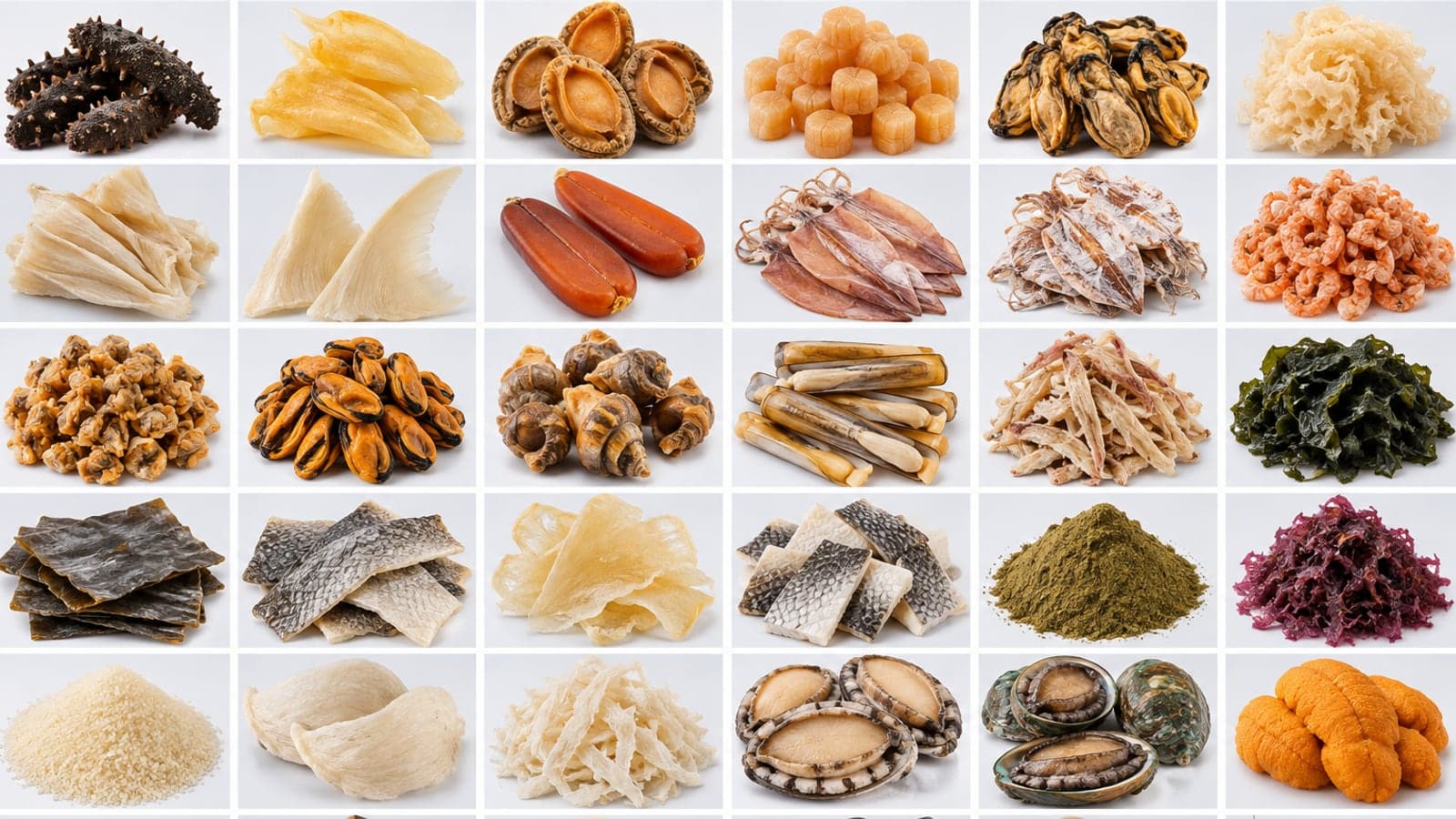
Collagen peptide, gelatin and fish-bone calcium plants all start from the same place: the skin, scales and frames left behind when fish are filleted. For the processor these by-products are the main raw material, and their condition on arrival sets the ceiling for extraction yield, color, odor and the paperwork that can follow the finished ingredient to market. Two containers sold as ‘tilapia skin’ can perform very differently if one was frozen within hours of filleting and the other sat warm on a collection floor.
This guide is for technical and purchasing teams at collagen, gelatin and ingredient companies, and the importers who supply them. It covers how the three by-products differ, how to declare species and habitat, the frozen, dried and salted forms in trade, the fields a specification should set, gel properties for finished gelatin, and the separation of food-grade and industrial streams. It deals with ingredient specification only: what a processor may say about its finished product is for that processor and its market’s rules to settle.
Key takeaways
- Buy skin, scales and bone under separate specifications: skin is limited mainly by fat and residue, scales and bone by their mineral fraction.
- Declare species by scientific name, farmed or wild status and freshwater or marine habitat on every lot, and keep each lot to one species.
- Set moisture, fat, ash, protein, freshness, foreign matter, microbiology and contaminant limits in the contract, naming the method and basis for each.
- Bloom, viscosity and melting behavior are properties of finished gelatin, shaped by the processor’s method as well as the raw material.
- Settle whether each stream is food-grade or industrial before booking, and keep the two chains physically and documentarily separate.
Skin, scales and bone: three different inputs
Each by-product stream brings a different balance of protein, fat and mineral, so processors usually buy them under separate specifications even when they come from the same plant and the same species.
- Skin is the most direct collagen source and carries little mineral. Its weak points are fat, residual flesh and leftover scales, which vary with species and trimming. It is the main feedstock for collagen peptides and fish gelatin; our fish collagen raw materials program covers the skin and scale streams we source.
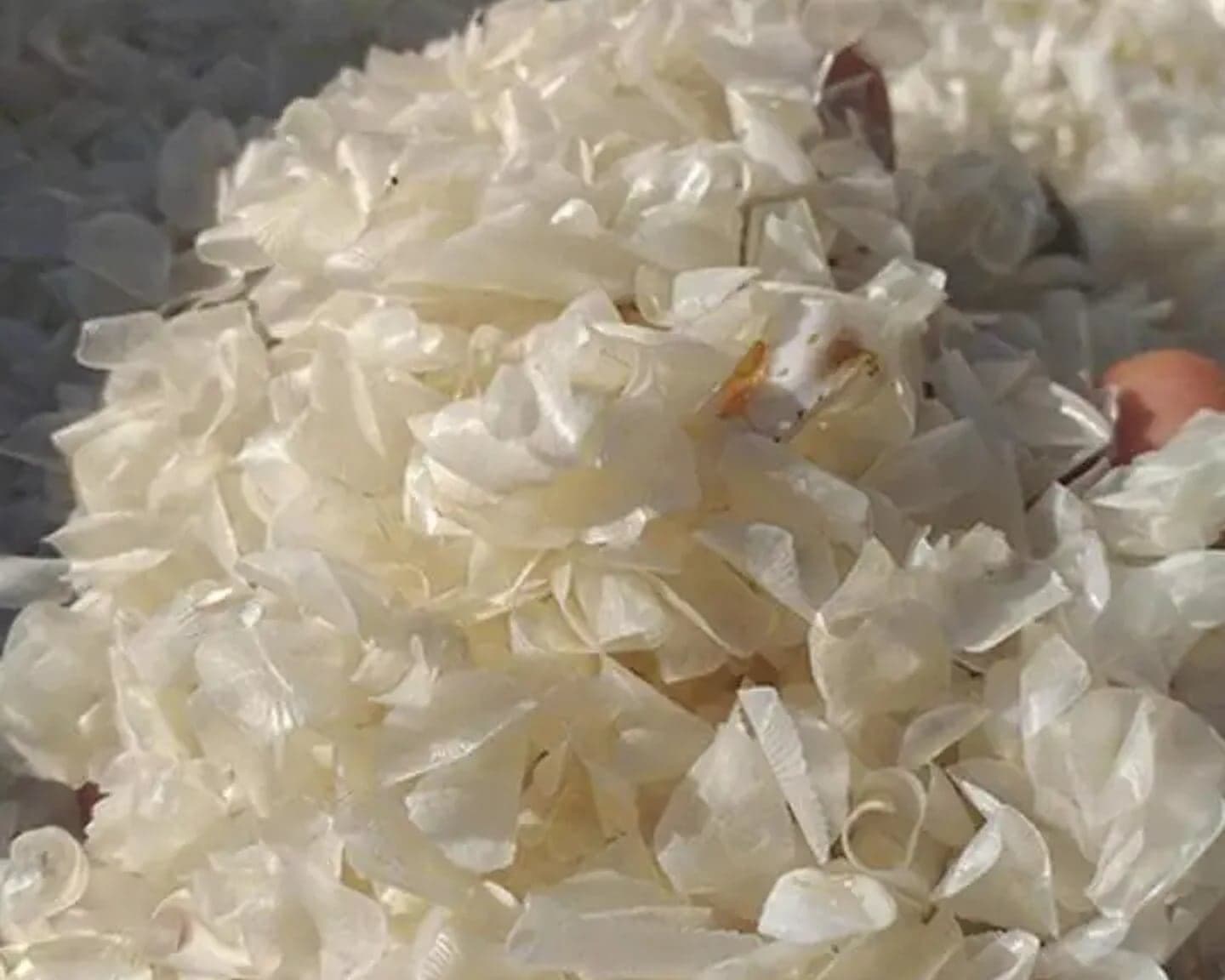
- Scales combine collagen fibers with a substantial calcium-phosphate fraction. Dried, they store and travel well, but the mineral must be dissolved out before extraction, which makes ash the defining parameter. Our dried fish scales come mainly from farmed tilapia.
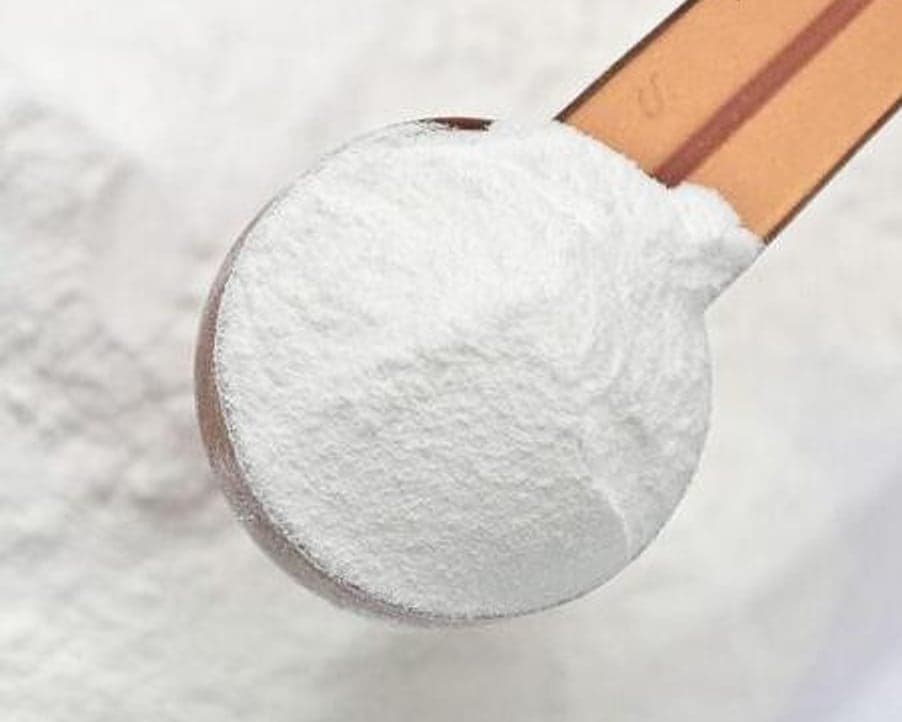
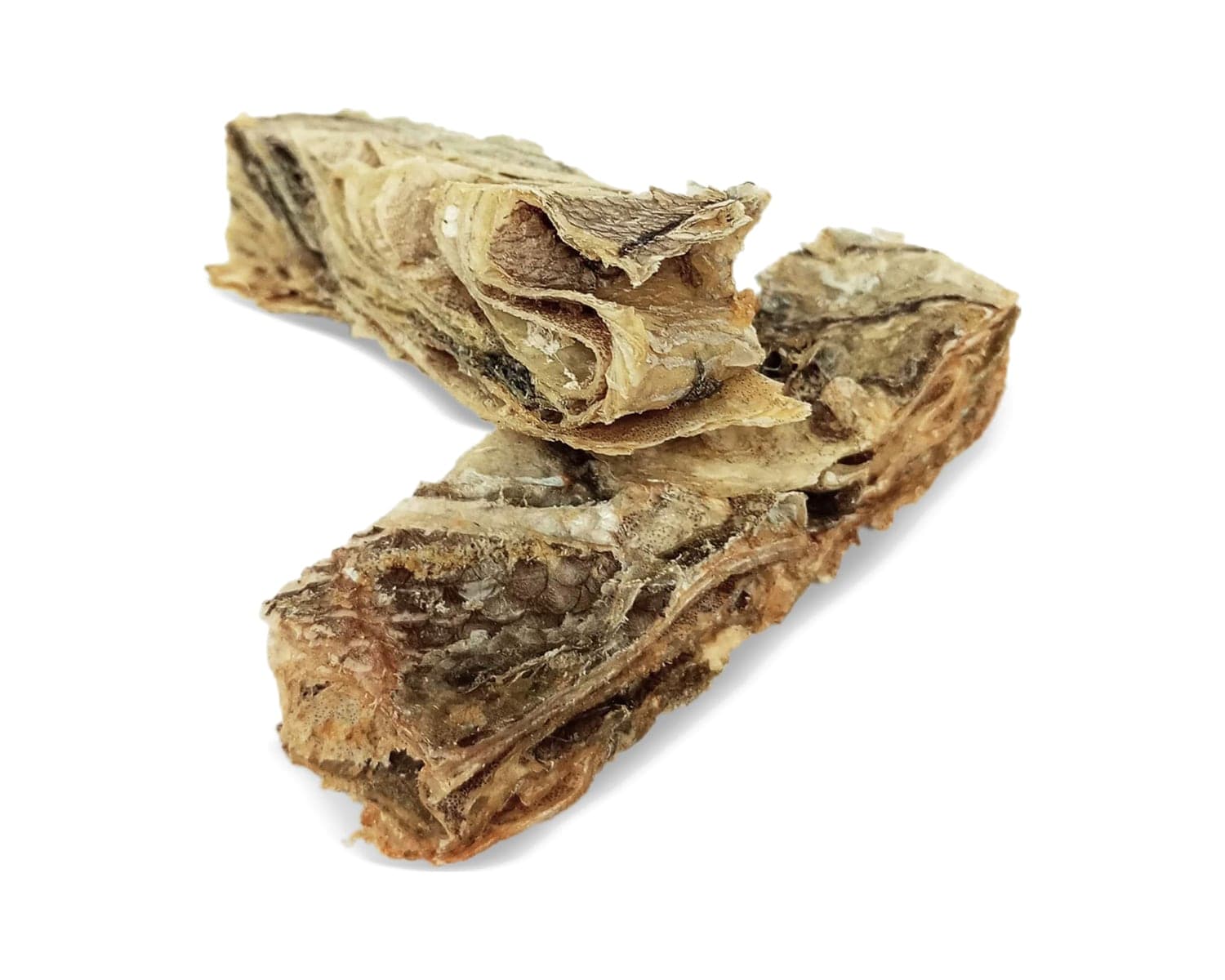
- Bone and frames are mostly mineral once meat and fat are removed, and are bought chiefly for calcium powder, less often for gelatin. Residual meat, fat and odor are the usual concerns, and powder buyers also set particle size.
Mixing streams undermines all of this, because a processor receiving skin with a variable share of scales, or bone with heads attached, cannot predict yield or demineralization demand. Single-stream lots are the norm, and any blend a buyer wants should be assembled from separately documented components.
Species, habitat and source declaration
Species determines much of what a processor can expect: fat level, skin thickness, the gel properties of any gelatin extracted and how the finished ingredient may be described. Every offer should state the species by common and scientific name, whether the fish was farmed or wild, and its habitat.
- Farmed freshwater species such as tilapia (Oreochromis niloticus), pangasius (Pangasianodon hypophthalmus) and carp supply much of the skin and scale volume in trade, because large fillet plants generate steady single-species streams.
- Wild marine whitefish such as Atlantic cod (Gadus morhua) and Alaska pollock (Gadus chalcogrammus) provide cold-water skin, usually from plants producing fillets or frozen blocks.
- Farmed marine species, with sea-farmed salmon the obvious example, give fattier skin that suits some uses and needs tighter fat limits for others.
Habitat matters commercially as well as technically. Collagen from freshwater fish is sometimes sold under loose ‘marine’ wording, which can run against misleading-labeling rules in some markets, so the declaration should leave the processor in no doubt about the source. Wild-caught material may need catch documentation for some destinations, and farmed material is commonly screened for veterinary drug residues. Ask for the supplying plant’s name or approval number on each lot, not just a country.
Frozen, dried and salted forms, and how they travel
How material is stabilized after filleting matters as much as species, because skin and bone start to deteriorate within hours at ambient temperature. Three routes are found in trade.
- Frozen. Block-frozen skin and bone in lined cartons is the standard route for extraction feedstock. It protects freshness best but commits the buyer to an unbroken frozen chain and reefer freight. Reject blocks that show signs of thawing and refreezing, such as fused cartons, frost inside the liner or drip stains.
- Dried. Sun- or machine-dried scales and some dried skins ship at ambient temperature, which suits processors far from fish-producing regions. Drying conditions affect color and odor, and dried material takes up moisture readily, so packaging and container conditions become part of the specification.
- Salted. Salting is used in some supply chains as an alternative to freezing or drying. A buyer considering salted material should have the salt content declared and agreed, since it affects washing, effluent and extraction. Our raw-material pages list frozen and dried handling.
Frozen material should move palletized and shrink-wrapped at a stable frozen temperature from plant to intake, with no thaw cycles at transshipment or in the buyer’s store. Dried material goes in lined sacks or bales, kept off damp floors, away from odorous goods and protected from condensation. Our guide to reefer and dry-container shipping covers both in detail.
The specification fields processors set
A raw-material specification turns those expectations into measurable limits. Most processors set the fields below, with values tailored to their own process and confirmed for each lot by a certificate of analysis (CoA) from a laboratory both parties accept.
| Field | Why it matters | How buyers usually set it |
|---|---|---|
| Species and habitat | Drives fat, gel behavior and how the finished ingredient may be described | Common and scientific name, farmed or wild, freshwater or marine; one species per lot |
| Moisture | Decides storage stability of dried material and the dry matter paid for | Maximum for dried streams, agreed per contract and confirmed by CoA |
| Fat or lipid | Oxidizes, carries odor into the product and adds defatting load | Maximum on a stated basis (as received or dry); trimming rule for fatty species |
| Ash | Shows mineral content: high in scales and bone, low in clean skin | Maximum for skin; reported for scales and bone to plan demineralization |
| Protein | Indicates extractable material; usually calculated from nitrogen | Minimum or target range; some buyers add hydroxyproline as a collagen marker |
| Freshness | Spoilage lowers yield and darkens color | Filleting-to-freezing time; TVB-N, plus histamine for species where it is relevant |
| Foreign matter | Plastics, metal, fins, flesh and other species contaminate product and plant | Listed exclusions and limits, checked by visual inspection per lot |
| Microbiology | The incoming microbial load affects the processor’s own control steps | Parameters such as total plate count, Enterobacteriaceae and Salmonella, as required |
| Contaminants | The finished ingredient must meet the destination’s legal limits | Heavy metals, drug residues for farmed fish and other analytes the market regulates |
| Handling | Thaw cycles and damp storage cause losses that cannot be reversed | Frozen at a stated temperature, or dried and sealed; temperature records on request |
Basis and method matter as much as the number. A fat limit on a dry basis cannot be compared with one stated as received, and protein results depend on the nitrogen method and conversion factor, so name both. The parameters we agree for each stream appear on our fish gelatin raw materials page and its companion pages, a practical starting point for your own document.
Finished gelatin and collagen: what ingredient buyers test
Some buyers purchase finished fish gelatin or collagen peptides, and raw-material buyers need to know what their own customers will measure. Gel properties belong to the finished ingredient: they depend on the processor’s pre-treatment, extraction, filtration and drying as much as on the fish, so they cannot be guaranteed for skins or scales.
- Gel strength (Bloom). A standardized test measures the force needed to press a plunger a set distance into a gel prepared and matured under fixed conditions, expressed in grams (Bloom). Buyers specify a range for the application.
- Viscosity. Measured on a solution of fixed concentration and temperature, it affects behavior on the line and the texture the gelatin gives a food.
- Melting and setting. Warm-water fish gelatins generally form firmer gels and melt at higher temperatures than cold-water fish gelatins, which matters wherever a product must hold its shape at room temperature.
- Clarity, color and odor. These are often decisive for fish gelatin and track raw-material freshness and fat closely.
- Collagen peptides are usually specified by molecular weight distribution, protein content, solubility, color, odor, moisture and ash, alongside the destination’s microbiological and contaminant limits.
Test methods change results, so agree the standard and laboratory before comparing Bloom or viscosity figures. BSA’s role is raw-material supply; finished ingredients can be discussed case by case with our export specialists.
Food-grade and industrial streams: keep them apart
The same skin or bone can become a food ingredient or industrial feedstock, and what decides it is the handling chain rather than the material. Food-grade raw material comes from plants approved for human-consumption production and is collected, frozen or dried, stored and transported as food from the fillet line onward. Material that leaves that chain, through mixed collection, inadequate cooling or storage beside non-food streams, is generally treated as an animal by-product, and in many jurisdictions it cannot come back.
For that reason our listing of fish-processing by-products for industrial use is kept separate from the food-grade programs. Its heads, frames, trimmings and viscera go to meal, oil, pet food, fertilizer and hydrolysate producers under the applicable by-product category, packed and labeled as such; viscera is always industrial, and any other stream counts as food-grade only where an offer states so explicitly.
Traceability, documents and supplier qualification
Traceability for by-product streams should be as tight as for primary seafood: each lot linked to a plant, species, production date and handling record, with lot codes on every carton or sack. A typical document set includes a species and plant declaration, the CoA, a certificate of origin, the commercial invoice and packing list, and either a health certificate or an animal by-product document, depending on designation and destination. Before approving a new source, work through the following:
- Is the supplying plant approved for human-consumption production, and eligible to export to your market where facility listing applies?
- Are skin, scales and bone collected separately, and kept apart from non-food streams at every stage?
- What is the documented time from filleting to freezing or drying, and how is it recorded?
- Is each lot single-species, with scientific name and habitat declared?
- Will the supplier provide a CoA from an accepted laboratory, using the methods and bases in your specification?
- Are lot codes carried through to the shipping documents and traceable to a production date?
- If your customers require religious or dietary certification, can the supply chain provide the records your certifying body asks for?
- Will the supplier ship a trial lot made to the commercial specification, and keep a retained sample?
This guide is general trade information, not legal or regulatory advice. Requirements differ by market and change over time; confirm current rules with your customs broker or competent authority before ordering.