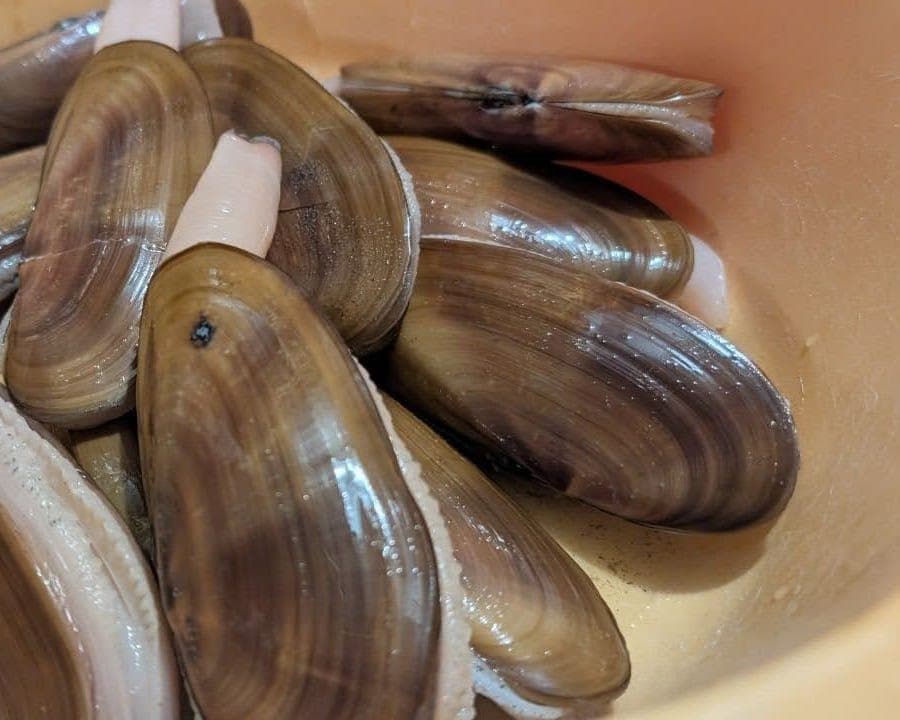
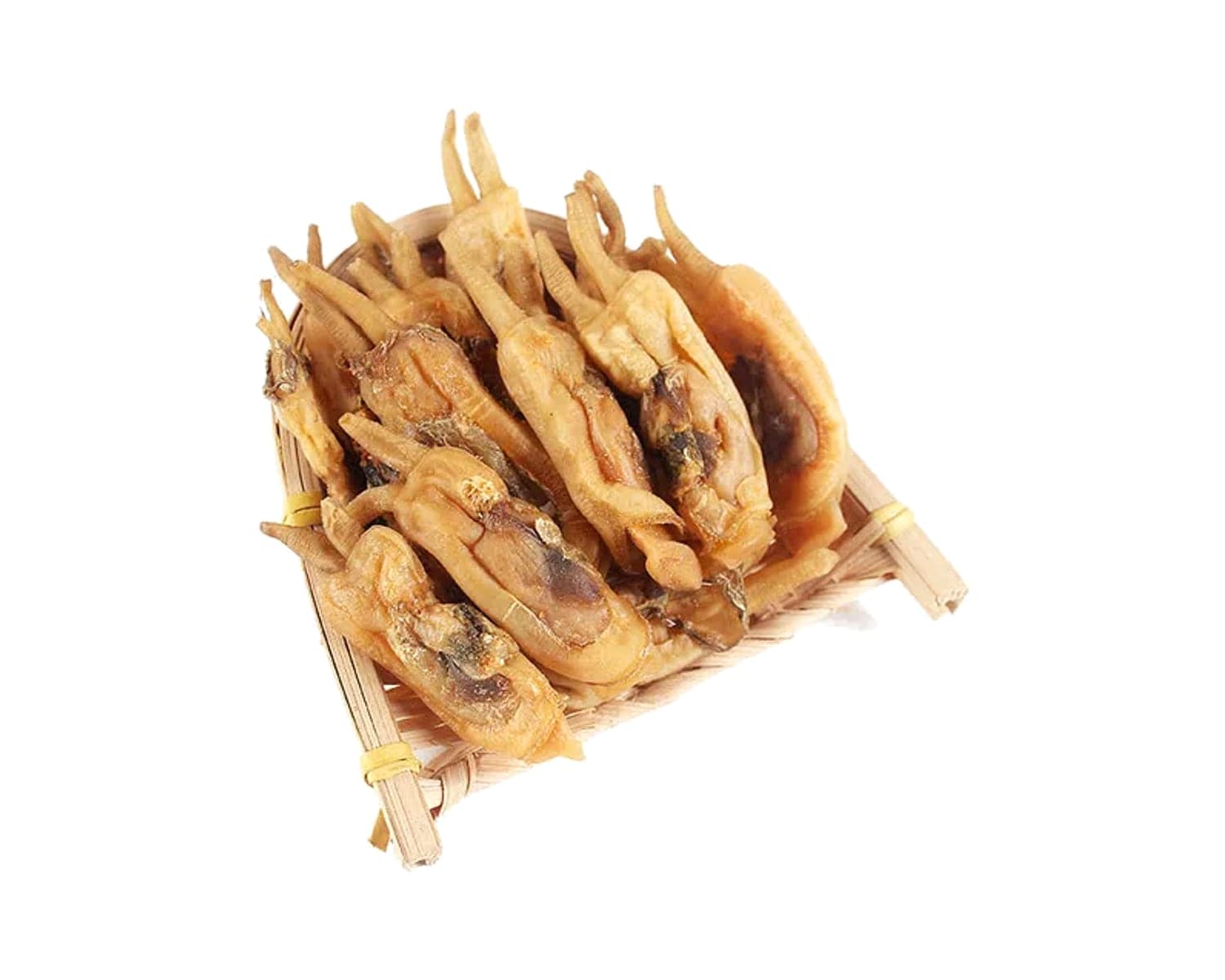
Razor clams are named for their resemblance to an old-fashioned straight razor: a long, narrow, thin-walled shell. They are bivalves that live upright in sand or mud, and the name covers animals from two families and several genera, from the large Ensis clams of European and South American beaches to the smaller constricted razor clam farmed on the mudflats of eastern China. BSA Food Products supplies them as frozen razor clams, whole, on the half-shell or as meat, and as sun-dried meat on the dried razor clams page.
This guide sets out how to recognize the main species, how they live and are harvested or farmed, the names they go by in different markets, which forms suit which dishes, and why harvest-area monitoring matters so much for this group. Spanish names in particular overlap between species, so the scientific name is the only reliable way to describe what you want.
Key takeaways
- Razor clam is a group name covering Ensis, Solen, Siliqua and Sinonovacula, which differ in size, shape and use.
- The constricted razor clam is farmed in eastern China and supplies most dried razor clam meat.
- Spanish names such as navaja and longueirón change meaning by region, so specify the scientific name.
- Razor clams filter their food from seawater, so harvest-area classification and toxin testing matter for every lot.
What a razor clam is
A razor clam’s two valves are long, thin and brittle, and they gape at both ends even when closed. From one end the clam pushes out a strong, muscular foot for digging; from the other it extends a pair of short siphons that draw in water for feeding and breathing. In life it stands upright in the sediment with only the siphon tips showing, and when disturbed it can dig down fast.
Most commercial razor clams belong to the family Pharidae, which includes Ensis, the Pacific razor clam Siliqua and the Asian Sinonovacula, while Solen species belong to the related family Solenidae. Like other bivalves they filter plankton from the water around them, so the condition of the growing area shapes the safety of the meat. Wild clams are taken by shore gatherers, divers and dredges; Sinonovacula is mostly farmed.
| Species | Scientific name | Where it comes from | Notes for buyers |
|---|---|---|---|
| Constricted or Chinese razor clam | Sinonovacula constricta | Native to China, Korea and Japan; farmed mainly in China | Shorter, boxier shell; sold fresh, frozen and dried |
| Pod razor | Ensis siliqua | Atlantic coasts of Europe | Large and straight; hand-gathered, dived or dredged |
| Curved razor | Ensis magnus (syn. E. arcuatus) | North-East Atlantic | The official Spanish “navaja” |
| American jackknife clam | Ensis leei (formerly E. directus) | North-West Atlantic; in the North Sea since about 1979 | Introduced to Europe, probably in ballast water |
| South American razor clam | Ensis macha | Chile and Argentina | Similar in shape to European Ensis |
| European razor clam | Solen marginatus | Atlantic and Mediterranean Europe | The official Spanish “longueirón” |
| Pacific razor clam | Siliqua patula | Pacific coast of North America | Dug on beaches; frequent toxin closures |
Constricted razor clam farming in China
Sinonovacula constricta is native to estuaries and intertidal mudflats in China, Korea and Japan, where it is known as agemaki. FAO describes razor clam farming in China as nearly five centuries old, centered on Fujian and Zhejiang, on flat muddy or sandy-mud ground between the tides; coastal ponds are also used today. Farmers stock young clams into prepared beds and usually harvest them after one to two years, when the shells measure around 4 to 6 cm.
Farming gives this species a steadier supply than any wild razor clam, and it is the raw material behind most dried razor clam meat, a specialty of the Fujian and Zhejiang coasts. The clams are purged of sand before processing, because mud left in the gut becomes obvious once the meat is cooked or dried.
Wild razor clams of Europe and the Americas
In Europe the main commercial species are the pod razor (Ensis siliqua) and the curved razor (Ensis magnus), with Solen marginatus also sold in Spain. In Scotland most of the catch is collected by divers, dredges are used in other European fisheries, and shore gatherers dig razor clams at low tide in many areas. Dredging can crack the thin shells, which matters for live and whole frozen product. Minimum sizes apply in many fisheries; EU and UK rules, for example, set 100 mm for Ensis.
The American jackknife clam (Ensis leei), native from Canada to South Carolina, turned up in the German Bight in 1979, probably carried as larvae in ballast water, and reached the Netherlands, Belgium and France over the next twelve years; by 1997 it was abundant in the Wash in eastern England. Further afield, Ensis macha is fished off Chile and Argentina, and on the Pacific coast of North America the Pacific razor clam (Siliqua patula) supports beach digs that close whenever toxin levels rise.
Razor clam names by market
Few seafood names shift as much between regions as those for razor clams. Spain’s official commercial names, as recorded in the EU’s database of commercial designations, give navaja to Ensis magnus, longueirón to Solen marginatus and muergo to Ensis siliqua. The same database, however, records longueirón for Ensis siliqua in Galicia, and along most of the Andalusian coast Solen is known as navaja. An order for navajas can therefore mean different animals depending on where the buyer is based.
| Market | Name | Species it usually refers to |
|---|---|---|
| Spain | navaja | Ensis magnus officially; Solen in Andalusia |
| Spain | longueirón | Solen marginatus officially; Ensis siliqua in Galicia |
| Spain | muergo | Ensis siliqua; Solen in Asturias and Cantabria |
| France | couteau | Razor clams in general, Ensis and Solen |
| Italy | cannolicchio, cappalunga | Ensis siliqua and other Ensis |
| China | 蛏 (cheng); 缢蛏 (yicheng) | Razor clams in general; 缢蛏 is Sinonovacula constricta |
| Japan | agemaki | Sinonovacula constricta |
| English-speaking markets | razor clam, razor shell, jackknife clam | Any of the above; jackknife mainly Ensis leei |
Forms, sizes and what they suit
Because the shell cannot close fully, live razor clams lose condition quickly and need fast, cool transport; frozen and dried forms remove that time pressure. Size is described by shell length, and the species sets the range: farmed Sinonovacula is harvested at a few centimeters, while European Ensis must reach 10 cm in some fisheries and large clams run well beyond that.
- Live: plancha, steaming and quick grilling near the harvest area.
- Frozen whole, raw or cooked: grilled or steamed whole; cooked clams need only reheating.
- Frozen half-shell: laid on trays for grilling with toppings, for plated dishes and buffets.
- Frozen meat: stir-fries, soups, fried rice, fillings and ready meals.
- Dried meat: soups, congee, steamed egg custard and braises after a short soak.
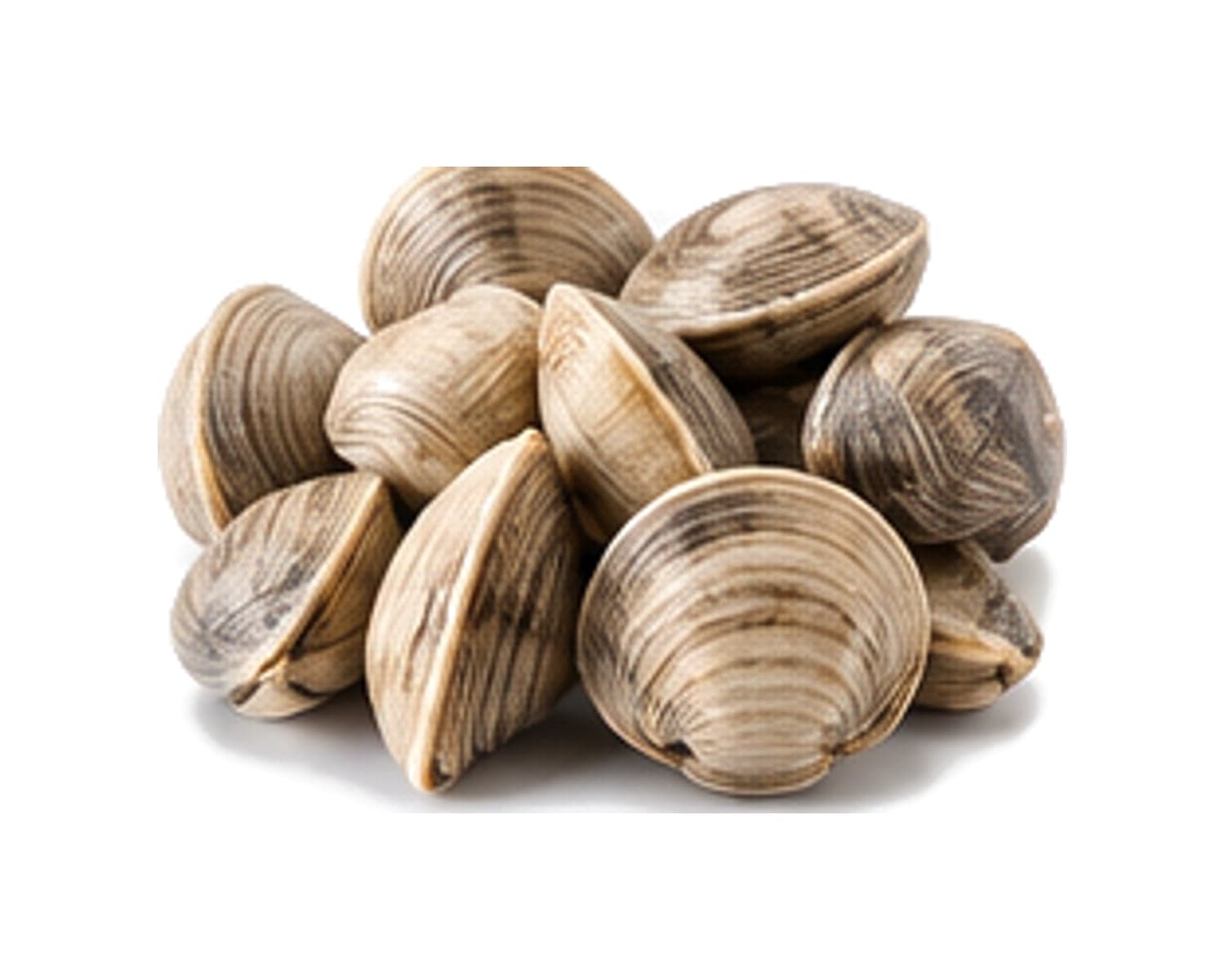
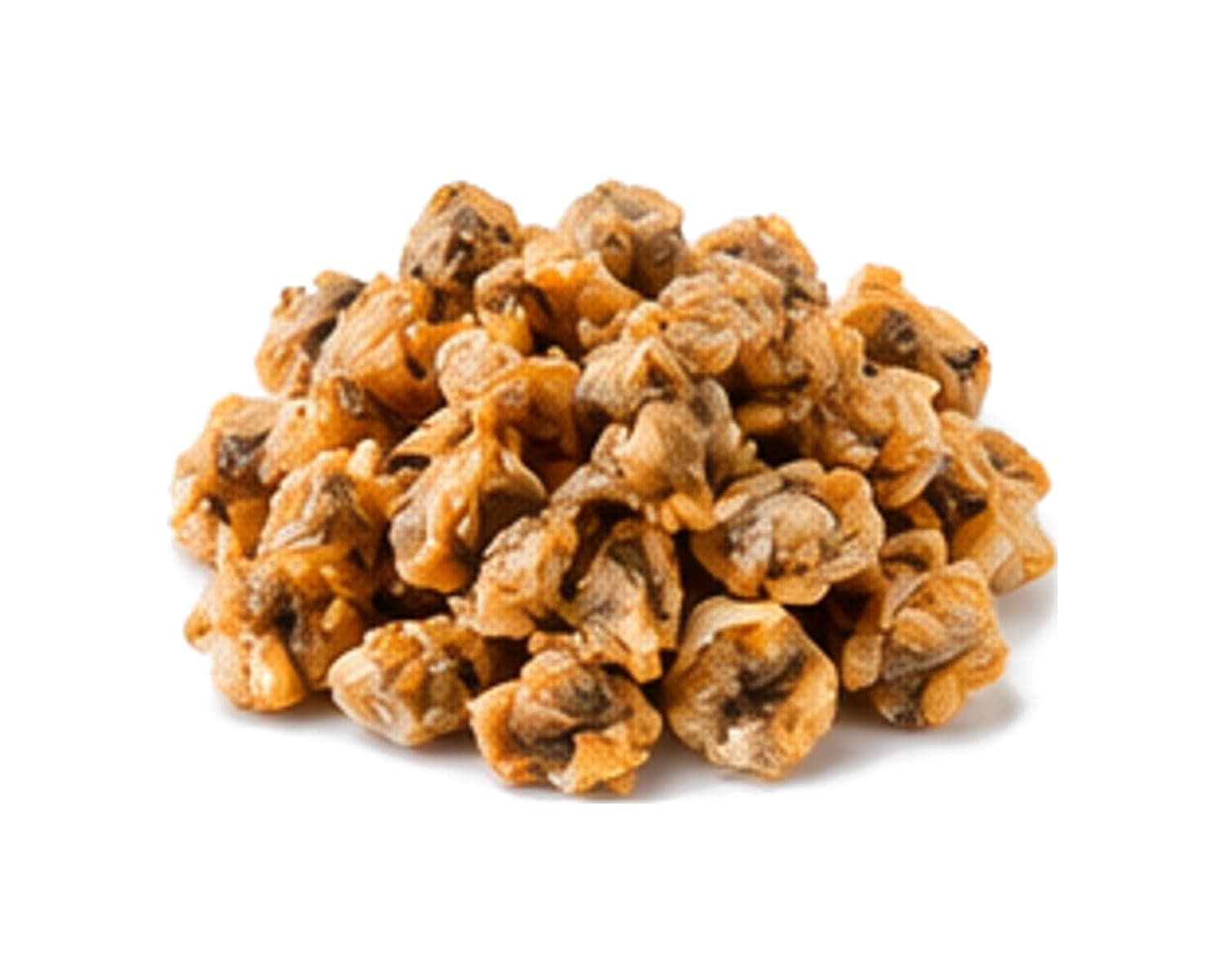
Glaze, count and the handling of raw versus cooked product follow the same rules as other frozen bivalves, set out in our frozen shellfish buying guide. Round clams for pasta and broth have their own profile in the clam species guide, with product on the frozen clams and dried clams pages.
How razor clams are cooked
Razor clam meat is sweet and tender with a slight chew, and it overcooks in moments. Spanish cooks lay whole navajas on a very hot plancha just until the shells open, then finish them with olive oil, garlic and parsley. In Chinese kitchens the constricted razor clam is steamed with garlic, stir-fried or cooked in broth, while the dried meat is soaked briefly and added to congee and steamed egg.
Most kitchens rinse razor clams well and check the dark gut area, where sand can lodge if purging was incomplete. Cooked whole clams and half-shell product need only enough heat to warm them through, and thawed meat should go straight into a hot pan rather than sit in its own liquid.
Biotoxins, mislabeling and quality checks for razor clams
As filter feeders, razor clams can take up algal toxins, bacteria and viruses from their growing water. Pacific razor clams are known for holding domoic acid, the toxin behind amnesic shellfish poisoning, in their tissue long after a bloom has cleared, and it has kept Washington beaches closed for entire seasons. Buy only from classified harvest areas, with monitoring and test records supplied for the lot.
Species substitution is the other risk. European Ensis species look so alike that they are often misidentified, even though they sell at different prices, and laboratories have developed DNA tests that separate Ensis siliqua, E. magnus, E. leei, E. macha and Solen marginatus in fresh and canned products. A scientific name on the specification, invoice and label is the simplest protection.
- Intact shells, with cracked or broken pieces counted against an agreed limit
- No sand in the gut or siphon when a sample is thawed and split
- Meat that fills the shell and smells clean and sweet
- Dried meat of even golden color, free of grit
To match a species and length grade to your menu, ask for an offer naming the species and shell length.
This guide is general trade information, not legal or regulatory advice. Requirements differ by market and change over time; confirm current rules with your customs broker or competent authority before ordering.