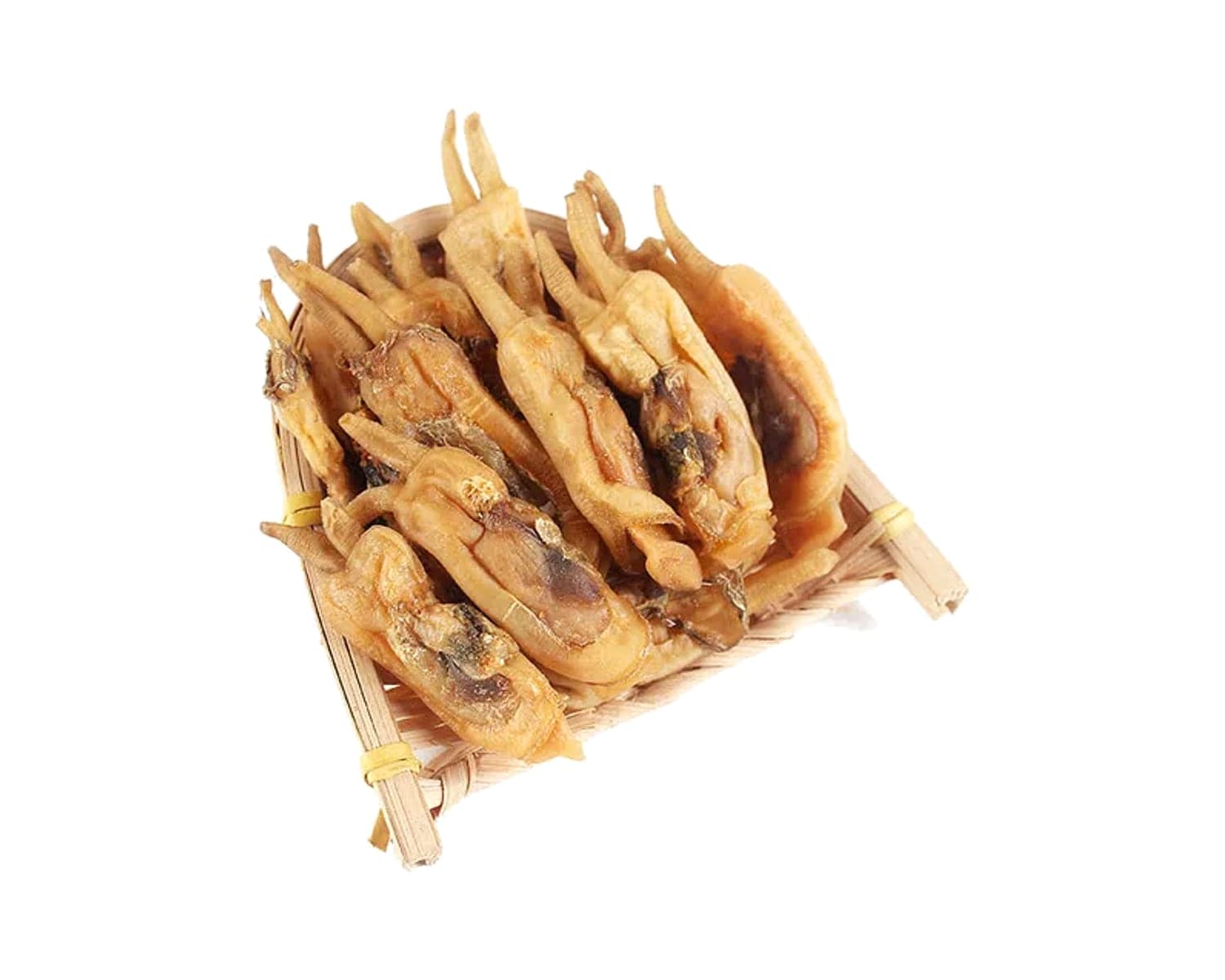
Specialty Dried Seafood
Dried Razor Clams
Sun-dried razor clam meat, length-graded and grit-checked
Dried
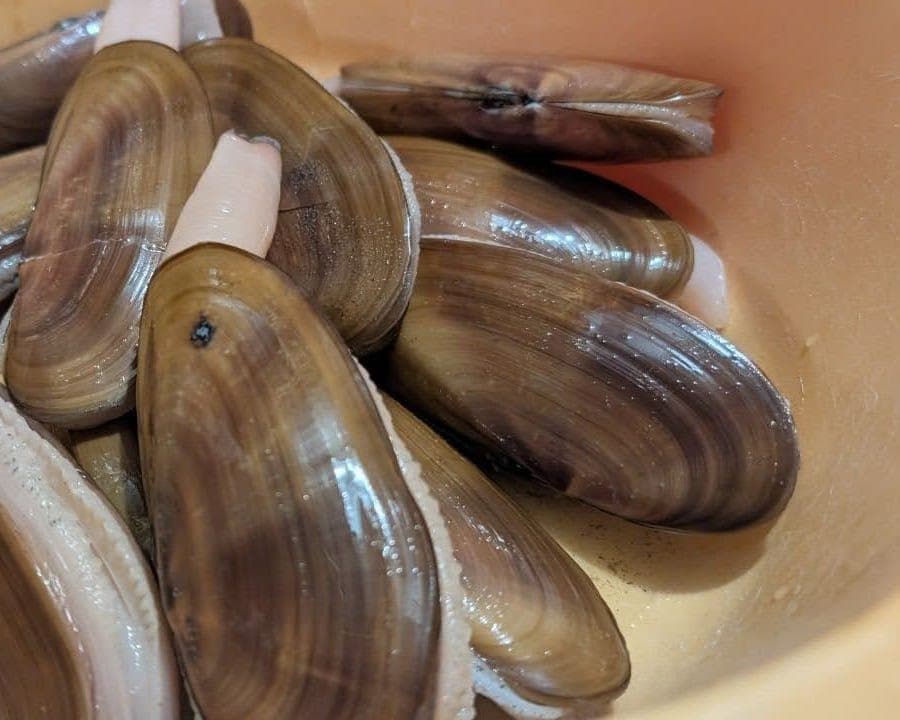
Razor clams frozen raw or cooked, whole in the shell, on the half-shell or as meat, specified by species and shell length, with the growing area, its classification and the lot testing to be carried out stated on every offer.
Indicative; confirmed per lot on each quotation.
Razor clams are long, narrow bivalves that live upright in burrows in sand or mud and are dug, raked or dredged rather than gathered from the surface. Their shells are thin and brittle and gape at both ends, so the animal can never seal itself completely, and that shapes how frozen product has to be handled: purging before processing, fast freezing to protect the exposed meat, and packing that keeps fragile shells from cracking in the carton. On the plate they are prized for sweet, tender meat that needs only moments on a hot griddle.
The volume species is the constricted or Chinese razor clam (Sinonovacula constricta), farmed on a large scale on the coastal mudflats of eastern China, with smaller production in Korea. Wild Solen species, slimmer and straighter, are harvested along Asian coasts including Indonesia. European buyers often ask for Ensis razor clams, the navajas of Spanish menus, from the North-East Atlantic and from South America, where Ensis macha is fished off Chile and Argentina. A constricted razor clam and an Ensis differ in size, shape and the dishes they suit, so the species is named on every offer and on the carton.
Whole razor clams are frozen raw in the shell, IQF or vacuum-packed on trays, or cooked briefly first so that the shells open and the meat sets. Half-shell product has one valve removed and the meat left on the other, laid in interleaved trays for grilling with garlic, butter or breadcrumbs. Shucked meat is frozen raw or cooked, IQF or in blocks, for stir-fries, soups, fried rice and processing. In-shell clams are graded by shell length in bands such as 5–7, 7–9, 9–12 and 12–15 cm, with 15 cm and over for the largest Ensis, or by pieces per kilogram, and meat by count per kilogram. Checks on thawed samples cover cracked and broken shells, sand in the gut and siphon, meat fill, odor and glaze.
Like other filter-feeding bivalves, razor clams can concentrate marine biotoxins and take up bacteria and viruses from their growing water, and some razor clam fisheries are known for closures caused by domoic acid, the toxin behind amnesic shellfish poisoning. Each lot therefore comes from a classified harvest area with monitoring records, and testing for the PSP, ASP and DSP groups and microbiology is arranged to your market’s limits, as described under export quality assurance. For pasta and steamed dishes, round clams are listed under frozen clams, and shelf-stable razor clam meat for soups and congee under dried razor clams.
Specification sheet
Indicative values. Final specifications are confirmed per lot on the quotation and certificate of analysis.
| Species | Sinonovacula constricta, Solen spp.; Ensis spp. including E. macha on request |
|---|---|
| Growing area | Harvest area and its classification declared per lot |
| Formats | Whole raw or cooked, half-shell, raw or cooked meat |
| Size | Shell length bands by species; meat count per kg |
| Shell condition | Cracked and broken shells recorded per lot |
| Sand | Gut and siphon checked for grit after thawing |
| Glazing | Percentage declared; net weight given ex-glaze |
| Testing | PSP, ASP, DSP toxin groups and microbiology to the destination’s limits |
| Allergens | Molluscs |
| Documents | Sanitary certificate, harvest-area records, lot test reports; catch certificate for wild lots where required |
| Minimum order | From 500 kg per item, consolidated with other frozen shellfish in a mixed reefer where needed. |
| Lead time | Commonly 3–5 weeks from an agreed specification; harvest-area closures can delay or reschedule a lot at short notice. |
FAQ
It depends on the dish and the market. Constricted razor clam (Sinonovacula constricta) is shorter and plumper, with rounded shell ends, and is the everyday choice for Chinese and Korean stir-fries, steamed dishes and soups. Wild Solen clams are slim and straight, with a delicate meat suited to quick steaming. Ensis razor clams are the long, straight navajas of Spanish and Portuguese cooking, usually cooked whole on the plancha or grilled on the half-shell. Tell us how the clams will be served and we will propose the species and length grade to match.
Their shells are thin and do not close completely, so the meat is exposed at both ends and the shell cracks easily under pressure. Exposed meat loses moisture faster in storage, and cartons stacked too high or handled roughly in transit can arrive with a high share of broken shells. Packers counter this with vacuum trays, rigid cartons and a protective glaze. We record broken and cracked shells on every lot, and buyers can set a maximum in the specification.
Both are available, and the offer states which. Raw whole clams frozen in the shell suit kitchens that grill or steam them to order and want the clam’s own juices in the pan. Cooked whole clams and cooked meat are quicker to serve and are the usual choice for ready meals and buffets. We offer frozen razor clams for cooking only, unless the packer’s documentation and your market’s rules specifically support raw consumption for a given lot.
Thaw them in the refrigerator on their tray, then cook them quickly under a hot grill or on a plancha, meat side up, for a minute or two until the flesh turns opaque, since longer cooking makes the meat rubbery. Garlic, parsley, olive oil and lemon are the classic Spanish dressing, while Chinese kitchens steam them with garlic and glass noodles. Cooked half-shell product needs only reheating.
Related
Specialty Dried Seafood
Sun-dried razor clam meat, length-graded and grit-checked
Frozen & Live Seafood
Blue, Chilean and green-lipped mussels, whole, half-shell or meat
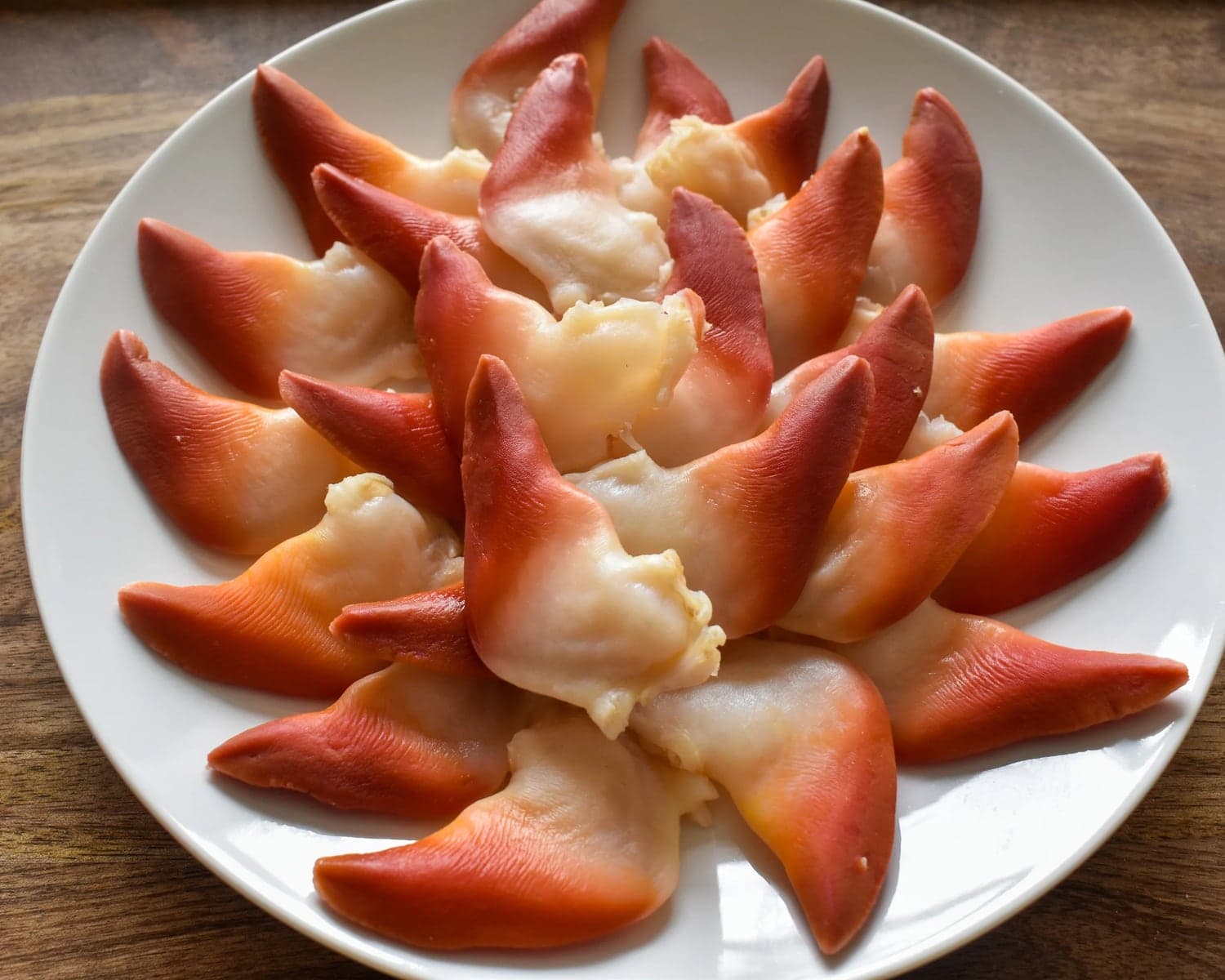
Frozen & Live Seafood
Arctic surf clam for sushi and Atlantic surf clam for chowder
Species Profiles6 min read
Several genera of long, burrowing bivalves share the razor clam name. Here is how they differ, where each comes from, what they are called in Spain, France, Italy and Asia, and how cooks prepare them.
Read the guide
Buying Guide8 min read
A working guide to frozen shellfish formats, freezing methods, glaze, treated scallop meat, count grading, raw and cooked handling and the harvest-area records every bivalve lot should carry.
Read the guide
Import & Compliance8 min read
A logistics guide for seafood buyers: reefer and dry-container shipping, temperature records, air freight for chilled and live product, where Incoterms 2020 place cost and risk, and the evidence a claim needs.
Read the guideRequest a quote
Share your target grade, packing, volume and destination. We confirm availability, documentation for your market and a formal quotation, usually within one business day.