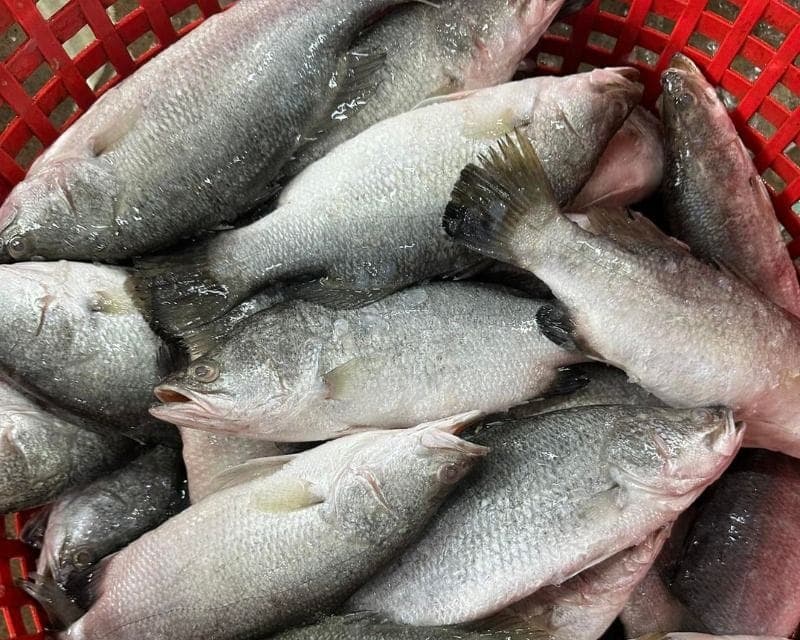
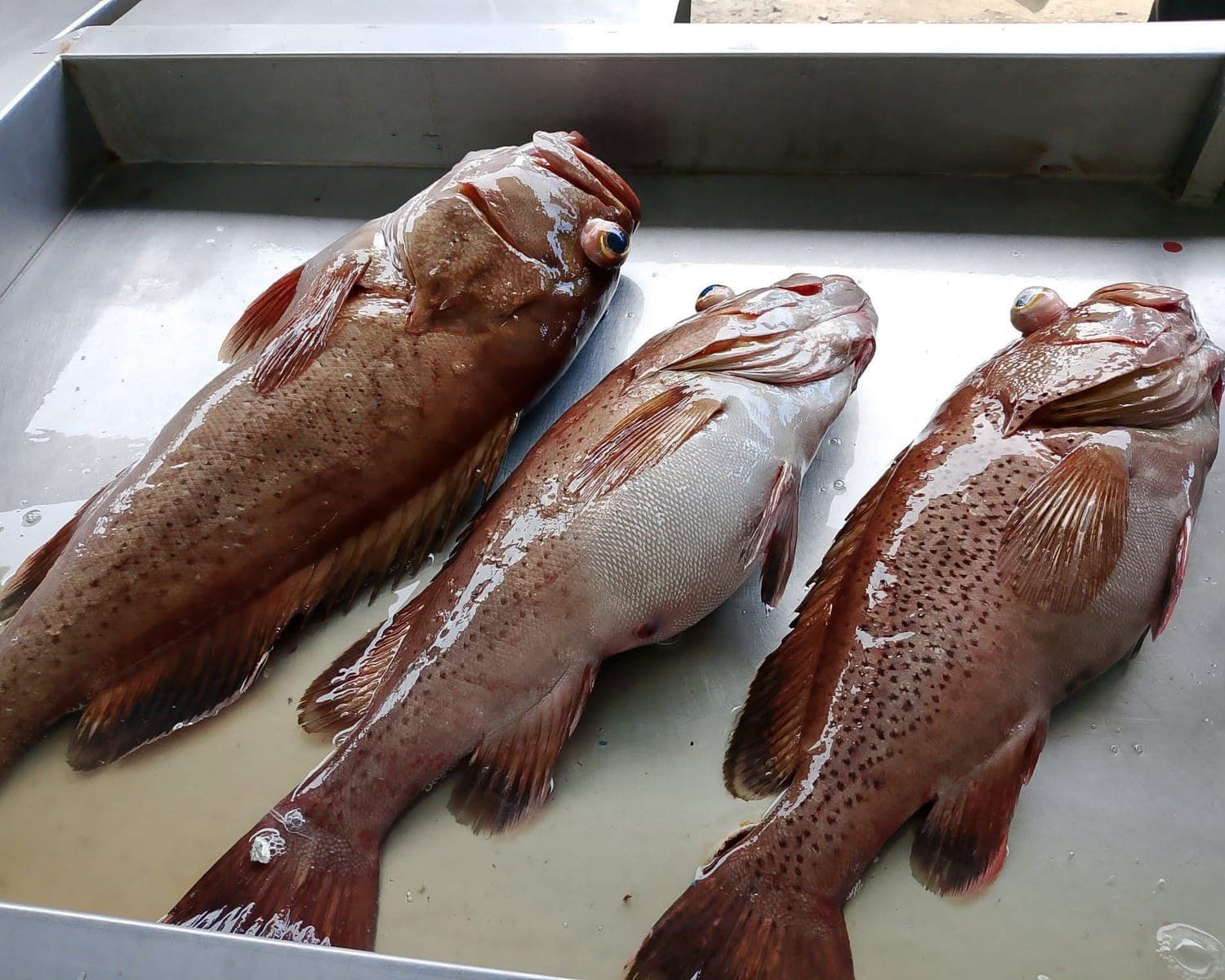
Few fish names are stretched as far as red snapper. In United States labeling it means one species from the Gulf of Mexico and the US Atlantic coast, Lutjanus campechanus. Across Asia, the Middle East and Africa it is a trade label for several red-skinned snappers, while Australians and New Zealanders use plain “snapper” for a sea bream. Our frozen red snapper page lists the Asian species, sizes and forms we supply, each declared by scientific name.
This profile explains the snapper family, the species that most often travel as red snapper, where they come from, how to tell them apart, and the look-alikes that have made the name a fixture of seafood fraud surveys. It closes with market forms, the dishes that keep demand steady across very different cuisines, and the trade rules that apply to wild and farmed snapper.
Key takeaways
- In US labeling, red snapper means Lutjanus campechanus alone; Asian red snappers are sold as snapper or under their own names.
- The Asian fish most often traded as red snapper are mangrove red snapper, Malabar blood snapper and crimson snapper, mostly wild-caught, with mangrove red snapper also farmed.
- Red snapper is among the most substituted fish in US surveys; skin-on fillets, whole-fish photos, scientific names and DNA tests keep lots honest.
- Australasian “snapper” and Japanese red sea bream are porgies, not snappers, and need their own names on the label.
The snapper family and the species called red snapper
True snappers form the family Lutjanidae, a large group of tropical and subtropical reef and shelf fishes, and the genus Lutjanus alone holds dozens of species. They are predators with a continuous dorsal fin, a large mouth and, in many species, prominent canine teeth, and they are caught mainly by handline, longline, trap and trawl. Several are red or pink, and those are the ones that end up sold as red snapper.
| Species | Range | Appearance | Place in trade |
|---|---|---|---|
| Northern red snapper, Lutjanus campechanus | Gulf of Mexico and US Atlantic coast | Pinkish red, paler below; fish under about 30 cm carry a large dark spot on the upper side | The only fish that may be labeled red snapper in the US |
| Mangrove red snapper, L. argentimaculatus | Indo-West Pacific, East Africa to Samoa | Greenish brown to coppery red, silvery below; deep-water fish redder overall | Wild-caught and farmed in South-East Asia |
| Malabar blood snapper, L. malabaricus | Persian Gulf and Arabian Sea to Fiji, southern Japan to Australia | Red to red-orange, lighter below, with a deep body | Major wild species in Asian and Australian line and trawl fisheries |
| Crimson snapper, L. erythropterus | Persian Gulf to Fiji, southern Japan to Australia | Red, deep-bodied, with a sloping head profile | Wild-caught; sold whole, gutted or as fillets |
| Caribbean red snapper, L. purpureus | Caribbean and the Atlantic coast of South America | Red, close in look to the northern red snapper | Must be called snapper, not red snapper, on US labels |
Separating the Asian species takes care even for specialists. FishBase notes that L. malabaricus is frequently misidentified as the bloodred snapper (L. sanguineus), and many authors have used the name L. malabaricus for the fish now called L. erythropterus. For a buyer, the practical answer is to ask the packer which species a lot contains, ideally with photographs of whole fish, and to expect older documents to use the names loosely.
Where red snapper comes from
The northern red snapper lives over rocky bottoms and reefs of the continental shelf, usually at 30 to 130 m, and is long-lived, with ages above 50 years recorded. In US federal waters of the Gulf of Mexico its commercial fishery has run under an individual fishing quota program since 2007, alongside a rebuilding plan, size limits and seasons set by federal and state managers. FishBase describes it as heavily exploited and now closely protected in American waters, and the IUCN Red List assessed it as Vulnerable in 2015.
The red snappers traded internationally come from the tropical shelf of the Indian Ocean and western Pacific. Juvenile mangrove red snapper live in mangrove estuaries, tidal creeks and the lower reaches of rivers before moving out to coral reefs and deeper water, which is why the species tolerates brackish water. Malabar blood and crimson snappers live on reefs, shoals and hard or muddy ground to about 100 m and are taken by trawl, line and trap. In Indonesia the red species are often traded together as kakap merah.
Mangrove red snapper is the species farmed, in sea cages and ponds across South-East Asia. FishBase notes that its flesh resists turning rancid in frozen storage, a useful trait for export. Farming has long relied on wild-caught fry, although research hatcheries in the region have bred the species in captivity. Wild supply moves with weather and fishing effort, while farmed fish can be harvested to order.
Who may call it red snapper: names by market
In the United States, the FDA Seafood List reserves “red snapper” for L. campechanus. Most other Lutjanus species, including the Asian red snappers and the Caribbean red snapper, are listed under the plain market name “snapper”, and some deep-water relatives may be sold as jobfish or snapper. “Pacific red snapper”, a name applied on the US West Coast to several rockfishes, appears on the FDA list only as a vernacular name, which is not acceptable on a label.
Other markets keep their own lists. The EU requires the commercial designation accepted in the member state together with the scientific name. In Australia, “snapper” is the standard name for Chrysophrys auratus (listed as Pagrus auratus on the FDA Seafood List), a sea bream of the family Sparidae, and the mangrove red snapper is called mangrove jack. In Mexico the everyday name for red snappers is huachinango, and pargo is used widely in Spanish.
| Market | Name used | Fish it refers to |
|---|---|---|
| United States, FDA list | Red snapper | Lutjanus campechanus only |
| United States, FDA list | Snapper | Most other Lutjanus species, including the Asian red snappers |
| US West Coast, vernacular | Pacific red snapper | Rockfishes (Sebastes); not an acceptable label name |
| Australia and New Zealand | Snapper | Chrysophrys auratus, a sea bream |
| Australia | Mangrove jack | L. argentimaculatus |
| Indonesia | Kakap merah | Several red Lutjanus species traded together |
| Thailand | Pla kaphong daeng | Red Lutjanus snappers, including L. argentimaculatus |
| Mexico | Huachinango | Red snappers of the Gulf and Pacific coasts |
Red snapper look-alikes and substitution
Red snapper is one of the most frequently mislabeled fish in the United States. A nationwide DNA survey by the conservation group Oceana, published in 2013, found that only a small fraction of the fish sold as red snapper was the genuine species; the rest included other snappers, rockfish and tilapia. Earlier newspaper tests, of sushi restaurants in Chicago in 2007 and of restaurants and shops in Boston in 2011, had found the same pattern.
- Other snappers: the most frequent swap and the hardest to see in fillet form. Whole fish can be separated by body depth, head profile, fin shape and juvenile markings; fillets usually need a DNA test.
- Rockfishes (Sebastes): unrelated North Pacific fish whose red skin makes the swap plausible once the fish is filleted.
- Tilapia and other white fish: inexpensive and easy to pass off once the skin is removed.
- Sea breams: Australasian snapper (Chrysophrys auratus) and Japanese red sea bream (Pagrus major) are red-skinned members of the porgy family, fine fish in their own right that must be sold under their own names.
Skin-on fillets with the red skin intact, photographs of whole fish from the lot, the scientific name on every document and an independent DNA test for each new supplier together close most of the gap.
Market forms and kitchen uses of red snapper
The red skin is part of what the customer pays for, so snapper is sold whole or as skin-on fillets far more often than skinless. Whole fish go round or gutted and scaled; larger fish are cut into fillets and bone-in steaks; and heads are sold for the fish-head curry of Singapore and Malaysia, a dish traditionally made with red snapper. The flesh is lean, white and firm, with a mild, sweet flavor and a medium flake that carries strong sauces and holds together on the grill.
- Mexico: huachinango a la veracruzana, traditionally a whole red snapper cooked in a sauce of onion, garlic, tomato, jalapeños, olives and herbs, sometimes with capers.
- Caribbean and West Africa: whole fish scored, seasoned and fried, or stewed in a peppery sauce.
- China and South-East Asia: whole fish steamed for banquets, where the red skin signals good fortune, and fillets in curries, sour soups and stir-fries.
- India and the Gulf: steaks and whole fish in curries and on the grill.
- US Gulf Coast: whole fish grilled or baked, and fillets pan-fried or broiled.
For a white fish that fills the same plates at a different cost, see the barramundi species guide; for the top of the banquet menu, the grouper species guide. Frozen barramundi can travel with snapper in one container, and our reefer shipping guide explains how mixed frozen-fish loads are planned.
Trade rules for wild and farmed snapper
Wild-caught snapper bound for the EU needs a catch certificate under the EU rules against illegal, unreported and unregulated fishing. Red snapper is also one of the species groups in the US Seafood Import Monitoring Program, and importers should confirm with NOAA Fisheries which snapper species and products the program covers at the time of shipment. Farmed mangrove red snapper faces veterinary residue limits in most importing markets.
Because snapper names differ so much between markets, settle the label name with your destination’s authority or customs broker before printing packaging, and keep the scientific name on invoices and cartons. Our guide to choosing premium seafood ingredients covers trial orders and consistency checks. To compare species and sizes for your menu, tell us which snapper you need.
This guide is general trade information, not legal or regulatory advice. Requirements differ by market and change over time; confirm current rules with your customs broker or competent authority before ordering.