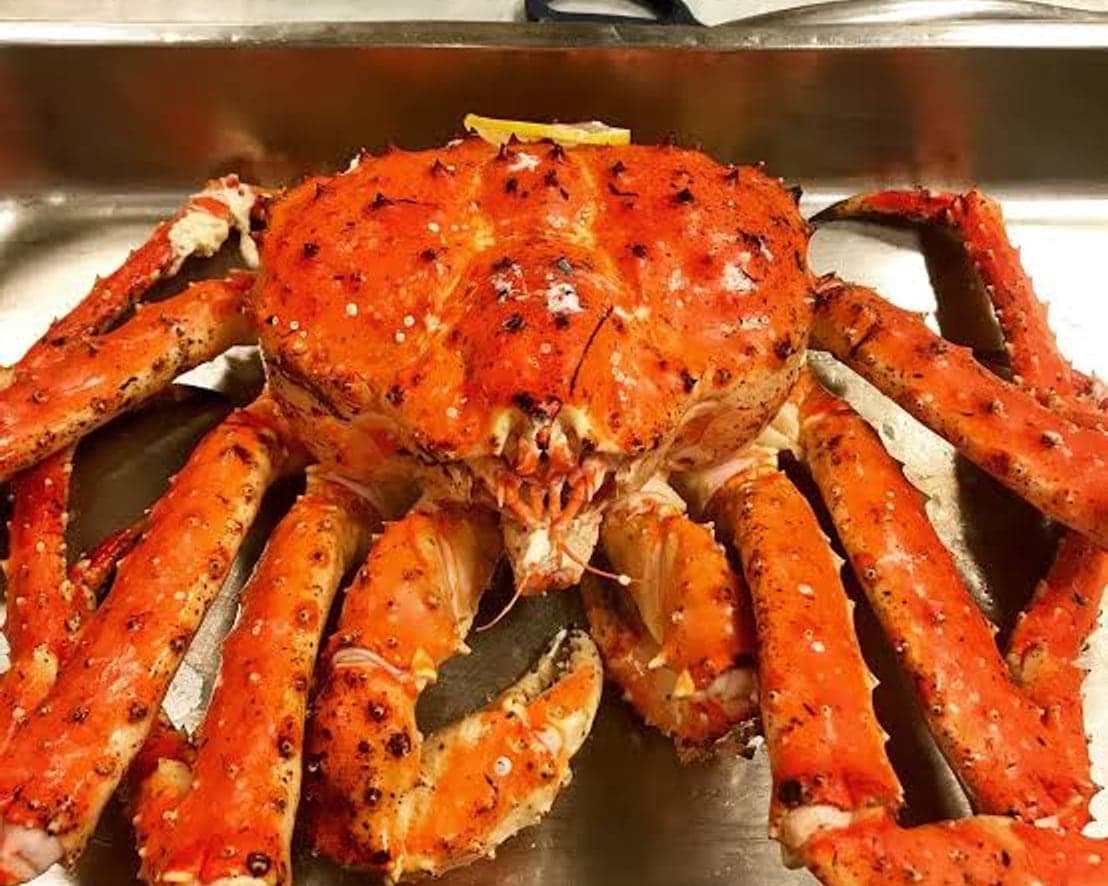
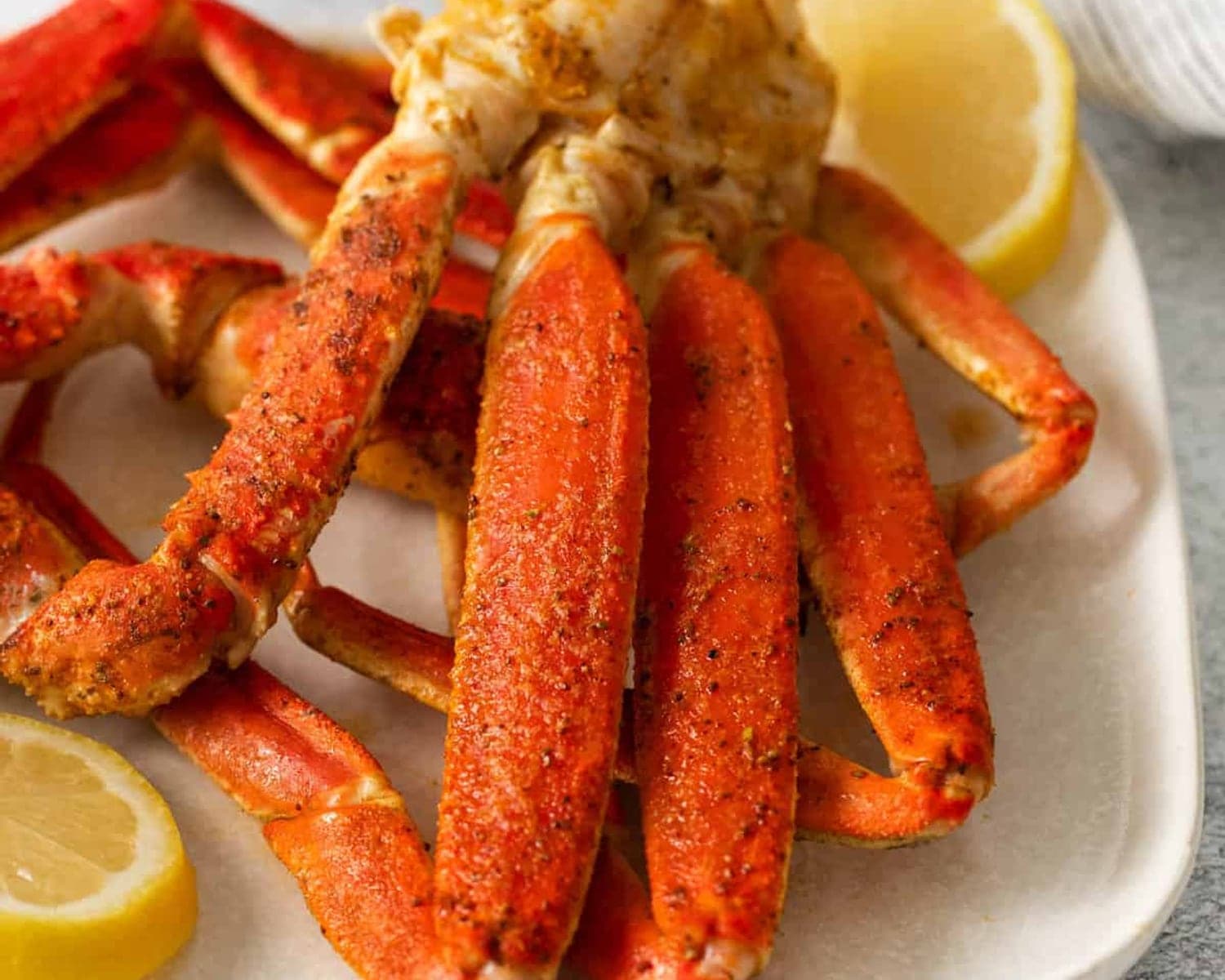
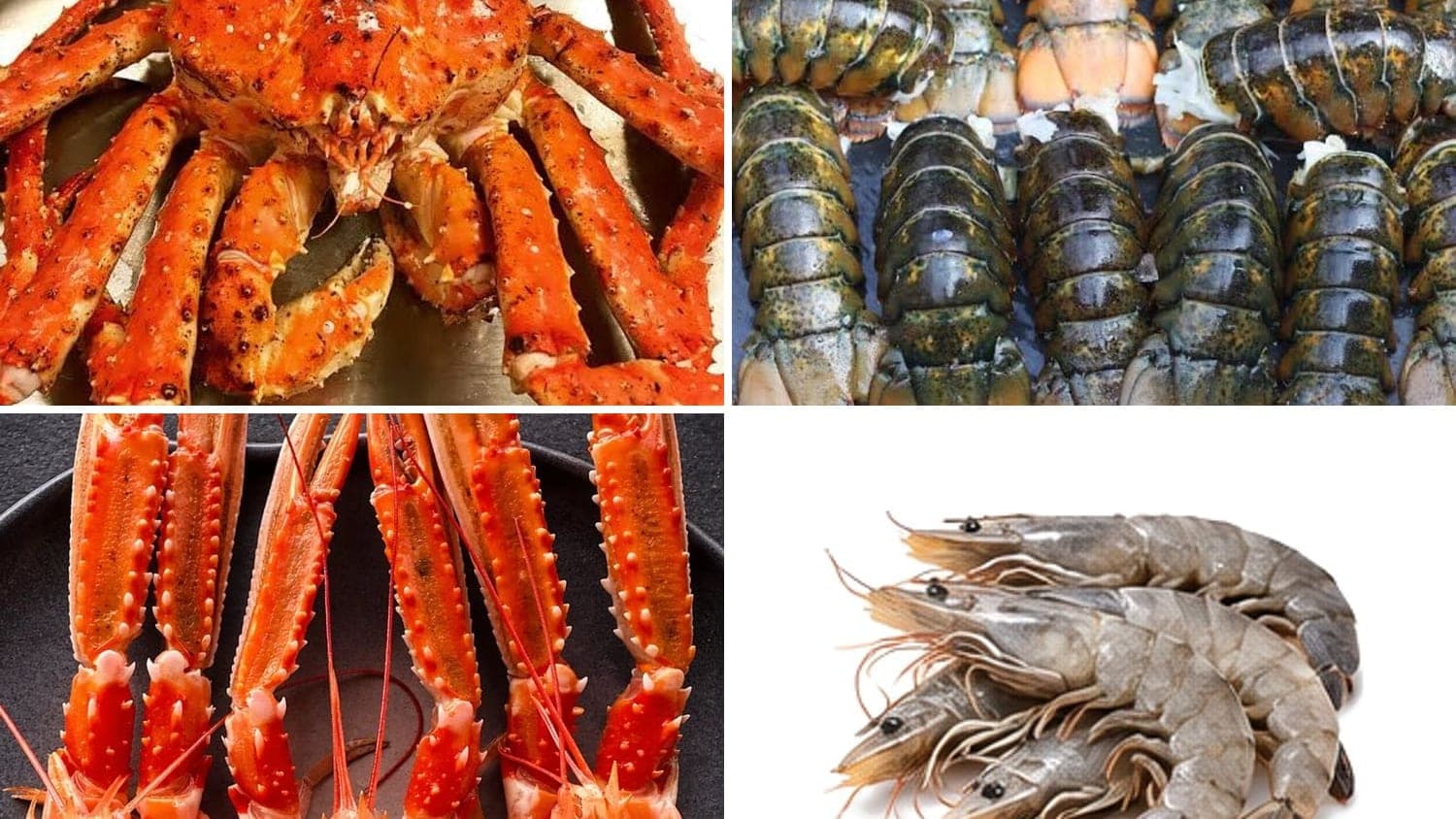
King crab and snow crab sit at opposite ends of the same menu. King crab sells on spectacle, its thick, spiny legs cracked open at the table; snow crab sells on value, its slender clusters filling buffets, crab boils and freezer promotions. Both are wild catches, managed by quota in their main fisheries, both are usually cooked and frozen soon after landing, and both are graded in ways that confuse first-time buyers.
This guide covers species, product forms, size grades, meat fill and glaze, catch documentation, storage and thawing, and how to compare offers. BSA sources king crab and snow crab to a written brief each season rather than holding stock, and the checks below apply to any offer you receive.
Key takeaways
- Identify every crab by scientific name: the king crab species and opilio and bairdi snow crab differ in size, fill and price.
- Define each size grade in writing, covering unit, glaze basis, claws, tolerance and broken legs.
- Compare offers per net kilogram, adjusted for meat fill measured on a thawed sample.
- Check catch documents, harvest origin and the processing chain against your market’s current rules every season.
- Store at a stable -18 °C or colder, thaw slowly in the chiller and warm cooked crab only briefly.
The species in the trade
Market names travel loosely, so the scientific name is the only reliable identifier. King crabs belong to the family Lithodidae and snow crabs to the genus Chionoecetes:
- Red king crab (Paralithodes camtschaticus): the largest and most valuable, with the heaviest legs, fished in the North Pacific and, as an introduced population, in the Barents Sea.
- Blue king crab (Paralithodes platypus): from small North Pacific fisheries, often sold with red because it cooks to a similar color.
- Golden or brown king crab (Lithodes aequispinus): a deeper-water species with an orange-gold shell and smaller legs, usually priced below red.
- Southern king crab (Lithodes santolla): from Chile and Argentina, where it is known as centolla, and worth considering where a buyer asks for it.
- Opilio (Chionoecetes opilio): the main snow crab of commerce, with long, slender legs, landed in the North Atlantic and North Pacific.
- Bairdi (Chionoecetes bairdi), or tanner crab: larger and heavier than opilio, from North Pacific fisheries that open only in some seasons.
Similar names cover other crabs, such as the red snow crab (Chionoecetes japonicus) of the Northwest Pacific, which should be sold under its own name. Insist that the scientific name on the offer matches the cartons and the documents.
Product forms: whole crab, clusters, legs and meat
The cut decides how crab is graded, how much shell you pay for and how much kitchen labor you save.
- Whole crab: cooked and frozen intact for display and banquets, graded by individual weight.
- Clusters or sections: half a crab joined at the shoulder, with three walking legs and a claw for king crab, or four walking legs and a claw for snow crab.
- Legs and split legs: single king crab legs, with or without the claw, or legs cut lengthwise so the meat is ready for the grill or platter.
- Meat and claws: merus meat, from the long upper leg section, is the premium shelled cut, ahead of mixed leg and body meat; snow crab also comes as cocktail claws, shelled or scored above the pincer.
Cooked and brine-frozen is the standard form: the crab is cooked in brine, cooled, frozen quickly and evenly by immersion in very cold brine, then glazed, so it needs only thawing. Raw frozen crab, made in smaller volumes mainly for Asian markets that steam, grill or hot-pot it, must be cooked through and can show discolored meat if handling falls short. The brief should say which is wanted, as the two are not interchangeable on a menu.
Size grades and why they need defining in writing
Crab is graded by weight, with conventions that differ by species, form and origin. King crab legs are usually counted per 10 lb carton: the fewer legs it takes to fill the carton, the larger each one is. King crab clusters and whole crab go by piece weight, and snow crab clusters by weight band, in ounces in North American trade and grams in metric markets.
That leaves room for misunderstanding. Is a leg count measured on glazed or net carton weight? Are claws counted, packed separately or excluded? Does a 10 oz-up cluster grade apply to every cluster or to the average? How many pieces may fall outside the band, and do broken legs count? Origins answer these questions differently, and a buyer who assumes one answer and receives another will struggle to make a claim stick.
Meat fill and glaze
Two clusters of equal weight can carry very different amounts of meat. Crabs grow by molting, and a crab needs time to fill its new, larger shell; until then the meat sits loosely and tends to be watery. Fill therefore varies with season and fishing ground, which is why the cheapest offer per kilogram can be the most expensive per plate. Golden king crab generally fills less than red, part of the price gap between them.
To check fill, thaw legs or clusters from several cartons and cut the shell lengthwise along the merus and the other segments. Well-filled meat presses against the shell; poor fill shows gaps, shrinkage or stringy, wet meat. For a comparable figure, weigh a thawed sample, extract all the meat and weigh it again. Packers’ yield data helps, but your own trial is the reference.
Brine-frozen crab carries a protective glaze, and its percentage should be stated with the basis used to calculate it; compare prices per net kilogram. The deglazing method in our frozen shrimp specifications guide works for crab too: rinse until the ice has left the shell surface and cut ends, drain for a fixed time and weigh, without thawing the meat inside.
Catch documentation, legality and traceability
All king and snow crab is wild-caught, and most fisheries operate under quotas, seasons, minimum sizes and, in many cases, a ban on landing females. Quotas are typically set each season from stock surveys, and some fisheries have closed entirely in poor years, so availability, size mix and price can swing between seasons, and legality has to be demonstrated, not assumed.
Documentation is set by the destination, and it changes. Some markets, the EU among them, require a catch certificate validated by the vessel’s flag state for wild-caught fishery products. Others run their own traceability programs, and some restrict or prohibit seafood from particular origins, sometimes judging origin by where the crab was caught rather than where it was processed. Confirm current rules with your competent authority or customs broker before contracting, and again each season. An offer should identify:
- Species by scientific name, and whether the crab is cooked or raw
- Fishing area, vessel name and flag, and landing dates
- The plant that cooked and packed the crab, and its country
- Lot codes linking cartons to production and catch records
- The documents that will accompany the shipment, with drafts before loading
Where one country’s fleet catches the crab and another country processes it, ask for the full chain, including any transshipment, because a gap can be enough for an authority to hold a consignment. Retail labels must also declare crustaceans as an allergen in the form each market requires. Our export specialists can review a proposed origin and document set with your broker in advance.
Comparing king crab with snow crab, and comparing offers
Many distributors carry both crabs for different roles. The table summarizes general differences; individual lots, origins and seasons vary.
| Attribute | King crab | Snow crab |
|---|---|---|
| Main species | Red, blue and golden; southern on request | Opilio; bairdi in smaller volumes |
| Typical sources | North Pacific, Barents Sea, South America | Atlantic Canada, Greenland, Norway, Alaska |
| Leg and shell | Thick, spiny shell and very large legs; needs scissors | Thinner shell and slender legs; meat slides out easily |
| Main formats | Legs, clusters, split legs, merus meat, whole crab; live from some origins | Clusters, cocktail claws, meat, whole crab |
| Size grading | Legs per 10 lb carton; clusters and whole crab by piece weight | Clusters by ounce or gram band |
| Relative price | Higher per kilogram; golden below red | Markedly lower per kilogram |
| Typical uses | Signature plates, whole-leg presentation, festive retail | Buffets, crab boils, casual dining, promotions |
Put offers on a common basis before comparing price: species and origin, form, grade in the same unit and weight basis, price per net kilogram and Incoterm. Then weigh what the price hides: meat fill from your trial, the share of broken legs, the production date and the documents available. Crab from an earlier season held in good cold storage can be perfectly sound, but it should be described and priced as such. A brief sent through our quote form that covers these points brings back an offer you can compare line by line.
Storage, thawing and service
Hold frozen crab at -18 °C or colder, moving to colder storage near -25 °C for long holding where the packer recommends it. Stability matters as much as the set point: each temperature swing lets glaze sublimate and moisture leave the meat, drying the exposed ends and leaving white, fibrous freezer burn. Keep cases closed and away from cold-store doors, and rotate stock first in, first out.
Thaw slowly in a chiller, on a rack over a tray so that meltwater drains away; large legs and clusters need overnight or longer. Sealed bags under cold running water work when time is short, but crab should never be thawed at room temperature. Cooked crab only needs serving chilled or brief warming by steam or grill, since prolonged heat toughens the meat, while raw crab must be cooked through. Do not refreeze thawed crab, and use it within the limits your food safety plan sets.
Pre-shipment and arrival checklist
Many crab disputes can be prevented before the container is sealed. Before shipment:
- Check species, fishing area, vessel flag and processing plant against your market’s current rules.
- Review draft documents for consistent species names, weights and lot codes.
- Agree the grade definition, glaze basis, net weight, defect allowances and claim period in writing.
- Request photographs of the production lot with carton marks visible, plus samples or yield data from a new packer.
- Confirm the reefer set point and that a temperature logger travels with the load.
On arrival, record each result against the lot code:
- Download the logger and probe product temperature at several positions in the load.
- Check cartons for crushing, damp and internal frost, and labels against the packing list.
- Deglaze and weigh samples from several pallets to confirm net weight.
- Check counts or weight bands against the agreed definition, and record broken or missing legs.
- Thaw a sample to assess meat fill, color, odor and dehydration, and taste it.
- Photograph findings and notify the supplier within the agreed claim period.
This guide is general trade information, not legal or regulatory advice. Requirements differ by market and change over time; confirm current rules with your customs broker or competent authority before ordering.