Tilapia is a trade name for a group of African and Middle Eastern cichlid fishes rather than for one species. Almost all of the tilapia in international trade is farmed, and most of it is Nile tilapia (Oreochromis niloticus) or a red or gray hybrid strain bred from it and its close relatives. Raised in ponds, cages and tanks from Egypt to China and Brazil, it reaches buyers as live fish, whole frozen fish and boneless fillets, and each of those forms has its own customers.
This profile explains how the main tilapias differ and how to recognize them, how the fish spread from Africa to farms across the tropics, the names it carries in different markets and how kitchens use it. Current origins, cuts and size bands for our own supply are on the frozen tilapia product page, which also covers fillet grading, so this article stays with the fish itself.
Key takeaways
- “Tilapia” covers several African cichlids, but farmed trade is dominated by Nile tilapia and red or gray hybrid strains.
- Regular dark bars across the tail fin identify Nile tilapia; red tilapia is a family of hybrid strains, not a species.
- Whole fish go mainly to Africa, the Middle East, Latin America and Asian communities, while skinless fillets serve retail and foodservice in North America and Europe.
- Settle off-flavor limits, color treatment, residue testing and label wording for your market before fixing a tilapia specification.
What tilapia is: one name, several fish
Early naturalists placed most of these fish in a single genus, Tilapia. Later work split the group, and the commercially important species now sit mainly in Oreochromis, with others in Sarotherodon and Coptodon; redbelly tilapia, for example, is now Coptodon zillii, formerly Tilapia zillii. Breeding habits help separate the groups. In Oreochromis the female carries the eggs and newly hatched fry in her mouth, while Coptodon species lay sticky eggs on the bottom and both parents stand guard over them.
Nile tilapia dominates farming because it suits farms so well. It feeds low in the food chain, grazing on algae, plankton and detritus, grows quickly on inexpensive pelleted feed and reaches market size within months in warm water. It also matures early, at five to six months old in ponds according to FAO, which is the farmer’s main difficulty: a mixed-sex pond soon fills with small fish competing for food. Since hormonal sex-reversal techniques were developed in the 1970s, commercial farms have widely stocked all-male fingerlings, which avoids overcrowding and stunted fish.
| Fish | Scientific name | Native range | Field marks | Place in trade |
|---|---|---|---|---|
| Nile tilapia | Oreochromis niloticus | Nile basin, West African rivers and the East African rift lakes | Regular dark vertical bars across the whole depth of the tail fin | The main farmed species, sold whole and as fillets |
| Blue tilapia | Oreochromis aureus | Jordan Valley, lower Nile, Chad basin, Niger and Senegal rivers | Tail fin without regular bars and with a pink to red edge; breeding males bright blue on the head | Valued for cold tolerance; a common parent of gray hybrids |
| Mozambique tilapia | Oreochromis mossambicus | Lower Zambezi south to South Africa’s Eastern Cape | Smaller, seldom much over 1 kg; thrives in brackish and salt water | Spread through Asian farms in the 1940s and 1950s; supplied the color of the first red strains |
| Red tilapia | Hybrid Oreochromis strains | Bred on farms, first in Taiwan from the late 1960s | Pink, orange or red skin on a Nile-type body | Sold whole where skin color matters to diners |
How to identify Nile tilapia and red tilapia
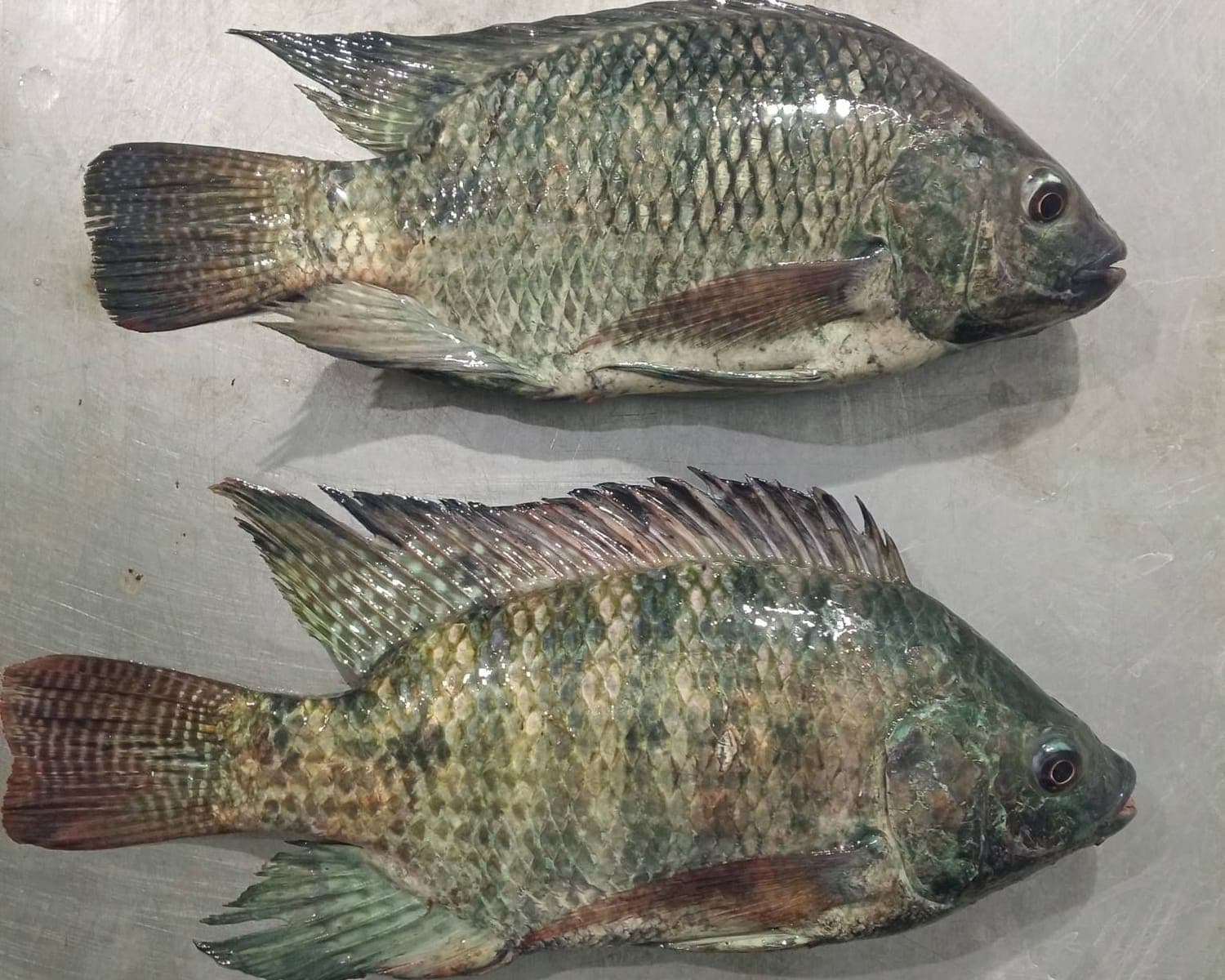
Nile tilapia is a deep, laterally compressed fish with smooth-edged scales and one long dorsal fin, spiny at the front and soft-rayed behind. The surest field mark is the tail: from fry to adult it carries regular dark vertical bars across its full depth, a pattern blue tilapia lacks. Body color runs from silvery gray to olive, males are often bluish pink with a dark throat, and in the breeding season the dorsal, pectoral and tail fins turn reddish. Wild fish have been recorded at more than 4 kg and nine years of age, but farms harvest them far younger, from pan-size fish of a few hundred grams to fish of 600 to 900 g raised for filleting.
Red tilapia is not a species. The first red strains came from Taiwan, where a reddish mutant of Mozambique tilapia noticed in 1968 was crossed with Nile tilapia; similar lines were later bred in Florida and Israel from other parent combinations, and many commercial red strains now mix genes from several Oreochromis species. Skin color ranges from pale pink through orange to deep red. Under the skin, red and gray fish are hard to tell apart, so the distinction matters chiefly when the fish is sold whole.
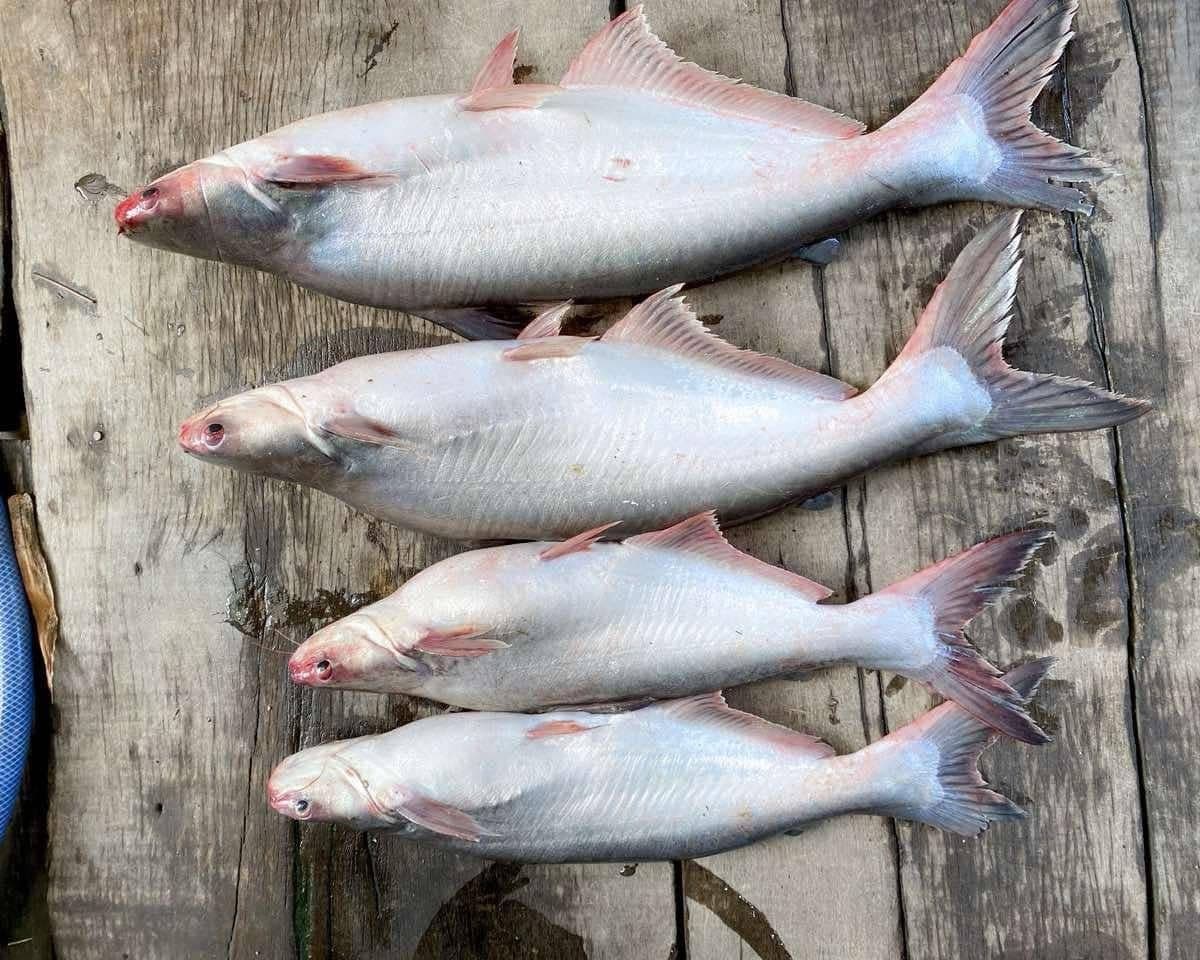
At a glance, a whole red tilapia can resemble a small marine fish such as a snapper, and skinless tilapia fillets look much like other mild white fillets, pangasius among them. A fish counter or menu should name tilapia as tilapia. Where a buyer suspects a lot holds a different species from the one on the label, a DNA test by an independent laboratory settles the question quickly.
Where farmed tilapia comes from
Nile tilapia is native to the Nile basin, the rivers of West Africa from Senegal to Lake Chad, and the lakes of the East African rift. People have raised it for a very long time, and its farming can be traced to ancient Egypt. Its spread as a farmed fish belongs to the twentieth century. Mozambique tilapia reached Taiwan from Singapore in 1946, Nile tilapia arrived in Thailand in 1965 as a gift of fish from Japan’s then Crown Prince to the Thai king, and over the following decades the species was introduced to farms across Asia, Latin America and beyond.
Selective breeding has since reshaped the farmed fish. The best-known program, Genetically Improved Farmed Tilapia (GIFT), began in the Philippines in 1988 under ICLARM, now WorldFish, working with Philippine institutes and Norway’s AKVAFORSK. The first GIFT fish went to Philippine farmers in 1993, and the strain has since been distributed to many other Asian countries. Other national and commercial strains are now farmed alongside it.
FAO data show China producing more than half of the world’s farmed tilapia through the 1990s and early 2000s, and it remains a leading producer; large volumes also come from Indonesia, Egypt and Brazil, while Thailand, the Philippines, Colombia, Mexico and Honduras are among the many other countries that farm it commercially. Systems range from fertilized earthen ponds, sometimes shared with carps, to floating cages in lakes and reservoirs, raceways, tanks and recirculating systems in cooler countries.
Temperature shapes the calendar. FAO notes that Nile tilapia does not spawn until the water reaches about 24 °C and dies at around 11 to 12 °C, so tropical farms harvest year-round, while farms with cold winters grow fish through the warm months and harvest before the water cools, or keep stock indoors. Farms in temperate countries cannot match tropical production costs for frozen fillets, so they generally sell into the live-fish market instead.
Tilapia names in the main markets
The English word tilapia is understood in most markets, but local names still appear on menus, import papers and shop labels. The table lists names we could verify; the labeling rules of each market decide which name is acceptable on a pack.
| Market or language | Name | Notes |
|---|---|---|
| International English | Tilapia; Nile tilapia; red tilapia | “Tilapia” alone usually means Nile tilapia or a hybrid |
| Thailand | Pla nil; pla thap thim | Pla nil is Nile tilapia; pla thap thim, roughly “ruby fish”, is red tilapia |
| Mainland China | 罗非鱼 (luófēi yú) | The general name for farmed tilapia |
| Taiwan | 吳郭魚 (wúguō yú); 台灣鯛 | The first honors the two men who brought tilapia fry from Singapore in 1946; the second is a marketing name adopted in 2002 |
| Egypt (Arabic) | Bolti (بلطي) | Used for Nile tilapia |
| Mexico | Mojarra | The usual menu name for tilapia; the word mojarra also covers unrelated marine fish |
| European Union | Designation set by each member state | Labels must also carry the scientific name |
Market forms of tilapia and where each fits
Tilapia’s trade splits along the line between whole fish and fillets, and the two seldom share customers. The table summarizes the main forms in world trade; it describes the species’ market as a whole, not our own range.
| Form | Typical buyers | Use |
|---|---|---|
| Live | Restaurants and markets near farms; live-fish trade in some importing countries | Steamed or cooked to order from the tank |
| Fresh whole on ice | Wet markets and supermarkets in producing countries | Grilling, frying, soups |
| Frozen whole round, or gutted and scaled | Importers serving Africa, the Middle East, Latin America and Asian communities | Frying and grilling on the bone, stews |
| Frozen skinless fillets, often deep-skinned | Retail, foodservice and processors in North America and Europe | Baking, pan-frying, breading, tacos, ready meals |
| Steaks and portions | Caterers and foodservice | Curries, stews, portion-controlled plates |
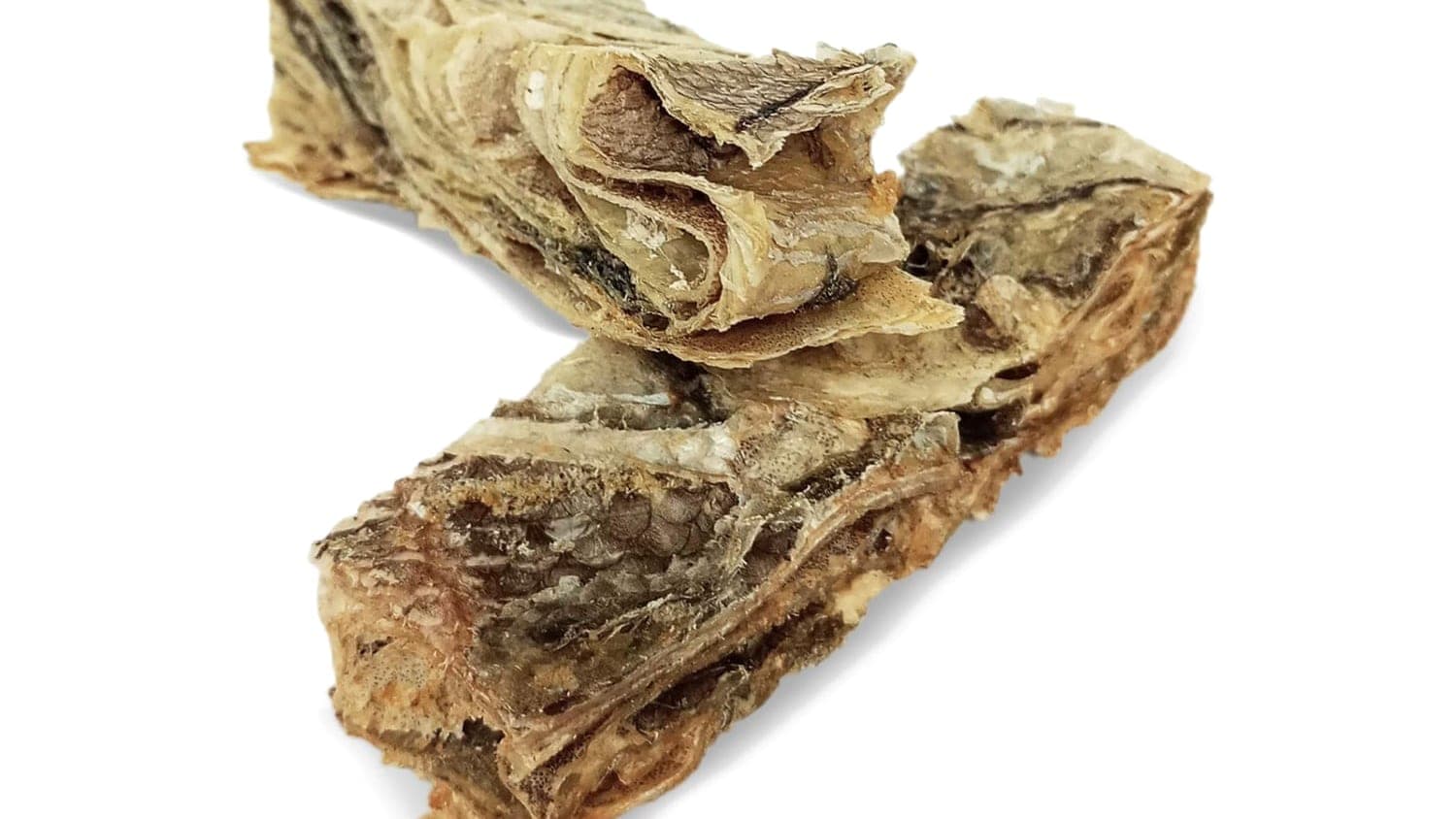
| Skin, scales and frames | Gelatin and collagen processors, snack makers | Raw material for gelatin and collagen; fried skin snacks |
Fillet yield explains much of the price gap between whole and filleted fish. FAO’s tilapia fact sheet puts skinless fillet yield at about a third of live weight, so each kilogram of fillet takes roughly three kilograms of fish. The remainder becomes heads, frames, skin and scales, and much of it goes to by-product lines: tilapia skin is traded as fish skin and scales as fish scale raw material, and our collagen and gelatin raw-material guide explains how processors specify them.
For a restaurant or retailer weighing a change of fillet, our restaurant and retail sourcing guide sets out how to run a side-by-side trial against the product already in use.
How tilapia is cooked around the world
Tilapia flesh is white, lean and mild, with a medium-firm flake, so it takes marinades, spice pastes and sauces readily and suits almost any cooking method. Kitchens divide broadly into whole-fish cooking, where skin, bones and head are part of the dish, and fillet cooking, where the fish serves as a neutral base.
- Thailand: pla nil or pla thap thim coated in salt and grilled whole over charcoal (pla pao), deep-fried until crisp, or steamed with lime, garlic and chili.
- China and Taiwan: steamed whole with ginger and scallion and finished with hot oil and soy sauce, or braised in a brown sauce.
- Philippines: grilled over coals as inihaw, stuffed with tomato and onion and roasted in foil or banana leaf as pinaputok, or wrapped in leaves and cooked in spiced coconut milk as sinanglay.
- Ghana and West Africa: grilled whole and served with banku, a fermented corn and cassava dough, and hot pepper sauce, or cooked into stews and light soups.
- Egypt: fried or grilled whole and eaten with rice, bread and tahini.
- Mexico and Central America: mojarra frita, the whole fish scored, deep-fried and served with lime, salsa and tortillas.
- North America and Europe: skinless fillets baked, pan-fried, blackened or breaded, and used in fish tacos and sandwiches.
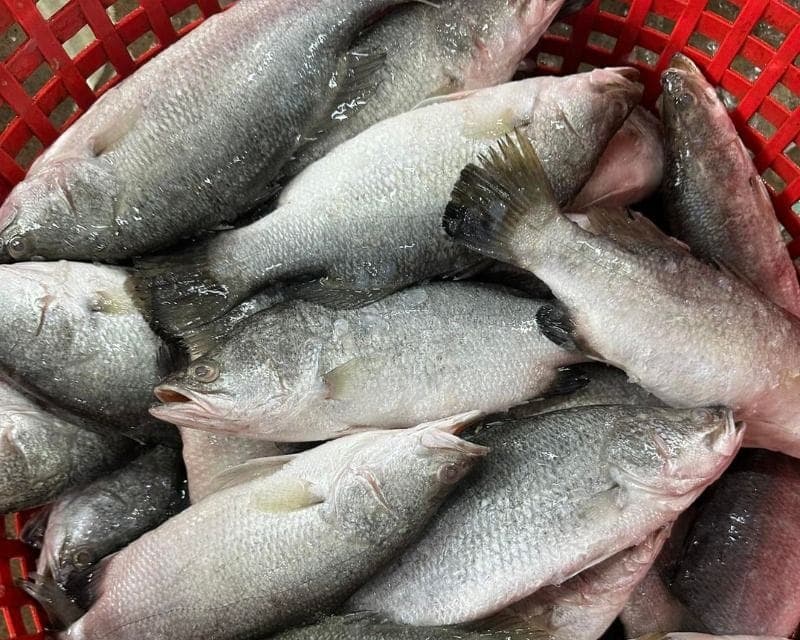
Recipes written for tilapia fillets usually work with other mild white fillets of similar thickness, such as pangasius, which is softer and moister (see our pangasius species guide), or barramundi, which is firmer with a larger flake. Whole fish are harder to replace, because diners who know tilapia expect its shape, skin and bone structure on the plate.
Tilapia quality signs and trade rules to check
Good tilapia smells clean and faintly sweet. A muddy or earthy note comes from compounds made by algae and bacteria in pond water, and the usual remedy is to hold fish in clean water before harvest, for three to seven days according to FAO. Whole fish should have bright, intact skin, red gills and a firm belly, and fillets should be white to faintly pink, without gaping, bruising or yellowed fat under the skin line.
Three trade questions come up again and again with this fish. Some fillets for the US market are treated with filtered smoke to hold a pink color, which the EU does not allow; farmed lots are tested against each market’s residue limits for veterinary drugs and banned dyes; and many markets require labels to state the farmed production method and the country of production. Live tilapia raises one more issue, since escaped fish compete with native species and several countries restrict where tilapia may be stocked. Requirements change, so confirm them with your importing authority or broker before the first shipment.
Once the form, size band and destination are settled, you can ask us for a tilapia offer on that basis.
This guide is general trade information, not legal or regulatory advice. Requirements differ by market and change over time; confirm current rules with your customs broker or competent authority before ordering.