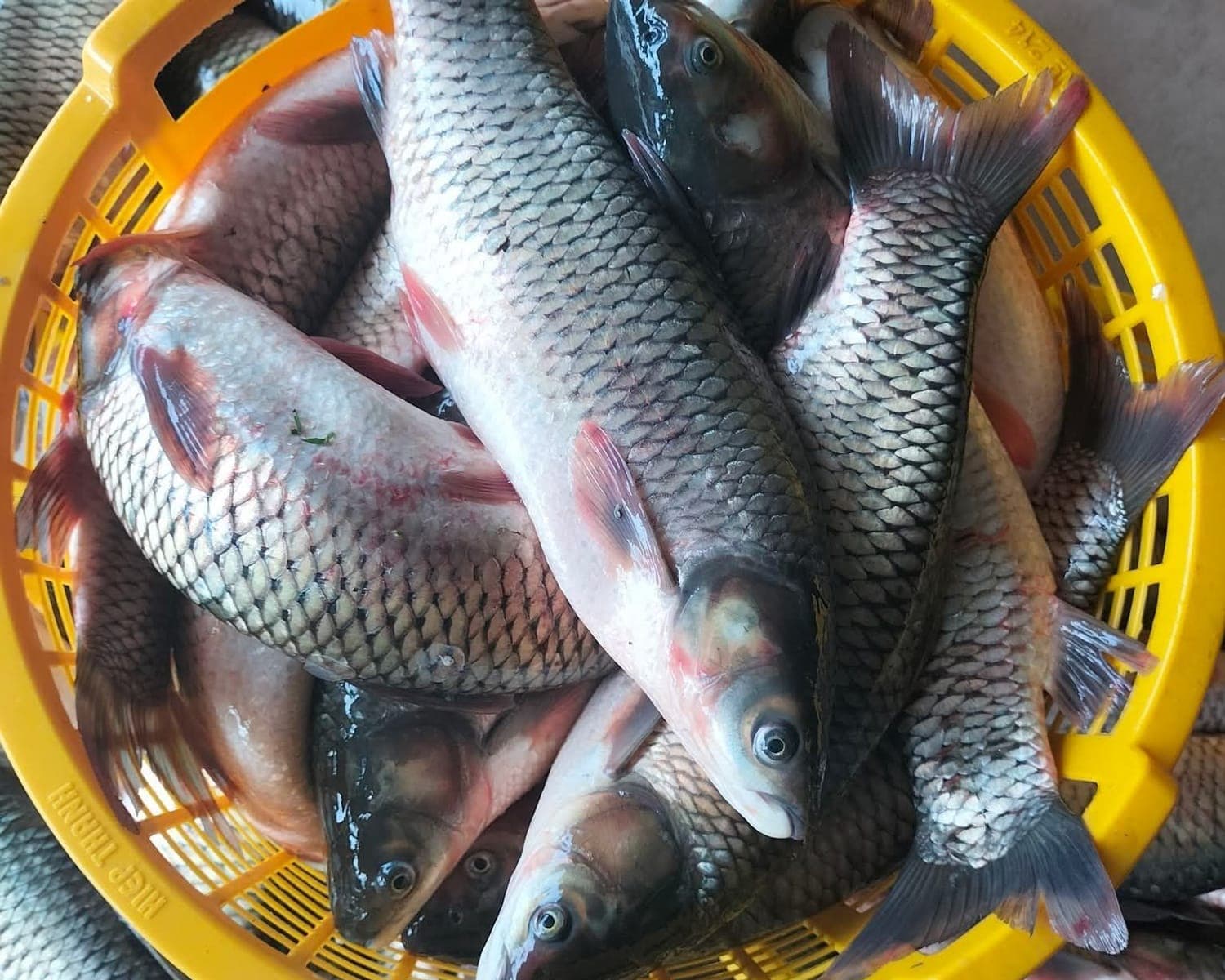
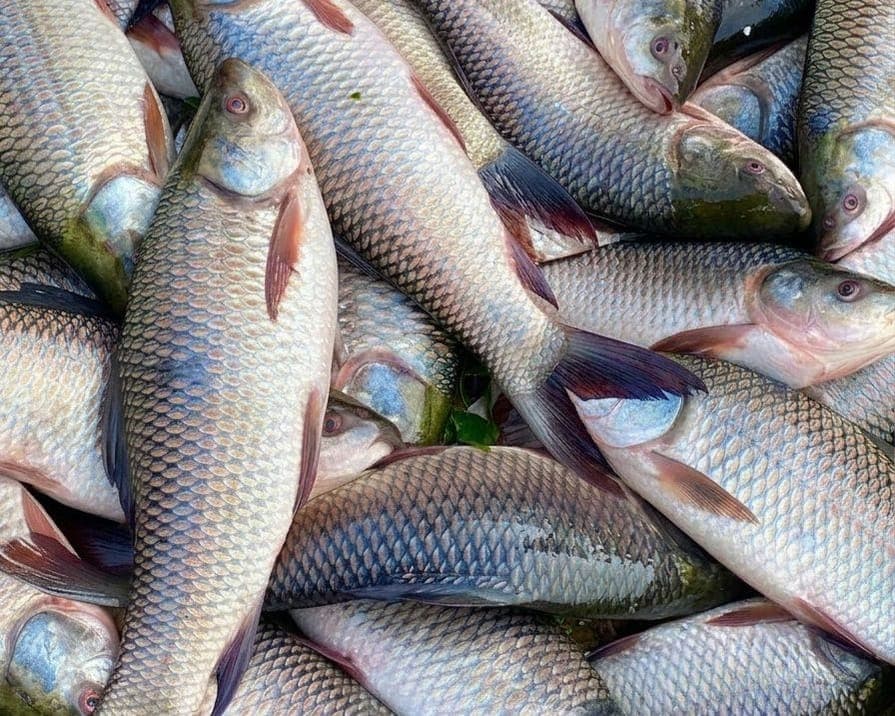
“Carp” on an order means little until the species is named. Common carp, grass carp, silver carp and bighead carp are all farmed on a vast scale, but they differ in body shape, diet, texture and price, and each has its own customers. A Prague fishmonger at Christmas, a Cantonese restaurant steaming fish and a Hunan kitchen splitting heads for chopped-chili fish head are buying three different animals.
This profile treats the four together, as our frozen carp product page does. It covers how to identify each species, how carp farming developed in China and Europe, the names used in the main markets, the forms carp is traded in and how kitchens use them, with notes on bones, taste and import rules. Sizes, cuts and the origins we supply are listed on the product page.
Key takeaways
- Common, grass, silver and bighead carp are separate species with different shapes, diets, flesh and markets, so name the species on every order.
- Barbels mark common carp; dark-edged scales mark grass carp; the keel and dark blotches separate silver from bighead carp.
- Carp has been farmed for over 2,000 years in China and since medieval times in Europe, and most is still sold live or fresh.
- Expect fine intermuscular bones in all four, check for muddy taste, and confirm invasive-species rules for your destination.
Four carps, four different fish
The four species fill different niches in the same water, which is why farmers have long raised them together. Silver carp strains phytoplankton from the water through sponge-like gill rakers; bighead carp filters larger zooplankton through long, comb-like rakers; grass carp eats aquatic weeds and grasses; and common carp roots through the mud for insect larvae, worms and plant matter. A pond stocked with all four uses food that any one species would leave untouched.
| Feature | Common carp | Grass carp | Silver carp | Bighead carp |
|---|---|---|---|---|
| Scientific name | Cyprinus carpio | Ctenopharyngodon idella | Hypophthalmichthys molitrix | Hypophthalmichthys nobilis (formerly Aristichthys nobilis) |
| Native range | Rivers draining to the Black, Caspian and Aral Seas; close relatives across East Asia | Eastern Asia, from the Amur south to southern China | Eastern Asia, from the Amur south to the Pearl River | China, from the Pearl River north to the Amur |
| Natural food | Bottom animals and plants | Water weeds and grasses | Phytoplankton | Zooplankton |
| Largest recorded | About 40 kg | About 45 kg | About 50 kg | About 40 kg |
| Bought mainly for | Whole fish for frying, baking and festive dishes | Firm white flesh: steamed fish, slices, fillets | Economical whole fish and mince | The large head, plus body steaks |
History explains why China farms these particular carps. Common carp was farmed first, but under the Tang dynasty (618 to 907) the imperial family name, Li, sounded the same as the word for carp, and FAO’s species notes record that farmers turned to other species in its place. Grass, silver and bighead carp, together with black carp, became the “four famous domestic fishes” (四大家鱼) of Chinese pond farming, a group that does not include common carp.
How to identify common, grass, silver and bighead carp
- Common carp: a deep body with an arched back, a long dorsal fin and two pairs of barbels at the corners of the mouth, the only one of the four with barbels. Wild fish are brownish green above and golden below. Farmed strains include fully scaled fish, mirror carp with a few large, irregular scales and nearly scaleless leather carp.
- Grass carp: long and almost cylindrical, with a rounded belly, a broad head, a mouth at the tip of the snout and no barbels. The large scales have dark edges, which give the flanks a net-like pattern, and the color runs from dark brown on the back to greenish yellow on the sides.
- Silver carp: deep and flattened from side to side, evenly silver, with very small scales and a scaleless head. The eyes sit low and forward on the head, the mouth is upturned and toothless, and a sharp keel runs along the belly all the way from the throat to the vent.
- Bighead carp: the head is longer than the body is deep, with a wide mouth and a projecting lower jaw. The back and sides are dark gray with irregular dark blotches, fading to a white belly, and the belly keel starts only behind the pelvic fins.
Silver and bighead carp are closely related and can hybridize, so mixed lots of large plankton-feeding carp need the closest checking: the keel and the blotches settle most cases. Black carp (Mylopharyngodon piceus), the fourth of China’s traditional pond fish, looks like a dark grass carp and feeds on snails and mussels. Crucian carp and goldfish (Carassius species) are smaller, deep-bodied relatives without barbels, and the Indian major carps, rohu and catla, are covered in our rohu and catla species guide.
Taxonomy adds two wrinkles. Current catalogs such as FishBase keep common carp in the carp family, Cyprinidae, but place grass, silver, bighead and black carp in a separate family of East Asian carps, Xenocyprididae, so older references that call all four cyprinids are not wrong, only out of date. FishBase also limits wild Cyprinus carpio to rivers draining to the Black, Caspian and Aral Seas and lists the wild carp of East Asia, from the Amur to the Red River, as Cyprinus rubrofuscus. Trade documents and most farm statistics still use C. carpio for both, but a specification should name the species exactly as the destination authority expects.
Where farmed carp comes from
Carp farming is among the oldest forms of aquaculture. FAO notes that cyprinids have been reared in China for more than 2,000 years, at first in ponds stocked with fry from the rivers. In Europe the Romans kept common carp in storage ponds, and from the Middle Ages monasteries built fish ponds to supply carp for the many fasting days of the church calendar. Central European pond landscapes in Bohemia, Poland and Hungary still reflect that history.
Artificial breeding of silver carp and its relatives succeeded in China in the 1950s, freeing farms from wild fry and allowing the species to spread through China and then abroad. Grass carp alone has been introduced to more than 40 countries, partly to control water weeds, and silver carp was stocked in European and Israeli waters to control algae and for food. Common carp has been introduced almost worldwide and is farmed in polyculture with Chinese carps, Indian major carps or tilapia, and alongside rice and livestock.
China remains by far the dominant producer of all four species. Common carp is also farmed widely in Indonesia, Vietnam, Bangladesh, India and Central and Eastern Europe. Growth depends on warm water. FAO notes that in most of China grass carp needs more than one season of grow-out to pass its market size of 1.5 kg, which tropical farms can reach within a year, and that bighead reaches 750 g to 1.5 kg within eight to ten months, while European common carp takes two to four seasons to reach 1 to 2 kg. Central European ponds are traditionally drained and fished out in autumn, ahead of the Christmas market.
Carp names in Chinese and other markets
| Species | Mandarin | Cantonese and other names | English trade names |
|---|---|---|---|
| Common carp | 鲤鱼 (lǐyú) | Karpfen (German), kapr (Czech), karp (Polish), ikan mas (Indonesia) | Carp, mirror carp, leather carp |
| Grass carp | 草鱼 (cǎoyú) | 鲩鱼 (wan yu) in Cantonese | Grass carp, white amur |
| Silver carp | 鲢鱼 (liányú), 白鲢 | Carpe argentée (French) | Silver carp |
| Bighead carp | 鳙鱼 (yōngyú), 花鲢, 胖头鲢 | 大头 (dai tau, “big head”) in Cantonese; carpe à grosse tête (French) | Bighead carp |
In North America, grass, silver, bighead and black carp are grouped as Asian or invasive carp, and since 2022 a campaign begun by the Illinois Department of Natural Resources has marketed wild-caught fish from the Mississippi basin as “Copi”. These are names for the same species, not different fish.
Carp market forms: live, fresh, frozen and the head trade
Most carp in producing countries never sees a freezer. FAO notes that most common carp is eaten in the country where it is farmed and that buyers want it live or freshly dressed, and grass, silver and bighead carp are likewise sold mostly live or fresh in China. Live sale is also the Central European tradition, with fish held in tanks in the days before Christmas Eve.
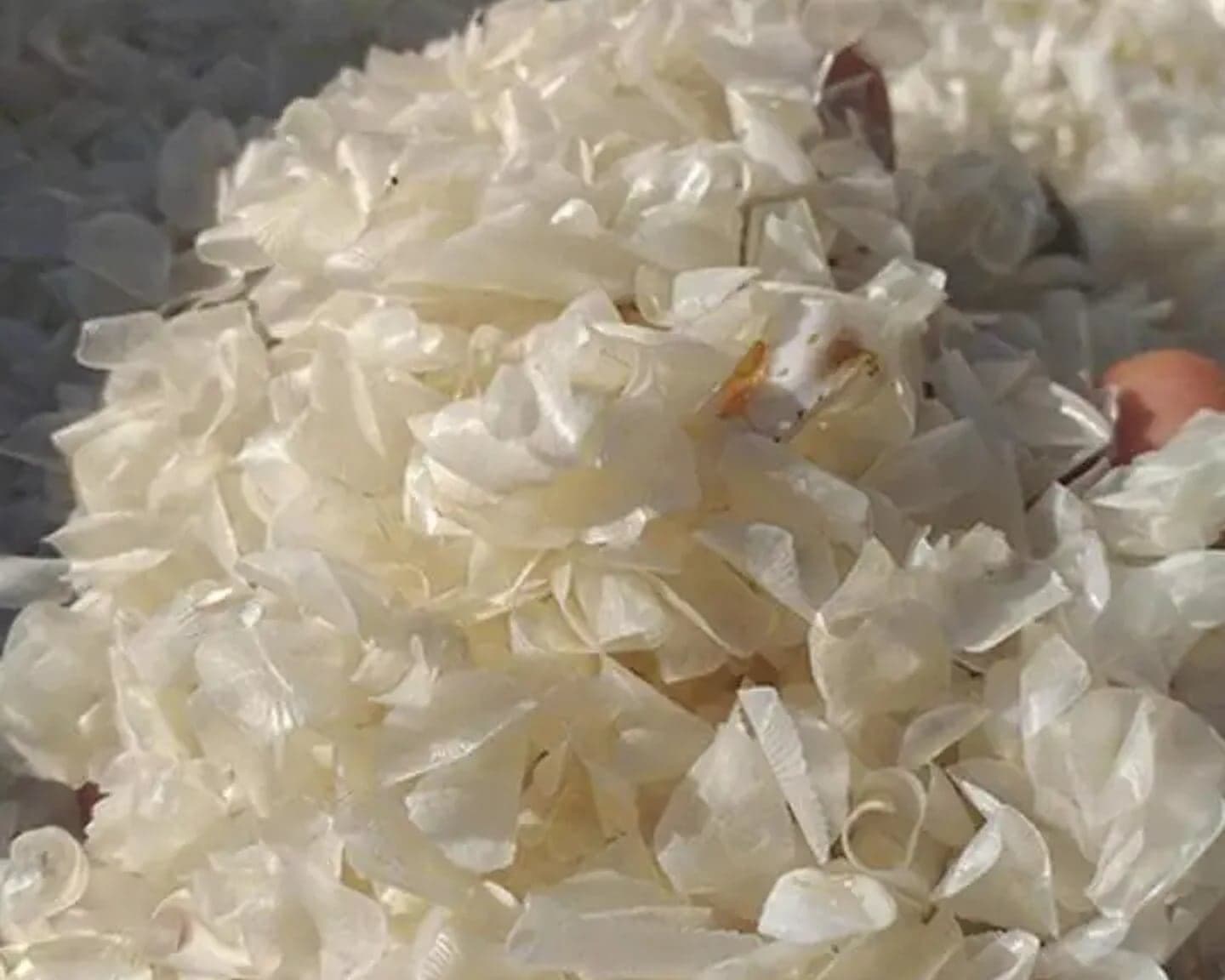
Frozen carp serves importers far from the farms and the processing trade. The main forms are whole round or gutted fish, cross-cut steaks, skin-on fillets that are often scored, and, for bighead, the head on its own. In Chinese cooking the head is the prized part of a bighead carp, so heads and bodies are often sold separately. Silver carp, the most economical of the four, is minced for fish balls and cakes, and some bighead is canned. Scales from processing lines are collected as raw material for fish scale collagen.
Carp travel well frozen if they are frozen fast and held steady; our reefer and Incoterms guide explains the temperature records and claim evidence to ask for on a container.
How carp is cooked, from Christmas Eve to fish-head soup
- Central Europe: breaded and fried carp is the Christmas Eve dish in the Czech Republic, Poland, Austria and parts of Germany, with fish soup made from the head and trimmings; Polish kitchens also serve carp in aspic.
- Jewish cooking: carp is a traditional base for gefilte fish, the poached minced-fish dumplings of Ashkenazi tables.
- Northern China: sweet-and-sour whole common carp, scored deeply and fried so the flesh opens out, a dish linked to the Yellow River.
- Cantonese cooking: grass carp steamed whole with ginger and scallion, sliced thin for congee and hot pot, or braised; crisp grass carp from Zhongshan, raised on broad beans, is prized for its firm texture.
- Hunan and Jiangnan: bighead heads split and steamed under chopped salted chili (剁椒鱼头), or simmered with tofu into a milky fish-head soup.
- Iraq: masgouf, the split fish grilled upright beside an open fire, often made with carp.
- Indonesia: ikan mas cooked as arsik, a North Sumatran Batak dish with andaliman pepper, or wrapped in banana leaf with spice paste as pepes.
Carp flesh is white to pinkish, moist and mild, firmest in grass carp and softest in silver carp. Most of the dishes above cook the fish whole or in bone-in pieces, so the head, skin and bones contribute to the flavor.
Carp bones, taste and import rules
All four species carry fine Y-shaped bones in the muscle along both sides of the body. Kitchens deal with them by scoring fillets finely before frying, by cooking the fish whole so diners can eat around the bones, or by mincing. Taste is the other recurring issue: carp from still ponds rich in algae can pick up a muddy flavor, which is reduced by holding fish in clean, flowing water for some days before harvest.
Import rules can be species-specific. In the United States, the Fish and Wildlife Service lists silver and bighead carp as injurious wildlife, and several other countries regulate silver, bighead or grass carp as invasive species. Such rules mainly target live fish and viable eggs, but some destinations also set conditions for whole uncooked fish. Before quoting a new destination, we check which forms are accepted; buyers should confirm current rules with their own authorities as well. To discuss species, cut and destination together, request a carp quotation.
This guide is general trade information, not legal or regulatory advice. Requirements differ by market and change over time; confirm current rules with your customs broker or competent authority before ordering.