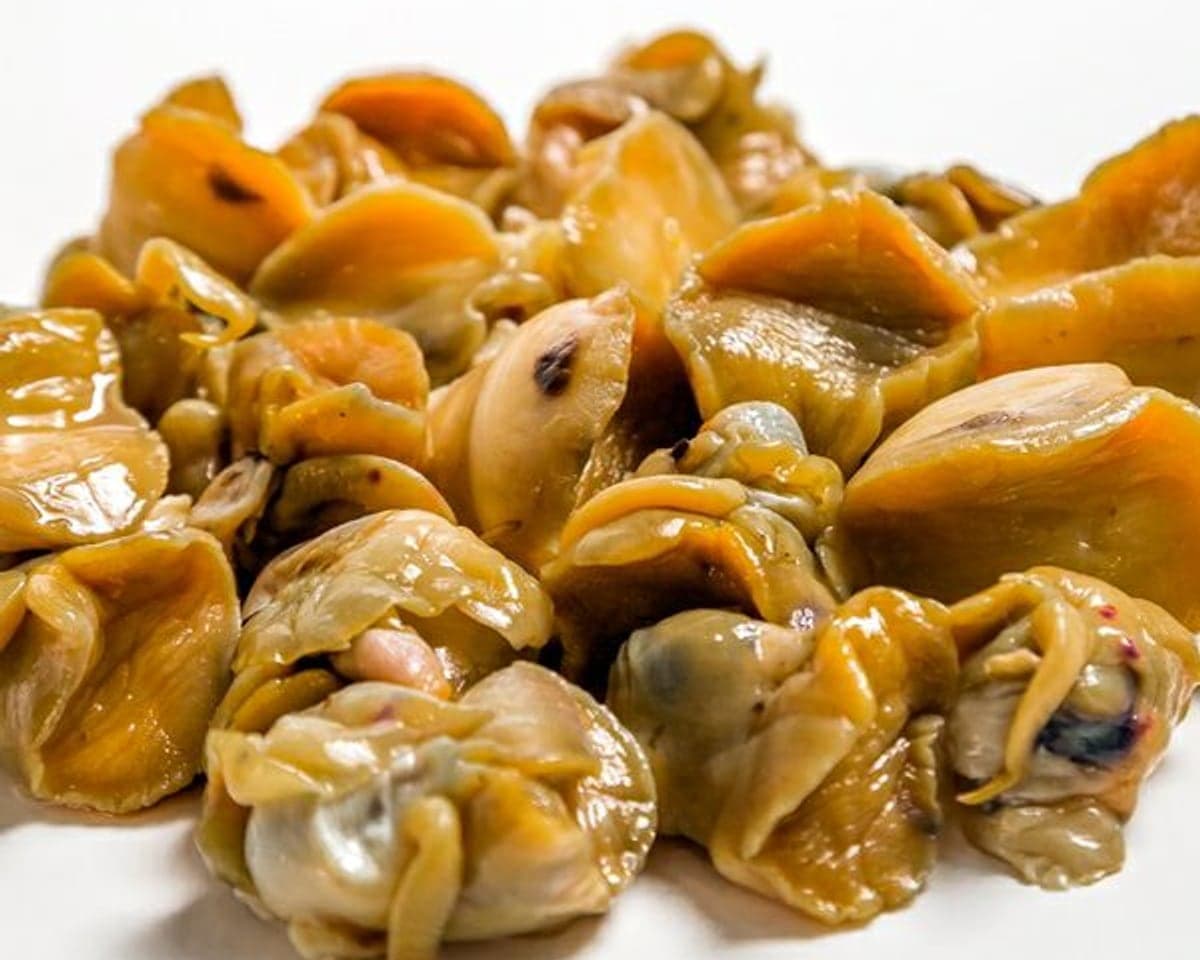
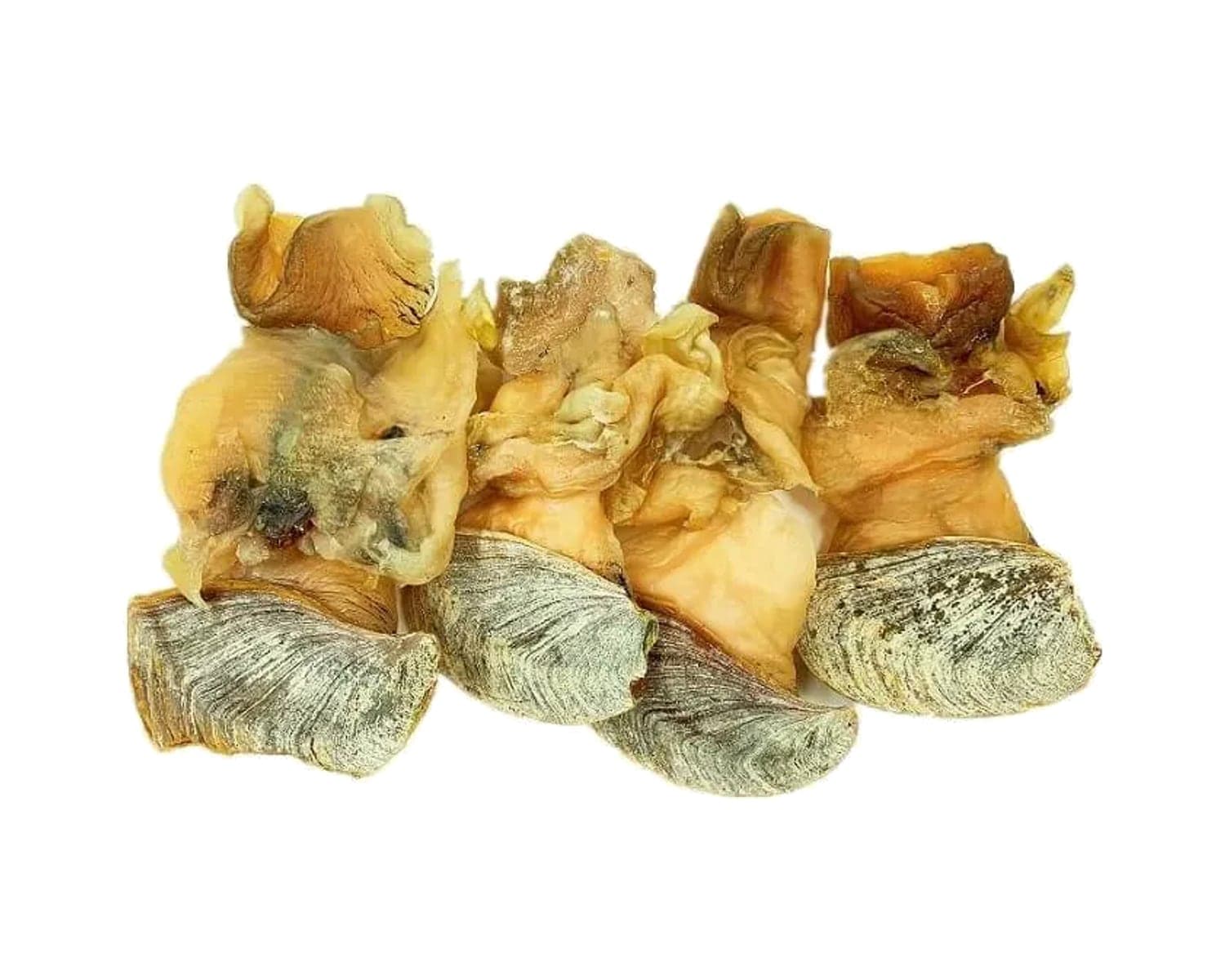
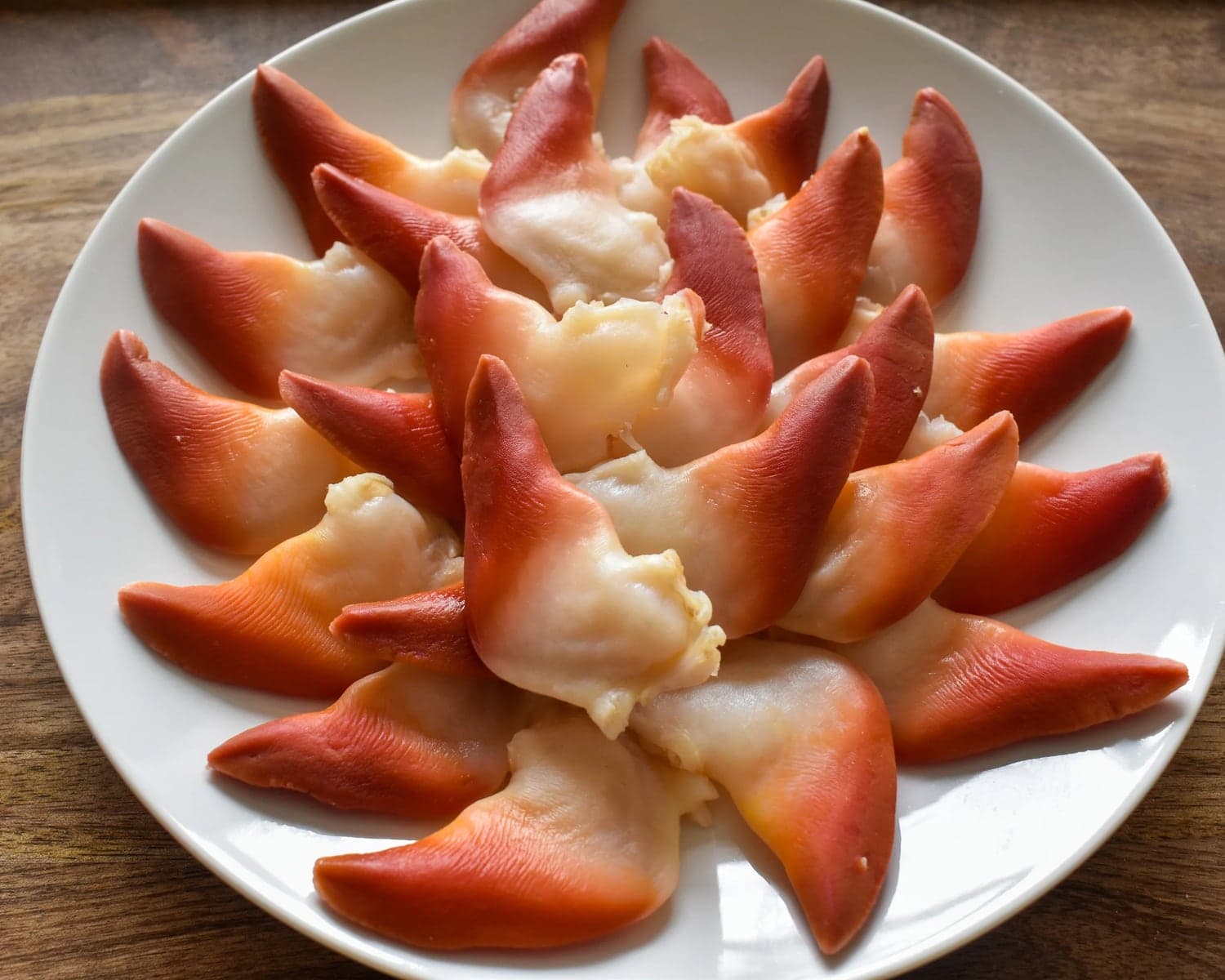
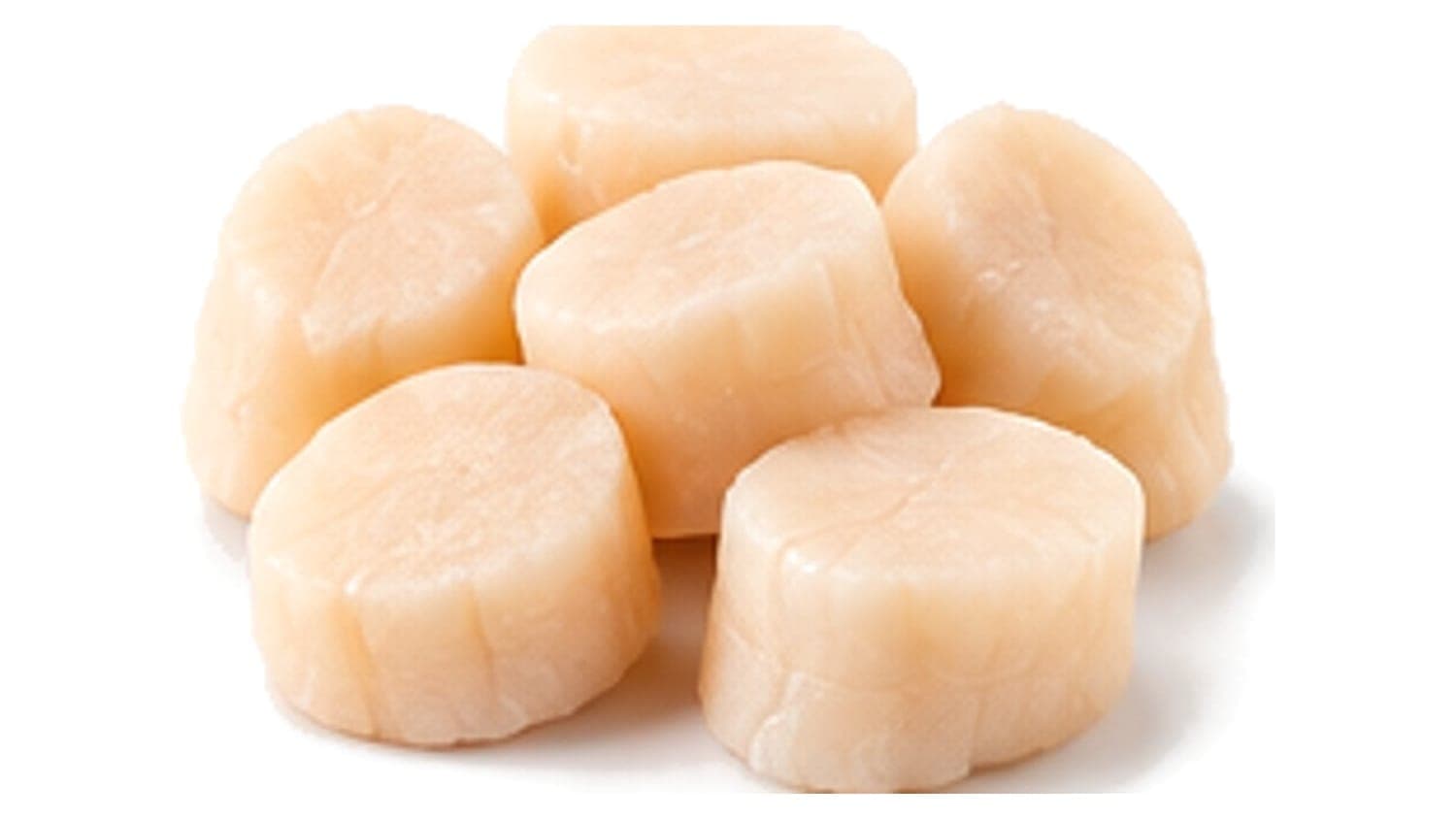
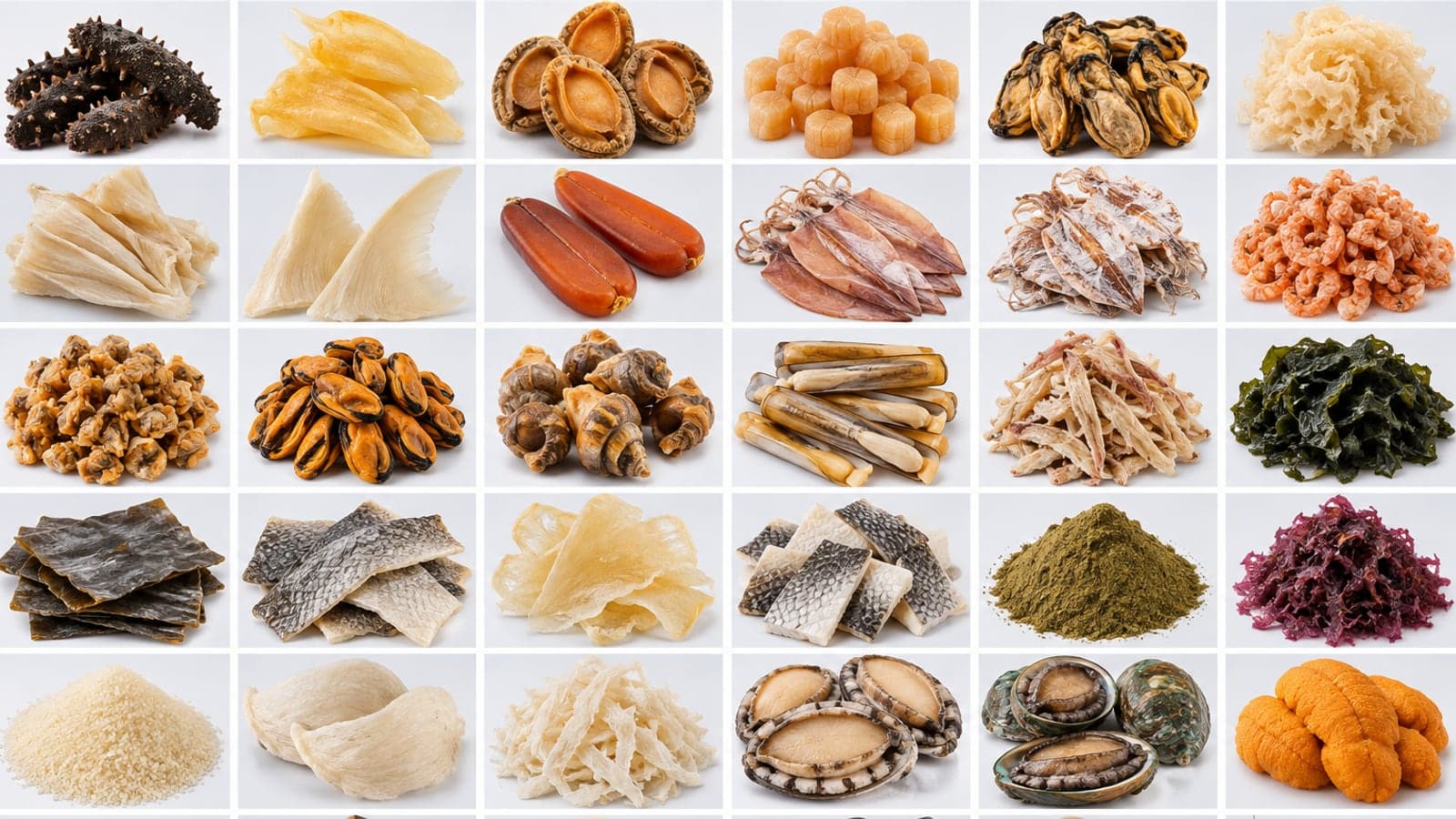
Whelk and conch are market names for large marine snails whose muscular foot is eaten as meat. In the North Atlantic, whelk usually means the common whelk, Buccinum undatum, while conch is used far more loosely, for the true conchs of tropical waters and for big whelks sold under a grander name. BSA Food Products handles the animal in two forms: cooked meat and whole cooked snails on the frozen whelk page, and the sliced and whole dried meat used in Cantonese soups on the dried whelk and conch page.
This profile covers the species that reach the market, how they live and where they are fished, the names they carry in Europe, North America and Asia, and the forms and dishes each one suits. It gives particular attention to queen conch, a Caribbean species whose international trade is controlled under CITES, and to the checks that keep the wrong snail out of a carton labeled whelk or conch.
Key takeaways
- Whelk and conch are trade names spanning several snail families; only the scientific name identifies the animal.
- Common whelk is a cold-water North Atlantic species caught in baited pots and shipped mainly to East Asia.
- Queen conch (Aliger gigas, listed by CITES as Strombus gigas) is in CITES Appendix II, and BSA Food Products does not offer it.
- Neptunea whelks are processed with their salivary glands removed, because the tetramine in them survives normal cooking.
Whelk or conch: what the names mean
Both words describe gastropods, the snail branch of the molluscs, but biologists use them more strictly than the trade does. True whelks belong mostly to the family Buccinidae, cold-water predators and scavengers that feed on bivalves and carrion. True conchs belong to the family Strombidae, warm-water grazers of algae and seagrass whose shells grow a flared outer lip. Other snails cross the line: the veined rapa whelk is a murex (family Muricidae), and the knobbed and channeled whelks of the US Atlantic coast (family Busyconidae) are sold as conch.
All of these snails carry an operculum, a horny plate on the back of the foot that in whelks seals the shell opening, and processors remove it along with the gut. What the buyer receives is the foot muscle: dense, pale and mildly sweet, with a bite that runs from springy to chewy depending on the species and the cooking.
| Species | Scientific name | Where it lives | How it reaches the market |
|---|---|---|---|
| Common whelk | Buccinum undatum | North Atlantic, from the shore to deep shelf waters | Baited pots; cooked meat, whole cooked, canned |
| Red whelk and other Neptune whelks | Neptunea spp. | North Atlantic and North Pacific | Part of Japan’s “tsubu” whelk group; glands removed |
| Veined rapa whelk | Rapana venosa | Native to East Asian seas; established in the Black Sea | Black Sea catch shipped to East Asia |
| Knobbed and channeled whelks | Busycon carica, Busycotypus canaliculatus | US Atlantic coast | Sold as conch or scungilli |
| Spotted babylon | Babylonia areolata | South-East Asian coasts, including the Gulf of Thailand | Trapped wild and farmed in Thailand |
| Queen conch | Aliger gigas (listed by CITES as Strombus gigas) | Wider Caribbean sand flats and seagrass | CITES Appendix II; export permits required |
Common whelk biology and fishing
The common whelk lives on both sides of the North Atlantic, around Britain, Ireland, France, Norway and Iceland in the east and as far south as New Jersey in the west, from the lower shore to several hundred meters deep, though most are found shallower than 200 m. Its shell reaches about 10 cm in height, although size and shape vary a good deal from one area to the next.
Whelks hunt live bivalves and scavenge dead fish and crabs, which is why the fishery works with baited pots, commonly using dogfish or brown crab as bait. Females fix clusters of lentil-shaped egg capsules to rocks and shells, and after several months in cold water the young crawl out as tiny whelks, with no drifting larval stage. Empty egg masses washed up on beaches are known as sea wash balls.
That direct development shapes how the fishery is managed. Young whelks settle close to their parents, so a stock behaves as many small local populations, and size at maturity can change over short distances. The baseline minimum landing size in UK and EU waters is 45 mm of shell length, some authorities set higher limits, such as 65 mm in Wales, and many add permits, limits on pot numbers or closed periods. Rising demand in East Asia, above all South Korea, has driven the growth of the British fishery since the early 2000s, and most of the catch is exported there.
Where whelks and conchs come from
Common whelk is fished in the British Isles, in France, where it is sold as bulot, and in eastern Canada. South Korea imports whelk mainly from the United Kingdom and Ireland, with smaller volumes from Norway and Canada, and cans much of it in brine or sauce; canned whelk is the usual shortcut for the spicy dressed whelk known as golbaengi-muchim.
Neptunea whelks come from the North Pacific and North Atlantic and are eaten in Japan and Korea. Their salivary glands hold tetramine, a natural toxin that ordinary cooking does not destroy, so Japanese food-safety guidance is to cut the glands out before cooking, and processors remove them as a routine step. The red whelk, Neptunea antiqua, can be confused with the common whelk, one more reason the species name matters on whelk paperwork.
Veined rapa whelk originated in the Sea of Japan and neighboring East Asian waters. It turned up in the Black Sea in the 1940s and is now caught there in quantity; Bulgaria, Georgia, Romania, Türkiye and Ukraine have surveyed the stock jointly under a research program of the General Fisheries Commission for the Mediterranean, and much of the catch is exported back to East Asia. On the US Atlantic coast, knobbed and channeled whelks are taken in baited pots and sold as conch, and spotted babylon is trapped wild in the Gulf of Thailand as well as farmed.
Queen conch and CITES: what buyers should know
Queen conch, Aliger gigas, is the large pink-lipped conch of the wider Caribbean, including the Bahamas. The CITES appendices and many trade documents still call it Strombus gigas, and some references use Lobatus gigas. Adults graze algae on sandy flats, juveniles shelter in seagrass beds, and NOAA Fisheries gives its size and life span as up to about 30 cm and 25 to 30 years.
Its biology makes it easy to overfish. A conch stops growing in length at around sexual maturity and from then on only thickens its shell lip, so length says little about whether an animal has bred. NOAA Fisheries’ 2024 listing rule found that size rules in many jurisdictions still allow immature conch to be landed, and that adult densities in most jurisdictions are below the roughly 100 conch per hectare needed for animals to find mates.
Queen conch has been listed in CITES Appendix II since 1992. International shipments need an export permit from the CITES authority of the exporting country, which may only be issued for legally obtained conch whose export will not harm the survival of the species, and CITES has recommended suspending trade with some range states, in some cases with the recommendation still in force. In 2024 the United States also listed queen conch as threatened under its Endangered Species Act. National rules in exporting and importing countries can go further than CITES, so confirm the current position with your own authority.
Market forms of whelk and conch
Boiling in the shell sets the muscle and lets it be drawn out whole, so most whelk is cooked before freezing or drying. The main forms in trade are:
- Frozen cooked meat, shelled with the operculum removed, IQF or in blocks: the standard export form for Korean canners, salad makers and foodservice.
- Whole cooked whelk, frozen in the shell for seafood platters and retail packs where presentation counts.
- Canned whelk, cooked meat in brine or a seasoned sauce, the familiar Korean pantry form.
- Dried conch slices, thin rounds of foot muscle dried hard and known in Cantonese as lo pin, used in slow-simmered soups.
- Whole dried whelk meat, the unsliced dried foot, which the kitchen soaks and cuts itself.
Glaze, count grading and the other frozen formats are explained in our frozen shellfish buying guide, and dried slices keep best under the conditions set out in the dried seafood storage guide.
How whelk and conch are cooked
Cooked whelk needs only warming through or serving cold, since extra boiling tightens the meat; dried slices are the exception. The snail turns up in quite different dishes:
- Britain: boiled whelks, often eaten with vinegar, are a traditional snack at seafood stalls in London and at the seaside.
- Korea: canned whelk is dressed with a spicy chili sauce and vegetables and served with thin somyeon noodles as golbaengi-muchim, a classic anju, or drinking snack.
- Japan: whelks of the tsubu group are braised, grilled or served as sushi.
- Italian-American cooking: scungilli, the sliced meat of knobbed or channeled whelk, is a long-standing ingredient in seafood dishes.
- Cantonese cooking: dried conch slices are simmered for hours in clear soups, often alongside other dried seafood.
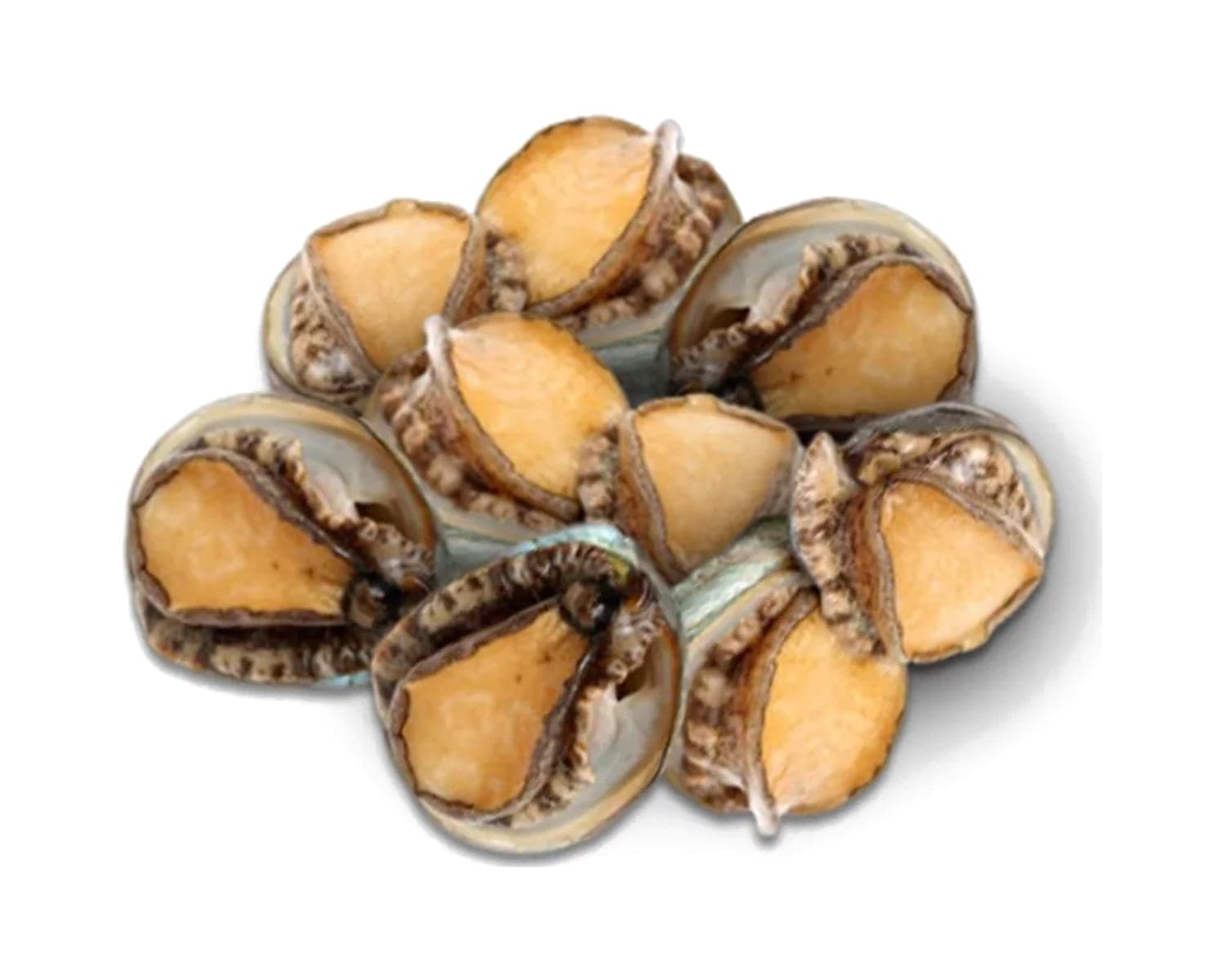
Kitchens that buy whelk for Chinese cooking often stock abalone as well, another prized marine snail described in our abalone species profile and sold as frozen abalone.
Telling whelk species apart: quality and labeling checks
Shelled snail meats look much alike, so identity rests on paperwork and quality on inspection:
- Scientific name on every document: conch, sea snail and whelk do not identify a species, and the species decides both the toxin risk and the legal status.
- Gland removal: for any Neptunea lot, ask the packer to confirm that the salivary glands were cut out, and ask the same of any whelk offered without a species name.
- Operculum and shell: cooked meat should arrive with the operculum removed and no shell fragments in a thawed sample.
- Smell: clean and marine; sourness or a strong ammonia note points to poor handling.
- Dried slices: even thickness and color, with no scorching, mold or grit.
- Biotoxins: whelks eat bivalves and can accumulate paralytic shellfish toxins from them, so some importing countries ask for test results on gastropods too.
Replacing an existing product? Send us its label and target species to check against what we can lawfully supply; documents for dried lines are outlined in our guide to importing dried seafood.
This guide is general trade information, not legal or regulatory advice. Requirements differ by market and change over time; confirm current rules with your customs broker or competent authority before ordering.