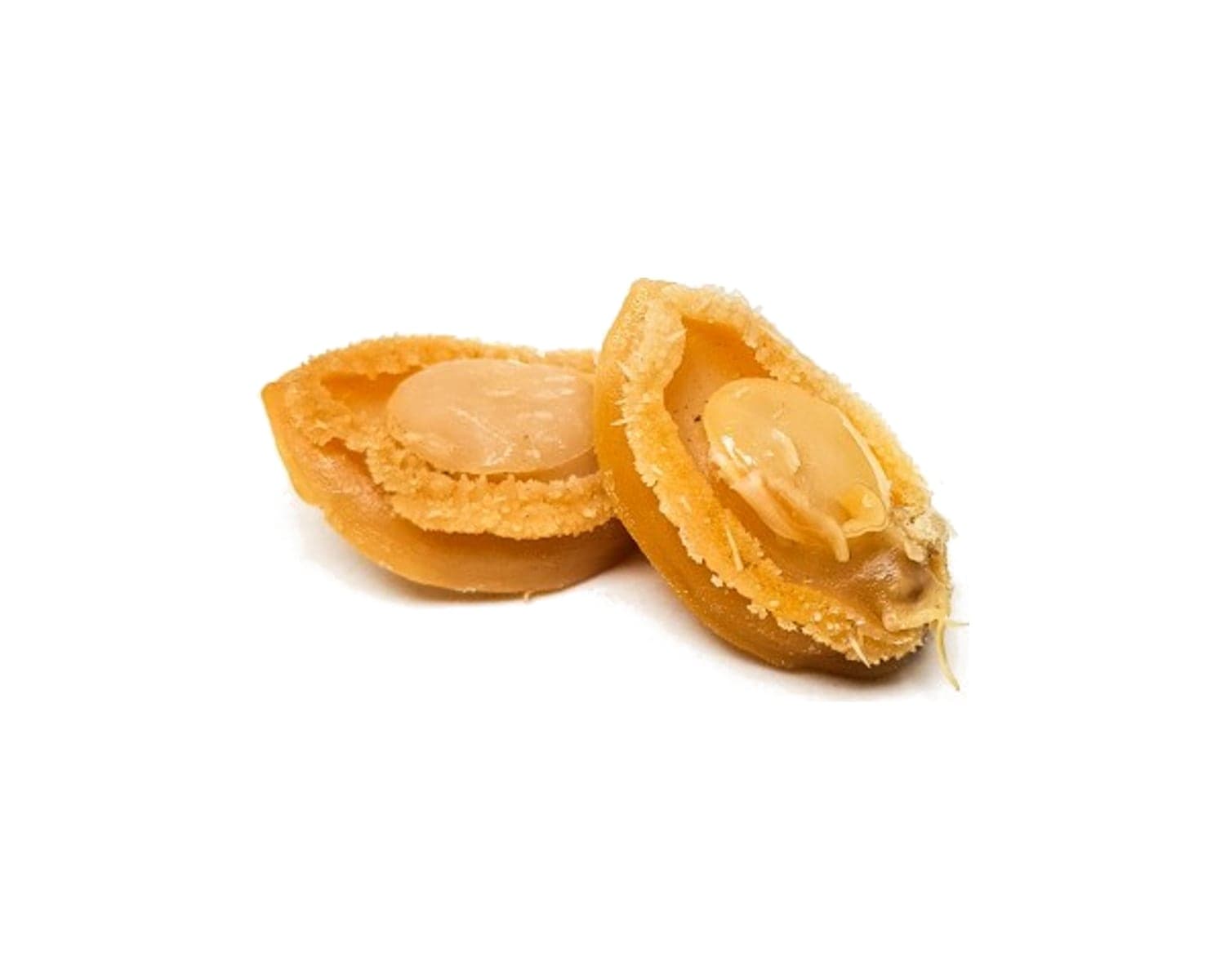
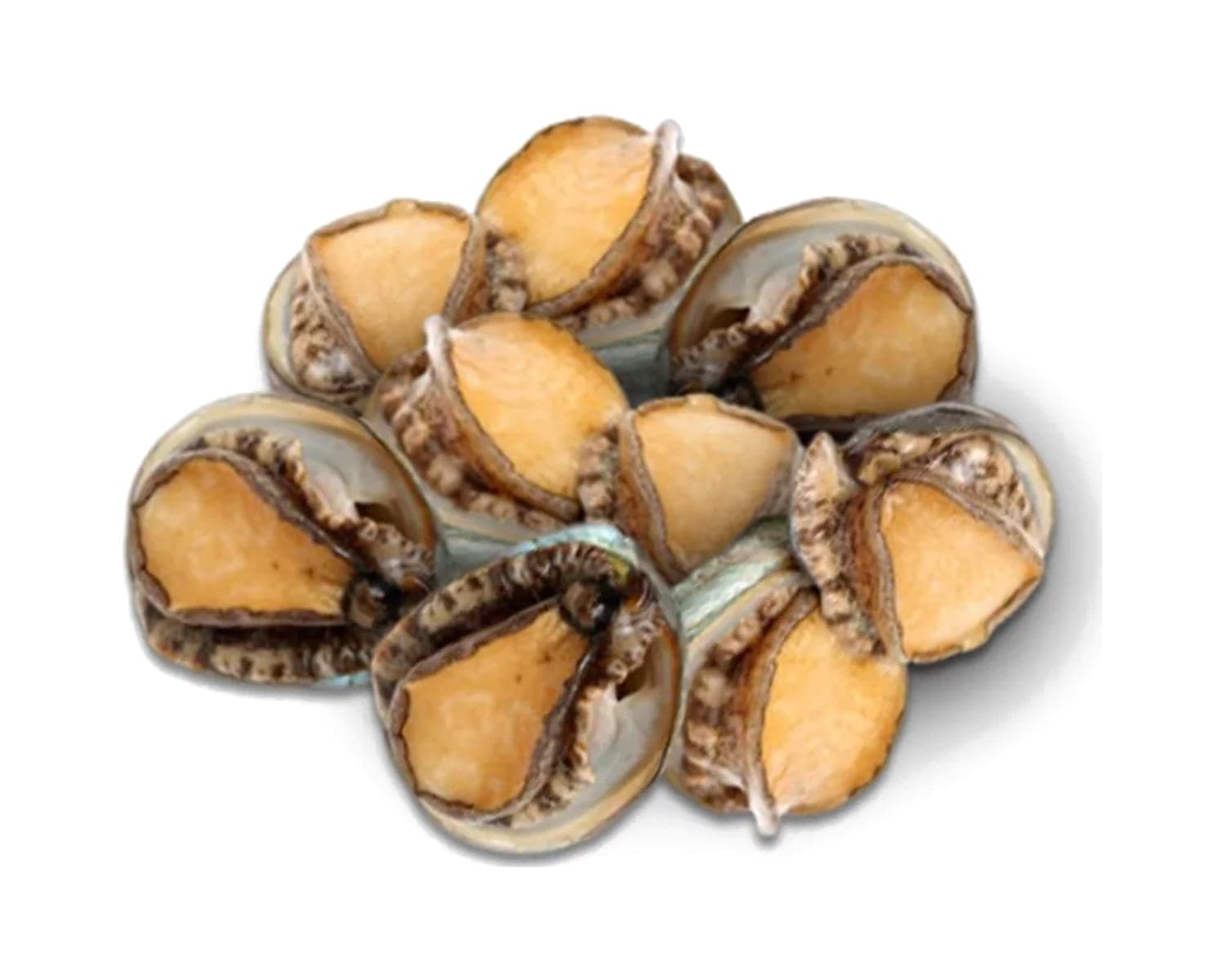
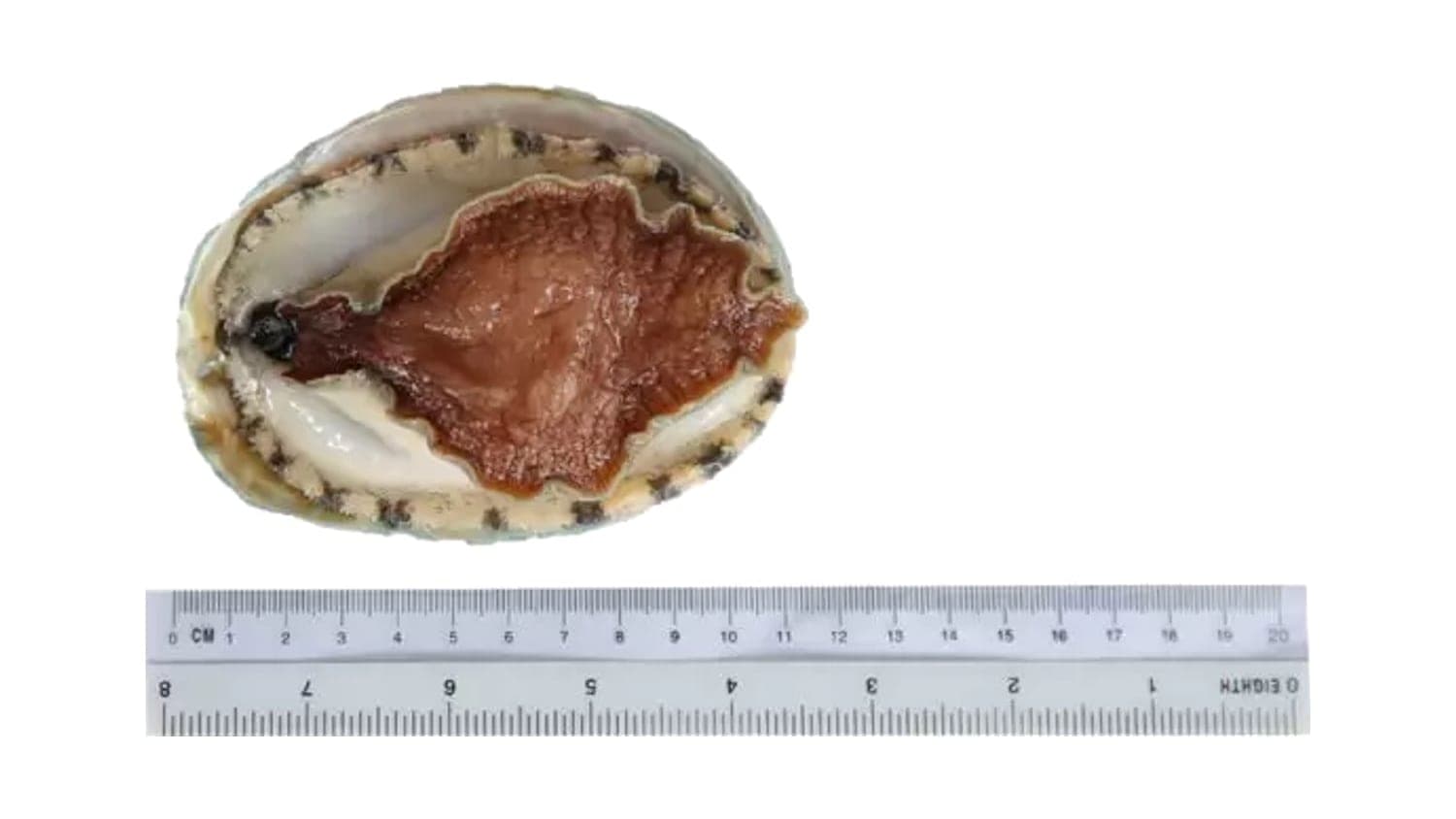
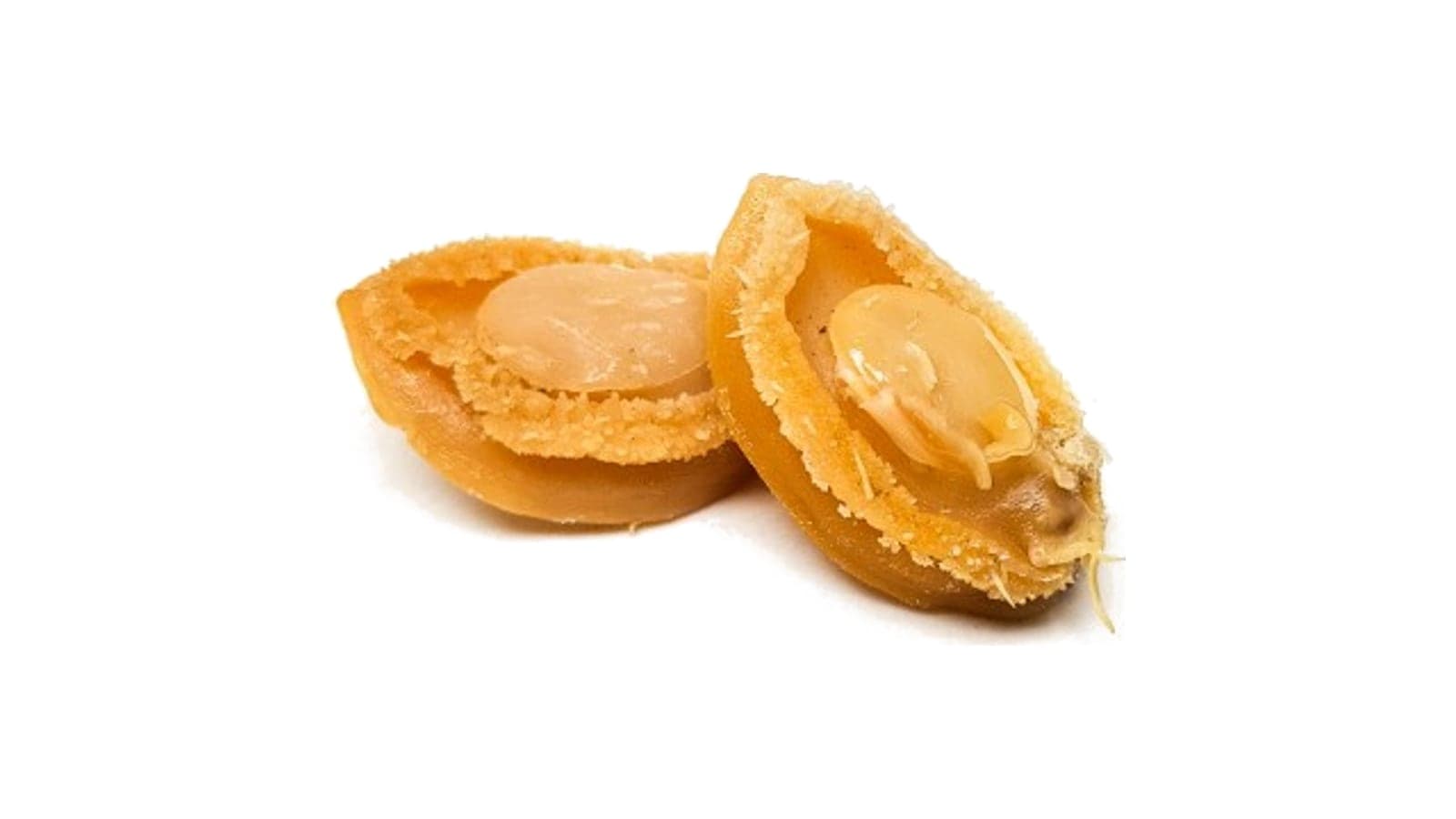
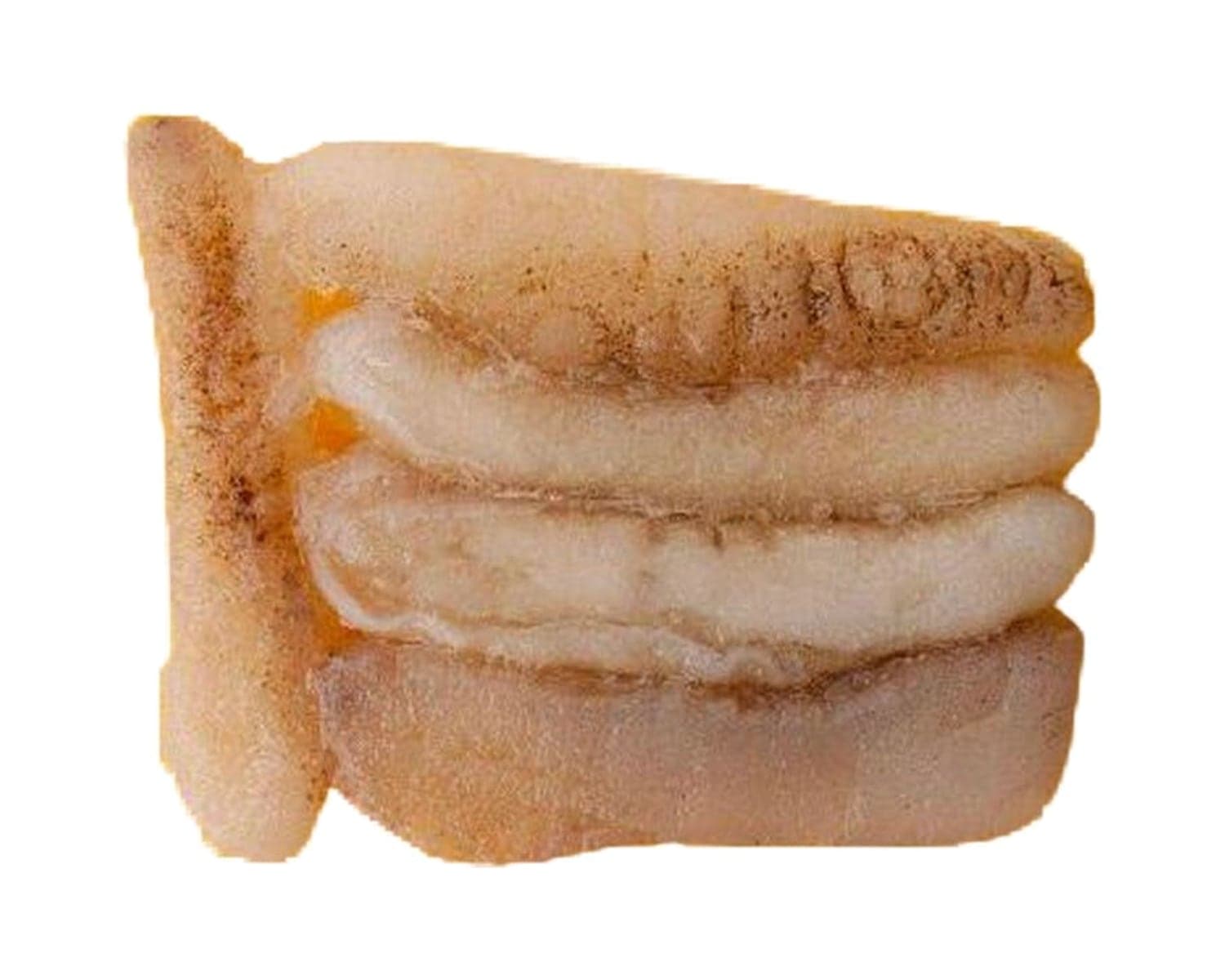
Abalone are marine snails of the genus Haliotis, recognized by a single flattened, ear-shaped shell and a broad muscular foot, which is the part people eat. Several dozen species live along rocky coasts around the world, and a handful of them supply nearly all of the trade, led by the farmed Pacific abalone of northern China and Korea. Our dried abalone, frozen abalone and live abalone pages set out the species, origins and formats we currently offer in each form.
This profile is about the animal itself: how to recognize abalone and separate the main species, what they are called in different markets, where wild and farmed supply originates, which forms reach the trade and how kitchens cook them. Grading dried abalone by head count is a subject of its own, handled in our dried abalone grading guide, so it gets only a passing mention here.
Key takeaways
- Abalone are grazing sea snails of the genus Haliotis; contract on the scientific name, because one market name can cover several species.
- Farms, led by China and South Korea, now produce most of the world’s abalone, while wild lots come from tightly managed or closed fisheries.
- Loco, sold as “Chilean abalone”, belongs to a different snail family and must be labeled under its own name.
- Choose the form by the dish: live or chilled for raw service, frozen or canned for sliced dishes, dried for slow braises.
What abalone is and how to recognize it
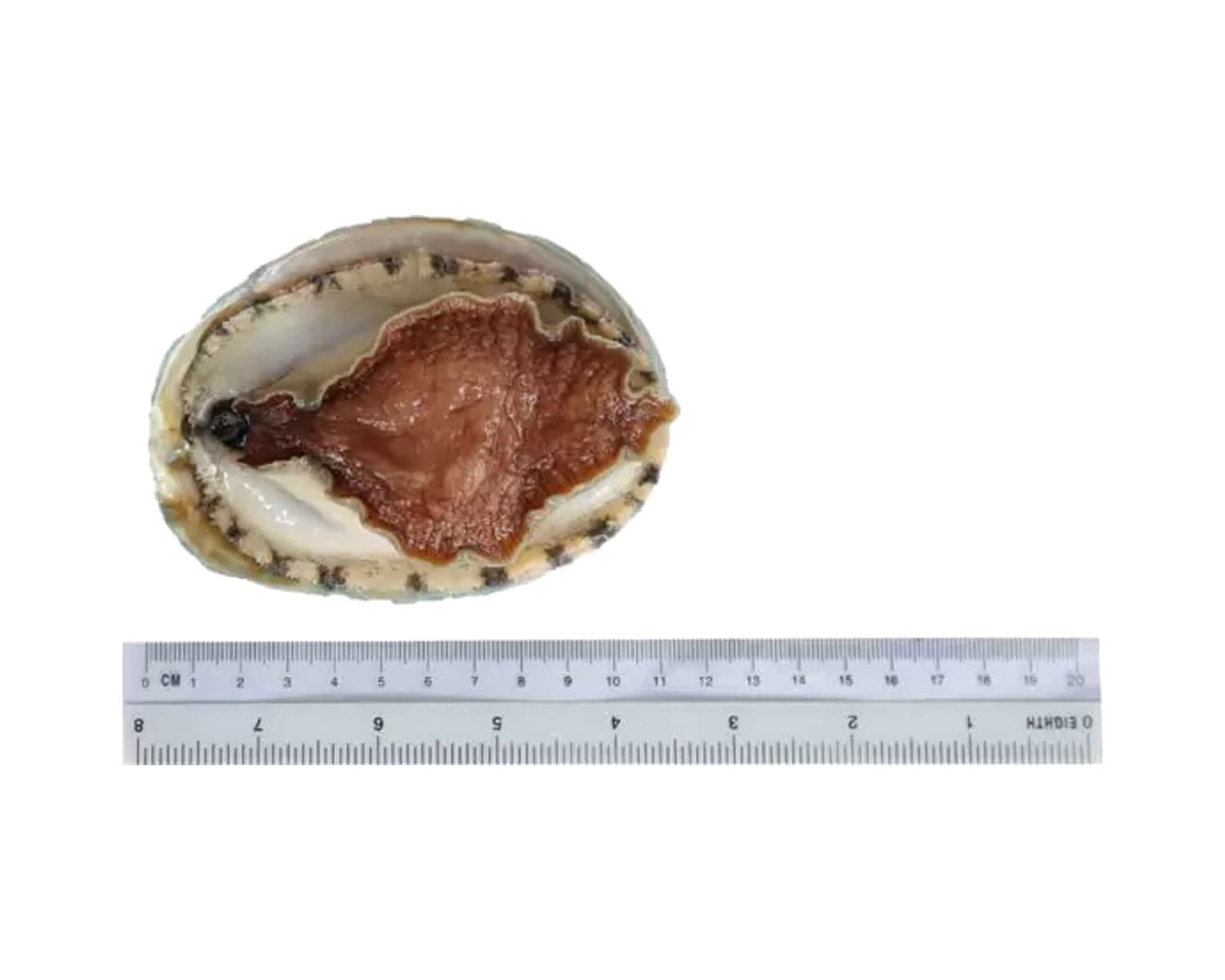
Abalone make up the family Haliotidae, a group of gastropod molluscs within the wider world of sea snails. The shell is low and wide, coiled tightly at one end only, which is why older English names call them ear shells or sea ears. A curved row of holes runs close to the outer edge. New holes form as the shell grows and older ones close over, so only a few are open at any time, usually between four and ten depending on the species. Inside, the shell is lined with iridescent nacre in silver, pink, green or blue.
Underneath, the animal is almost entirely foot: a thick, oval muscle that grips rock with great force and carries the abalone slowly over reef and boulder. Adults graze on seaweed, favoring red and brown algae, which they rasp away with the radula, a ribbon of tiny teeth. Most species live in cool, shallow coastal water and measure between 2 and 20 cm across the shell. The largest, red abalone (Haliotis rufescens) of California and Baja California, can exceed 25 cm.
Growth is slow and uneven. California’s fish and wildlife department notes that red abalone in the north of the state take about 12 years to reach 7 inches (about 18 cm), with growth rates varying widely, and that after an early phase of fast growth each further inch can take many years. Farms often harvest smaller animals than divers take from the wild, and the slow growth of wild stock is one reason depleted abalone beds take so long to rebuild.
The main abalone species in trade
Market names often hide the species, so every offer should carry the scientific name. The table lists the species buyers meet most often and their usual supply pattern. Classification within the genus is still debated, particularly among the Japanese species, and some references group the forms below differently.
| Common or market name | Scientific name | Main supply area | Wild or farmed |
|---|---|---|---|
| Pacific abalone, ezo awabi | Haliotis discus hannai | Northern China, Korea, northern Japan | Mostly farmed; also wild in Japan |
| Kuro awabi | Haliotis discus discus | Japan, in warmer water than ezo awabi | Wild; the classic sashimi abalone |
| Madaka and megai awabi | Haliotis madaka, Haliotis gigantea | Japan | Wild; large species, megai mostly cooked |
| South African abalone, perlemoen | Haliotis midae | South Africa | Mostly farmed; wild stock heavily poached |
| Blacklip abalone | Haliotis rubra | Southern Australia, Tasmania above all | Mainly wild, under quota |
| Greenlip abalone | Haliotis laevigata | Southern Australia | Wild and farmed |
| Green and pink abalone | Haliotis fulgens, Haliotis corrugata | Pacific coast of Baja California, Mexico | Wild, fished by cooperatives |
| Omani abalone | Haliotis mariae | Dhofar coast, Oman | Wild, brief season |
| Red abalone | Haliotis rufescens | California and Baja California; farmed in Chile | Farmed; California sport fishery closed |
| Pāua | Haliotis iris | New Zealand | Wild |
| Ormer | Haliotis tuberculata | Northeast Atlantic and Mediterranean, including the Channel Islands | Mainly wild |
Within Japan the species are not interchangeable. Kuro awabi is the benchmark for sashimi, ezo awabi is close to it in flavor and texture, and megai awabi, softer and less crisp, mostly goes into cooked dishes. Because the trade values them so differently, a contract for one Japanese species should name it scientifically and rely on documents rather than appearance.
Abalone names by market, and the loco problem
Few shellfish carry as many local names, and a buyer reading offers from several origins will meet most of these:
- Chinese: 鮑魚 (bàoyú), used across the fresh, canned and dried trade. The second character means fish, although abalone is a mollusc.
- Japanese: awabi (鮑), usually qualified by species, as in ezo awabi or kuro awabi.
- Korean: jeonbok (전복).
- Mexican Spanish: abulón, the word from which English took abalone.
- South Africa: perlemoen, the local name for Haliotis midae.
- New Zealand: pāua, the Māori name for Haliotis iris, applied to the meat and to its vividly colored shell.
- Older English names: ormer, used in the Channel Islands, and muttonfish, an Australian term now rarely heard.
Where abalone comes from: farms, fisheries and closures
Farming now supplies the great majority of the world’s abalone. A 2019 review of world production in the Journal of Shellfish Research put farmed output for 2016/17 at about 160,000 tonnes, against roughly 6,500 tonnes of legal wild catch. China is by far the largest producer and consumes most of what it grows, with South Korea in second place. Farms raise hatchery seed in land-based tanks or in cages and baskets hung in the sea, usually feeding them seaweed. South Africa, Australia, Chile and a number of other countries farm on a smaller scale.
Wild abalone is a smaller and tightly controlled business. Mexican fishers have worked green and pink abalone along the Pacific coast of Baja California since the 1940s, through cooperatives that hold the rights to their stretch of coast. Oman opens its Dhofar fishery for only a few weeks late in the year, and closed it completely from 2008 to 2010 to let the stock recover. In southern Australia, where Tasmania holds the largest wild fishery, blacklip and greenlip are taken under quotas and size limits, and in Japan wild abalone is fished under local seasons and minimum sizes.
Some wild stocks have collapsed. Poaching has reduced South Africa’s wild perlemoen to a small fraction of its former level, and the IUCN lists the species as Endangered. South Africa placed it in CITES Appendix III from 2007 to 2010 and withdrew a proposal for an Appendix II listing at the CITES conference in late 2025. In California, the recreational red abalone fishery has stayed closed since 2018, after kelp forests collapsed and sea urchins multiplied, and in December 2025 the state extended the closure to 2036. Our sea urchin profile explains how urchin grazing reshapes those kelp beds.
Market forms of abalone and what each suits
Abalone reaches buyers in more forms than almost any other shellfish, and the choice is usually settled by the dish, the kitchen’s skills and the shipping route rather than by the species:
- Live: the reference product for sashimi, steaming to order and tank display, limited by air-freight time and by animal-health rules that keep many destinations closed to live molluscs.
- Fresh chilled: shucked or in the shell, with a life of days, so it is mostly a regional trade.
- Frozen: whole in the shell, shucked meat or cooked portions, giving menus steady supply and portion control.
- Canned: cooked, shelled abalone sealed in tins, ready for slicing and warming.
- Ready-to-heat: braised in sauce and sealed in pouches, for kitchens that want the banquet dish without the labor.
- Dried: salted, boiled and sun-dried over weeks, then soaked and slow-braised; our dried seafood storage guide covers keeping it in condition.
Frozen and canned abalone suit dishes where it is served sliced or in pieces, while live stock earns its premium only where it is cooked to order or eaten raw. At delivery, live animals should be vigorous, contracting and gripping when touched, with intact shells and a full, moist foot. Frozen meat should show an even color without dry, pale patches. Abalone served raw should come from approved farms or harvest areas and be handled under your market’s rules for raw shellfish.
How abalone is cooked around the world
Chinese cooking, Cantonese above all, treats abalone as a banquet ingredient, ranked with fish maw and sea cucumber among the prized sea delicacies. Dried abalone is soaked and braised whole in rich stock and oyster sauce, while live abalone is often steamed in the shell with garlic and glass noodles. Our sea cucumber profile covers its frequent partner on banquet menus.
Japanese cooking values texture. Raw awabi is sliced for sashimi or served as mizugai, cut and floated in cold water, a summer dish that shows off the crisp meat, and steamed abalone gives a softer bite. Dried strips called noshi awabi have been offered at Ise Grand Shrine for many centuries, and the noshi ornament on Japanese gift wrapping began as a folded strip of dried abalone.
Korean cooking uses abalone in jeonbok-juk, a rice porridge from Jeju Island that turns pale green when the viscera are cooked into it, and pan-fries it in butter. On the California coast, where sport fishers once took red abalone, the classic preparation was a thin steak dusted in cracker meal and fried.
This guide is general trade information, not legal or regulatory advice. Requirements differ by market and change over time; confirm current rules with your customs broker or competent authority before ordering.