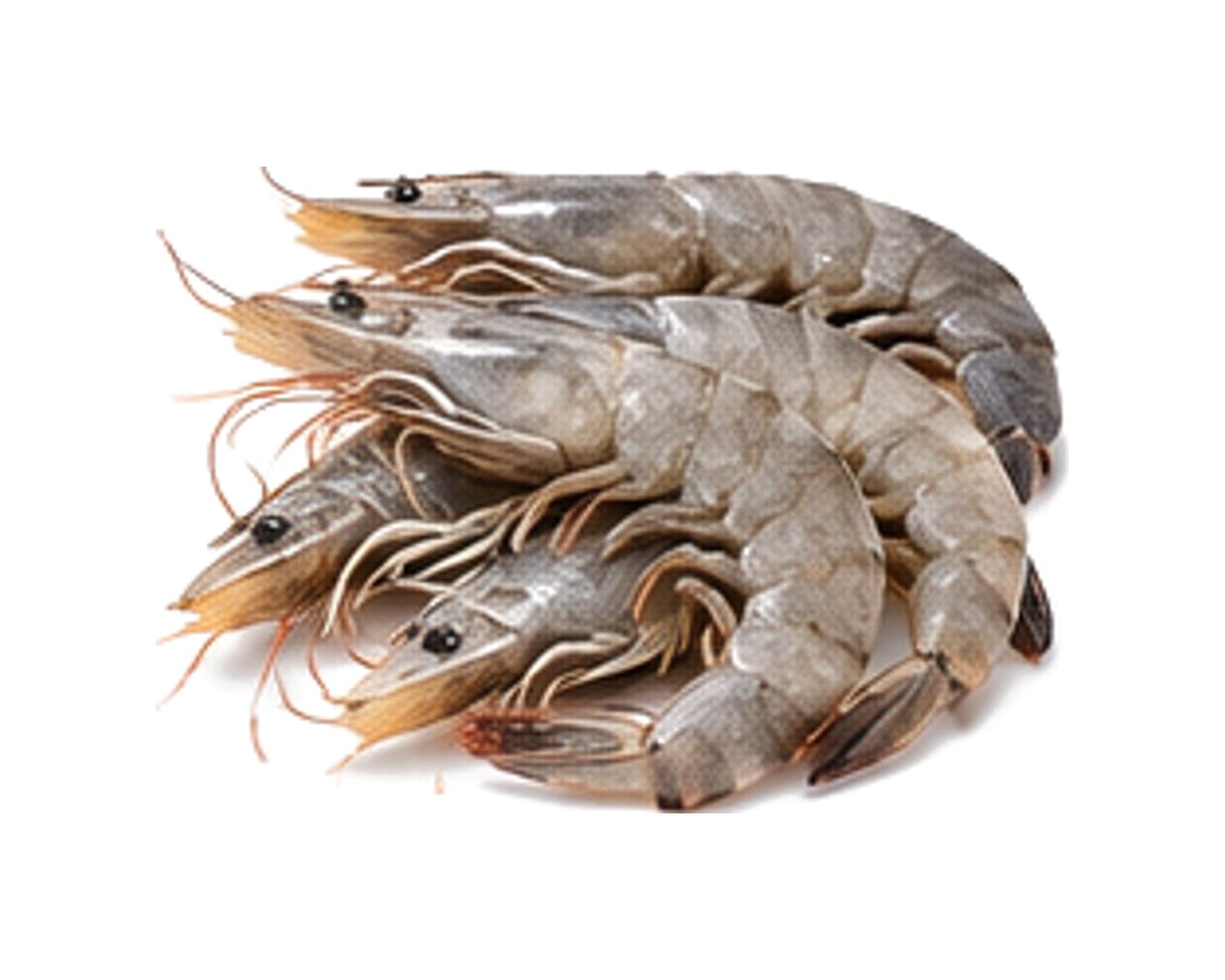
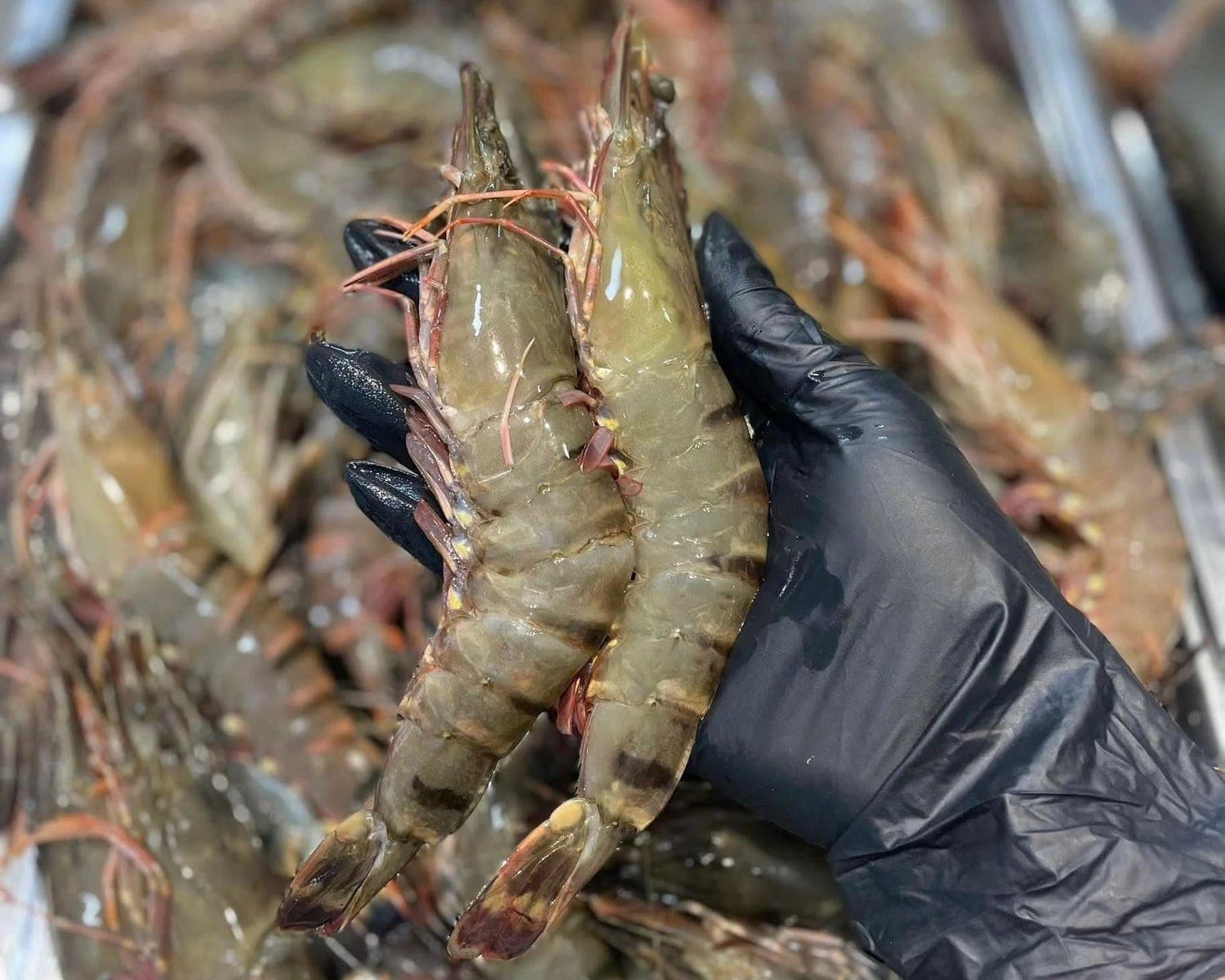
Argentine red shrimp stands apart from the other large shrimps in the frozen trade: it is wild rather than farmed, it comes from cold rather than tropical water, and it is red before it is cooked. Its scientific name is Pleoticus muelleri. Argentines call it langostino, Spanish buyers langostino argentino and Italian buyers gambero argentino.
This profile explains what kind of animal it is, where it lives, how the Patagonian fishery runs and is managed, how the catch is frozen and sold, how it compares with farmed shrimp and how to cook it. BSA offers Argentine red shrimp from Argentina within its large shrimp and prawns program, where head-on lots are graded L1 to L3.
Key takeaways
- Argentine red shrimp, Pleoticus muelleri, is a wild, cold-water shrimp of the family Solenoceridae and is red even before cooking.
- Most supply comes from the Patagonian shelf, especially the Golfo San Jorge, fished by freezer trawlers and coastal fleets under federal and provincial rules.
- Survey-based subarea openings and hake-bycatch closures make the season variable, and catches swing widely between years.
- The meat is sweet and tender; cook it briefly and judge doneness by the flesh turning opaque, not by the color of the shell.
What Argentine red shrimp is
Although it looks and cooks like a large prawn, Pleoticus muelleri is not a penaeid. The World Register of Marine Species places it in Solenoceridae, a neighboring family in the same superfamily as tiger and whiteleg shrimp. Like them it releases its eggs into the sea instead of carrying them, but it spends its entire, fairly short life in the sea, whereas young tiger and whiteleg shrimp grow up in estuaries and lagoons.
- Color: pink to deep red even when raw; cooking deepens the shell color while the flesh turns from translucent to opaque white.
- Size: females grow larger than males, and the biggest head-on grade in trade, L1, runs at 10 to 20 pieces per kilogram.
- Habit: a bottom-living shrimp of mud and muddy sand, caught by trawl.
| Name | Language or market | Notes |
|---|---|---|
| Argentine red shrimp | FAO English name; US trade | The usual name on US packs |
| Argentinian red prawn | UK retail | Prawn is the usual British word |
| Langostino; langostino patagónico | Argentina and Uruguay | Everyday names in the producing countries |
| Langostino argentino | Spain | Often shortened to langostino |
| Camarón langostín argentino | Spanish (FAO name) | The official FAO Spanish name |
| Salicoque rouge d’Argentine | French (FAO name) | The official FAO French name |
| Gambero argentino | Italy | Official Italian trade name |
| Argentinische Rotgarnele | Germany | Literally “Argentine red shrimp” |
| Camarão vermelho; camarão de Santana | Brazil | Names at the northern end of the range |
Where Argentine red shrimp lives
The species lives in the South-West Atlantic, from about 20°S off Espírito Santo in Brazil, past Uruguay, to about 50°S off Santa Cruz in Argentine Patagonia. It stays close to the bottom on mud or mud mixed with sand, mostly on the continental shelf at depths down to about 170 m, in water of roughly 6 to 20 °C. The densest concentrations lie off Patagonia, above all in the Golfo San Jorge, whose waters are shared by the provinces of Chubut and Santa Cruz.
Argentine research has described separate concentrations off Mar del Plata, around Bahía Blanca and off Patagonia, and the Patagonian grounds in and around the Golfo San Jorge support the modern fishery. In Patagonia the shrimp breeds in spring and summer. The species is short-lived, so each season depends heavily on recent recruitment, and the size of the catch varies considerably from one year to the next.
How the Patagonian fishery works
Two kinds of fleet work the grounds. Freezer trawlers, many of them outrigger vessels that tow a net from each side, freeze the catch on board. Ice trawlers and smaller coastal vessels land their catch for grading, processing and freezing in plants on the Patagonian coast. Offshore waters are managed by Argentina’s Federal Fisheries Council (Consejo Federal Pesquero), with stock assessment by the national fisheries research institute, INIDEP, while Chubut and Santa Cruz manage their own provincial inshore waters.
Much of the federal fishing takes place inside a permanent closed area for juvenile hake, which is opened to shrimp trawling subarea by subarea. Before a subarea opens, commercial vessels carrying INIDEP observers run an exploratory survey of shrimp yields, shrimp sizes and the hake caught alongside them. Open subareas are closed again during the season when the ratio of hake bycatch to shrimp passes a set limit (0.20 under the rules in force in 2026), when small juvenile shrimp of grade L4 and below make up too large a share of the catch, or when yields fall away. The national fisheries authority makes these calls on INIDEP’s advice, and the Federal Fisheries Council ratifies them.
Wild-caught shrimp shipped to the EU needs a catch certificate validated by the flag state, and other importing countries apply their own traceability rules, so check the requirements for your market before each shipment.
Sea-frozen and land-frozen: how Argentine red shrimp is sold
Speed after catch shapes every form. The head darkens soon after the haul, so freezer trawlers freeze their catch on board while coastal landings go quickly to shore plants:
- Sea-frozen head-on: whole shrimp frozen on board soon after the haul and graded L1 (10 to 20 pieces per kilogram), L2 (21 to 30) and L3 (31 to 40); the form for grilling and whole presentation.
- Sea-frozen headless: shell-on tails frozen at sea, for cooking in the shell or peeling ashore.
- Land-frozen: chilled catch from coastal vessels, processed ashore into head-on, headless and peeled forms.
- Peeled: raw, deveined, tail-on or tail-off, made from either sea-frozen or land-frozen raw material, for retail packs and foodservice.
Freezing method changes texture and appearance, so an offer should say whether a lot was frozen at sea or ashore. Wild shrimp is often treated against black spot on board, and how that treatment, the glaze and the count should be declared, together with an arrival routine for checking them, is set out in our frozen shrimp specifications guide.
Argentine red shrimp compared with farmed shrimp
| Feature | Argentine red shrimp | Whiteleg shrimp | Black tiger shrimp |
|---|---|---|---|
| Family | Solenoceridae | Penaeidae | Penaeidae |
| Production | Wild-caught | Farmed | Mostly farmed |
| Water | Cool South-West Atlantic shelf | Tropical ponds | Tropical ponds |
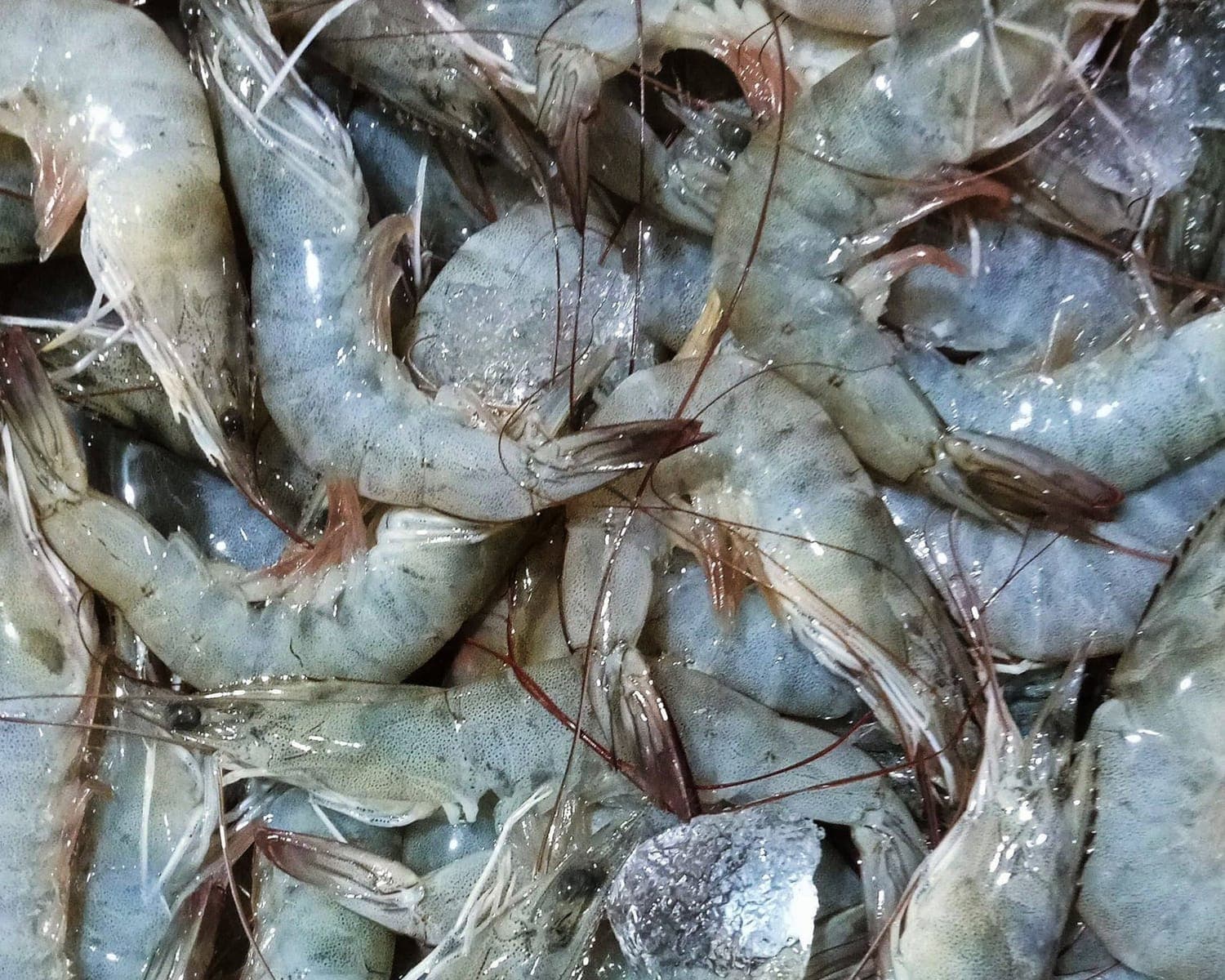
| Raw color | Pink to deep red | Translucent white to gray | Blue-black and yellow bands |
| Eating quality | Sweet, rich and tender | Mild, lightly sweet, tender | Firm and meaty |
| Supply pattern | Seasonal, shaped by surveys and closures | Harvested year-round | Year-round, with harvest windows by region |
| Head-on grading | L1, L2 and L3 letter grades | Pieces per kilogram | Pieces per kilogram |
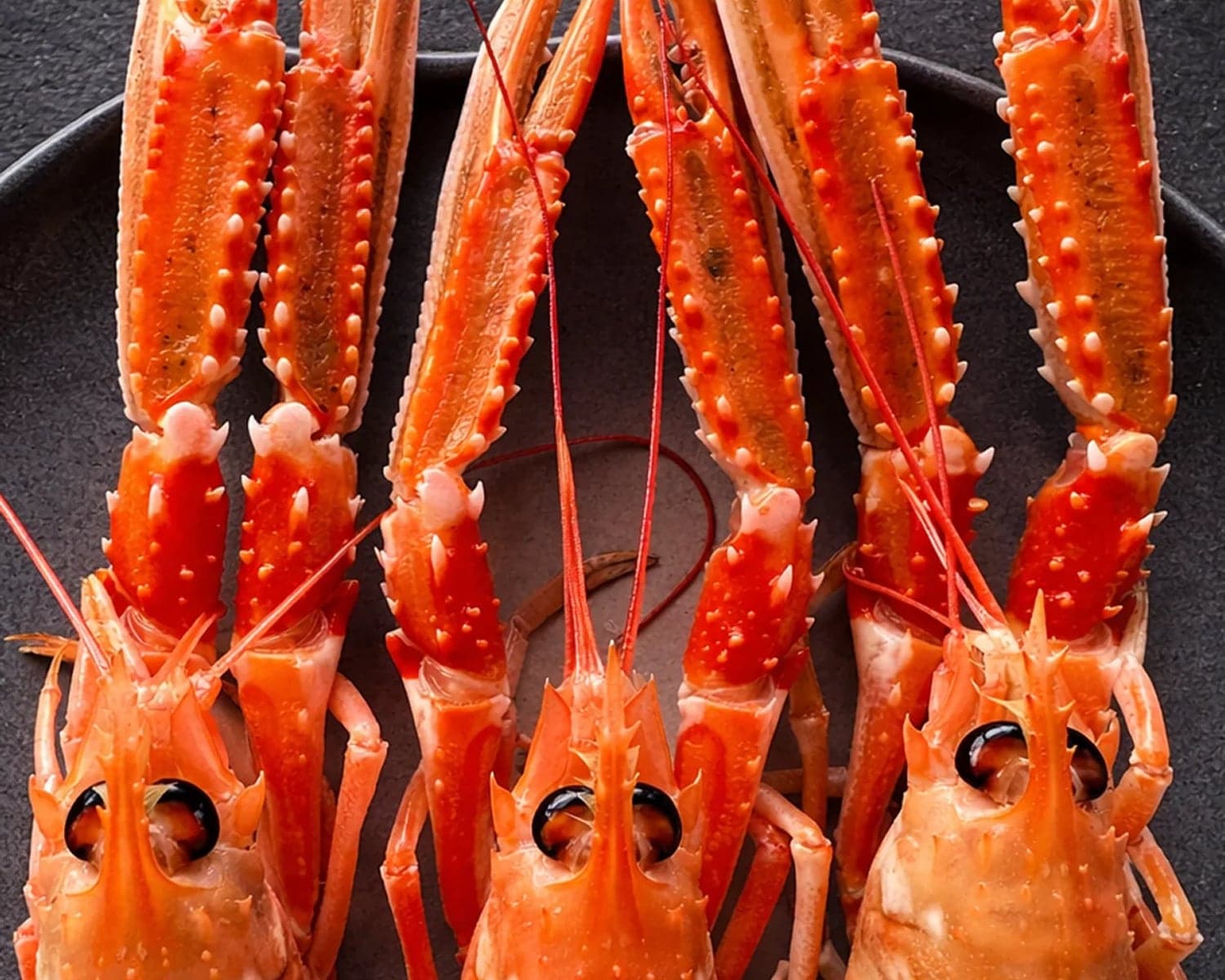
Other naturally red shrimps exist, among them the deep-water red prawns trawled in the western Mediterranean, such as the Palamós prawn (Aristeus antennatus) prized in Catalonia; they are separate species from separate fisheries. And because Argentines and Spaniards call this shrimp langostino, it is sometimes confused in translation with langoustine, a clawed lobster described in our langoustine profile. The farmed species in the table are covered in our black tiger shrimp profile and its whiteleg counterpart.
How to cook Argentine red shrimp
Cooks describe the meat as sweet and rich, often comparing it with lobster or langoustine, and its flesh is noticeably soft and tender. It cooks in a few minutes. Because the shell is red from the start, color is no guide to doneness: watch for the flesh to turn from translucent to opaque white and take the shrimp off the heat as soon as it does.
- Plancha and grill: whole or split shrimp cooked hot and fast with salt and olive oil.
- Garlic dishes: sizzled with garlic and chili in olive oil, or finished with garlic butter.
- Rice and pasta: added near the end of paella, risotto or seafood pasta so they do not overcook.
- Cold dishes: poached briefly, cooled and served in salads or on seafood platters.
- Stock: heads and shells simmered for stock, bisque or a rice base.
Thaw slowly in the refrigerator, cook soon after, and follow your market’s food-safety rules on cooking temperature. Where a milder shrimp and steady year-round supply matter more, farmed vannamei shrimp is the usual alternative. If you need L1, L2 or L3 head-on lots for a seasonal program, ask us for a grade-by-grade offer.
This guide is general trade information, not legal or regulatory advice. Requirements differ by market and change over time; confirm current rules with your customs broker or competent authority before ordering.