Langoustine is one animal with a long list of names. Fishery records call it Norway lobster, older Irish and British menus offer Dublin Bay prawns, British pubs sell its breaded tails as scampi, and Spanish and Italian cooks know it as cigala and scampo. Behind each of these names sits a single species, Nephrops norvegicus, a slim orange lobster that digs its home in soft mud from northern Norway to the Mediterranean.
This profile explains how to recognize the animal, where it lives, how it is caught and managed, why landings change through the year, which other crustaceans are sold under its names, and how kitchens use each market form. The whole, tail and meat formats that BSA sources against a buyer’s brief, plus live animals where a route allows, are listed on our langoustine product page.
Key takeaways
- Langoustine, Norway lobster, Dublin Bay prawn and cigala are one species, Nephrops norvegicus, a burrowing true lobster of the North-East Atlantic and Mediterranean.
- Scampi and langostino describe different animals in different countries, so the scientific name has to travel with every offer, invoice and label.
- Catch method shapes the product: creels feed the live trade, while trawls supply most frozen whole animals, tails and meat.
- Winter trawl catches lean heavily male because egg-carrying females stay in their burrows until the larvae hatch in spring.
What is a langoustine?
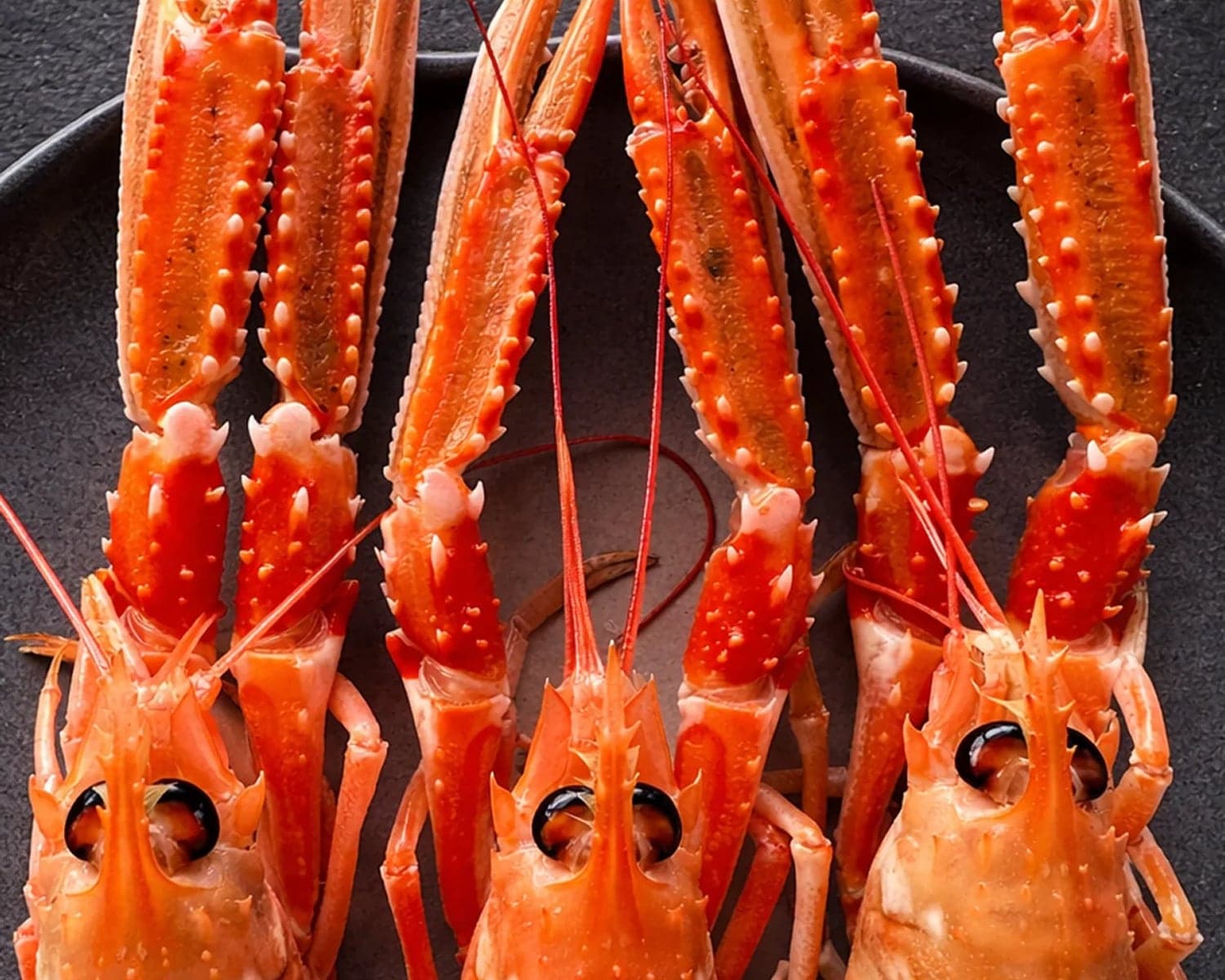
Despite the prawn and scampi names, langoustine is a true lobster. It belongs to the family Nephropidae, which also holds the European and American clawed lobsters (Homarus), and it is the only living member of its genus. The name Nephrops means kidney eye, a reference to the kidney-shaped eyes at the front of the carapace.
- Body: slender and much narrower than a clawed lobster, pale orange to coral even before cooking, with a long segmented tail that carries most of the edible meat.
- Claws: a pair of greatly elongated front claws edged with spiny ridges, far slimmer than the heavy claws of Homarus.
- Eyes: large and kidney-shaped, one of the quickest features for telling a whole langoustine apart from a prawn.
- Size: most animals in the catch measure about 10 to 20 cm from head to tail, and the largest reach around 24 to 25 cm.
In trade, whole animals are graded by the number of pieces per kilogram, while fishery rules set minimum landing sizes by carapace or total length, with limits that differ from one sea area to the next.
Where Norway lobster lives
Nephrops depends on a particular kind of seabed: fine, soft mud with a high share of silt and clay that will hold the shape of a tunnel. Each animal digs a burrow some 20 to 30 cm deep and spends most of its life in or beside it, coming out mainly at night or around dawn and dusk to feed on worms, small crustaceans and detritus. It occurs from about 20 m down to 800 m, on the continental shelf and the upper slope.
The range runs from Iceland and northern Norway through the North Sea and around Britain and Ireland to Portugal, Morocco and the Canary Islands, then east through the Mediterranean, where the Adriatic holds important grounds. It is absent from the Baltic and the Black Sea. Because suitable mud lies in separate patches, the species lives as many distinct populations rather than one continuous stock, and ICES scientists assess the North-East Atlantic grounds as separate functional units, each with its own advice.
Langoustine cannot be aged from hard parts the way fish can, so on most of the main grounds the assessments rest on underwater television surveys that count burrow systems on the seabed, combined with the size mix of catches.
How langoustine is caught and managed
Most langoustine is taken by bottom trawlers working the mud grounds. A smaller creel fishery sets baited pots on inshore grounds, notably off the west coast of Scotland and along the Swedish west coast, where creels supply a meaningful share of local landings. Creel animals reach the deck alive and mostly undamaged, so they supply the live trade and the best whole grades, and they fetch a premium over trawled animals.
UK vessels, mostly Scottish, land the largest share of the North-East Atlantic catch, and Ireland, France, Denmark and Sweden also run established fisheries. In the Mediterranean, mainly trawl fleets work grounds off Spain and Italy and in the Adriatic, and Spain and Italy are major markets for the fresh animal.
In EU and UK waters, catches are capped by total allowable catches set with ICES advice in view, backed by gear rules such as minimum mesh sizes and by minimum landing sizes. Wild-caught langoustine entering the EU needs a catch certificate under the rules on illegal, unreported and unregulated fishing, and other importing countries run their own traceability schemes, so confirm the current document set for your market before ordering.
Langoustine names by market
| Name | Where you will see it | What it refers to |
|---|---|---|
| Langoustine | France and international trade; the FAO French name | Nephrops norvegicus, usually whole animals |
| Norway lobster | The FAO English name; quotas and fishery statistics | Nephrops norvegicus |
| Dublin Bay prawn | Ireland and Britain, mainly on menus | Nephrops norvegicus |
| Scampi | Britain | Tail meat, often breaded; other species in other countries |
| Cigala | Spain; the FAO Spanish name | Nephrops norvegicus |
| Scampo (plural scampi) | Italy | Nephrops norvegicus |
| Kaisergranat | Germany | Nephrops norvegicus |
| Havskräfta; jomfruhummer | Sweden; Denmark | Nephrops norvegicus |
| Lobsterette | United States; a market name on the FDA Seafood List | Nephrops norvegicus |
| Langostino | Spain, Argentina and Peru; United States | Not langoustine: large prawns in Spanish usage, squat lobsters in US market naming |
Scampi needs the most care on a label. In Britain and much of Europe it means Nephrops tail meat, but New Zealand’s “scampi” is Metanephrops challengeri, a related deep-water lobster, and Indian trade applies the word to the farmed giant freshwater prawn. A carton that says only “scampi” tells a buyer very little, so ask for the Latin name on the offer, the invoice and the label alike.
Langoustine look-alikes and how to tell them apart
- Other scampi lobsters (Metanephrops): close relatives in the same family, fished in deep water off New Zealand and Australia and prized in Japan as akaza-ebi (Metanephrops japonicus). Whole, they resemble langoustine closely, but they come from other oceans and other fisheries, so origin and scientific name settle the question.
- Squat lobsters: in the United States, the FDA Seafood List accepts “langostino” as a market name for a few squat lobster species, mostly from the eastern Pacific. They are a separate group of crustaceans and should never appear on a menu or invoice as langoustine.
- Giant freshwater prawn: the “scampi” of Indian trade is a pond-farmed river prawn whose mature males carry very long blue or orange claws. Its freshwater origin and prawn body set it apart, as our giant freshwater prawn profile explains.
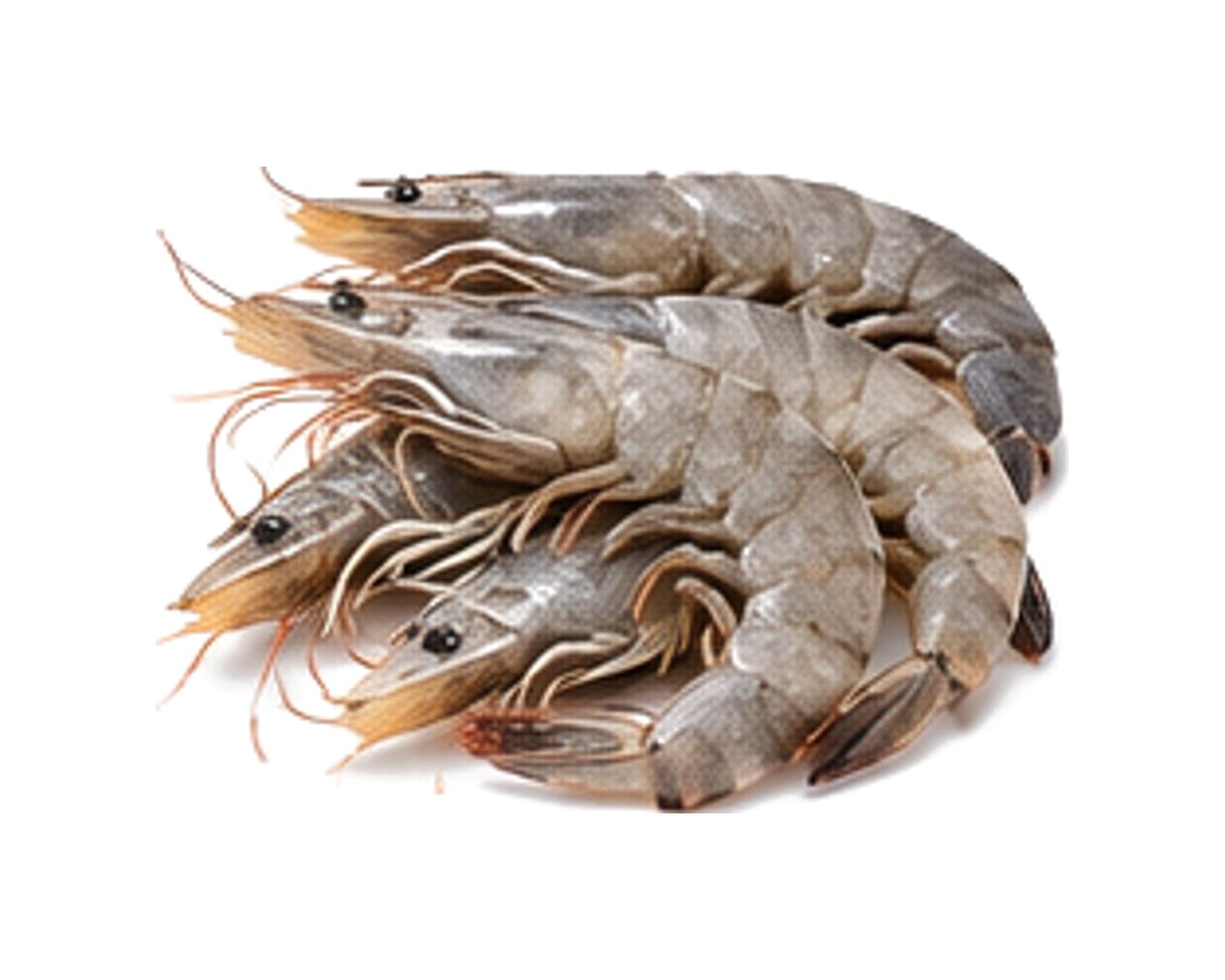
- Large prawn tails: peeled penaeid prawn tails can stand in for langoustine meat in some cooked dishes, but a whole prawn lacks the long, ridged front claws.
Whole animals are easy to check: long ridged claws, kidney-shaped eyes and an orange shell before cooking. Peeled or breaded tail meat is much harder to identify by eye, so for those products the paperwork, backed by DNA testing if a dispute arises, is the reliable route. Buyers who want a bigger animal for similar dishes can compare clawed and spiny lobster, and our lobster species guide covers the Homarus species.
Market forms: from live langoustine to breaded scampi
Speed after capture decides quality. Left whole and unchilled, a langoustine soon begins to blacken at the head and shell joints while its tail loses firmness, so each market form is built around how quickly the animal can be frozen, cooked, tailed or delivered alive.
- Live: creel-caught animals shipped cold and damp, for restaurants that cook to order; the most demanding form, with the shortest usable life.
- Whole raw, frozen: often frozen on board soon after the haul, for grilling, roasting and split presentations.
- Whole cooked, frozen: boiled at sea or ashore before freezing, ready to serve cold on platters once thawed.
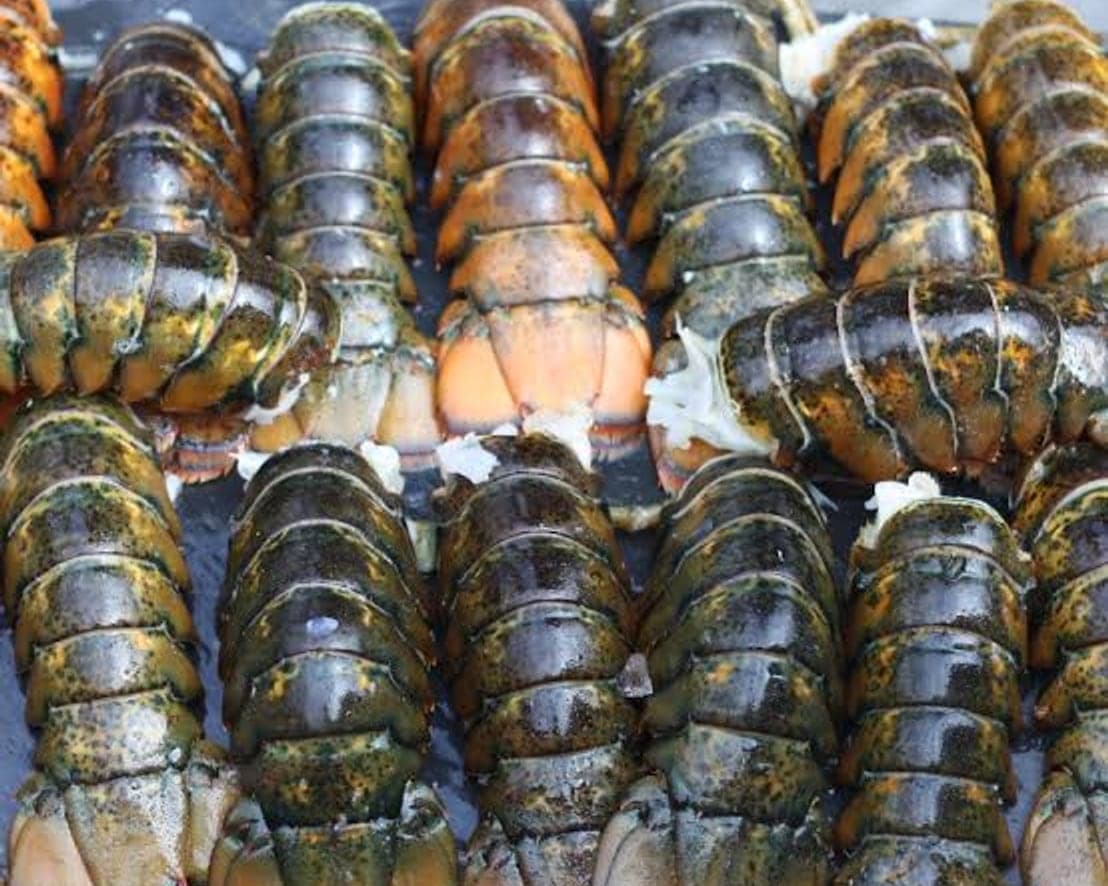
- Shell-on tails: head and claws removed soon after capture, a common outlet for trawl catches; for pan-frying, grilling and pasta.
- Peeled tail meat: for risotto, gratins, filled pasta and coated products.
- Breaded scampi: tail meat in crumb or batter, a long-running staple of British retail freezers and pub menus.
Count per kilogram, glaze and the declaration of anti-blackening treatments work much as they do for frozen shrimp; our guide to frozen shrimp count, glazing and net weight sets out those checks once for both.
How kitchens cook langoustine
The tail meat is sweet, fine and soft, closer to lobster than to most prawns, and it suffers quickly from overcooking, so the classic preparations are brief and simple.
- France: boiled whole, cooled and served with mayonnaise on a plateau de fruits de mer, or roasted with butter.
- Spain and Portugal: whole cigalas cooked briefly on the plancha with coarse salt, or boiled for shellfish platters; in both countries they are a special-occasion dish.
- Italy: scampi split and grilled, tossed through pasta or folded into risotto.
- Britain and Ireland: breaded scampi with chips and tartare sauce, and whole Dublin Bay prawns in seafood restaurants.
- Stocks and bisques: heads and shells left over from peeling make a rich stock, the base for bisque and shellfish sauces.
For dishes that need more meat per piece, large shrimp and prawns take the same treatments at a lower cost per portion. To source whole or tail langoustine, or live animals where a route allows, send the grade, form and fishing area you want and we will build an offer around that brief.
This guide is general trade information, not legal or regulatory advice. Requirements differ by market and change over time; confirm current rules with your customs broker or competent authority before ordering.