Mud crab is the heavyweight of the tropical crabs, a thick-shelled mangrove dweller with crushing claws, bought live for chili crab in Singapore, steamed crab in Hong Kong and curries across South Asia. Our mud crab page sets out the live and frozen formats and the weight, sex and fill grades we supply.
This profile covers the animal itself: the four Scylla species and how they differ, how the crab lives, molts and grows, where supply comes from in the wild and on farms, the names and market categories used in different countries, and how it is cooked, including as soft-shell crab.
Key takeaways
- Mud crabs are four Scylla species, recognized in a 1998 revision; S. serrata is the largest and most widespread.
- They live in mangroves, grow by molting and are graded on weight, sex and fullness, since a light crab carries little meat.
- Supply is part wild and part pond-raised or fattened, and much farming still starts from wild-caught young crabs.
- Names such as mud crab, mangrove crab and green mud crab are used loosely, so the scientific name is the reliable identifier.
What is a mud crab? The genus Scylla
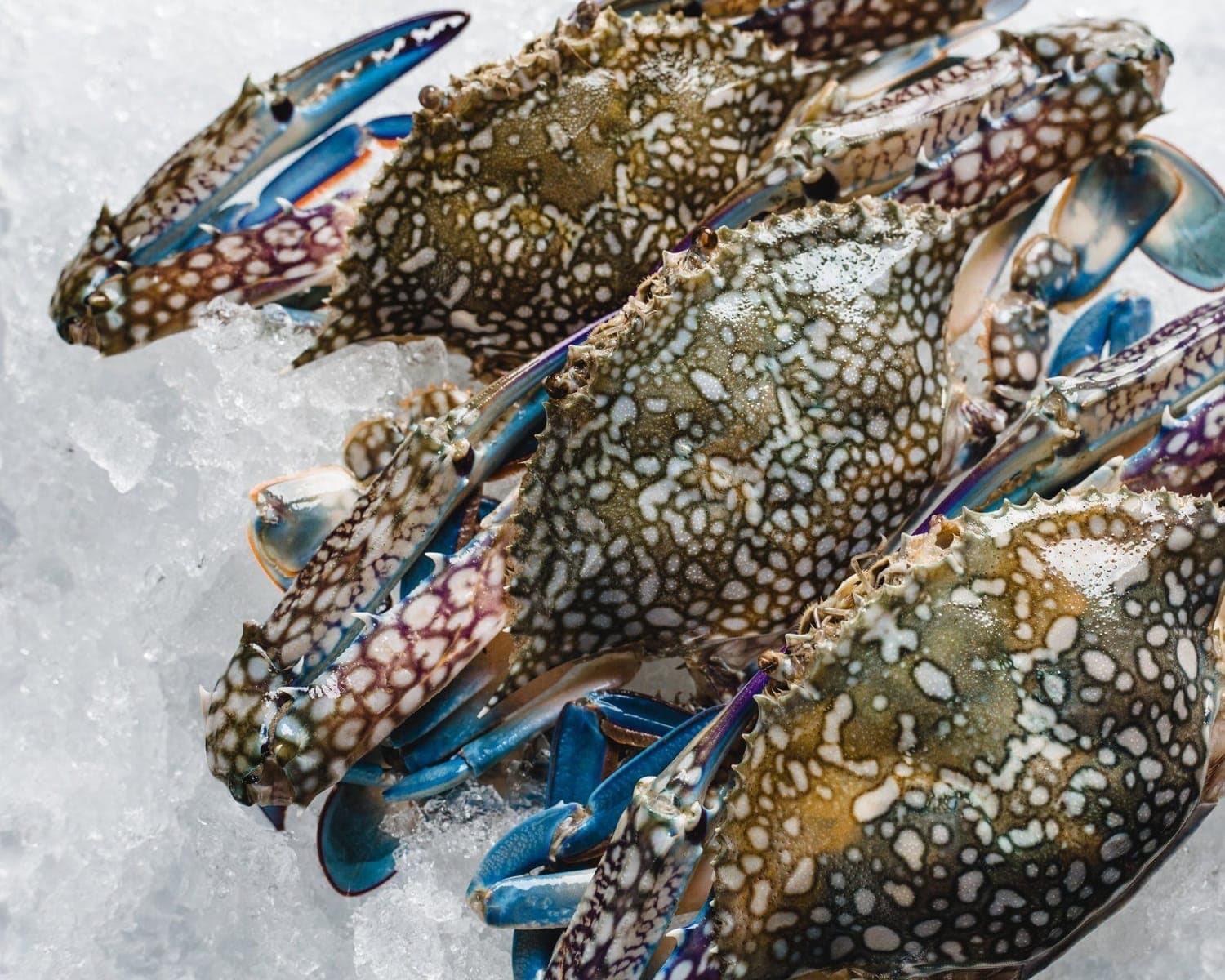
Mud crabs belong to the Portunidae, the swimming crab family, alongside the blue swimming crab, and they keep that family’s paddle-shaped last pair of legs. Everything else about them suits a life in mangrove mud: a smooth, heavy carapace edged with teeth along each front margin, and claws far more massive than a blue swimming crab’s, strong enough to break open the oysters and other shellfish they feed on.
The genus was revised in 1998 by Keenan, Davie and Mann in the Raffles Bulletin of Zoology, who recognized four species. Before that work, the name Scylla serrata was applied far more widely than it is today; in China, for example, crabs recorded as S. serrata have turned out to be mostly S. paramamosain. Older references and some trade records therefore still lump the species together. The English name is loose as well, and references note that “mud crab” and “mangrove crab” are used for more than one crab.
The four mud crab species compared
| Species | Common names | Range | Size and appearance |
|---|---|---|---|
| Scylla serrata | Giant mud crab; mangrove crab; Indo-Pacific swamp crab (FAO); “Sri Lanka crab” in Singapore | The widest range, from East Africa across the Indian Ocean to the western Pacific and Australia; introduced to Hawaii | Largest, at up to about 28 cm and 3 kg; carapace green to almost black, legs often marbled |
| Scylla paramamosain | Green mud crab | Northern South China Sea south to Java | Up to about 20 cm; the main farmed species in southern China and Vietnam |
| Scylla olivacea | Orange mud crab | From Tamil Nadu and northern Australia north to Taiwan and east to Papua | Up to about 18 cm; brownish to brownish-green, sometimes orange, with orange to yellow palms |
| Scylla tranquebarica | Purple mud crab | Mangroves of the eastern Indian Ocean and western Pacific, down to the shallow subtidal | Up to about 20 cm and 2 kg |
Specialists separate the species by small differences in spines and color pattern, but ranges overlap and color varies, so the trade grades first by weight, sex and fullness and names the species from the packer’s identification. S. olivacea is among the most common mud crabs in the markets of Thailand and the Sundaic region. Our own offers cover S. serrata, S. paramamosain and S. olivacea, with the species named on each lot.
How mud crabs live, molt and grow
Mud crabs dig deep burrows in mangrove mud and soft shores and forage mainly at night, as predators of shellfish and as scavengers. In a Queensland study of S. serrata, juveniles stayed among the mangroves, larger crabs moved onto the intertidal flats to feed at high tide, and adults were caught mostly below the low-tide mark. Females migrate offshore to spawn, and the young crabs later make their way back into estuaries and mangroves.
Growth comes only through molting, and that cycle drives the trade’s grading. A freshly molted crab has a soft, then thin shell and a body full of water, and it needs a spell of heavy feeding before meat fills the new shell. Mud crabs also attack one another, above all a crab that is molting, which is one reason live crabs travel with their claws tied. A mating pair can stay coupled for seven to twelve hours, and the female spawns about five weeks later, carrying the eggs under her tail flap until they hatch.
Soft-shell crab is made from the short window after a molt. Producers keep crabs until they molt and take each one out of the water as soon as it has shed its shell, before the new shell can harden, so the whole crab can be cooked and eaten shell and all. S. olivacea is widely used for this.
Where mud crab comes from: wild catch, ponds and fattening
Mud crab supply has two strands that often meet in the same shipment. Wild crabs are taken in mangrove creeks, estuaries and shallow bays across South and Southeast Asia and northern Australia, with traps, baited lines and lift nets. Farmed crabs come from ponds, either grown out from small crabs or fattened: light, recently molted animals are stocked and fed until their shells fill with meat.
Much of the farming in Southeast Asia still stocks wild-caught young crabs, and some ponds simply admit larvae and juveniles on the tide, so farmed and wild supply are closely linked. S. paramamosain dominates farming in southern China and Vietnam, while Indonesia, the Philippines, Myanmar, Sri Lanka, Bangladesh, India and Thailand all export mud crab in some form. Live crab flows mainly to China, Hong Kong, Taiwan, Singapore and Malaysia, where restaurants keep holding tanks, while frozen cut crab travels further, including to the Gulf.
In many areas, wild stocks are managed through size limits and protection for females. Queensland, for instance, bans the taking of female mud crabs and sets a 15 cm minimum shell width for males, and several Asian exporting countries limit the capture or export of small or egg-bearing crabs. Because these rules decide which grades can lawfully be shipped, check them against the origin named on each offer. Live crab moves by air, so our guide to air and sea shipping of seafood is useful background for a first consignment.
Mud crab names and market categories
Names for mud crab vary by country, and several are shared between Scylla species:
- Mangrove crab and giant mud crab: common English names, the latter mainly for S. serrata in Australia and Singapore.
- Indo-Pacific swamp crab: the FAO English name for S. serrata, with crabe de palétuviers in French and cangrejo de manglares in Spanish.
- 青蟹 (green crab): the everyday Chinese name, with 锯缘青蟹 as the formal name of S. serrata.
- Sri Lanka crab: a Singapore name for large S. serrata.
- Alimango: the Philippines.
- Samoan crab: Hawaii, where S. serrata was introduced from American Samoa.
Asian markets also sort mud crab into categories that go beyond size. Male crabs are bought for meat and claws, and mature females with orange roe filling the shell are sold separately as roe crab. Min Nan speakers in Fujian and Taiwan use three names for mud crabs: 菜蟳, usually for males, 處女蟳 for females that have not yet mated, and 紅蟳 for mated females full of roe.
How mud crab is cooked
Mud crab meat is dense, sweet and moist, with the claws holding the firmest, chunkiest pieces, and the roe of a mature female is rich and orange. Males give the most claw meat, while full females are chosen where the roe is the point of the dish. Because the crab is bought so often for a single signature dish, kitchens pay close attention to size, sex and fullness:
- Singapore and Malaysia: chili crab, for which mud crab is the usual choice, in a sweet yet savory tomato and chili sauce, and its variation, black pepper crab.
- Hong Kong, southern China and Taiwan: whole crab steamed, or cut and stir-fried.
- Sri Lanka and southern India: crab curry.
- Soft-shell crab: deep-fried or sautéed whole, or rolled into sushi.
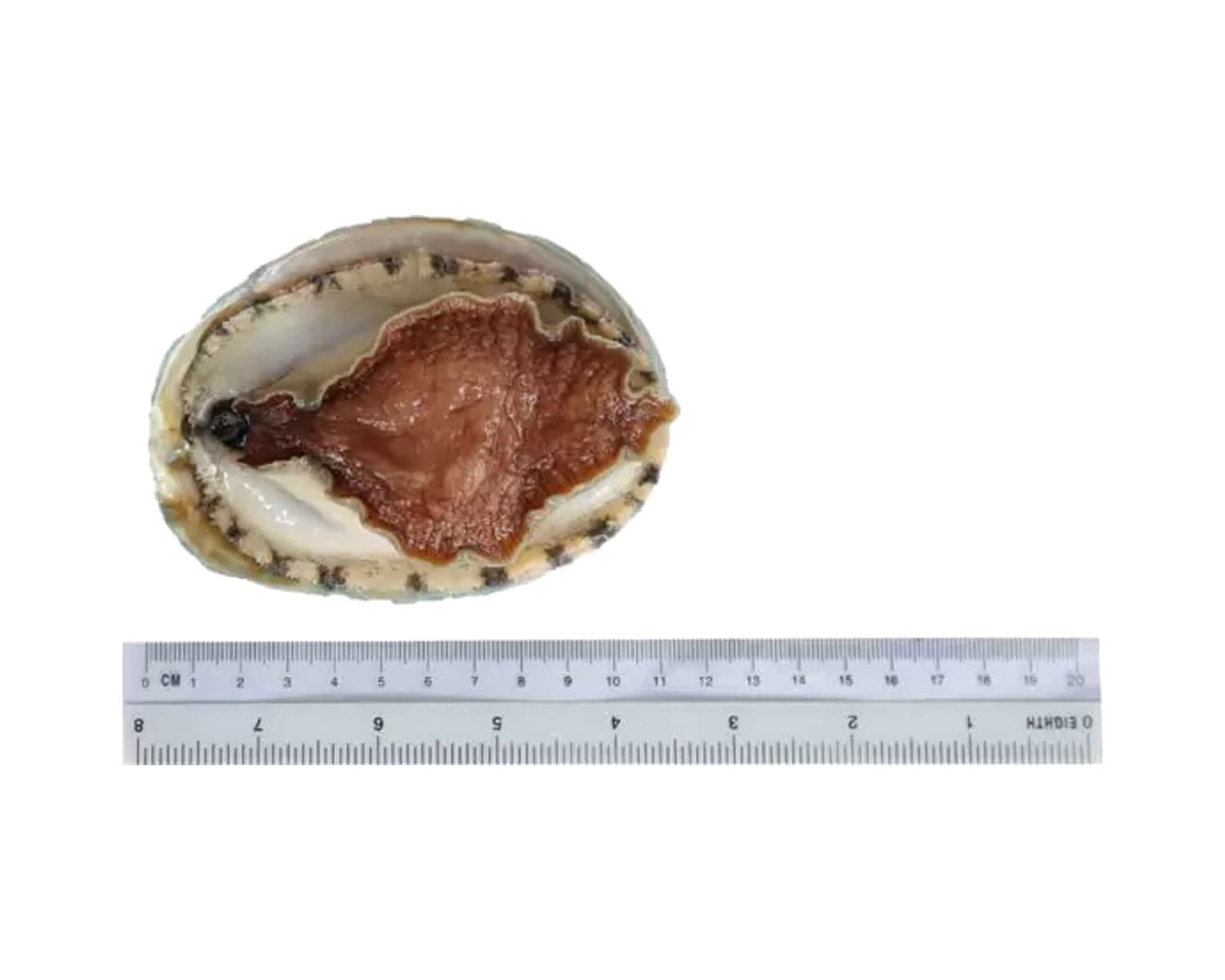
Frozen half-cut and sectioned crab serves the curry and stir-fry kitchens that do not keep live tanks. For a lighter crab sold whole frozen or as pasteurized meat, see our blue swimming crab species guide, and for the transit planning behind any live shipment, our live abalone page describes the same approach. To discuss live or frozen supply for your market, tell us your preferred grade and delivery port.
This guide is general trade information, not legal or regulatory advice. Requirements differ by market and change over time; confirm current rules with your customs broker or competent authority before ordering.