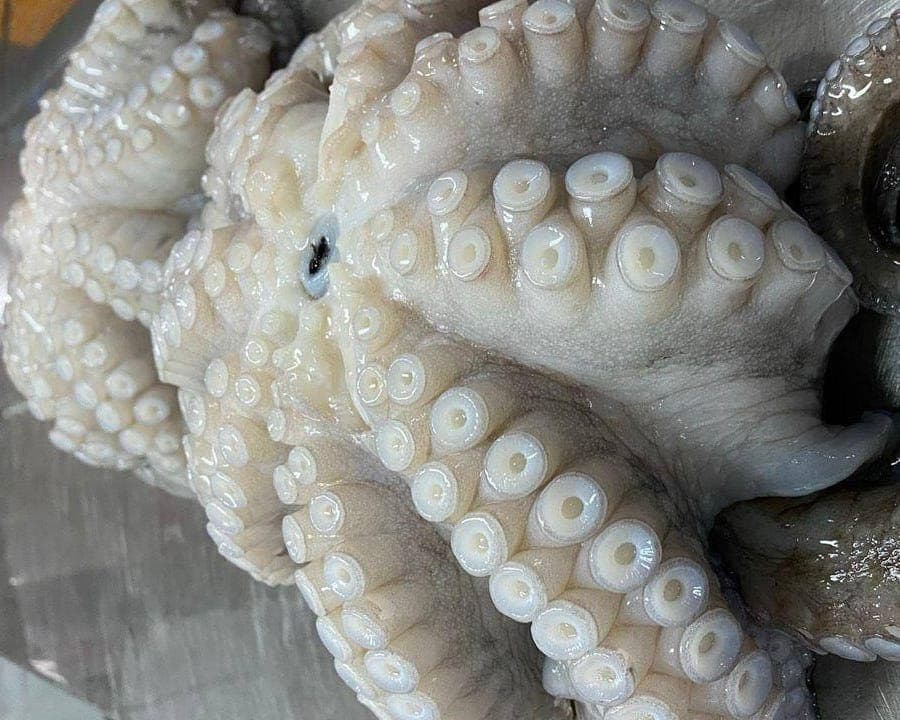
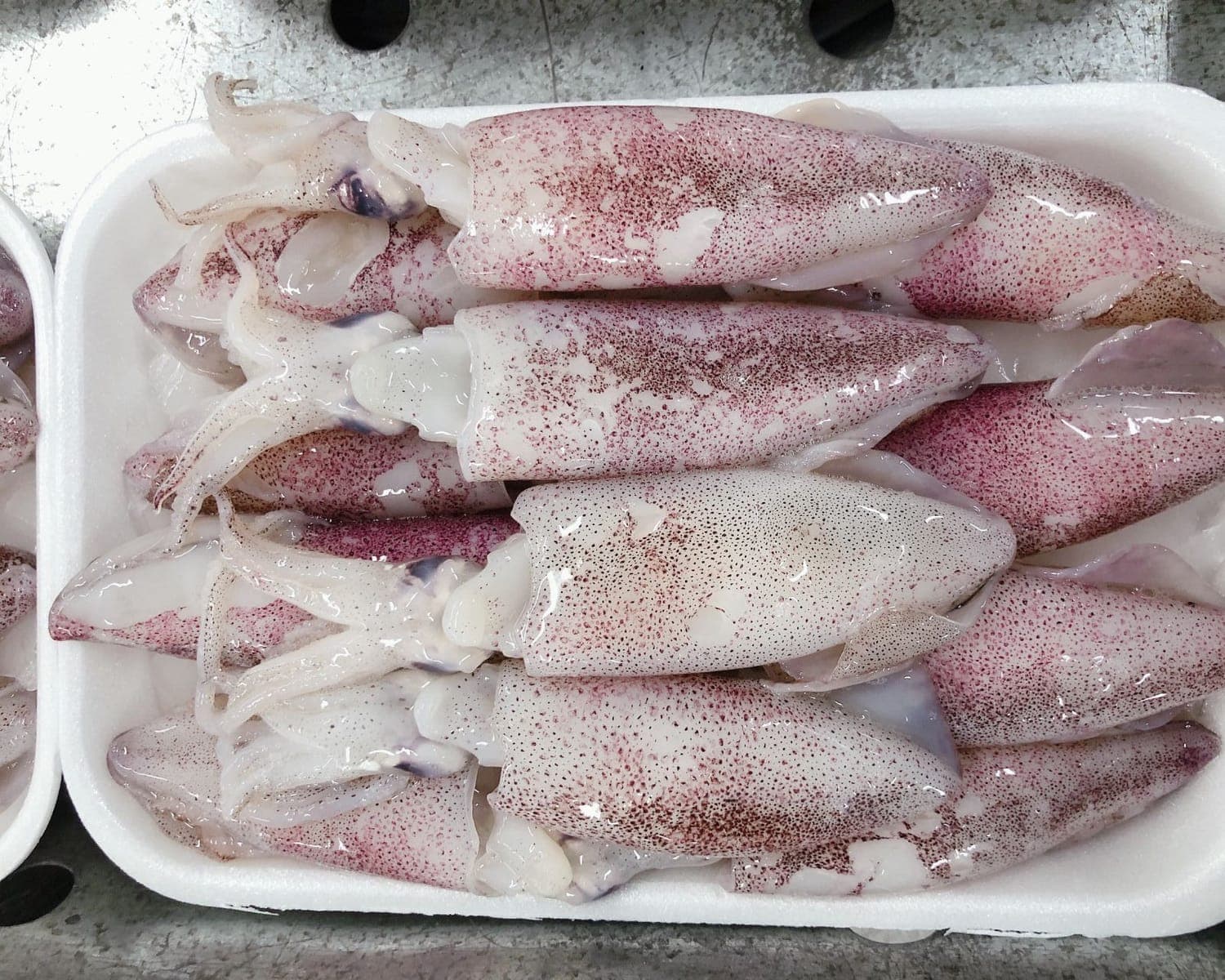
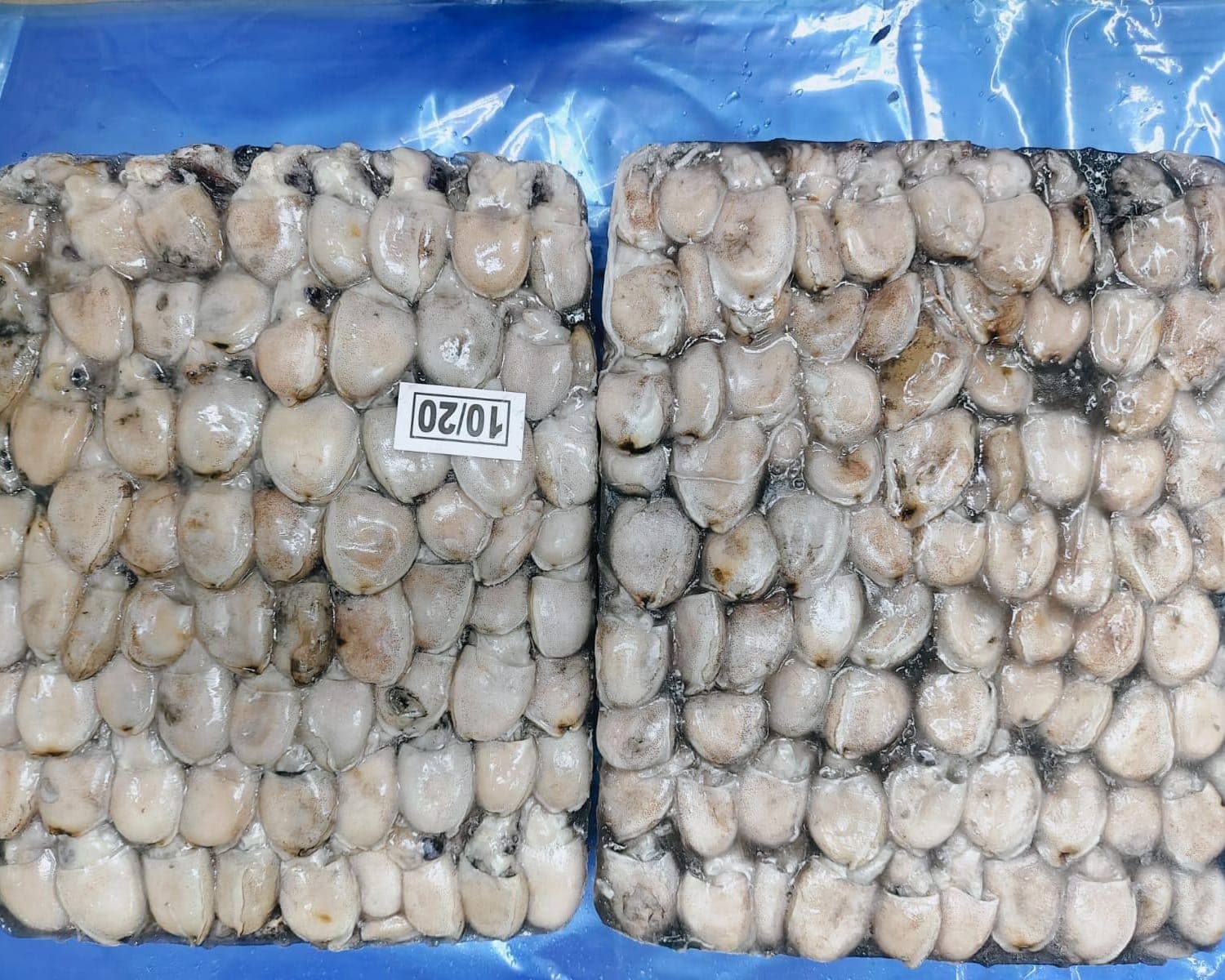
Octopus is the eight-armed cephalopod of the seabed: no shell, no fins in the species eaten as food and no tentacles, only arms lined with suckers. It is sold by the piece and judged on texture, and the commercial species range from small Amphioctopus of a few tens of grams to common octopus weighing several kilograms. BSA Food Products supplies frozen octopus raw or cooked, whole or as tentacles, along with cleaned, cut and seasoned baby octopus.
This profile covers how to recognize an octopus and its look-alikes, the species behind the main trade names, where supply comes from and how it is managed, the forms in which octopus is sold and the dishes it is best known for. It closes with the checks that keep cheaper relatives out of a lot labeled octopus.
Key takeaways
- An octopus has eight arms and no tentacles, fins or shell; squid and cuttlefish have ten limbs and an internal support.
- Common octopus is now treated as a group of species, with Octopus sinensis recognized for East Asia.
- Baby octopus means small Amphioctopus species, and Eledone is recognized by its single row of suckers.
- Octopus in trade is wild-caught; farming is not an established source of supply and faces legal and public opposition.
What sets an octopus apart
Squid and cuttlefish each carry two specialized feeding tentacles on top of their eight arms; an octopus has the eight arms alone. Its body is a soft, rounded mantle with no internal shell, or at most a pair of tiny stylets. In true Octopus and Amphioctopus each arm bears two rows of suckers, whereas the related genus Eledone has a single row, a quick way to separate them on a processing line.
Octopuses live on the seabed and shelter in dens, usually crevices among rocks or other hard structures. The day octopus, for example, keeps a den in coral or rubble on the reef and forages for crabs and other prey. They grow fast and die young: common octopus lives one to two years and day octopus little more than a year. A female lays her eggs in her den, tends them until they hatch, and then dies.
Size varies enormously between species. The small Amphioctopus sold as baby octopus has a mantle of no more than about 10 cm, while a large common octopus can weigh up to about 10 kg and measure more than a meter from mantle to arm tip. That spread is why octopus is graded by weight per piece rather than by count alone, and why kitchens choose a species and weight band together.
Octopus species in the seafood trade
Genetic studies have shown that the familiar Octopus vulgaris is really a group of closely related species. The East Asian population is now recognized as Octopus sinensis, and other members of the group include O. americanus and the Australian O. tetricus and O. djinda. Labels and import rules do not always follow the split, so agree in advance which name a lot will carry.
| Common name | Scientific name | Range | Notes |
|---|---|---|---|
| Common octopus | Octopus vulgaris | Eastern Atlantic and Mediterranean, south to South Africa | Up to about 10 kg |
| East Asian common octopus | Octopus sinensis | East Asian seas | Recently separated from O. vulgaris |
| Day or big blue octopus | Octopus cyanea | Indo-Pacific reefs, Hawaii to East Africa | Active by day; up to about 6 kg |
| Marbled or sandbird octopus | Amphioctopus aegina | Indo-West Pacific, East Africa and the Red Sea to Japan | Mantle up to about 10 cm; sold as baby octopus |
| Webfoot octopus | Amphioctopus fangsiao | North-West Pacific, including the Yellow Sea | Korean jukkumi; lives about a year |
| Curled octopus | Eledone cirrhosa | North-East Atlantic and Mediterranean | One sucker row; mostly trawl bycatch |
| Musky octopus | Eledone moschata | Mediterranean and nearby Atlantic coasts | One sucker row; smooth skin and musky smell |
The veined octopus (Amphioctopus marginatus) is also sold as baby octopus, and because it and the marbled octopus are hard to tell apart once cleaned, lots are often declared simply as Amphioctopus spp.
Where octopus comes from
Octopus in commercial trade is wild-caught. Common octopus is trawled on a large scale off North-West Africa and also taken with pots and traps in the Mediterranean and the Atlantic; in Tunisia, fishers set lines of clay pots on the seabed for octopus to shelter in. Day octopus comes from Indo-Pacific reefs, and the small Amphioctopus species are trawled and trapped in the Gulf of Thailand and other South-East and East Asian coastal waters. Further north, webfoot octopus is caught along the coasts of China, Korea and Japan; its Chinese name, fanshao or rice octopus, comes from eggs that look like grains of rice.
Several octopus fisheries use closed seasons and minimum weights to protect young animals and spawning stock; Mexico’s Yucatán fishery, the largest in the Americas, works to a fixed open season each year. In the North-East Atlantic, curled octopus is taken mostly as bycatch in bottom trawls, and like other cephalopods there it is not managed under EU catch quotas.
Farmed octopus is not an established source of supply. Commercial aquaculture has so far relied on fattening wild-caught juveniles in sea cages, chiefly in Spain, and plans for farms that breed octopus through its whole life cycle have drawn strong opposition; Washington State passed a law prohibiting octopus farming in 2024.
Octopus market forms and what they suit
| Form | What it is | Typical uses |
|---|---|---|
| Whole raw, frozen | Whole animal, sometimes cleaned of viscera and beak | Boiling to a house recipe, braises, grilling after boiling |
| Tenderized raw | Tumbled in a drum before freezing to loosen the arms | Kitchens with little time for long simmering |
| Whole cooked | Boiled whole, then frozen | Slicing for salads, tapas and the grill |
| Cooked tentacles | Single arms, often vacuum-packed | Grilled starters and plated mains with little waste |
| Sliced or diced cooked | Boiled octopus cut to size | Sushi, takoyaki and seafood salads |
| Baby octopus | Small Amphioctopus, cleaned, cut or seasoned | Skewers, barbecue, stir-fries and seafood mixes |
Weight per piece is the basic grade, from tens of grams for baby octopus to several kilograms for large common octopus. Baby octopus also goes into our frozen seafood mix, and frozen octopus can travel in one reefer with squid and cuttlefish, as described in our guide to reefer shipping and Incoterms.
How octopus is cooked
Octopus muscle is laced with connective tissue, so cooks soften it by slow simmering, by beating it or by freezing it first. On Greek coasts, fishermen traditionally pound a fresh catch against a stone, hang it to dry in the sun and then grill it. Pre-cooked octopus skips the long simmer and needs only a few minutes on a hot grill or plancha to char the skin and warm the meat through. Around the world:
- Galicia: polbo á feira, boiled octopus served in the region’s pulperías.
- Portugal: polvo à lagareiro, roasted and served with potatoes, garlic and plenty of olive oil, and arroz de polvo, octopus stewed with rice.
- Greece: grilled octopus with olive oil, garlic, oregano and lemon, a meze often paired with ouzo.
- Japan: sushi, sashimi, karaage, vinegared salads and takoyaki, batter balls with octopus inside.
- Korea: nakji bokkeum, stir-fried long-arm octopus, and jukkumi, webfoot octopus, stir-fried in a spicy gochujang sauce.
- Hawaii: octopus, called he’e in Hawaiian and tako from Japanese, is a regular part of local cooking.
Telling octopus species apart: look-alikes and labeling
Three identity questions matter most to buyers:
- Octopus or Eledone: count the sucker rows. Two per arm means Octopus or Amphioctopus; one means Eledone, which must be sold under its own name. Musky octopus also gives itself away by its smooth skin and smell, and curled octopus by arm tips that curl at rest.
- Baby octopus: the name refers to small species rather than young common octopus, so the documents should say which species is in the bag.
- Common octopus or a relative: O. vulgaris, O. sinensis, O. americanus and day octopus look much alike once frozen, so the declared species and catch area should match the label for your market.
Where a dispute arises, DNA testing can confirm the species. To start with the right animal, ask for an octopus offer by species and weight band. The ten-limbed relatives are covered in our squid and cuttlefish species guides.
This guide is general trade information, not legal or regulatory advice. Requirements differ by market and change over time; confirm current rules with your customs broker or competent authority before ordering.