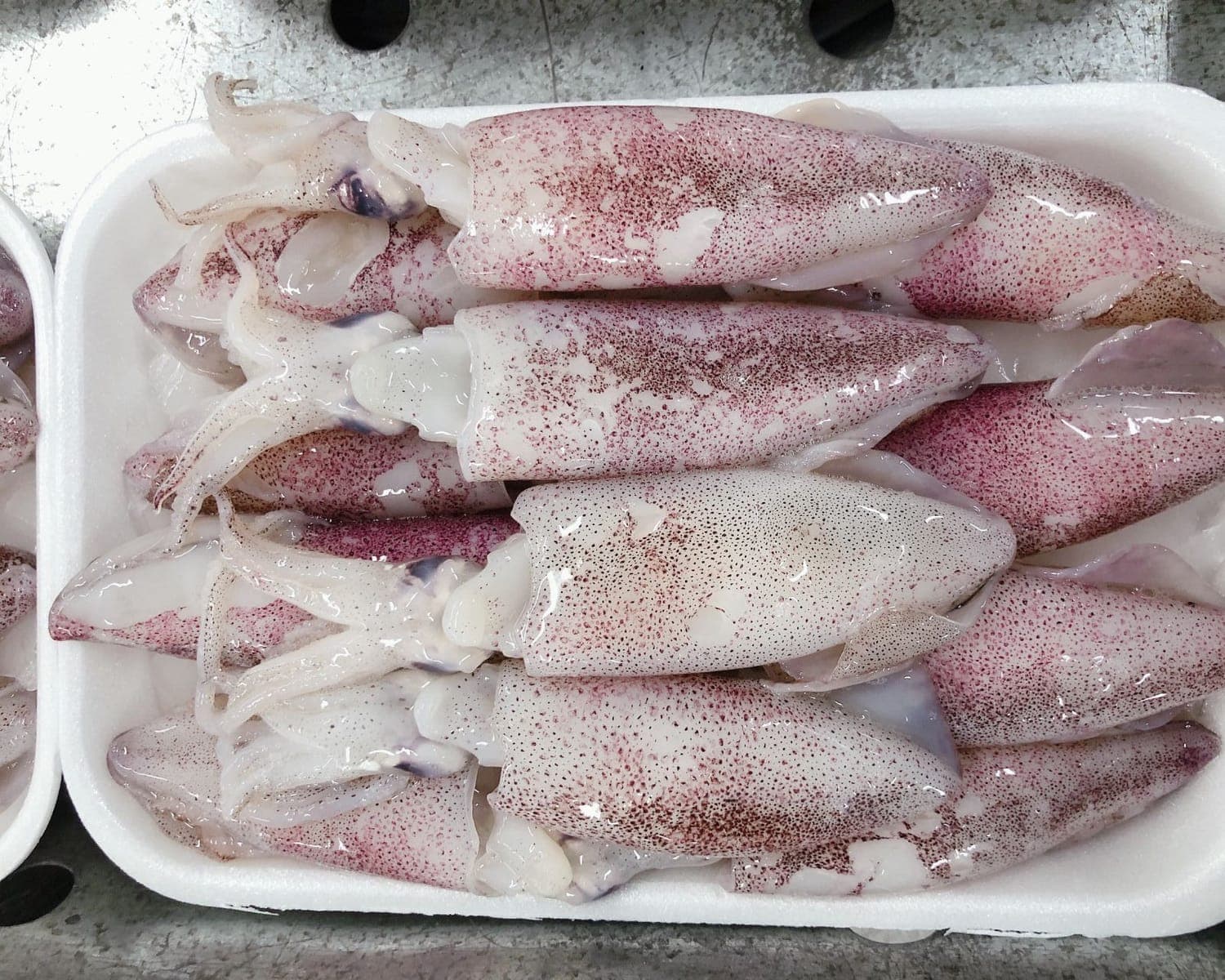
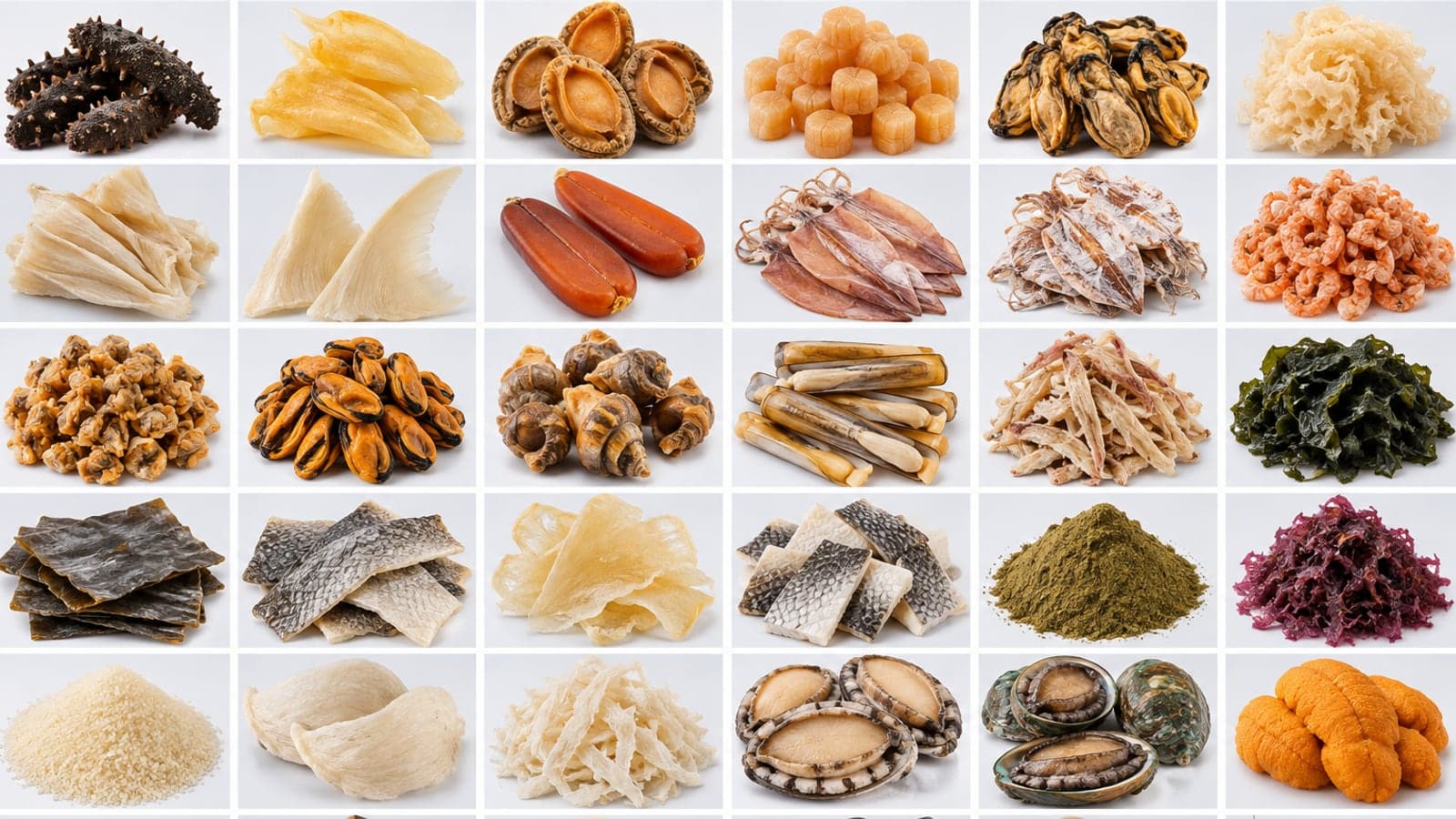
Squid are ten-limbed cephalopods with a long, streamlined body stiffened by a thin internal pen. The single word covers dozens of species, from small, tender inshore squid caught near the coast to large, thick-walled flying squid taken by jigging fleets far offshore, and the difference shows on the plate. BSA Food Products supplies frozen squid as whole squid, tubes, rings and tentacles, and whole butterflied and shredded dried squid.
This guide explains how to recognize a squid and tell the two main families apart, which species dominate trade and where they are fished, the names used in Spain, Italy, France, Portugal and Japan, and how each market form is used in the kitchen. Squid is often confused with cuttlefish and octopus, so the first section sets out the physical differences.
Key takeaways
- Most traded squid belongs to two families: tender inshore squid (Loliginidae) and firmer, thicker flying squid (Ommastrephidae).
- A clear, feather-shaped pen marks a squid; cuttlefish carry a chalky cuttlebone and octopus has neither.
- Squid live about a year, so catches swing with ocean conditions and every offer should name the species and catch area.
- Official EU names separate Illex and Dosidicus from Loligo, so the label must match the species in the carton.
How to recognize a squid
A squid’s body is a muscular tube, the mantle, with a pair of fins and a head that carries eight arms and two longer feeding tentacles, which carry their suckers mainly on club-shaped tips. The sucker rims are stiffened with chitin and may carry tiny teeth, and a few species add hooks. Running inside the mantle is the gladius, or pen: a clear, feather-shaped strip that is all that remains of an ancestral shell. Pull the head from a whole squid and the pen slides out like a sliver of plastic, the quickest way to confirm what you are holding.
| Feature | Squid | Cuttlefish | Octopus |
|---|---|---|---|
| Body | Long, tube-shaped mantle | Broad, flattened oval mantle | Soft, rounded sac |
| Internal support | Thin, clear pen (gladius) | Chalky, porous cuttlebone | None, or two tiny stylets |
| Fins | Paired fins, from short to nearly full mantle length | A narrow fin around the mantle edge | None in food species |
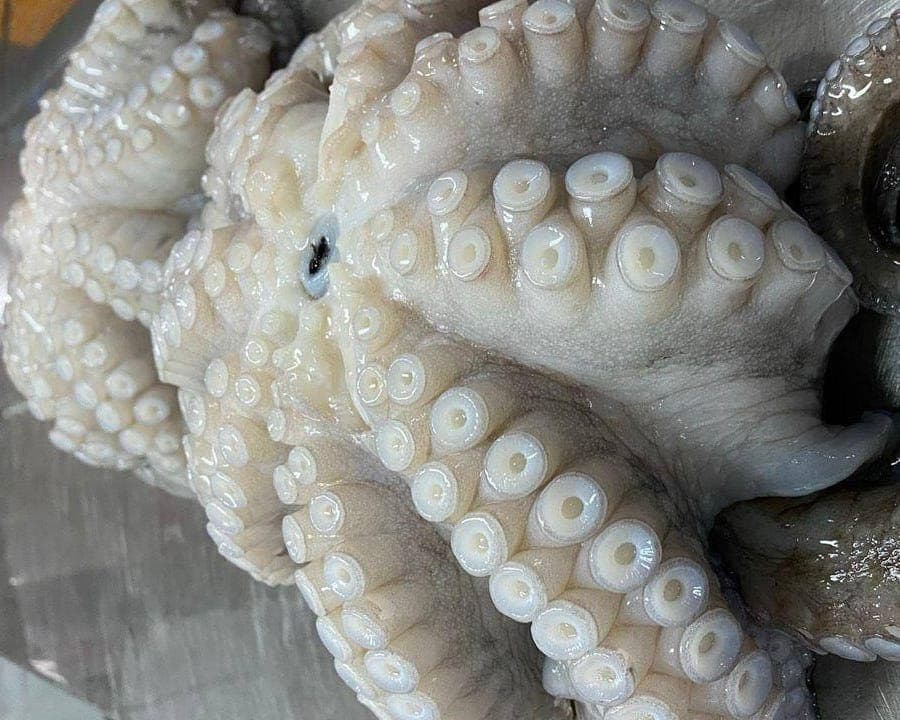
| Limbs | Eight arms plus two long tentacles | Eight arms plus two feeding tentacles | Eight arms, no tentacles |
| Usual habitat | Open water, coast to ocean | On or just above the seabed | On the seabed, often in dens |
| Ink color (typical) | Blue-black | Brown-black | Black |
Fin shape varies within squid, and one Indo-Pacific reef squid has fins so broad that it is regularly taken for a cuttlefish; our cuttlefish species guide explains how to separate the two.
Inshore squid and flying squid: the two families in trade
Most commercial squid belongs to one of two families. Inshore or pencil squid of the family Loliginidae live over continental shelves and close to coasts; a transparent corneal membrane covers each eye, the fins run along much of the mantle, and the mantle wall is thin and tender. Flying squid of the family Ommastrephidae range over shelves and slopes and far into the open ocean; their eyes lack that covering, short fins form an arrowhead at the tail, and the mantle is thicker and firmer. On whole squid, the eye is a useful check: a clear skin over it marks an inshore species.
| Species | Scientific name | Family | Main fishing areas |
|---|---|---|---|
| Indian squid | Uroteuthis duvaucelii (formerly Loligo) | Loliginidae | Indian Ocean to South-East Asia |
| Mitre squid | Uroteuthis chinensis | Loliginidae | South-East Asian waters |
| European squid | Loligo vulgaris | Loliginidae | Eastern Atlantic and Mediterranean |
| Bigfin reef squid | Sepioteuthis lessoniana | Loliginidae | Indian Ocean and western Pacific |
| Argentine shortfin squid | Illex argentinus | Ommastrephidae | South-West Atlantic, Patagonian shelf |
| Japanese flying squid | Todarodes pacificus | Ommastrephidae | North-West Pacific around Japan |
| Jumbo flying squid | Dosidicus gigas | Ommastrephidae | Eastern Pacific, chiefly off Peru, Chile and Mexico |
Many loliginid squid were once all placed in Loligo, and older names such as Loligo duvaucelii still appear on cartons and price lists for species now assigned to Uroteuthis. When an offer uses an old name, ask which current species it means.
Squid biology: short lives and changeable catches
Squid live fast. Most species complete their life cycle in about a year, and many inshore squid in less; flying squid such as Illex and Todarodes typically spawn once and then die. Each season’s catch is therefore largely a new generation, and landings can rise or fall sharply between years as ocean conditions change. The jig fishery for jumbo squid in Mexico’s Gulf of California, for instance, had collapsed by 2015 after a shift to warmer, more tropical ocean conditions.
Jumbo flying squid is the heavyweight of the trade, reaching more than 1 m in mantle length and up to about 50 kg, and it ranges along the eastern Pacific from Chile to California, with records as far north as Alaska. Its muscle holds ammonium salts that keep it buoyant but make the fresh meat taste sour and bitter, so processors treat it, typically with tenderizing and acid and brine soaks, before it reaches kitchens as steaks, strips and rings. Argentine shortfin squid grows to roughly 30 cm in mantle length and is taken on the Patagonian shelf by trawlers and by jigging vessels that draw squid to the surface with bright lights at night.
Coastal states regulate squid in their own waters, and on the high seas of the South-East Pacific jumbo flying squid falls within the remit of the South Pacific Regional Fisheries Management Organisation. In Japan, catches of Todarodes pacificus fell to record lows in the late 2010s, and Japan has since cut its catch limit for the species to record lows.
Squid names in the main markets
Calamari, now a menu word worldwide, comes from the Italian plural of calamaro, which traces back to a Latin word for a pen case or ink pot, a nod to the squid’s shape and ink. On English-language menus it stands for squid in general, whatever the species. The EU’s list of commercial designations is more precise, and in several languages it gives flying squid names of their own.
| Market | Inshore squid (Loliginidae) | Flying squid (Ommastrephidae) |
|---|---|---|
| Spain | calamar (Loligo vulgaris); small squid often called chipirones on menus | pota argentina (Illex argentinus); potón del Pacífico (Dosidicus) |
| Italy | calamaro | totano atlantico (Illex argentinus); totano gigante del Pacifico (Dosidicus) |
| France | calmar, encornet | encornet rouge argentin (Illex argentinus), though calmar and encornet are also accepted for it |
| Portugal | lula | pota, potra (Illex argentinus); pota gigante (Dosidicus) |
| Japan | aori-ika (bigfin reef squid) | surume-ika (Todarodes pacificus) |
Because these names attach to species, Illex rings packed for Spain should carry the official name for Illex, not the one for Loligo. Agree the label name with your customer and check it against the destination’s official list before packing.
Whole, cut and dried: squid market forms
- Whole round: frozen as caught, for kitchens that clean their own, want the ink or grill small squid whole.
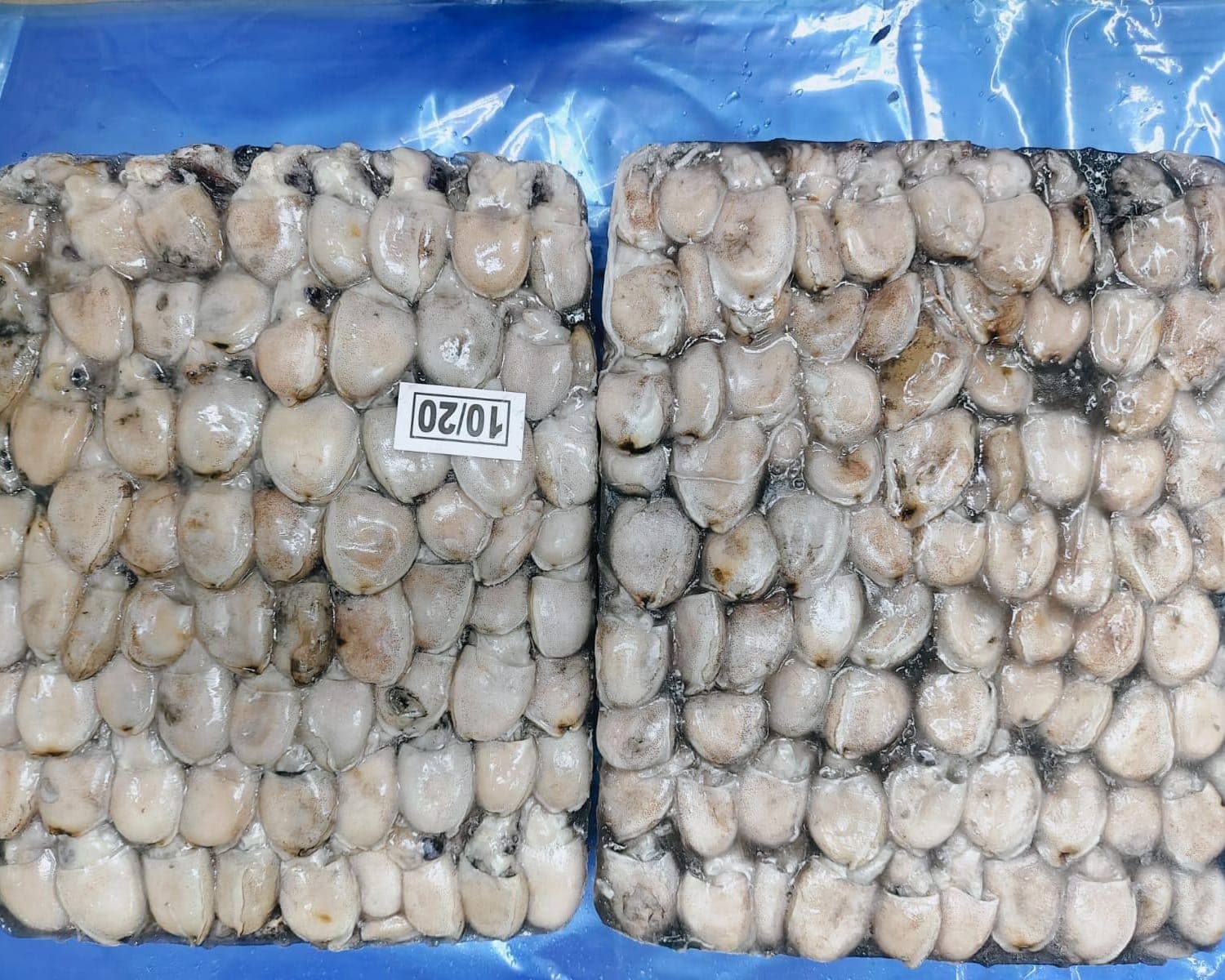
- Cleaned tubes and tentacles: head, guts and pen removed, usually skinned; tubes for stuffing, grilling and slicing.
- Rings and strips: cut from tubes for frying, paella and mixed seafood; inshore squid gives softer rings, flying squid firmer ones.
- Steaks and fillets: cut from the thick mantle of jumbo flying squid and usually tenderized before freezing.
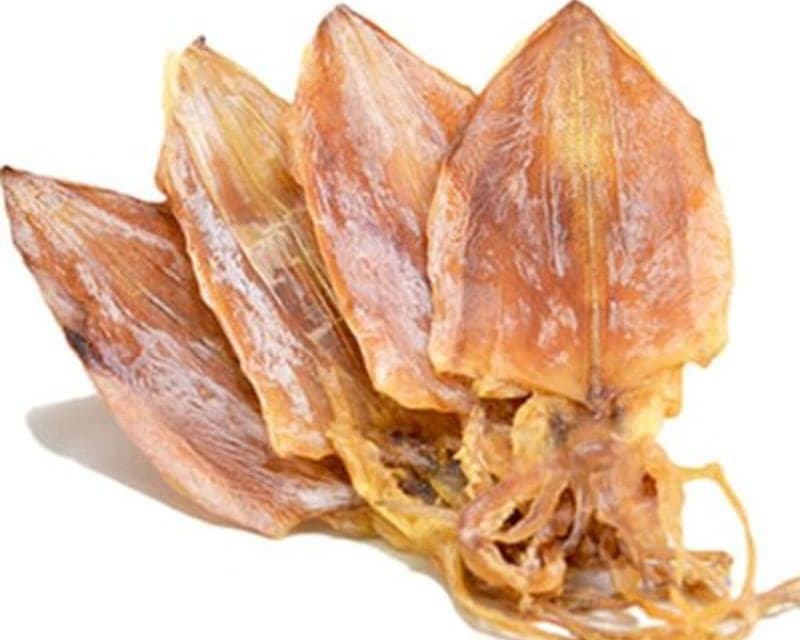
- Plain dried squid: split and dried whole, the Japanese surume, grilled as a snack or soaked for stir-fries and stock.
- Seasoned shredded squid: cooked, seasoned and pulled into strands, known in Japan as sakiika and in Korea as ojingeochae, a drinking snack that is also stir-fried as a side dish.
Documents for dried lines are covered in our guide to importing dried seafood. Frozen squid can share a container with frozen cuttlefish and frozen octopus, and the reefer shipping guide explains how temperature and Incoterms are handled.
How squid is cooked around the world
Squid suits either very fast or very slow cooking: a minute or two over fierce heat keeps it tender, and a long braise softens it again, while anything in between turns it rubbery. A few classic preparations:
- Spain: calamares a la romana, battered rings with lemon and aioli; puntillitas, tiny fried squid; and calamares en su tinta, stewed black in their own ink.
- Italy and Greece: calamari fritti in Italy, and kalamarakia tiganita, small fried squid served with lemon, in Greece.
- Japan: raw squid as sashimi, sushi and ika sōmen, cut into noodle-like strands, and ikayaki grilled at street stalls.
- Korea: raw squid, and ojingeo-jeot, salted fermented squid served as a side dish.
- China and South-East Asia: whole squid grilled at food stalls, stir-fries, rice and noodle dishes, and in the Philippines adobong pusit, cooked with its ink.
- Peru: jumbo squid, known locally as pota, is a cevichería staple served as ceviche de pota.
Squid quality, substitution and labeling
Once squid is skinned and cut into rings or strips, the family differences are hard to see, so a firmer flying squid can pass for inshore squid unless the species is written into the specification. Wall thickness on thawed rings, fin shape and eye covering on whole squid, and a quick pan test all help, and a DNA test can settle a dispute. In the EU, labels on fresh and frozen squid must give the commercial and scientific names and the catch area, and wild catches travel with a catch certificate; other markets set their own rules.
This guide is general trade information, not legal or regulatory advice. Requirements differ by market and change over time; confirm current rules with your customs broker or competent authority before ordering.