- Private-label packing
- Export documentation
Frozen & Live Seafood
Frozen Octopus Supplier: Whole Octopus, Cooked Tentacles and Baby Octopus
Common and day octopus supplied whole, tenderized or cooked, and small Amphioctopus baby octopus cleaned, cut or seasoned, with the species, weight band, cooking state and catch area named on every offer.
- Common, day and Amphioctopus baby octopus, species named
- Whole round, cleaned, drum-tumbled or cooked whole octopus
- Cooked tentacles, plus sliced and diced cuts for sushi
- Baby octopus whole cleaned, flower cut, blanched or seasoned
- Weight per piece graded, with the grading unit always stated
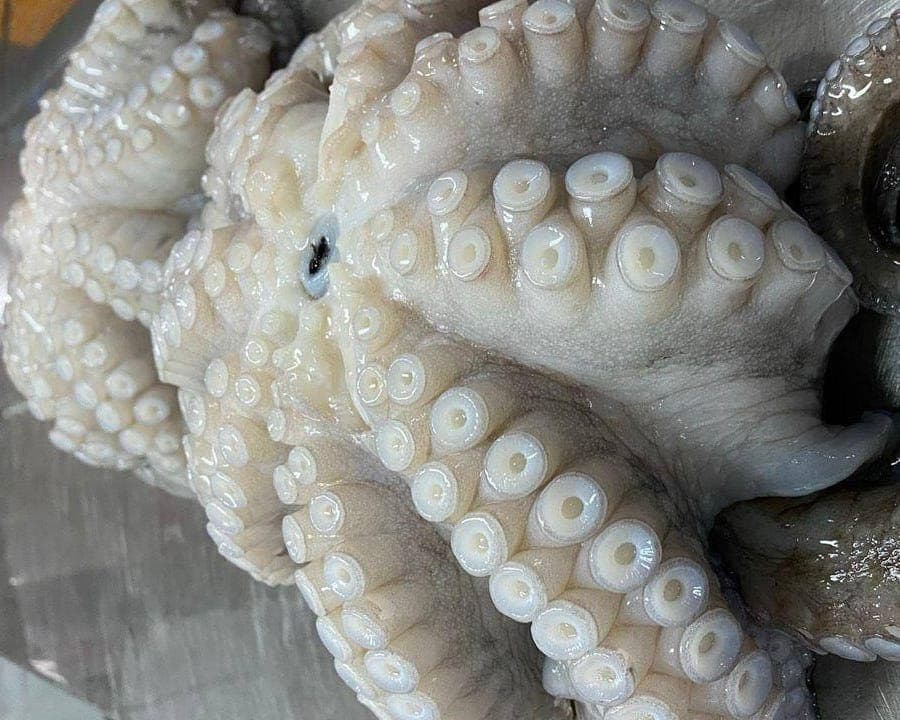
- Sucker rows checked to keep Eledone out of Octopus lots
Product Specifications
Indicative; confirmed per lot on each quotation.
- Origin
- North-West Africa and other Atlantic grounds for common octopus; Indonesia, the Philippines and East Africa for day octopus; the Gulf of Thailand, Vietnam, Indonesia and India for baby octopus. Catch area declared per lot.
- Grade / Size
- Whole octopus by weight per piece (200–500 g, 500 g–1 kg, 1–2 kg, 2–3 kg, 3 kg+) or by T-grade; baby octopus at 10–20, 20–40, 40–60 or 60–80 g per piece, or by pieces per kilogram.
- Form & Processing
- Whole round or cleaned (viscera, beak and eyes removed), drum-tumbled or untreated, raw or cooked; cooked tentacles and slices; baby octopus whole cleaned, flower cut, blanched or seasoned. IQF, block or vacuum-packed.
- Storage
- Keep raw and cooked octopus at -18 °C or colder; thaw slowly under refrigeration, and use opened packs of cooked tentacles within the packer’s stated period.
- MOQ
- From about 1 tonne per item for trial orders, combinable with squid and cuttlefish in a mixed reefer; seasoned baby octopus subject to recipe set-up quantities.
- Lead Time
- Generally 3–6 weeks after the specification is agreed; catches follow seasonal closures at each origin, and cooked or seasoned lines need extra production time.
Product overview
Octopus is bought by the piece and judged on the plate by texture, so four questions decide every order: which species it is, how heavy each animal is, whether it has been tenderized, and whether it arrives raw or cooked. A 2 kg common octopus bound for a Galician-style dish and a 30 g baby octopus for a grill skewer are separate products with separate buyers, and we handle them that way, quoting each against its own weight bands and processing steps rather than under one generic heading.
Common octopus (Octopus vulgaris) supplies most of the European and Japanese whole-octopus trade, with major fisheries off North-West Africa and smaller volumes from other Atlantic and Mediterranean grounds. The East Asian population is now often classified as a separate species, Octopus sinensis, and we use whichever name the destination accepts. Day octopus (Octopus cyanea), a reef species of the Indo-Pacific, is caught in Indonesia, the Philippines and East Africa and processed in much the same way. Baby octopus is not the young of these large species but a group of small octopuses of the genus Amphioctopus, chiefly the marbled or sandbird octopus (A. aegina) and the veined octopus (A. marginatus), taken by trawl and trap in the Gulf of Thailand and neighboring Asian waters; the two are easily confused, so many lots are declared as Amphioctopus spp.
Large octopus is frozen whole round or cleaned, with the viscera, beak and eyes removed, and may be tumbled in a drum before freezing to break down the tough connective tissue in the arms. Cooked lines include whole boiled octopus, individual cooked tentacles in vacuum bags, and boiled octopus sliced or diced for sushi and takoyaki. Whole octopus is graded by weight per piece in bands such as 200–500 g, 500 g–1 kg, 1–2 kg, 2–3 kg and over 3 kg, and North-West African packers and the Spanish buyers they supply also use a numbered T-scale on which T1 is the heaviest grade. Baby octopus comes whole cleaned, flower cut, blanched or seasoned, at 10–20, 20–40, 40–60 or 60–80 g per piece.
Inspection covers the weight band, glaze, skin and sucker condition after tumbling, leftover beak or sand in the mantle, odor and, for cooked lots, an even purple-red skin over white flesh. We also look at the suckers themselves, because octopus of the genus Eledone carries a single row on each arm instead of two and must be sold under its own name. Typical buyers are Mediterranean importers, Japanese and Korean processors, tapas and grill restaurants, and makers of seafood salads and ready meals; baby octopus also goes into marinated barbecue packs and our frozen seafood mix. The frozen squid and frozen cuttlefish lines serve the same customers and can share a container.
Specification sheet
Frozen Octopus: full specification
Indicative values. Final specifications are confirmed per lot on the quotation and certificate of analysis.
| Species | Octopus vulgaris or O. sinensis, O. cyanea; baby octopus Amphioctopus aegina, A. marginatus |
|---|---|
| Catch area | FAO area and processing country stated for each lot |
| Formats | Whole round or cleaned, tumbled, cooked whole, tentacles, slices |
| Weight bands | 200 g to 3 kg+ per piece, or T-grade; baby octopus 10–80 g per piece |
| Cooking state | Raw or cooked, stated per lot and on the label |
| Seasoned lines | Baby octopus to an agreed recipe and ingredient list |
| Glazing | Declared as a percentage; net weight excludes glaze |
| Allergens | Molluscs; seasoned recipes may add soy, wheat or sesame |
| Shelf life | Per the packer’s declaration, commonly 12–24 months |
| Documents | Catch certificate where required, health certificate, origin and species declarations |
| Minimum order | From about 1 tonne per item for trial orders, combinable with squid and cuttlefish in a mixed reefer; seasoned baby octopus subject to recipe set-up quantities. |
| Lead time | Generally 3–6 weeks after the specification is agreed; catches follow seasonal closures at each origin, and cooked or seasoned lines need extra production time. |
FAQ
Frozen Octopus: questions from buyers
Is baby octopus a young octopus?
Usually not. In the trade, baby octopus means small species, above all Amphioctopus aegina and A. marginatus from South-East and South Asian waters. Their bodies stay small, the arms are short and the meat turns tender after brief cooking, which suits grilling, skewers and salads. Juveniles of large species such as Octopus vulgaris are protected by minimum sizes or weights in several fisheries, so a lot sold as baby octopus should name an Amphioctopus species or another small species on its documents.
Should I buy raw or cooked octopus?
Raw octopus gives a kitchen full control: it can be boiled by the house method, braised or slow-cooked and then grilled, but it takes time and loses a large share of its weight in the pot. Cooked octopus, whole or as separate tentacles, has already lost that weight, so you pay only for edible yield, and it needs just reheating or a few minutes on the grill. To compare the two fairly, work out the cost per kilogram of cooked meat rather than per kilogram of raw product. Cooked lots are handled as ready-to-eat food, with the hygiene that implies.
How is frozen octopus tenderized?
The traditional method is mechanical: cleaned octopus is tumbled in a rotating drum, sometimes with salt or ice, which loosens the connective tissue in the arms. Freezing helps as well, since ice crystals disrupt the muscle fibers, which is one reason many Mediterranean cooks prefer frozen octopus to fresh. Some packers add permitted tenderizing or water-retaining agents, and where they do the agent is shown on the offer and in the ingredients list. Overworked octopus loses skin and suckers, so we check tumbling damage during the visual inspection.
How do I compare baby octopus grades from different packers?
Ask for the unit first. A 20–40 grade can mean grams per piece from one packer and pieces per kilogram from another, and the two describe very different animals. Then check whether the weight is taken before or after glazing, whether the octopus has been cleaned or only washed, and whether any marinade is counted in the net weight. Our offers state all four points, and a short thaw-and-weigh check on a sample bag at arrival confirms them.
Related
Related products
Buyer guides
Species Profiles6 min read
Octopus in the Seafood Trade: Common, Day and Baby Octopus Compared
From the common octopus of Galician pulperías to the small Amphioctopus sold as baby octopus, here is how the species differ, where they are caught and how kitchens prepare them.
Read the guide
Import & Compliance8 min read
Shipping Seafood: Reefer Containers, Cold Chain and Incoterms
A logistics guide for seafood buyers: reefer and dry-container shipping, temperature records, air freight for chilled and live product, where Incoterms 2020 place cost and risk, and the evidence a claim needs.
Read the guide
Buying Guide7 min read
Choosing Premium Seafood Ingredients for Restaurants and Retail
How chefs, foodservice buyers and brand owners match grade and format to the application, compare suppliers on cost per portion, and keep quality consistent across orders and channels.
Read the guide
Request a quote
Request a quote for frozen octopus
Share your target grade, packing, volume and destination. We confirm availability, documentation for your market and a formal quotation, usually within one business day.
- Grade, size or count required
- Packing format and labeling language
- Estimated volume and order frequency
- Destination port or airport and Incoterm
- Reference: Frozen Octopus