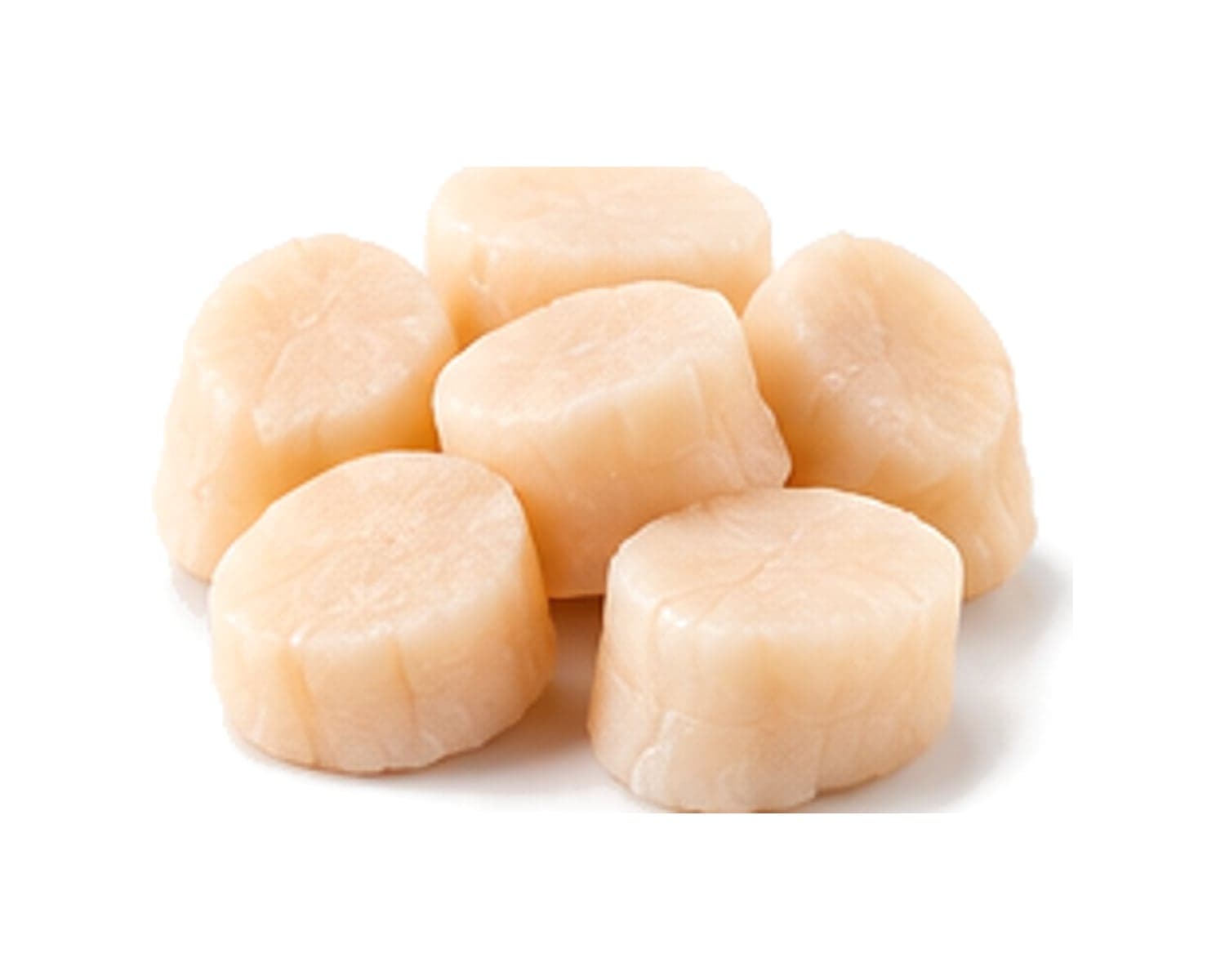
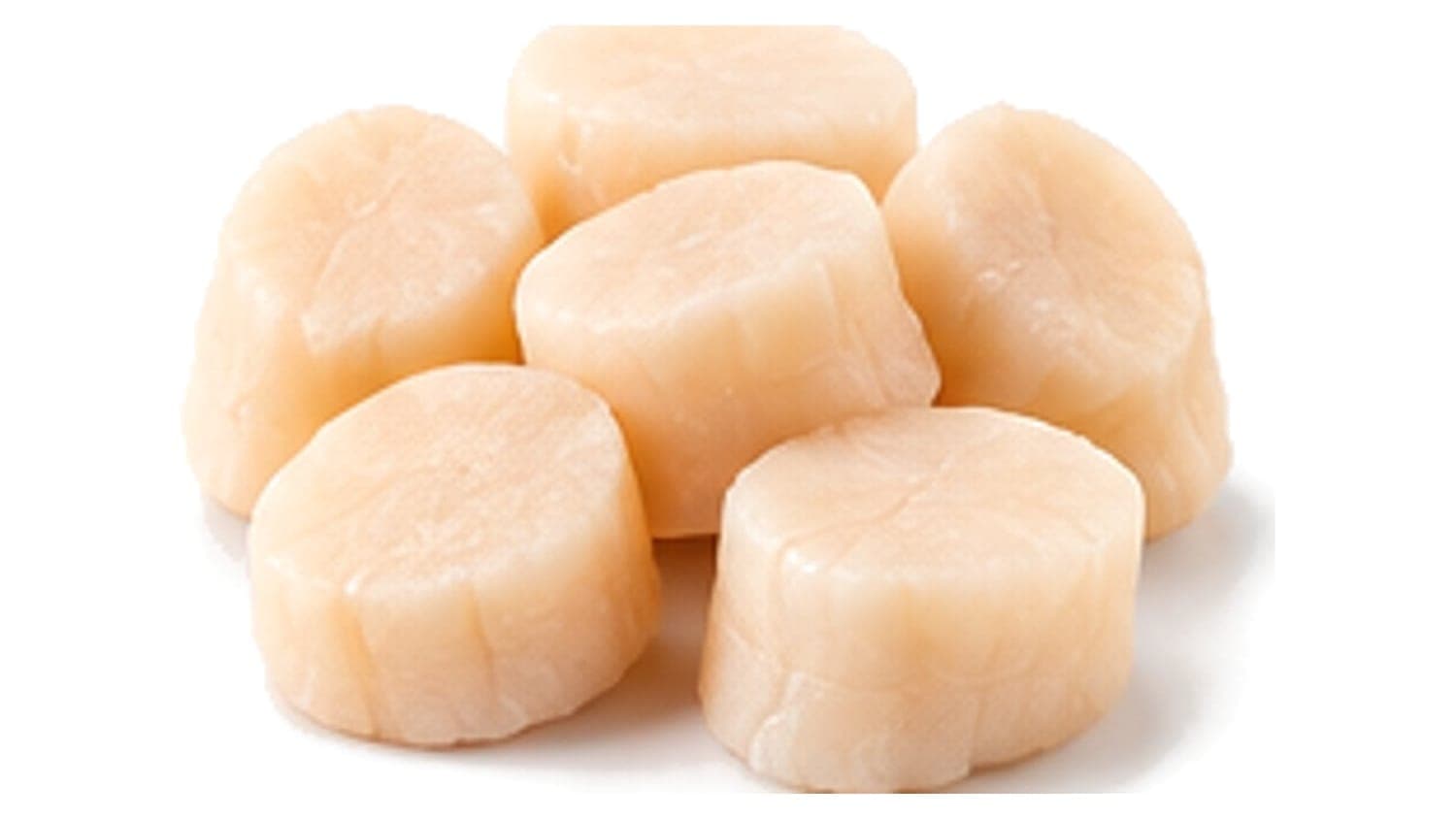
Scallops are bivalves of the family Pectinidae, a group of several hundred species found from polar seas to the tropics. Only a handful reach commercial scale, and in trade the word “scallop” usually means one muscle: the round, sweet adductor that closes the shell. Japan’s Yesso scallop, the Atlantic sea scallop of the North American banks and the farmed Peruvian scallop are the names buyers meet most often in international trade, while China grows enormous volumes of Yesso and bay scallops, much of it for its own market.
This profile looks at the animals behind the carton: how to tell the species apart, what they are called in different markets, how they are farmed or fished, and how kitchens from Hokkaido to Lima use them. Current origins, counts and formats are listed on our frozen scallops page, and the dried adductor is covered under dried scallops and conpoy.
Key takeaways
- The scallops buyers meet most often are farmed Yesso, wild Atlantic sea and farmed Peruvian scallops, each with its own shell, meat and roe.
- Roe color follows sex; Yesso roe is one color per animal, while hermaphrodite species such as Peruvian and bay scallops show two tones.
- Names such as kaibashira, Saint-Jacques and vieira cover more than one species, so ask for the scientific name.
- Conpoy is dried scallop adductor; pen shell adductor is a different product and should be labeled as such.
What makes a scallop a scallop
A scallop has two fan-shaped valves joined at a straight hinge flanked by small “ears,” and most species carry radiating ribs. Unlike clams and mussels, which close their shells with two adductor muscles, a scallop has a single large one set near the center of the shell. That muscle is what makes scallops unusual among bivalves: by snapping the valves shut, a scallop pushes jets of water out beside the hinge and swims in short bursts, usually to escape starfish. Along the edge of the mantle runs a row of up to 200 tiny eyes, which let the animal react to shadows and movement.
The orange or cream crescent wrapped around the muscle is the gonad, sold as roe or “coral,” and its color follows the sex of the animal. The Yesso scallop has separate sexes, with females carrying pink to orange roe and males cream to white; FAO describes it as maturing first as a male and turning female with age. Peruvian, bay and European great scallops are hermaphrodites, so their roe can show a pale male section beside an orange female one.
One practical consequence of the scallop’s design is that, unlike an oyster or clam, it cannot seal itself tightly or hold water in its shell. Out of the sea it dries out and dies quickly, which is why live scallops are sold mainly close to where they are grown and almost everything else reaches buyers shucked and frozen.
The main commercial scallop species
Shell shape and color, meat size and whether the roe is kept all help identify the species. The table compares the scallops buyers meet most often in international trade, using current scientific names from the World Register of Marine Species (WoRMS) with older names that still appear on documents.
| Species | Common and trade names | Where it comes from | How it is usually traded |
|---|---|---|---|
| Mizuhopecten yessoensis (formerly Patinopecten yessoensis) | Yesso or Japanese scallop; hotate in Japan | Farmed in northern Japan and northern China, smaller volumes in Korea and the Russian Far East | Large roe-off adductor meat, half-shell, whole boiled, conpoy |
| Placopecten magellanicus | Atlantic sea scallop, American sea scallop | Wild, dredged on the continental shelf of the North-West Atlantic | Large adductor, landed mostly as shucked meat |
| Argopecten purpuratus | Peruvian scallop; concha de abanico in Peru | Farmed in sheltered bays of Peru and Chile | Medium meat, often roe-on; half-shell |
| Argopecten irradians | Bay scallop | Native to the US Atlantic and Gulf coasts; farmed at scale in China | Small meat, frozen or dried |
| Scaeochlamys farreri (formerly Chlamys farreri, still the usual name in trade and much of the literature) | Zhikong scallop | Farmed in northern China | Small meat; dried as small conpoy |
| Zygochlamys patagonica | Patagonian scallop | Wild, from the Argentine shelf | Small IQF meat in volume packs |
| Amusium pleuronectes | Asian moon scallop | Wild, Indo-West Pacific; taken mainly by trawl, often as bycatch | Roe-off meat from a thin, smooth shell |
| Pecten maximus | Great or king scallop; coquille Saint-Jacques in France | Wild, North-East Atlantic | Fresh in the shell or roe-on meat, mainly in Europe |
A few visual clues separate the large species. The Yesso scallop has one whitish valve with around twenty broad, flattened ribs and one purplish-brown valve. The Atlantic sea scallop has a saucer-shaped, smooth shell without prominent ribs; NOAA describes the upper valve as reddish-pink or brown and the lower one as white or cream. The great scallop of Europe pairs a flat, pink to reddish-brown upper valve with a strongly convex lower one and has bold ribs. The Asian moon scallop is quite different again: thin, almost circular and very smooth, about 8 cm across, with a pinkish-brown upper valve and a white lower one.
Where scallops come from: farms and wild beds
Yesso scallop farming in Japan and China rests largely on spat collected from the wild. Larvae settle on mesh-filled collectors hung from longlines, and the young scallops are then grown on in one of two ways. In hanging culture, practiced in places such as Funka Bay in Hokkaido and Mutsu Bay in Aomori, they are raised in stacked lantern or pearl nets, or hung in pairs from ropes through a small hole drilled in the shell’s ear. In seabed ranching, the main method on Hokkaido’s Sea of Okhotsk coast, juveniles grown for about a year are sown into one of several seabed zones fished in rotation, then dredged three to four years later, as the Hokkaido Research Organization describes it. FAO notes that suspended scallops reach about 10 cm after two to three years, and that bottom-sown stock takes roughly a year longer.
Atlantic sea scallops are wild. They live in dense beds on sand and gravel from Newfoundland to Cape Hatteras, generally about 30 to 90 meters deep on Georges Bank and in the Mid-Atlantic, according to NOAA, and are fished by US and Canadian fleets with dredges. In US waters the fishery is managed with catch limits and by closing areas full of small, fast-growing scallops for later reopening. Most boats land shucked meat rather than whole scallops.
Peruvian scallops occur naturally from Peru to Chile and are farmed in sheltered bays, with Sechura Bay in northern Peru a leading production area; much of the seed is still gathered from natural banks. Bay scallops, native to the American coast from Cape Cod to the Gulf of Mexico, were introduced to China in the early 1980s and grew into a major farmed species there, while the wild American fishery has shrunk. The smaller Patagonian and Asian moon scallops come from wild fisheries, so their supply moves with catches rather than with farm cycles.
Scallop names in different markets
Some market names describe a species, some a size and some only the muscle, which makes scallop vocabulary easy to misread.
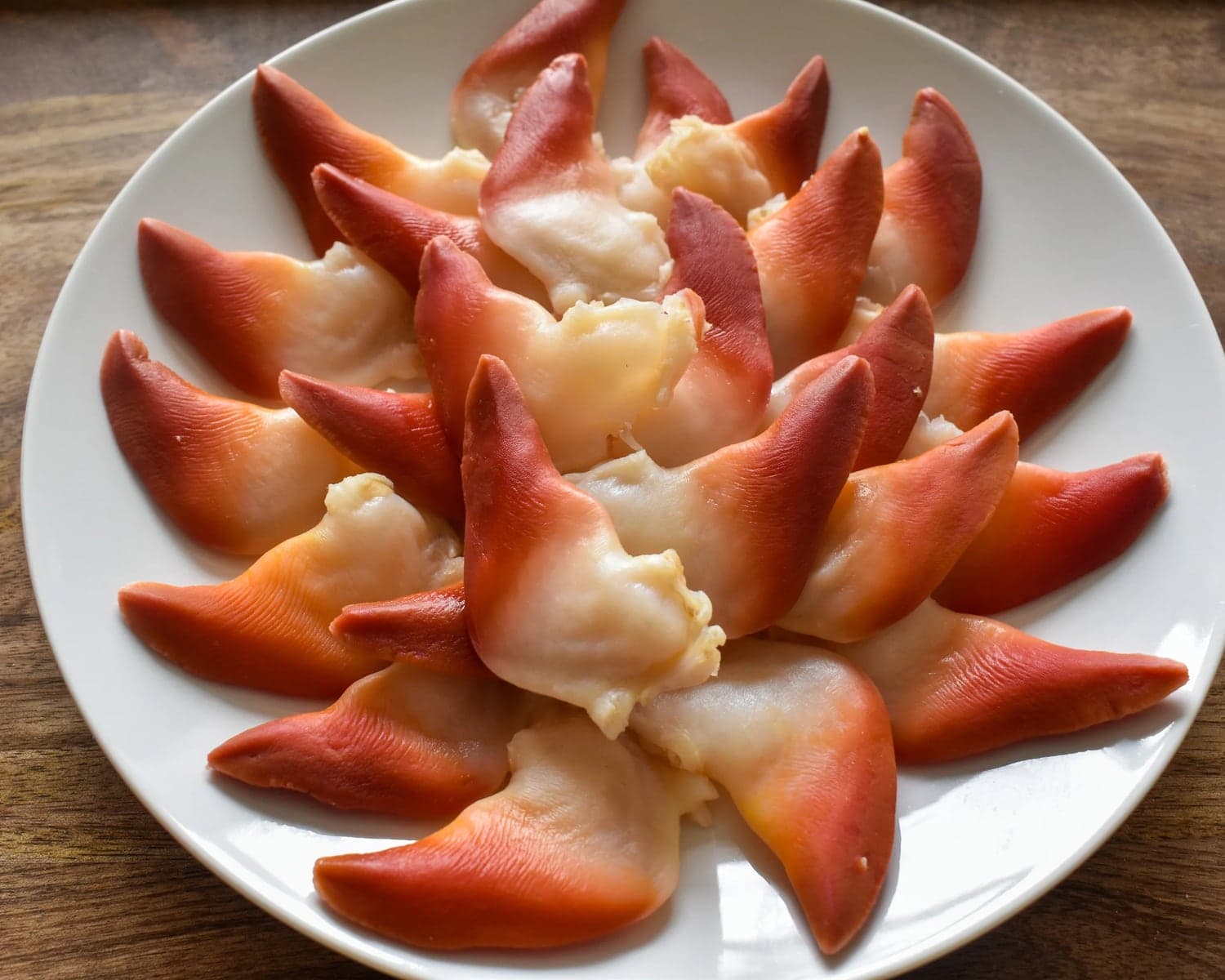
- Japan: hotate or hotategai (帆立貝) is the Yesso scallop. Kaibashira (貝柱) means the adductor muscle of any bivalve, so a menu listing “kaibashira” may be serving scallop, pen shell or another bivalve’s muscle.
- China and Hong Kong: 扇貝 is the general word for scallop. Dried adductor is conpoy, from the Cantonese pronunciation of 乾貝 (“dried shellfish”), also sold as 瑤柱.
- Peru: concha de abanico, “fan shell,” is the Peruvian scallop.
- France: Saint-Jacques historically meant the great scallop, while pétoncle covers other scallops, mostly smaller ones; FAO’s French name for the Yesso scallop is pétoncle du Japon.
- Spain: vieira is the general word, and FAO’s Spanish names build on it, as in vieira japonesa for the Yesso scallop and vieira patagónica for the Patagonian scallop.
- United Kingdom and United States: king and queen scallops are European species; sea and bay scallops are American ones, and “bay” describes a species, not just any small scallop.
Dried scallops and conpoy
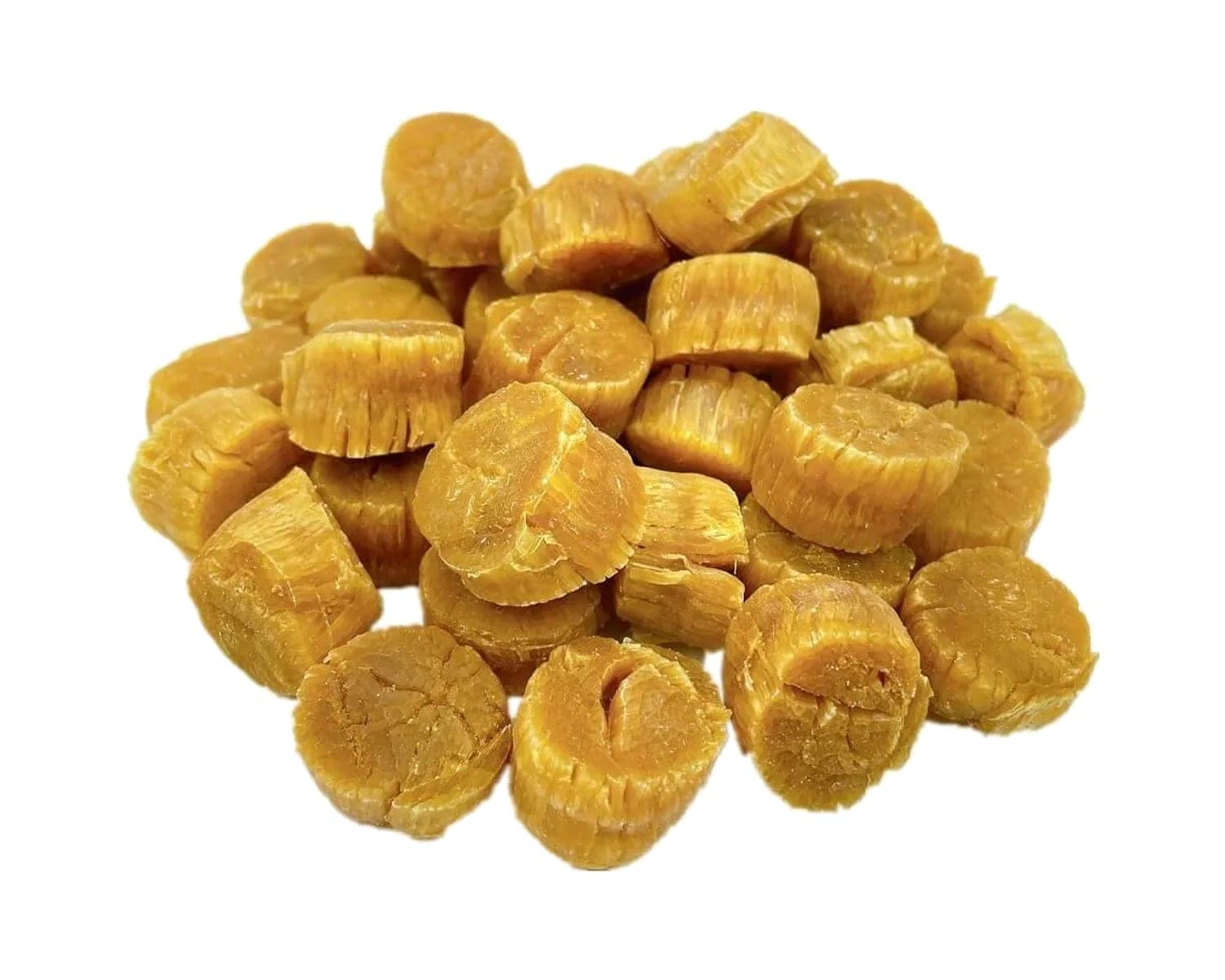
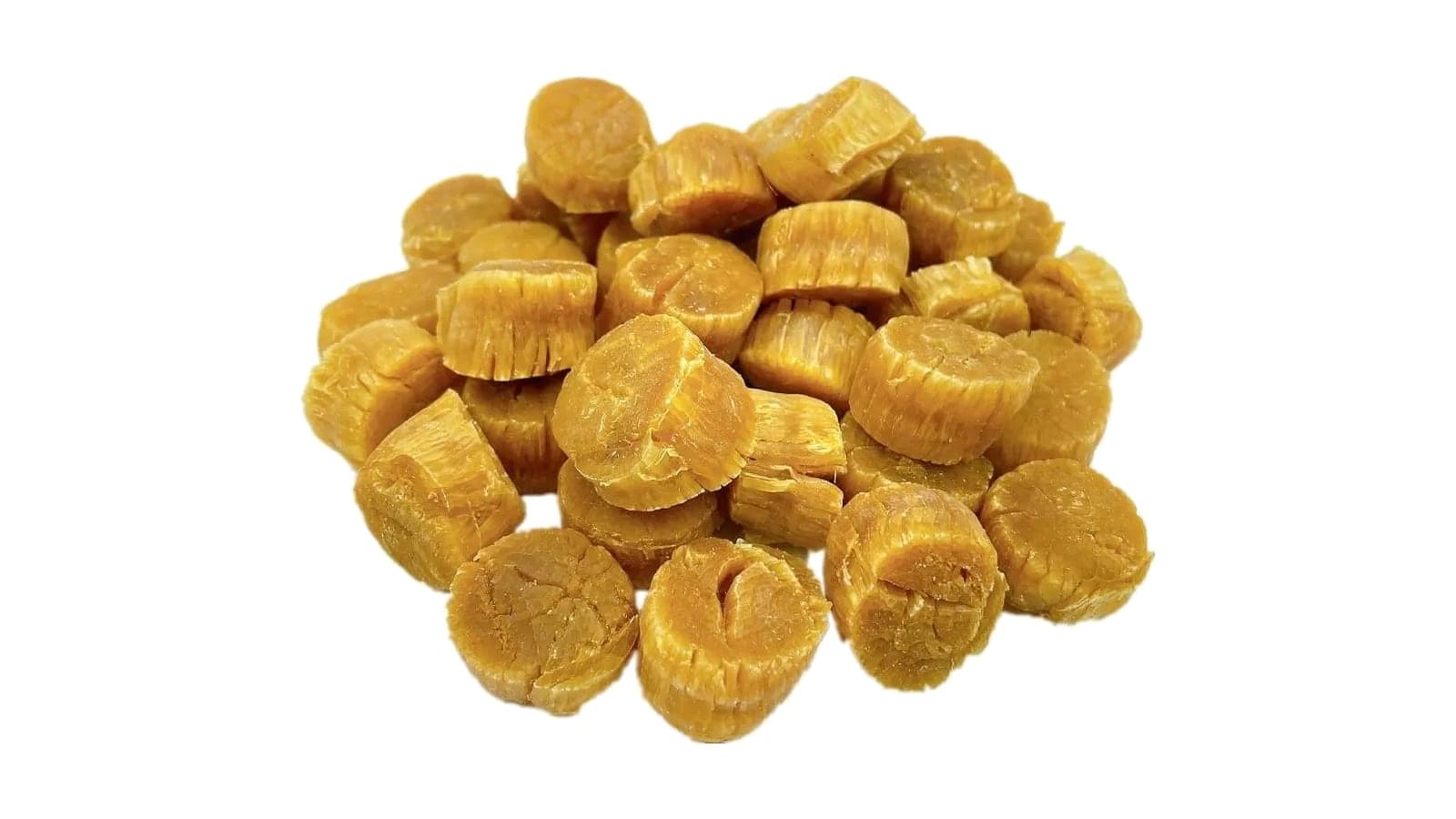
Conpoy is the scallop adductor boiled and dried until it is hard and amber, a concentrated form of the same sweetness found in the fresh muscle. The reference product is made from Yesso scallop in Hokkaido and Aomori, and northern China supplies conpoy from farmed Yesso and smaller scallop species. In Hong Kong, a dried adductor from the pen shell Atrina pectinata (江珧) is also sold; it is a different animal and should carry its own name.
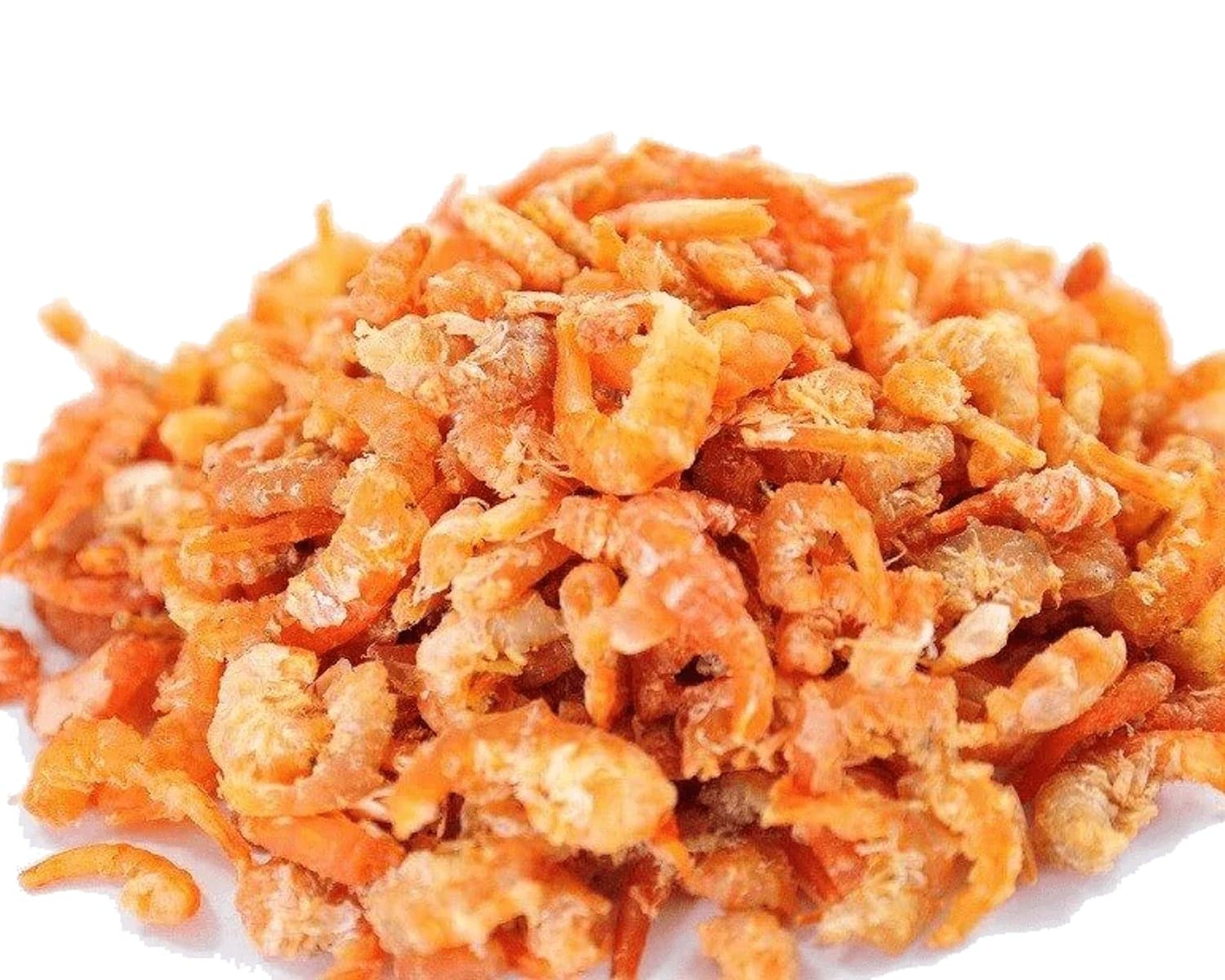
Cantonese cooks soak conpoy and shred it into congee, soups, stir-fries and braises, and it is the defining ingredient of XO sauce, the Hong Kong chili relish, usually alongside dried shrimp. Origins, size grades, processing and quality checks are covered in our buyer’s guide to dried scallops and conpoy.
How kitchens cook scallops
NOAA describes the sea scallop’s flavor as sweet and rich, sometimes mild and sometimes briny, with a firm, lean texture, and the Yesso scallop is similar. Large meats from either species are the classic choice for searing, where a dry surface and a very hot pan give a brown crust over a just-set center. Japanese kitchens serve Yesso adductor raw as sashimi and nigiri, which requires lots designated for raw consumption.
- France: coquilles Saint-Jacques, scallops baked in the shell under a creamy sauce and breadcrumbs, and pan-seared meats served with their roe.
- Peru: conchitas a la parmesana, scallops on the half-shell topped with Parmesan, butter and lime and grilled until golden.
- China: half-shell scallops steamed under a heap of fried garlic and softened glass noodles.
Roe-on meat is common in French and Peruvian cooking, where the coral adds color, while sushi counters use the adductor alone. For frozen meat, the decisions that matter most in the kitchen, dry or treated meat and count grade, are explained in our guide to buying frozen shellfish.
Telling scallops apart: substitutes and labeling
Once a scallop is shucked, the shell clues are gone. Meat size helps only at the extremes: very large adductors point to Yesso, sea or great scallop, while very small meats may be bay, Zhikong, Patagonian or moon scallop. Roe-on product narrows the field, because Yesso roe is a single color per animal while hermaphrodite species show two tones. Beyond that, rely on the scientific name and origin on the offer, matched to the label, and on a DNA test where doubt remains.
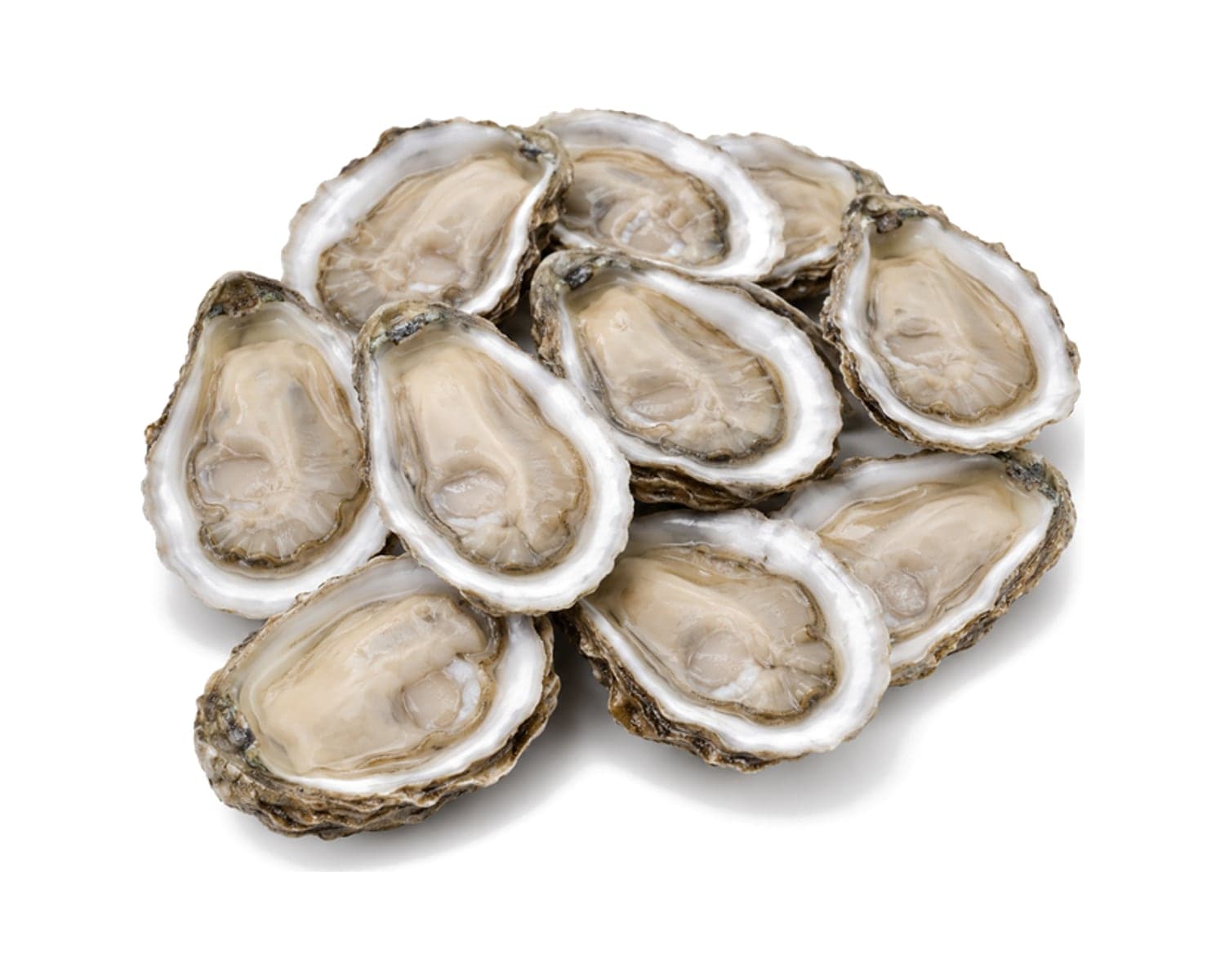
Two kinds of substitution are worth guarding against: a smaller, cheaper species sold under the name of a premium one, and adductors from other bivalves sold simply as “scallop.” Both cost money and can breach trade-name rules. Because marine toxins concentrate in the gut and roe rather than the muscle, whole and roe-on scallops also need closer attention to harvest records than clean meat. For a sibling profile of another shellfish that is often confused across species, see our oyster species guide, and when you are ready to compare species side by side, ask us for an offer by species and origin.
This guide is general trade information, not legal or regulatory advice. Requirements differ by market and change over time; confirm current rules with your customs broker or competent authority before ordering.