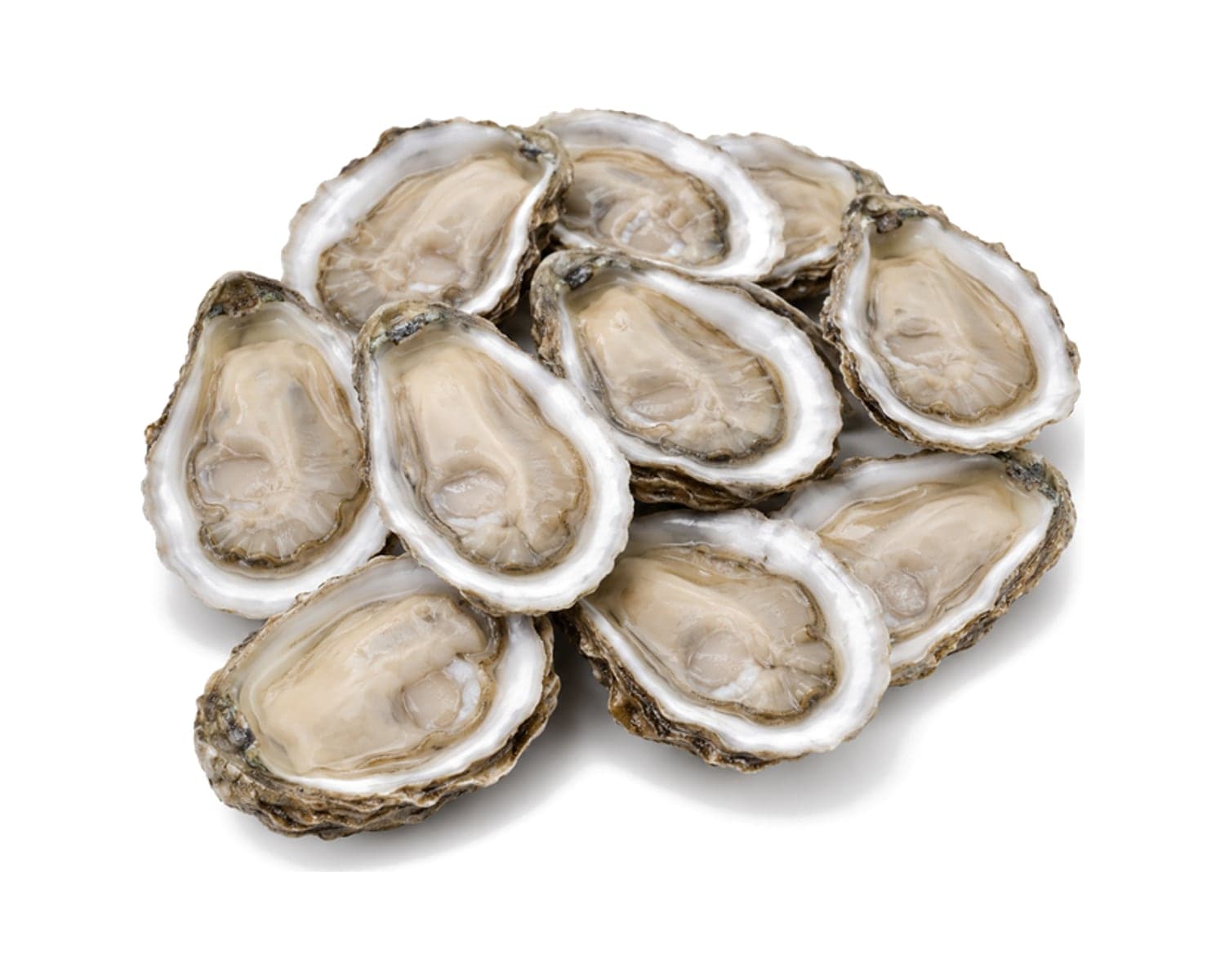
Oysters are bivalves of the family Ostreidae, the true oysters, which spend their adult lives cemented to rock, shell or each other in estuaries and sheltered bays. Two groups matter in the food trade: cupped oysters, with a deep lower valve under a flatter lid, and flat oysters, which are rounder and shallower. One cupped species, the Pacific oyster, is the most widely farmed oyster in the world, and China grows by far the largest share of the global harvest.
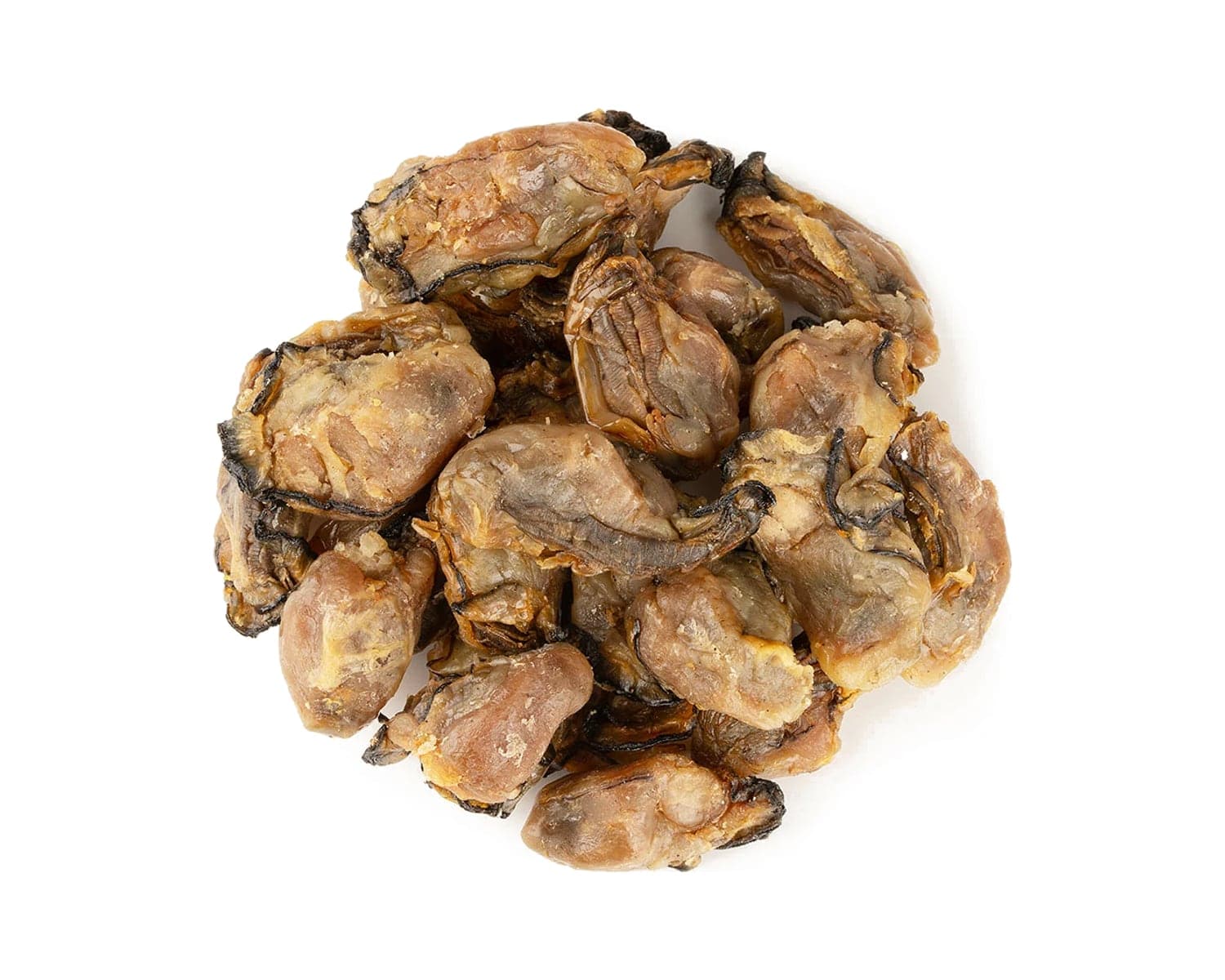
This profile covers the species behind the trade, how to tell them apart, where and how they are grown, what they are called in each market and how different cuisines cook them. Pacific oysters frozen on the half-shell and as meat are listed on our frozen oysters page, and fully dried and golden semi-dried oysters on our dried oysters page.
Key takeaways
- The Pacific oyster, Magallana gigas (formerly Crassostrea gigas), is the most widely farmed oyster, and China grows most of the world’s oysters.
- Cupped and flat oysters differ in shape, breeding and flavor; a purple muscle scar separates Eastern oysters from Pacific oysters.
- Names such as rock, native and kaki depend on the market, so specify the scientific name and growing area.
- Triploid oysters hold their condition better through summer because they are largely sterile.
How oysters live: cupped and flat oysters
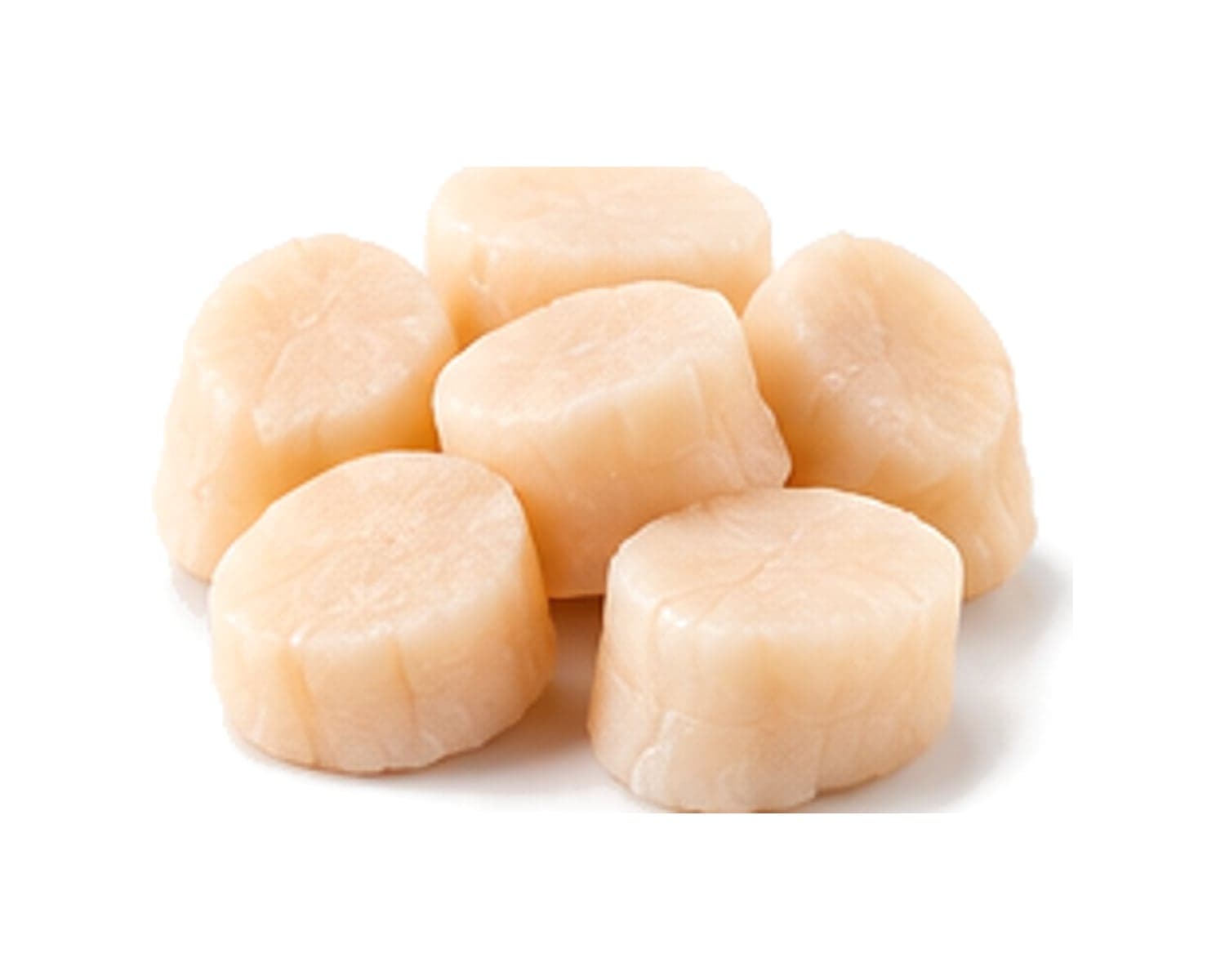
An oyster begins life as a swimming larva, settles on a hard surface, cements its left valve in place and never moves again. It feeds by pumping seawater across its gills and straining out plankton, and it closes its shell with a single central adductor muscle, the same arrangement a scallop has. Shell shape follows the surroundings, so it varies widely even within one species, and appearance alone is a weak guide to identity.
The two groups breed differently. Cupped oysters of the genera Magallana, Crassostrea and Saccostrea release eggs and sperm into the water, and FAO notes that a single female Pacific oyster of 8 to 15 cm can shed 50 to 200 million eggs in one spawning. Flat oysters of the genus Ostrea fertilize their eggs inside the shell and brood the larvae for 8 to 10 days before releasing them, producing far fewer. Most oysters also change sex: Pacific and Eastern oysters usually mature first as males and turn female as they grow, while the European flat oyster can switch back and forth within a single season.
Spawning matters to buyers because it drains the meat. A diploid oyster that has just spawned is thin and watery, which helps explain the old advice to eat oysters only in months with an “r” in their name, along with the faster spoilage of shellfish in warm weather. Hatcheries now supply triploid oysters, which carry three sets of chromosomes, are largely sterile and hold their condition better through summer; FAO notes that much of today’s hatchery output of Pacific oyster seed is focused on triploids.
The main oyster species in trade
The table lists the oysters buyers are most likely to meet, with current WoRMS names and the older names still common on trade documents and labels.
| Species | Common and market names | Native range and main production | Shell and meat |
|---|---|---|---|
| Magallana gigas (formerly Crassostrea gigas) | Pacific or Japanese oyster; magaki in Japan; huître creuse in France; rock oyster in the UK | Native to the North-West Pacific; farmed in Asia, Europe, North America, Oceania and South America | Rough, fluted, deeply cupped shell, whitish with purple streaks; muscle scar never purple |
| Crassostrea virginica | Eastern, American or Atlantic oyster; often sold under the name of a bay or farm | Gulf of St. Lawrence to the Gulf of Mexico and on to South America; farmed and fished in the US and Canada | Oval to elongated, smoother shell; deep purple or red-brown muscle scar |
| Ostrea edulis | European flat oyster; huître plate in France; native in the UK | Norway to Morocco, the Mediterranean and the Black Sea; much reduced by disease | Round, shallow shell; meat creamy beige to pale gray |
| Saccostrea glomerata | Sydney rock oyster | Australian coasts from the New South Wales–Victoria border around the north to Shark Bay, and New Zealand; farmed mainly in New South Wales and southern Queensland | Smaller cupped oyster, typically sold at about 50 g whole weight |
| Magallana sikamea (formerly Crassostrea sikamea) | Kumamoto oyster | Native to Japan, South Korea, China and Taiwan; farmed mainly on the US Pacific coast | Small and slower-growing than the Pacific oyster, to about 6 cm, with a deep cup |
| Magallana hongkongensis (formerly Crassostrea hongkongensis) | Hong Kong oyster | Estuaries of the Pearl River Delta and the South China coast | Plump meat; eaten fresh, dried, as golden oysters and in oyster sauce |
| Ostrea lurida | Olympia oyster | Pacific coast of North America; native beds much depleted, with limited farming | Very small flat oyster |
Two checks help when species are mixed. Open the shell and look at the muscle scar: FAO describes the Pacific oyster’s as white or sometimes dark but never purple or black, while the Eastern oyster’s is deep purple or red-brown. Then look at the profile: flat oysters are almost circular, with a lid sitting on a barely cupped lower valve, whereas cupped oysters are longer and deeper. Kumamoto and Pacific oysters are close relatives and can be confused, especially in small sizes.
Where oysters are grown
China grows the great majority of the world’s farmed oysters. Pacific oysters are grown in the north, while the south farms estuarine species such as the Hong Kong oyster, cultivated in the Pearl River Delta for centuries and the basis of much of the region’s dried oyster and oyster sauce production.
Japan grows Pacific oysters in hanging culture, on strings of scallop shells on which the young oysters have settled, suspended from rafts or longlines. Hiroshima, where raft culture is the standard method, is the leading oyster prefecture. France began importing Pacific oysters in 1966 and turned to them wholesale after disease wiped out its Portuguese oyster stocks around 1970, and the native flat oyster survives as a much smaller crop after the parasites Marteilia refringens and Bonamia ostreae spread through European beds in the 1970s and 1980s.
In North America, Eastern oysters are fished from wild reefs and farmed on the bottom, in bags, racks and cages, or in floating gear, while the Pacific coast industry has rested on the Pacific oyster since the 1920s. Many West Coast growers buy mature larvae from hatcheries and settle them on shell themselves, a practice called remote setting. New South Wales has farmed Sydney rock oysters since about 1870, traditionally on intertidal sticks, trays and racks, and the species takes around three and a half years to reach plate size.
Oyster names in different markets
- Japan: kaki (牡蠣) is the general word; magaki is the Pacific oyster and iwagaki the rock oyster Magallana nippona, a separate species.
- Chinese-speaking markets: 蠔 in Cantonese, 牡蛎 in Mandarin and 蚵 in Hokkien and Taiwanese, as in 蚵仔煎. Dried oysters are 蠔豉 and semi-dried golden oysters 金蠔.
- France: huître creuse means a cupped oyster, today almost always the Pacific oyster, and huître plate the flat oyster.
- Spanish: ostra and ostión are both used; FAO’s Spanish names are ostión japonés for the Pacific oyster and ostra europea for the flat oyster.
- United Kingdom and Australia: “rock oyster” means the Pacific oyster in British trade but the Sydney rock oyster in Australia, while British “natives” are flat oysters, traditionally sold from September to April.
- North America: Eastern oysters are usually named after the bay or farm that grew them, so the name on the menu describes a place rather than a species.
How oysters are eaten around the world
Raw on the half-shell, with lemon or a sharp vinegar dressing, is the signature use in France, Britain, North America and Australia, and popular in Japan too; it calls for live oysters or frozen lots specifically designated for raw consumption. Many classic dishes cook them instead, as do most uses of frozen product:
- United States: oysters Rockefeller, baked on the half-shell under a green herb sauce and breadcrumbs, created at Antoine’s in New Orleans in the late 19th century, as well as fried oysters.
- Japan: kaki furai, oysters coated in panko and deep-fried.
- Taiwan, Fujian and Southeast Asia: the oyster omelette, small oysters fried in egg and sweet potato starch batter, known as o-a-tsian in Taiwan and orh luak in Teochew cooking; Thai cooks make hoi thot in the same style.
- Southern China: oyster sauce, which began as the cooking liquor of boiled oysters reduced to a dark concentrate, and dried or golden oysters braised for Lunar New Year banquets.
Dried oysters keep as dry goods once fully dried, while golden oysters stay soft at the center and must be kept chilled; see our guide to storing dried seafood. For frozen half-shell and meat, the formats and the raw or cooking designation behind each lot are set out in our guide to buying frozen shellfish.
Oyster look-alikes, substitutions and raw-oyster rules
With oysters, confusing names cause as much trouble as look-alike species. Place names, “rock,” “native” and “Japanese” can each point to different animals depending on the market, so the scientific name and growing area on the offer are the reliable reference. Pearl oysters such as the akoya (Pinctada) belong to a different family and are not the oysters of the food trade, whatever the English name suggests. Where a menu promises a named variety such as Kumamoto, ask for the scientific name and growing area in writing.
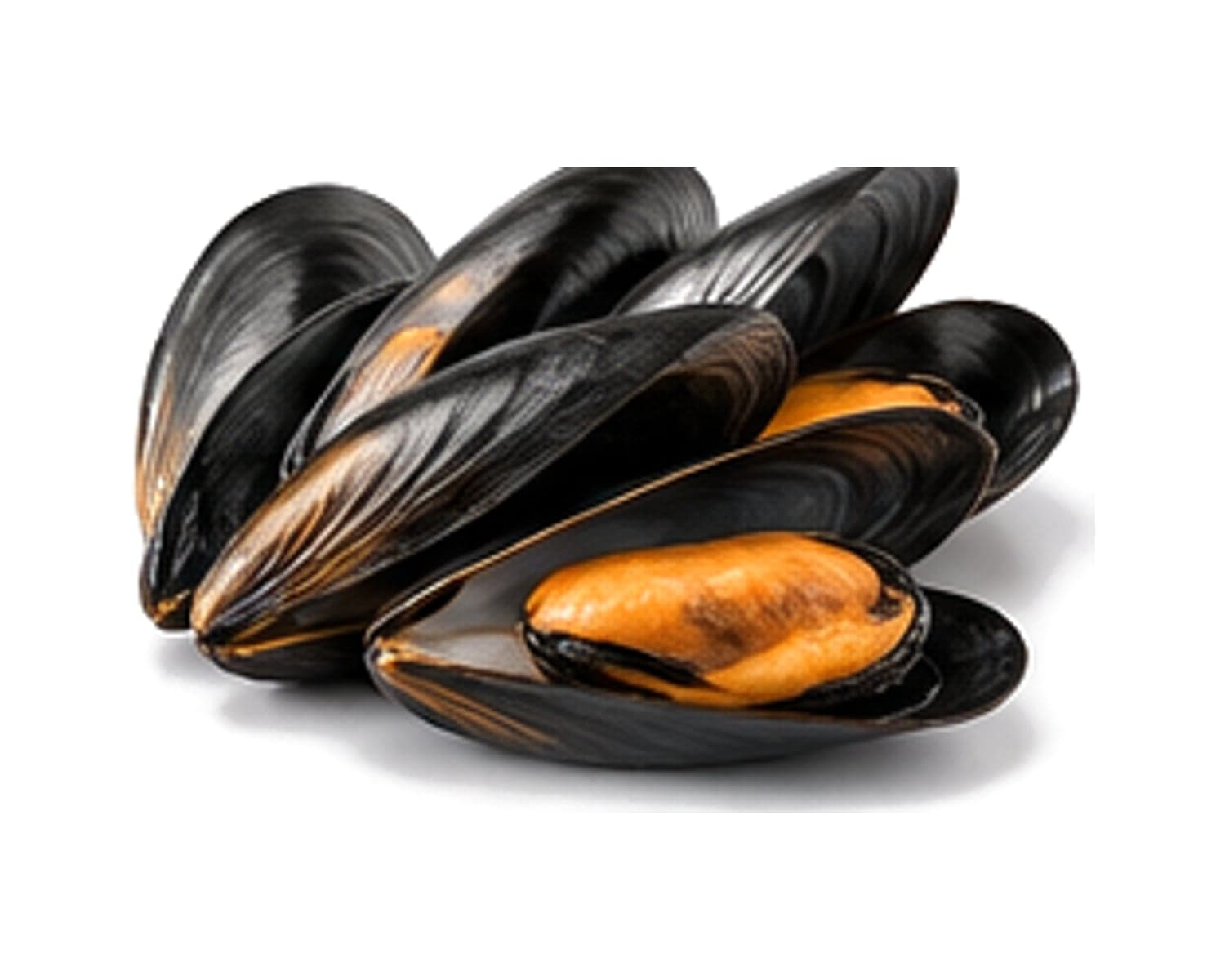
Because oysters are so often eaten raw, their growing waters are classified and monitored, and a biotoxin or pollution event can close a harvest area at short notice. Freezing alone does not make an oyster safe to serve raw. Comparable notes on two other filter-feeders appear in our mussel species guide and scallop species guide; frozen oysters can travel in one mixed reefer with frozen mussels and other shellfish lines. If you know the species, format and use you need, send us your specification.
This guide is general trade information, not legal or regulatory advice. Requirements differ by market and change over time; confirm current rules with your customs broker or competent authority before ordering.