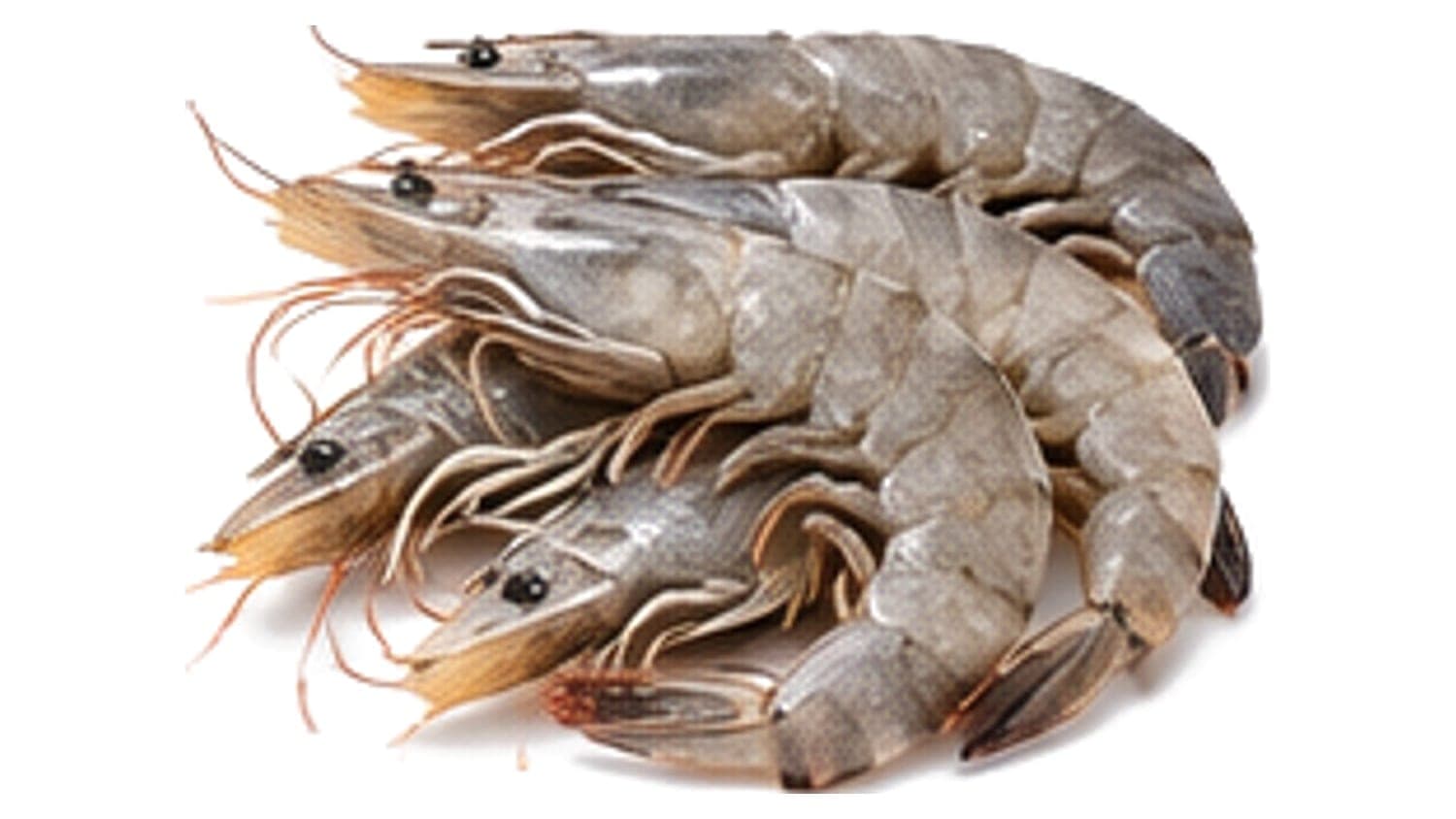
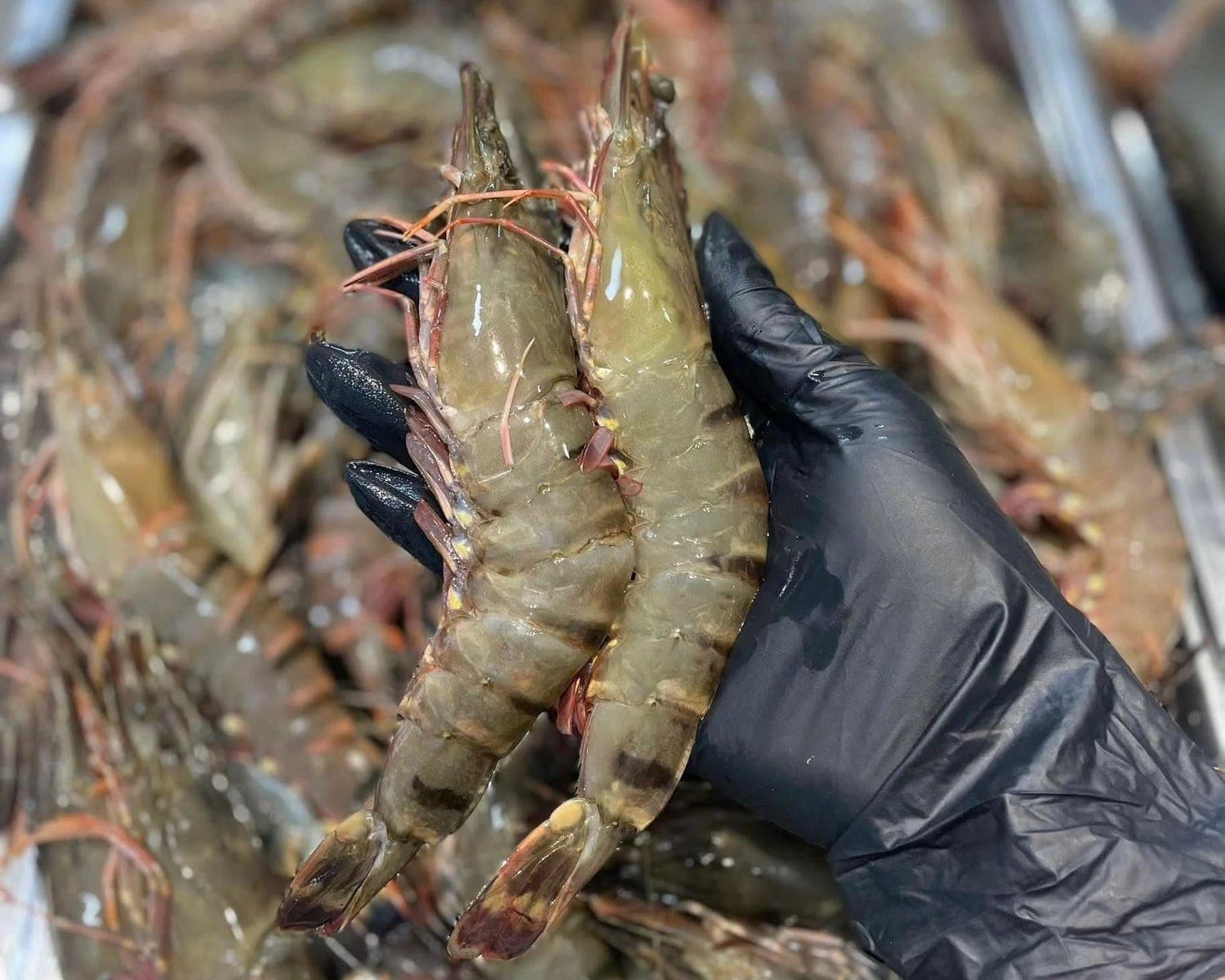
Whiteleg shrimp is the farmed shrimp most buyers handle week in, week out, whether the carton calls it vannamei, Pacific white shrimp, king prawn or simply white shrimp. The animal is Penaeus vannamei, a warm-water penaeid from the Pacific coast of the Americas, and it is now the most widely farmed shrimp species, raised in ponds from Ecuador and Mexico to India, Vietnam, Indonesia, Thailand and China.
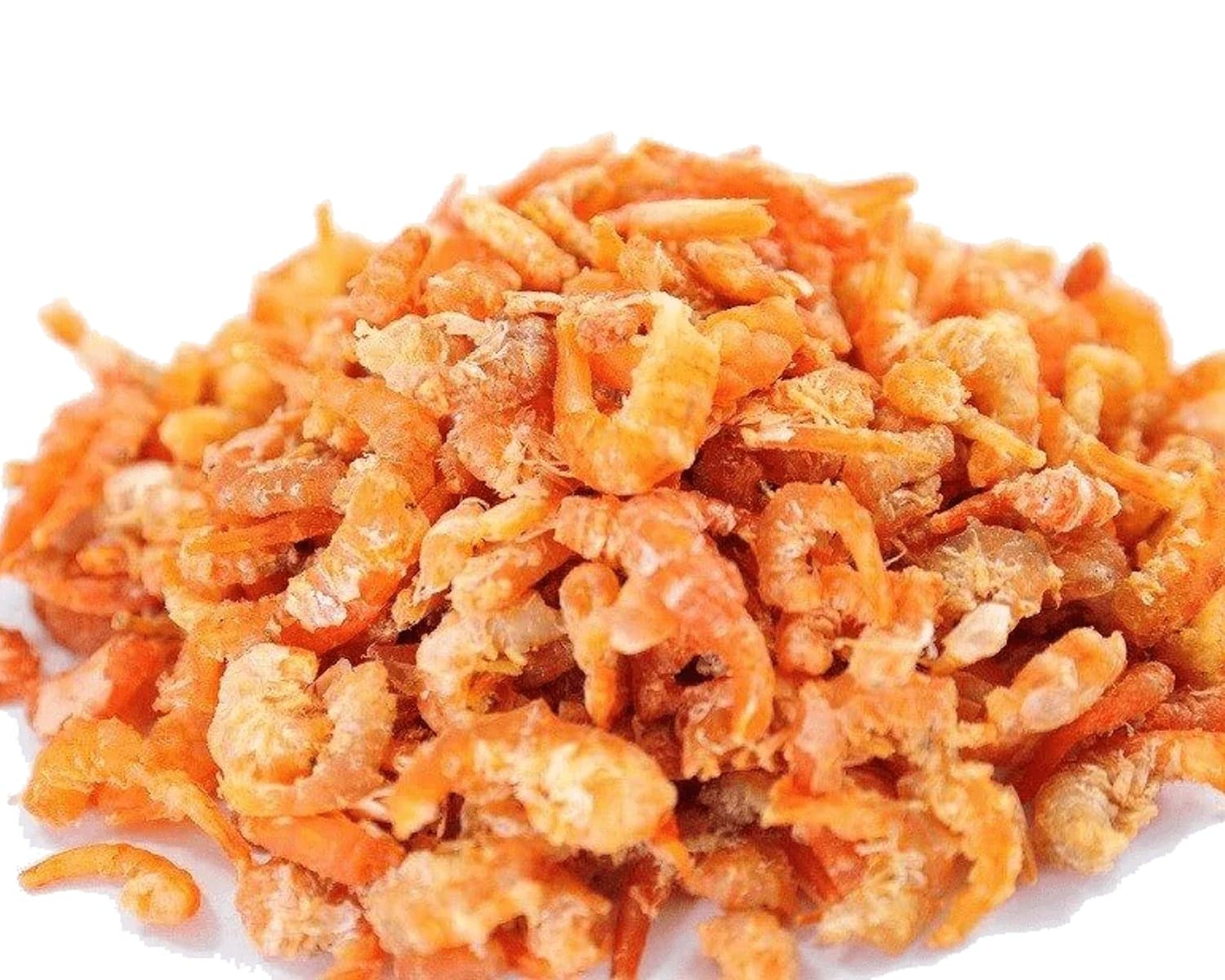
This profile covers the animal itself: its names and the Litopenaeus question, its natural range and biology, how farms raise it, how it compares with other white shrimps and with black tiger, and how kitchens use it. BSA supplies farmed vannamei shrimp in standard cuts and counts, sources the biggest grades through its large shrimp and prawns program, and offers dried shrimp made from several warm- and temperate-water species for sauces and stocks.
Key takeaways
- Whiteleg shrimp, Pacific white shrimp and vannamei are one species, Penaeus vannamei; Litopenaeus vannamei, the genus name used from 1997, is still printed on many labels.
- Native to the eastern Pacific between Mexico and Peru, it is now farmed across Latin America and Asia from domesticated, disease-screened broodstock.
- It is a pale, mild, medium-sized shrimp, which makes it the flexible base for peeled, cooked and coated products in almost every cuisine.
- Plain “white shrimp” and “freshwater prawn” can both mislead, so check the scientific name and production method on each offer.
Whiteleg shrimp names, and why labels still say Litopenaeus
Lee Boone described the species in 1931 as Penaeus vannamei, from material collected around the Bay of Panama. Isabel Pérez Farfante created Litopenaeus as a subgenus of Penaeus in 1969, and in 1997 she and Kensley raised it to a full genus, after which Litopenaeus vannamei went on to fill hatchery manuals, trade statistics and carton labels.
Later revisions folded these groups back into Penaeus, and the World Register of Marine Species now lists the shrimp as Penaeus (Litopenaeus) vannamei. Both names describe the same animal and either may appear on documents; what matters is that one shipment uses one spelling consistently from offer to label.
| Name | Language or market | Notes |
|---|---|---|
| Whiteleg shrimp | FAO English name | Refers to the pale legs |
| Pacific white shrimp | United States | Usual US trade and menu name |
| Vannamei | International trade | Shorthand taken from the species name |
| Camarón blanco | Mexico | Also used for other white shrimps, so check the species |
| Camarón patiblanco | Spanish (FAO name) | FAO’s Spanish name, also used in Panama |
| Langostino | Peru | In Spanish, a general word for larger prawns |
| Crevette pattes blanches | French (FAO name) | Literally “white-legged shrimp” |
| Mazzancolla tropicale | Italy | Official Italian trade name |
| 南美白对虾 | China | Literally “South American white shrimp” |
| King prawn | Some English-language retail | A loose term that also covers other large species |
Where vannamei comes from: range and biology
In the wild, whiteleg shrimp lives along the Pacific coast of the Americas from Sonora in Mexico to Tumbes in northern Peru, in water that normally stays above 20 °C all year. Adults live and spawn offshore, to depths of around 70 m. The larvae drift toward the coast, and the young shrimp grow up in estuaries, lagoons and mangrove channels before moving back out to sea.
That life cycle helps explain why the species farms so readily. It tolerates a wide range of salinities, so farms can run in coastal ponds or in inland, low-salinity ponds. It makes efficient use of the natural food in a pond and needs less protein in its feed than black tiger, which keeps feed costs down. Females grow faster and larger than males, and the species tops out at about 23 cm, which makes it a medium-sized shrimp by nature.
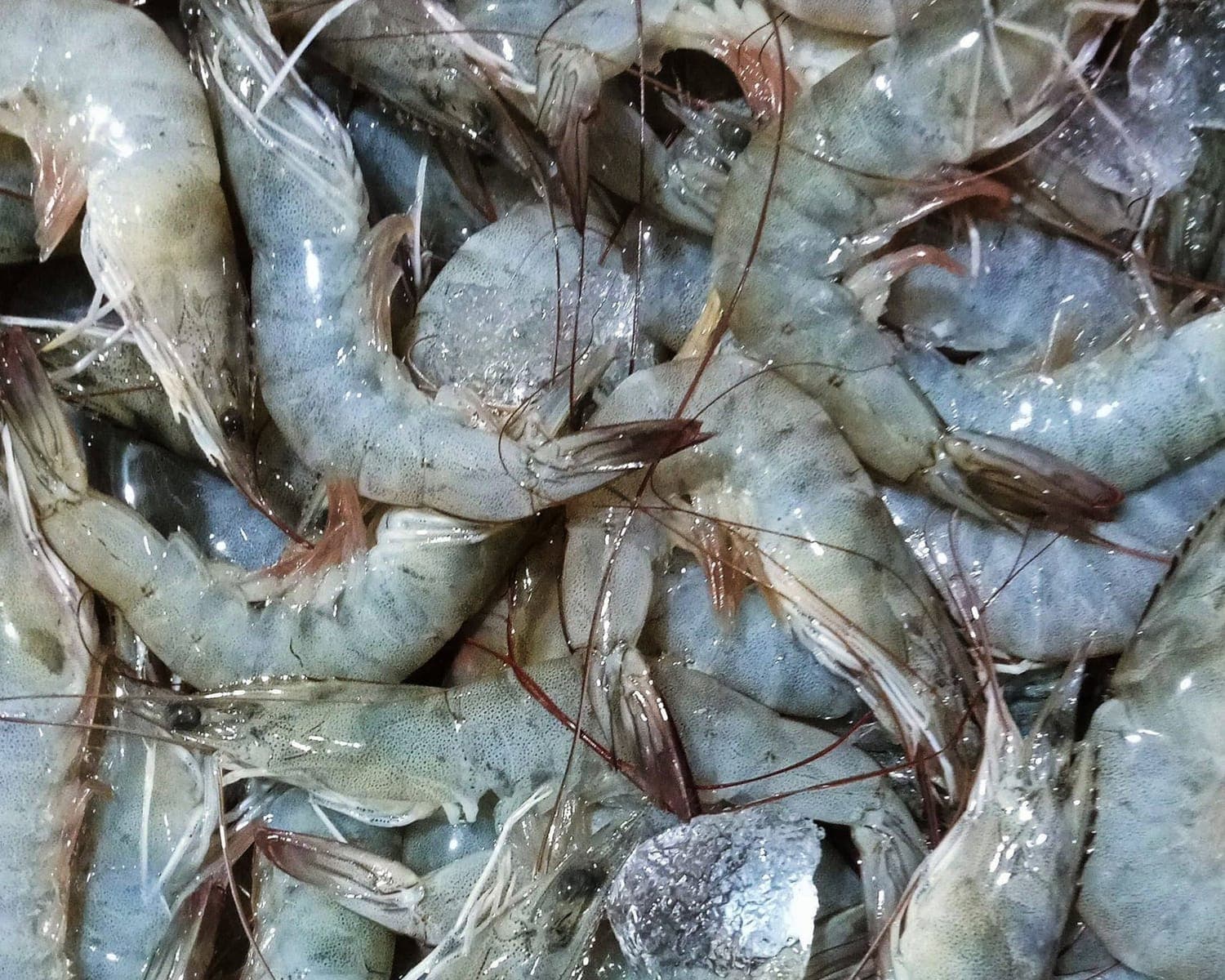
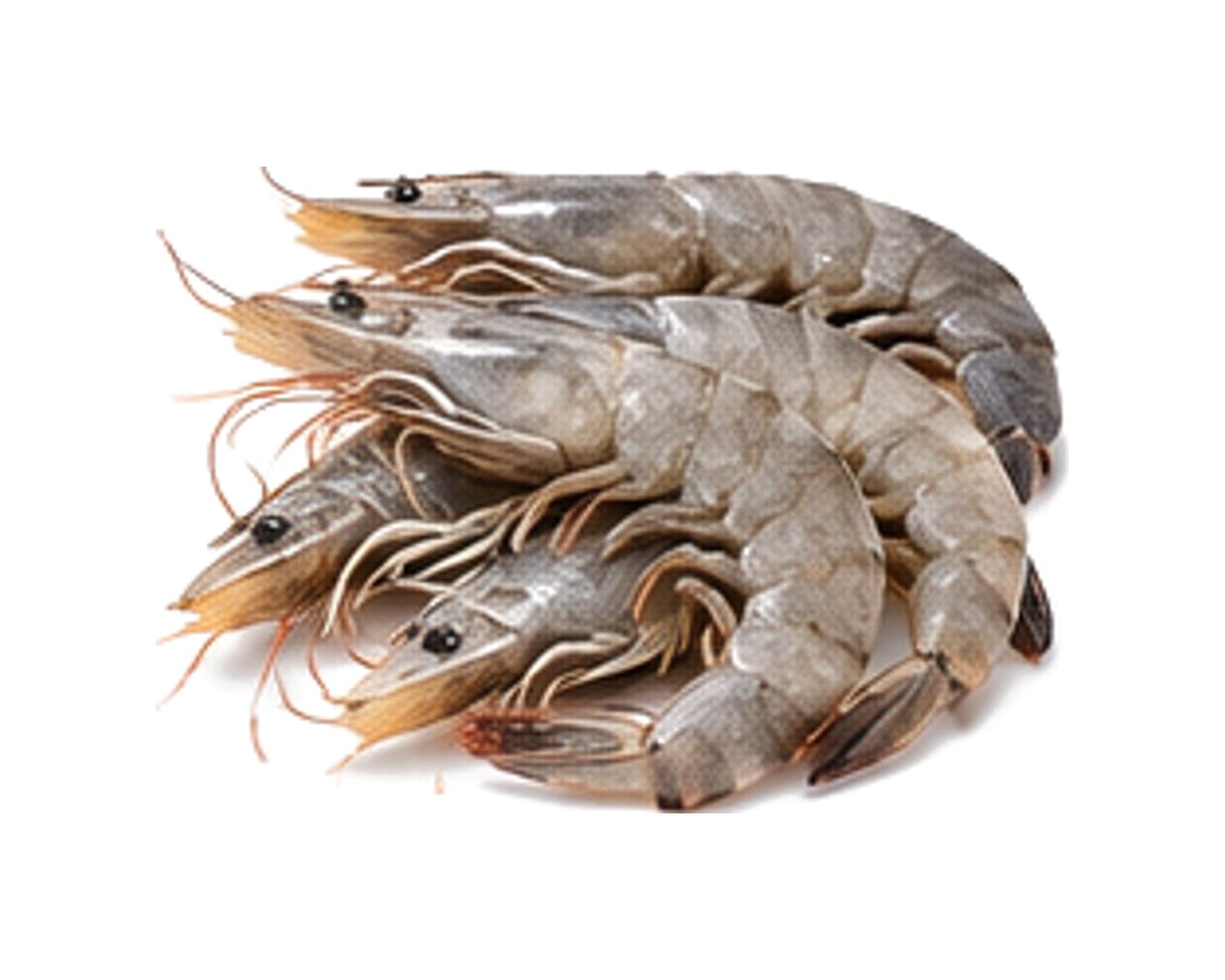
- Color: translucent white to gray when raw, the shade shifting with the pond bottom, the feed and the clarity of the water; pink to orange-red outside and white inside once cooked.
- Shell: smooth and fairly thin, without the bold dark banding of a tiger shrimp.
- Rostrum: moderately long, with 7 to 10 teeth on the upper edge and 2 to 4 below, a detail specialists use to separate it from similar white shrimps.
- Legs: pale, almost white, the feature behind its English and French names.
How whiteleg shrimp is farmed
Hatchery farming traces back to 1973, when larvae from a wild, mated female caught off Panama were shipped to Florida and gave the first spawning of the species in captivity. In 1976, work in Panama showed that removing one eyestalk from a female, with good nutrition, brings her to maturity, and commercial culture took hold in Central and South America. By the early 1980s farming had spread to Hawaii, the mainland United States and much of Latin America, and stock shipped to Hawaii in 1989 gave rise to specific-pathogen-free (SPF) lines, forerunners of the disease-screened broodstock later used across Asia.
Those domesticated lines changed shrimp farming in Asia. FAO recorded no Asian vannamei production in 1999, yet by 2004 the species had overtaken black tiger in China, Taiwan and Thailand. Disease-screened broodstock bred in captivity, much higher stocking densities and feeds lower in protein all favored it, while black tiger hatcheries were still relying largely on wild-caught parents. Major farming countries now include Ecuador, India, Vietnam, Indonesia, Thailand and China.
Farming systems span a wide range. Extensive tidal ponds in Latin America are stocked with 4 to 10 young shrimp per square meter and harvested at 11 to 12 g after four or five months, while intensive Asian ponds, earthen or lined, carry 60 to 300 per square meter under heavy aeration and turn out two or three crops a year. Ponds are harvested by draining through a bag net or by seining, and shrimp bound for processing are killed at once in iced water at the pond side, often with a sulfite-based additive in the water to stop black spot and red heads.
Because it is farmed in the tropics, vannamei is harvested year-round in most producing countries. Crop cycles, weather and disease still move volumes and sizes from month to month, and FAO has noted that Latin American output tended to rise in warm El Niño years and dip in cooler La Niña years.
Whiteleg shrimp compared with other white shrimps and black tiger
| Species | Scientific name | Origin of supply | How to tell it apart |
|---|---|---|---|
| Whiteleg shrimp | Penaeus vannamei | Farmed across Latin America and Asia; native to the eastern Pacific | Pale and translucent, no strong bands, very uniform farmed sizes |
| Northern white shrimp | Penaeus setiferus | Wild, from the US Atlantic coast and Gulf of Mexico | Similar pale color; sold in the US as wild “white shrimp” |
| Blue shrimp | Penaeus stylirostris | Eastern Pacific, the same coast as whiteleg; wild and, on a smaller scale, farmed | Close relative in the same subgenus; the scientific name is the reliable check |
| Banana prawn | Penaeus merguiensis | Indo-West Pacific | Pale like vannamei, so the label name is the check |
| Black tiger shrimp | Penaeus monodon | Mainly farmed in South and Southeast Asia | Dark bands across the shell, much larger sizes, firmer bite |
Inland farming adds a naming trap of its own. FAO notes that marine shrimp reared in fresh water are sometimes wrongly called freshwater prawns. A vannamei from an inland pond is still a marine penaeid; the giant freshwater prawn, Macrobrachium rosenbergii, is a different, long-clawed river species covered in our giant freshwater prawn profile.
Against black tiger, whiteleg is smaller, milder and more uniform, and it is produced in far greater volume; tiger is the choice when the shrimp is served whole and has to look the part. Our black tiger shrimp profile sets out that species in the same detail.
Sizes and market forms of whiteleg shrimp
Since the species rarely grows beyond medium size, most supply falls in the mid and small counts, with the larger grades coming from longer grow-out. Almost every form in the frozen trade is made from it:
- Head-on, shell-on: whole shrimp for grilling, frying and simmering in dishes where the head adds flavor.
- Headless shell-on and EZ-peel: for boiling, grilling and shell-on dishes peeled at the table.
- Peeled, raw: undeveined, deveined or tail-on, the bulk of foodservice and retail volume.
- Cooked and peeled: for cocktails, salads, sandwiches and platters.
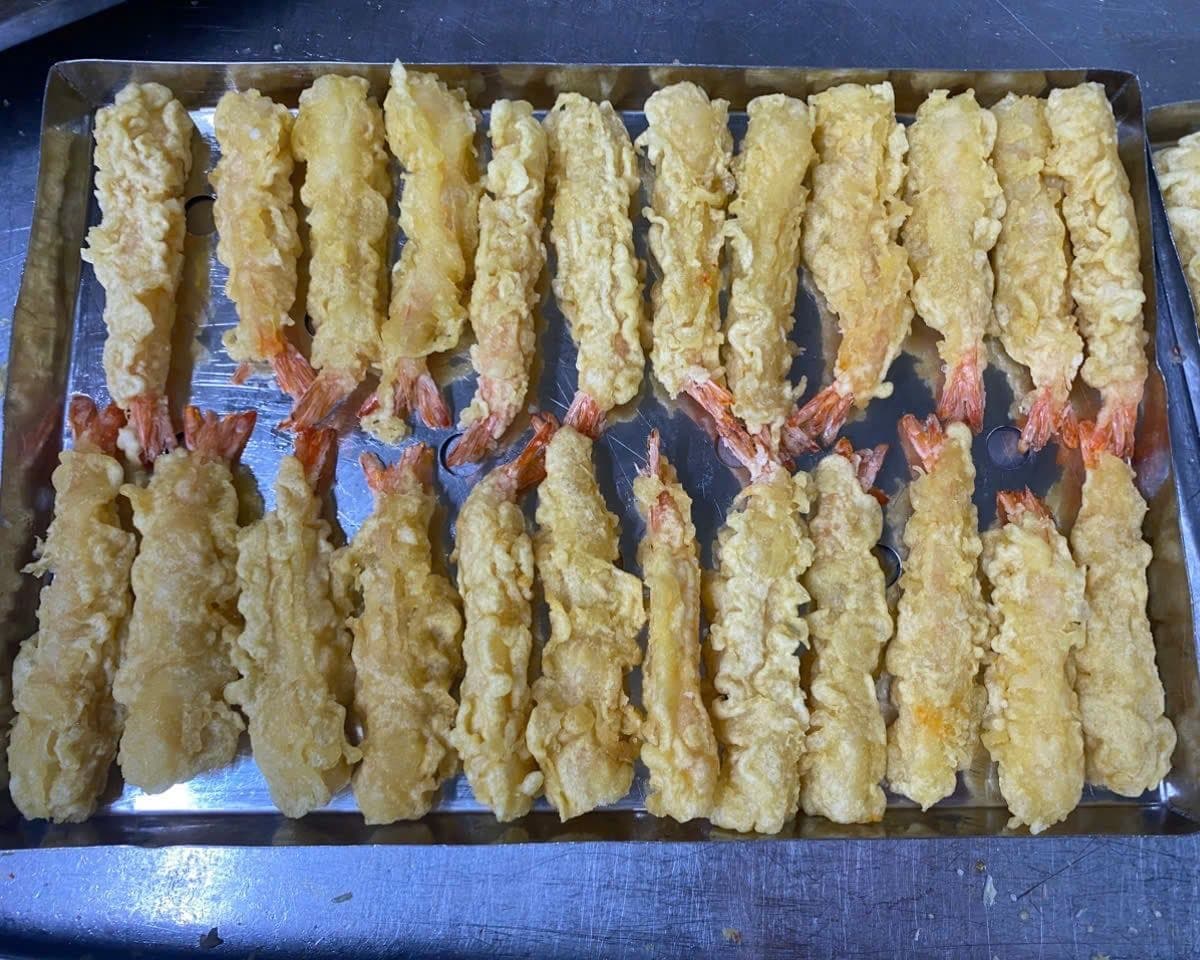
- Stretched, butterflied and coated: nobashi for tempura and the breaded and tempura shrimp built on peeled vannamei.
Count notation, glaze, soaking agents and the choice between IQF and block are the same questions for every farmed shrimp, so we answer them once in our frozen shrimp specifications guide.
How kitchens use vannamei
Whiteleg shrimp tastes mild, clean and lightly sweet, with a tender bite that is a little softer than black tiger’s. That neutral character is its strength: it carries garlic, chili, curry pastes and marinades without fighting them. Lots from some ponds can taste faintly of earth, which a cooked sample reveals before stock goes into service.
- China and Southeast Asia: stir-fried with garlic or chili, simmered in tom yum, wrapped in har gow and other dumplings.
- Japan: battered for tempura or crumbed for ebi fry, often using stretched nobashi shrimp.
- South Asia: cooked in masala gravies and coconut curries.
- Latin America: Ecuadorian shrimp ceviche made with cooked shrimp, and Mexican cócteles de camarón.
- Europe and North America: Spanish garlic shrimp, Italian pasta and the American “shrimp scampi”, a garlic-butter dish that borrowed its name from the langoustine.
Cook raw shrimp until the flesh is opaque throughout, to whatever temperature your market’s food-safety rules require, and keep raw and cooked product apart. For a standing program around particular counts and cuts, tell us the dishes and volumes and we will quote a matching specification.
This guide is general trade information, not legal or regulatory advice. Requirements differ by market and change over time; confirm current rules with your customs broker or competent authority before ordering.