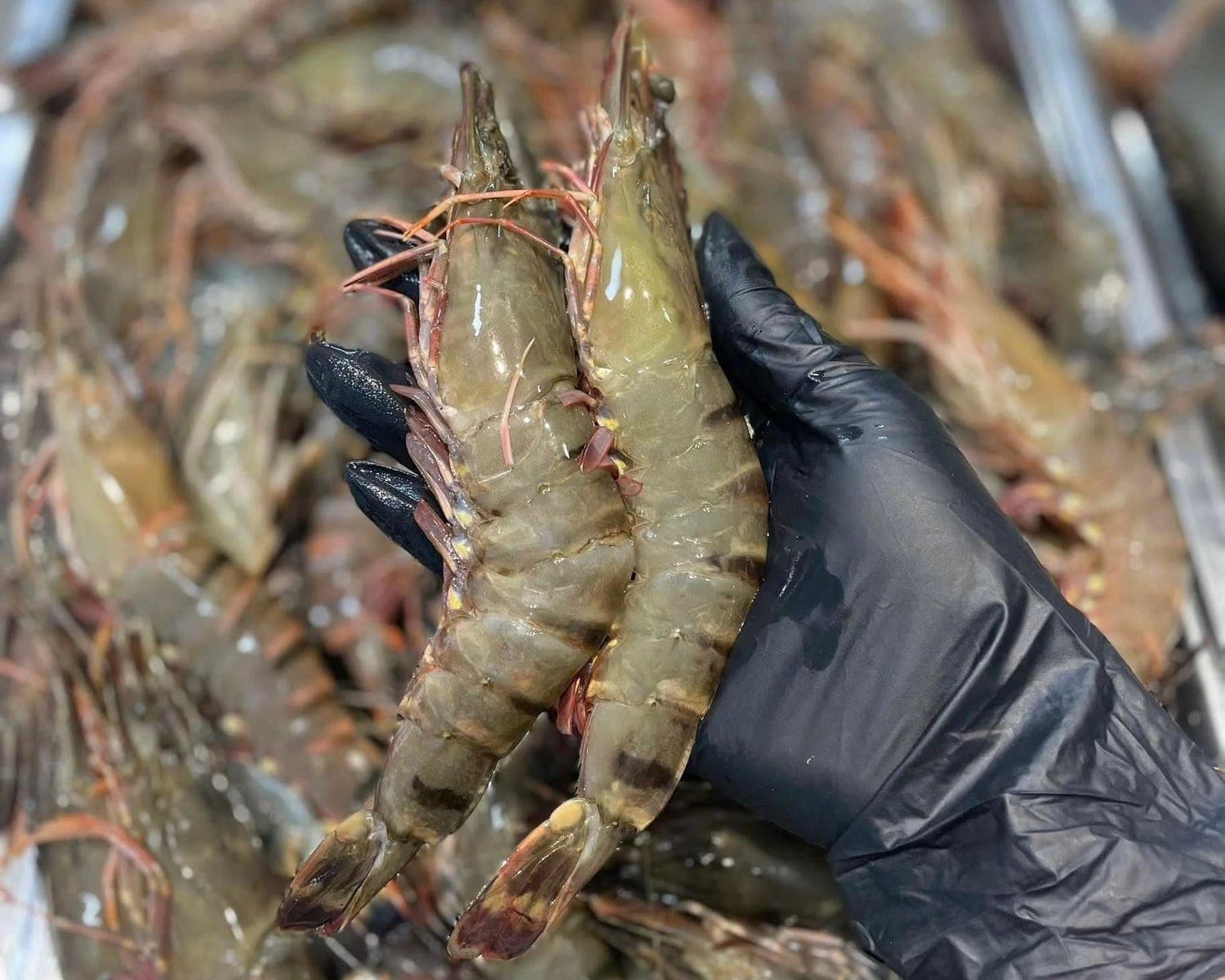
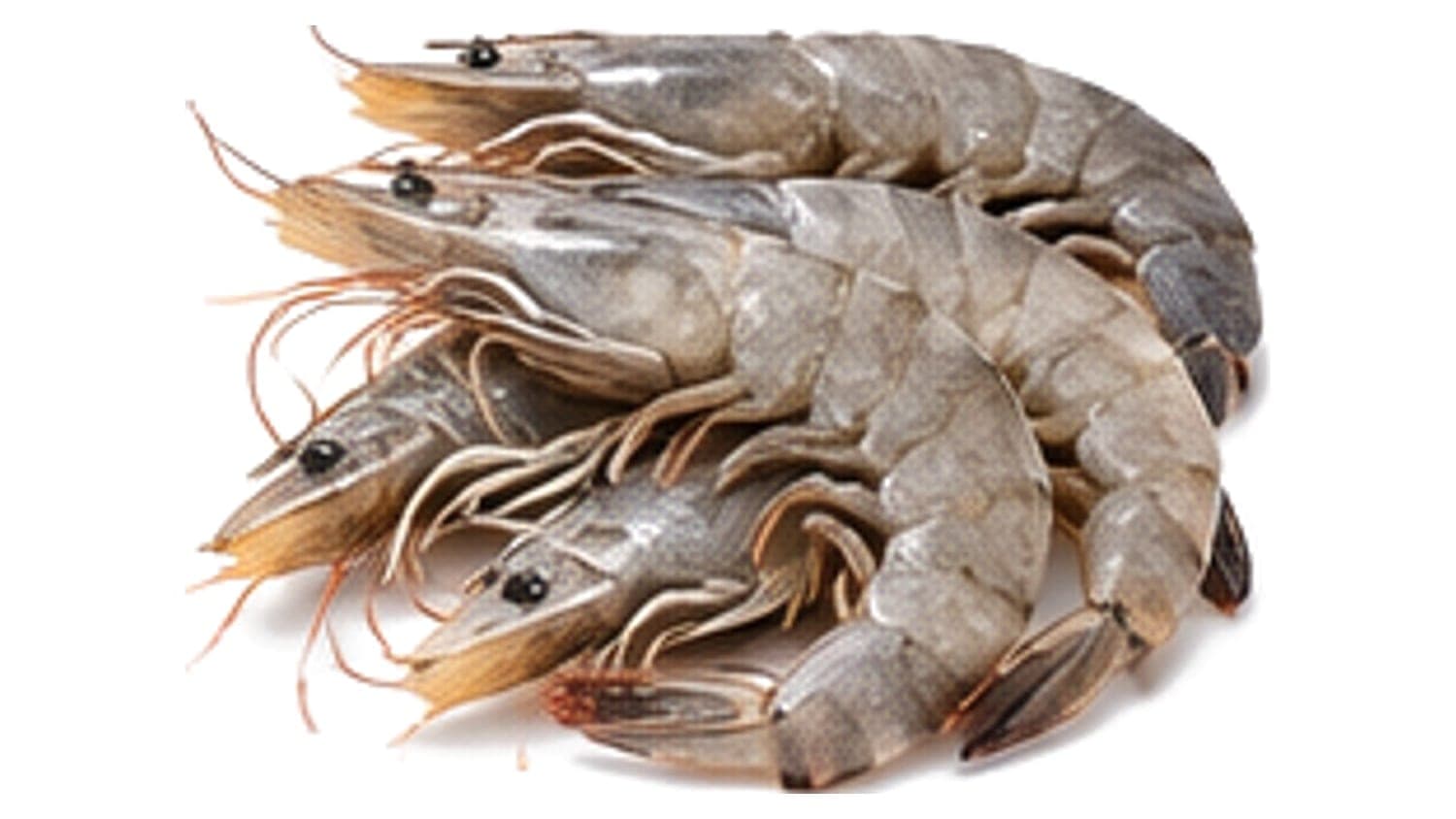
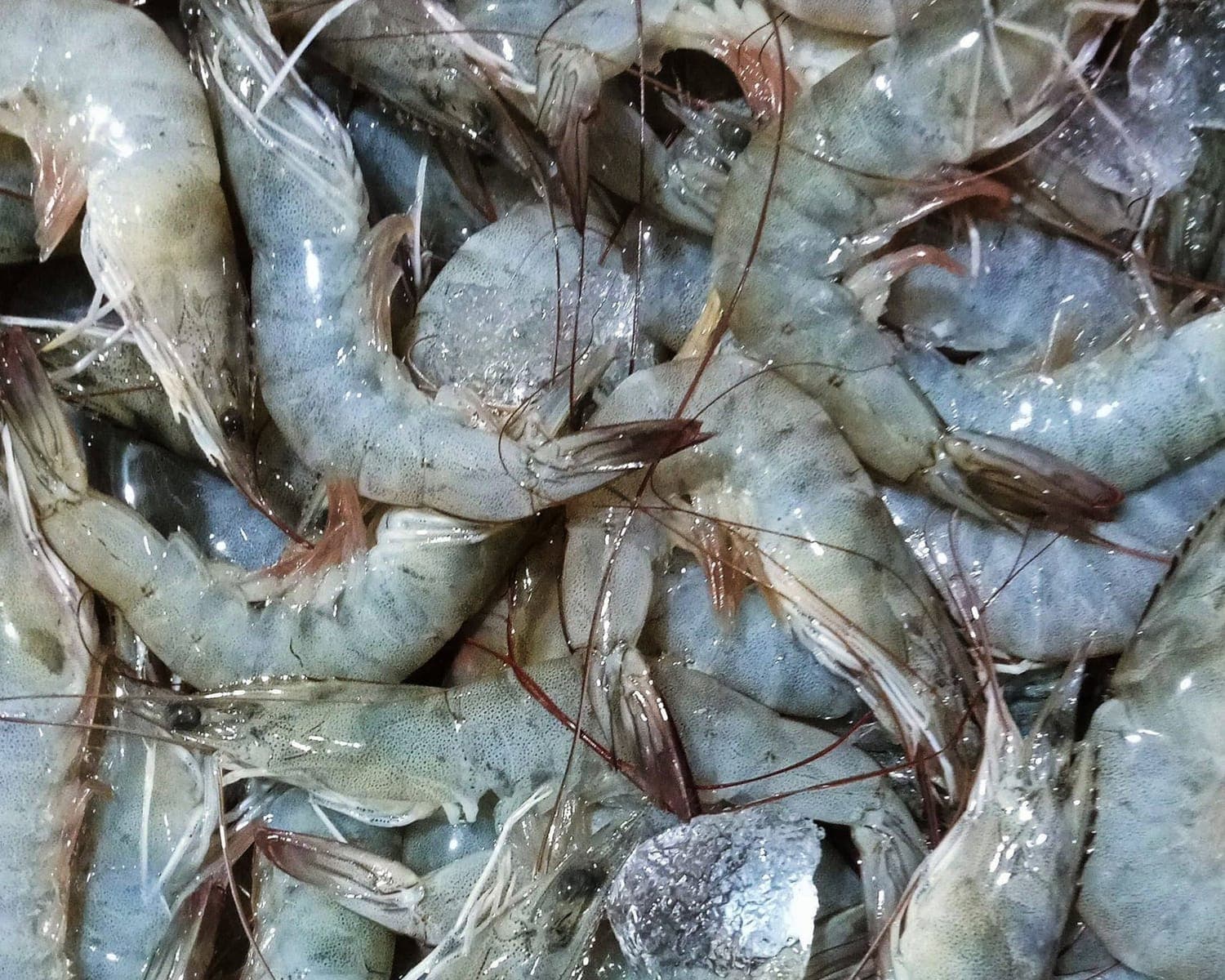
The giant freshwater prawn is the odd one out among the prawns sold frozen around the world. It is a river prawn, Macrobrachium rosenbergii, from the caridean branch of the shrimps, and it spends its adult life in fresh water, unlike the marine tiger and whiteleg shrimps it shares freezer space with. FAO calls it the giant river prawn; Bengali cooks know it as golda chingri, Thai cooks as kung kam kram, and Malaysian and Indonesian cooks as udang galah.
This profile covers what sets the species apart: its anatomy and male types, a life cycle that begins in brackish water, how it is farmed, why careful handling matters, which animals it is confused with and how it is cooked. BSA supplies pond-farmed giant freshwater prawn from Thailand and partner origins in head-on, headless and peeled forms.
Key takeaways
- The giant freshwater prawn, Macrobrachium rosenbergii, is a caridean river prawn whose females carry their eggs, unlike the marine penaeid shrimps.
- Adults live in fresh water but the larvae need brackish water, which shapes both its wild life cycle and the way hatcheries work.
- Uneven male growth, through small, orange-claw and blue-claw types, gives ponds a wide size range and puts much of the weight in head and claws.
- Fast chilling and freezing protect its soft tail meat, and it is at its most characteristic grilled whole in Thailand or simmered in Bengali coconut curry.
What makes the giant freshwater prawn different
Two big branches of the shrimp world meet in the frozen aisle. Tiger and whiteleg shrimp are penaeids, which shed their eggs straight into the sea. Macrobrachium belongs to the carideans, in the family Palaemonidae, and its females carry their eggs under the abdomen for about three weeks until they hatch.
- Size: males reach about 32 cm and females about 25 cm in total length, which puts it among the largest freshwater prawns.
- Color: usually greenish to brownish gray, sometimes bluish and darker in larger animals, with antennae that are often blue.
- Claws: the second pair of legs ends in long claws, blue or orange in mature males and far smaller in females.
- Rostrum: long, slender and slightly S-shaped, curving upward at the tip, with 11 to 14 teeth above and 8 to 10 below.
- Head: a large, hard carapace that makes up a much bigger share of the animal than the head of a marine shrimp.
Where giant freshwater prawns come from: range and life cycle
The species lives in tropical fresh water close to brackish estuaries, often in very muddy, turbid rivers. Berried females travel downstream so that their eggs hatch in brackish water, where the larvae pass through 11 stages over roughly a month. The young prawns then head back upstream, and they can climb small waterfalls and weirs along the way. Young and adult prawns eat almost anything: algae, water plants, molluscs, insects, worms and other crustaceans.
For a long time, M. rosenbergii was treated as one species spread from India to northern Australia. A 2007 study showed it is really two, and after a ruling by the International Commission on Zoological Nomenclature the name now belongs to the western species, found from South Asia through mainland Southeast Asia to western Indonesia. The eastern populations of the Philippines, eastern Indonesia, New Guinea and northern Australia are now classed as Macrobrachium spinipes. The farmed prawn of international trade is the western species.
How giant freshwater prawns are farmed
Modern farming dates from the early 1960s, when the FAO expert Shao-Wen Ling, working in Malaysia, found that the larvae need brackish water to survive. By 1972 a team in Hawaii led by Takuji Fujimura had developed hatchery methods on a commercial scale, Thailand and Taiwan became the pioneers of modern farming, and an FAO project launched in Thailand in 1978 helped spread the techniques. Introductions for aquaculture have since taken the species well beyond Asia, to Latin America, the Caribbean and the United States among other places.
China is a large producer and often raises the prawn alongside carp, and in Vietnam it is also farmed together with crops. FAO’s fact sheet names India, Bangladesh, Vietnam and Thailand as countries that export a significant share of their farmed and wild-caught prawns. China additionally farms a smaller native relative, the oriental river prawn (Macrobrachium nipponense).
Hatcheries rear the larvae in brackish water of about 12 parts per thousand, which inland sites make by mixing fresh water with trucked seawater or brine. Grow-out takes place in fresh water, mostly in earthen ponds stocked at a few to around 20 young prawns per square meter. Because males grow so unevenly, many farms combine regular seine-net culls of the largest prawns with a final drain-down, timing harvests to the sizes the market wants. In the tropics farms can stock and harvest all year, while cooler regions have a short warm-season window for grow-out.
Handling and market forms: why freshwater prawns turn soft
FAO’s fact sheet is blunt: freshwater prawns “tend to go mushy” if they are not handled and processed correctly. The routine it sets out is to avoid crushing prawns at harvest, kill them at the pond bank in iced water at 0 °C, wash them, and then either sell them fresh within three days on ice or quick-freeze them and hold them at -20 °C or below. Prawns for the live market travel in aerated water at 20 to 22 °C.
Three species-specific checks on a thawed sample show whether that routine was followed:
- Tail meat that is firm and springs back, not soft or pasty, especially where it meets the head.
- Claws and legs mostly intact on head-on grades, where presentation is the point of buying them.
- A sweet, clean smell and taste, with no earthy or muddy note from the pond.
Producing countries sell the prawn live and fresh at home and export it frozen, head-on, headless or peeled. FAO notes that peeled, mostly wild-caught prawns have long been exported, and that farmed, shell-on and normally headless prawns became a familiar sight in European supermarkets. Head-on prawns with intact claws are the form for presentation. Because head and claws carry so much of the weight, the tail is a smaller share of the whole animal than in a marine shrimp of similar size, which matters when comparing head-on and headless offers; the arithmetic of counts and glaze is in our frozen shrimp count and net weight guide.
Giant freshwater prawn names and look-alikes
| Name | Language or market | Notes |
|---|---|---|
| Giant river prawn | FAO English name | Used in statistics and science |
| Giant freshwater prawn | English-language trade | A common name on export cartons |
| Malaysian prawn | United States | A US vernacular name |
| Scampi; freshwater scampi | India | Not the Nephrops scampi of European markets |
| Golda chingri | Bangladesh and West Bengal | Bengali; bagda chingri is the black tiger |
| Kung kam kram; kung mae nam | Thailand | Kung mae nam means river prawn |
| Udang galah | Malaysia and Indonesia | Malay and Indonesian name |
| 罗氏沼虾 | China | Literally “Rosenberg’s marsh shrimp” |
| Bouquet géant | French (FAO name) | The official FAO French name |
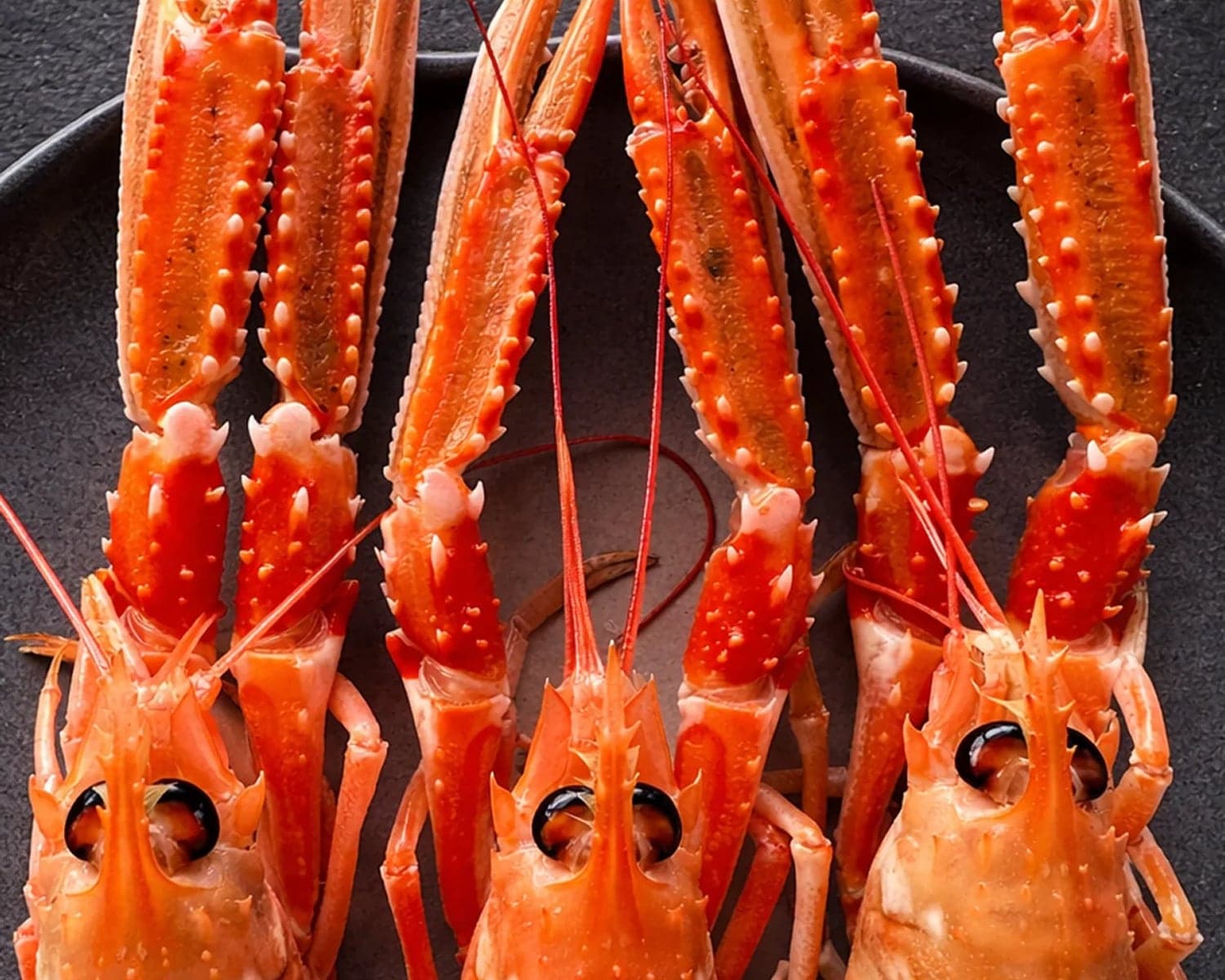
- Langoustine: European “scampi” is Nephrops norvegicus, a clawed marine lobster, while Indian “scampi” labels can mean this river prawn; our langoustine profile explains the difference.
- Marine shrimp from inland ponds: penaeids such as whiteleg shrimp are sometimes raised in low-salinity inland ponds and then loosely called freshwater prawns, but they lack the long claws and the large, heavy head.
- Oriental river prawn (Macrobrachium nipponense): a smaller relative farmed in China and sold under its own name.
- Australian giant river prawn (Macrobrachium spinipes): the eastern species, known in northern Australia as cherabin.
- Crawfish: also clawed and freshwater, but a crayfish, with its big pincers on the first pair of legs rather than the second; see our crawfish product page and crawfish species guide.
How kitchens cook giant freshwater prawns
The tail meat is sweet and softer in texture than most marine shrimp, and the head holds a rich, creamy fat that many Asian cooks prize. The classic dishes are built to make the most of both.
- Thailand: kung mae nam phao, river prawns split and grilled over charcoal and served with a spicy seafood dipping sauce, a specialty of riverside restaurants around Ayutthaya; also baked in a clay pot with glass noodles.
- Bengal: golda chingri malaikari, prawns simmered in a mild coconut-milk sauce, a dish for festive meals.
- Malaysia and Indonesia: udang galah grilled, fried or cooked in spicy sauces.
- Elsewhere: split and grilled with garlic butter, or served head-on on seafood platters, where the claws make a strong visual impression.
Cook prawns soon after thawing and keep cooking short, as the tender tail toughens quickly, and cook to the temperature your local food-safety rules require. For a marine alternative with a firmer bite, compare black tiger shrimp. To source head-on grades with intact claws for a menu feature, send us the count and pack you need.
This guide is general trade information, not legal or regulatory advice. Requirements differ by market and change over time; confirm current rules with your customs broker or competent authority before ordering.