Alaska pollock is a lean, mild member of the cod family that lives across the northern Pacific and supports one of the largest single-species fisheries on the planet. Few consumers ever see its name, because it reaches them as breaded portions, fish sandwiches, salted roe and crab-flavored sticks. For a buyer it shows up in three places on this site: as fillets, blocks and portions on our frozen Alaska pollock page, as the surimi base of surimi crab sticks, and as the block fish sawn into fish fingers and fish sticks.
This profile is about the animal behind those products: its names, biology, fisheries and seasons, the forms it is sold in, how kitchens in different countries cook it, and how to tell it from cod, saithe and pollack. Fillet grades, block dimensions and packing stay on the product pages.
Key takeaways
- Alaska pollock is Gadus chalcogrammus, a true cod once named Theragra chalcogramma; both names still appear in trade paperwork.
- All supply is wild, from US and Russian North Pacific fisheries, and the US Bering Sea fishery runs a winter roe season and a summer-to-autumn season.
- White, mild, lean flesh and a strong gel make pollock the reference fish for surimi and a staple of fish fingers and coated portions.
- Saithe, pollack, Pacific cod and Atlantic cod are different fish, so check the scientific name and catch origin on every document.
What Alaska pollock is: names and classification
Alaska pollock is Gadus chalcogrammus, a member of the cod family, Gadidae. For decades it was placed in a separate genus as Theragra chalcogramma, and that name still appears on older specifications, tariff notes and some official name lists, including the EU’s database of commercial fish names. Genetic studies placed the fish firmly among the true cods, close to Atlantic cod, so it was returned to Gadus, the genus in which Pallas first described it in 1814; the ending of the species name changed to agree with the genus, and US federal agencies, the Food and Drug Administration among them, now use G. chalcogrammus.
The change in genus did not turn pollock into cod for selling purposes. North American scientists long called it walleye pollock, after its large eyes. Since January 2016, when the FDA updated its Seafood List under a mandate from Congress, the US market name Alaska pollock has been reserved for fish caught in Alaskan waters or the adjacent US exclusive economic zone, so the same species caught off Russia is sold there as plain pollock. A fish described from northern Norway in 1956 as a separate species, the Norwegian pollock, turned out to be genetically the same animal and is now counted as G. chalcogrammus too.
| Market | Name for the fish | Notes |
|---|---|---|
| United States | Alaska pollock (Alaskan catch only); pollock | Walleye pollock in older scientific and trade texts |
| Germany | Alaska-Seelachs, Alaska-Pollack | Plain “Seelachs” means saithe, a different fish |
| France | Lieu de l’Alaska, colin d’Alaska | Plain “lieu noir” means saithe |
| Spain | Abadejo de Alaska | Colin de Alaska is also on Spain’s official name list |
| Japan | Suketōdara | Roe sold as tarako (salted) and mentaiko (cured with chili) |
| South Korea | Myeongtae | Separate names by form: dongtae (frozen), bugeo (dried), hwangtae (winter-dried), nogari (young fish, dried) |
| Russia | Mintai | Main catch areas are the Sea of Okhotsk and the western Bering Sea |
Biology and range of Alaska pollock
Pollock occur right around the rim of the northern Pacific, from the Sea of Japan and the Sea of Okhotsk through the Bering Sea and the Aleutian Islands to the Gulf of Alaska, and down the North American coast toward California. The densest concentrations are in the eastern Bering Sea, and a small population lives in Arctic waters off northern Norway.
This is a schooling, semi-pelagic fish. Juveniles live in midwater, while older pollock spend more time near the seabed, mostly between about 100 and 300 meters, and they move up and down the water column each day to feed. Krill and copepods make up much of the diet, and adults also take small fish and other crustaceans.
Pollock can grow to about 90 cm, but most fish in commercial catches measure 30 to 50 cm and weigh roughly 0.5 to 1.5 kg. Some begin spawning at three or four years old, and the species is relatively short-lived: NOAA Fisheries gives a life span of about 12 years. Spawning takes place in late winter and spring in dense aggregations over the outer continental shelf, and the eggs and larvae drift with the plankton.
Like other true cods, pollock have three separate dorsal fins and two anal fins. Compared with Pacific cod the body is slimmer, the eyes are larger, the lower jaw juts slightly forward and the chin barbel is tiny or absent. The back is olive-green to brown with darker speckling, shading to silvery sides and a pale belly. Raw fillets are white to off-white, with a thin gray-brown layer beneath the skin that processors remove when a deep-skinned fillet is ordered.
Where Alaska pollock comes from: fisheries and seasons
Every commercial pollock is wild-caught; the species is not farmed. Supply comes from two large blocks, the US fisheries of the eastern Bering Sea, the Aleutian Islands and the Gulf of Alaska, and the Russian fisheries of the Sea of Okhotsk and the western Bering Sea, with smaller catches off northern Japan. Most fish are taken by midwater trawl, a net towed through the water column rather than dragged along the seabed.
Large catcher-processors fillet the fish, make mince or produce surimi on board within hours of the catch, while other vessels deliver to shore plants on the Alaskan coast and in the Russian Far East. In US waters the fishery is run by NOAA Fisheries together with the North Pacific Fishery Management Council, with an annual catch limit for each stock.
Regulation splits the US Bering Sea fishery into two seasons. The A season opens on 20 January and runs to 10 June, covering the winter spawning period when females carry roe, the most valuable part of the catch at that time of year. The B season runs from 10 June to 1 November, and its fish go mainly into fillets and surimi. Fresh pollock is a local, seasonal product; international trade moves frozen, and our reefer and cold chain guide covers what to agree with the carrier.
Whether a fillet was frozen once near the fishing grounds, or frozen whole and later thawed, filleted and refrozen in another country, changes its texture and drip loss. The pollock product page explains how our offers state which of the two you are buying.
Alaska pollock market forms and what each is for
Pollock is a raw material more than a finished dish, so it is traded in forms designed for the next processor. The table summarizes the main ones in general trade; the formats we currently offer are listed on each product page.
| Form | What it is | Main uses |
|---|---|---|
| Fillet block | Skinless, boneless fillets pressed and frozen into a standard rectangle | Sawn into fish fingers and coated portions |
| Mince block | Minced flesh, often recovered from trimmings, frozen in the same block shape | Formed products, nuggets and budget fingers |
| IQF and interleaved fillets | Single fillets frozen separately or in layers, graded by weight | Foodservice frying and baking, retail packs |
| Surimi | Washed, refined mince blended with sugars and frozen in blocks | Crab sticks, kamaboko, fish balls and fish cakes |
| Roe | Whole roe sacs from pre-spawning females | Tarako, mentaiko and Korean myeongnan-jeot |
| Dried fish | Whole or split fish dried in the open air, a Korean specialty | Soups, stews and grilled side dishes |
| Skin and frames | Co-products left after filleting | Gelatin raw material and fishmeal |
Grading detail, such as bones per kilogram or the gel strength of a surimi grade, belongs in the specification, though one species-level point matters: some processors add phosphate to limit drip from pollock fillets, and it must be declared where used. The skin left after filleting is a raw material in its own right, and pollock skin is among the whitefish skins on our fish skin page.
Why surimi and fish fingers rely on Alaska pollock
Surimi starts as minced fish that is washed several times to strip out fat, blood and water-soluble components, then pressed and blended with sugar or sorbitol. What remains sets into a firm, elastic gel when heated, which is what lets a factory shape it into sticks, rolls, balls and cakes with a bite close to shellfish. Pollock is close to ideal for this: the flesh is white, mild and lean, and it forms a strong, springy gel.
Freezing once destroyed that gelling ability, so surimi had to be used fresh until researchers in Hokkaido developed frozen surimi around 1960, protecting the washed mince in cold storage with added sugars, which remain part of the recipe today. Frozen pollock surimi then became a commodity, much of it made at sea, and crab-flavored sticks, which appeared in Japan in the 1970s, carried it into supermarkets worldwide. Threadfin bream is the main alternative base in Southeast Asia, and the same paste also becomes kamaboko, chikuwa and fish balls.
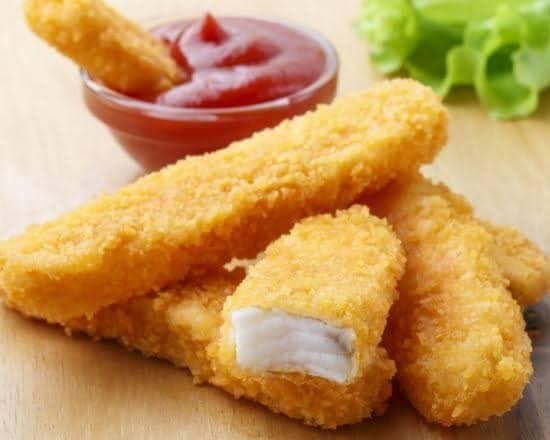
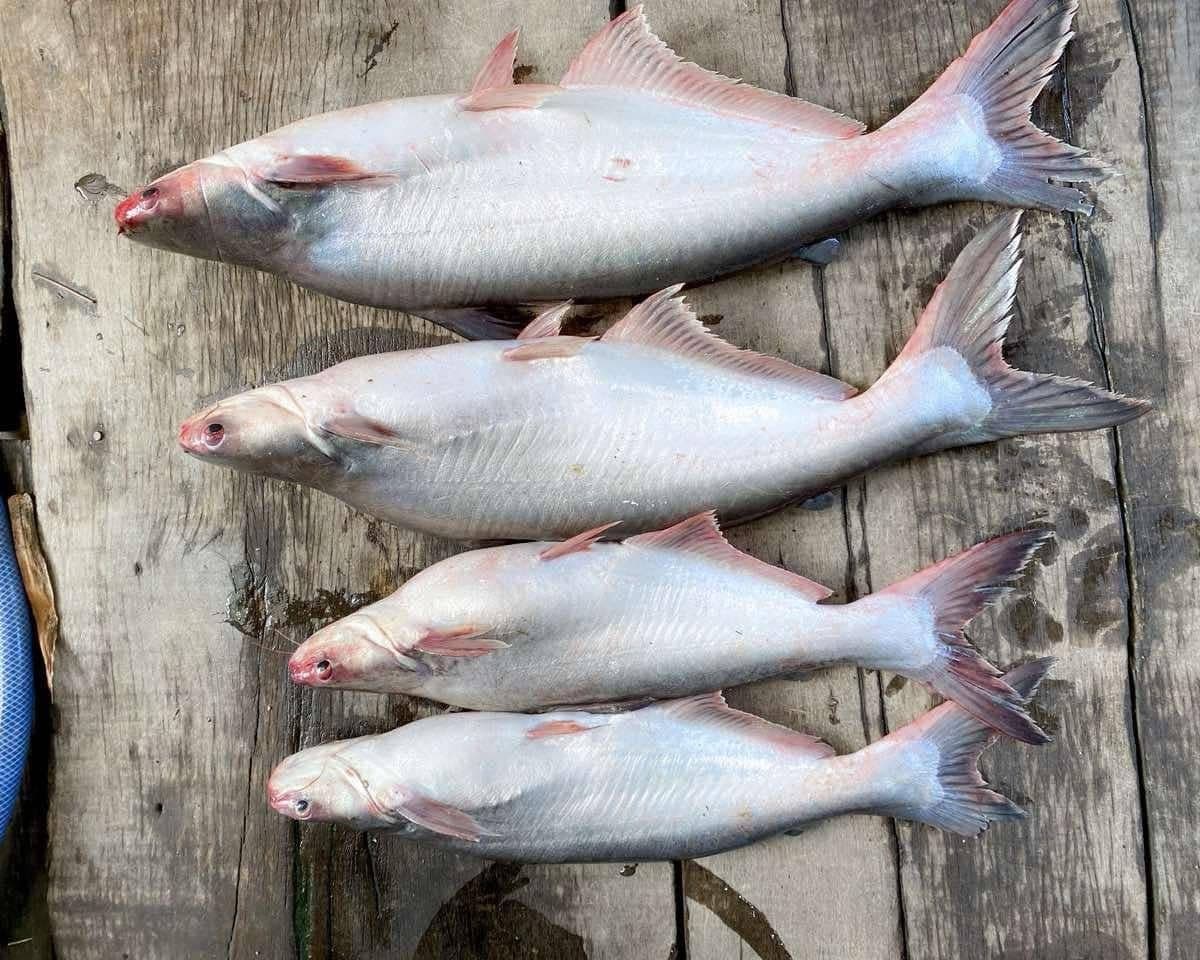
Fish fingers were launched in Britain in 1955. The manufacturer tested herring first, but trial shoppers chose cod, and the format has been built on mild whitefish ever since. Pollock blocks are now among the standard raw materials for fingers, alongside cod and farmed pangasius, which our pangasius species guide profiles. Fingers cut from fillet blocks break into natural flakes, while mince-block fingers are softer and more uniform, so the block type is part of any fair price comparison.
How kitchens cook Alaska pollock
Cooked pollock is white, mild and faintly sweet, with a small, tender flake that is softer than cod’s. It disappears pleasantly under batter, crumb and sauce, which is exactly why food manufacturers value it, and it suits steaming, poaching and baking better than hard grilling, where the thin fillets dry out quickly.
- North America and northern Europe: battered and breaded fillets, fish sandwiches, fish tacos, fish pies, chowders and oven-baked portions under a crumb or herb topping.
- Korea: dongtae-jjigae, a spicy stew of frozen pollock; bugeo-guk, a clear soup of dried pollock; grilled hwangtae brushed with chili paste; and myeongnan-jeot, salted roe served as a side dish.
- Japan: tarako and spicy mentaiko eaten with rice, tucked into onigiri or tossed through pasta, and pollock surimi in kamaboko and chikuwa for oden and noodle dishes.
- Russia and Eastern Europe: pan-fried or baked fillets, and fish cutlets formed from minced pollock.
Thaw fillets slowly in the chiller and pat them dry before coating so the crumb sticks. Coated products are usually cooked straight from frozen following the pack instructions, and par-fried items are raw at the center, so they need to reach the core temperature your market’s food rules require.
Telling Alaska pollock from cod, saithe and pollack
The word pollock covers more than one fish, and English, German and French names overlap in ways that regularly confuse buyers. These are the species most often mixed up with Alaska pollock:
- Saithe (Pollachius virens): a North Atlantic fish called coley or coalfish in Britain, pollock in the United States and Seelachs in Germany. It grows much larger, to about 130 cm, has a straight, pale lateral line and noticeably grayer raw flesh that whitens on cooking.
- Pollack (Pollachius pollachius): a European relative of saithe with a distinctly projecting lower jaw, no chin barbel and a dark lateral line that curves sharply over the pectoral fin.
- Pacific cod (Gadus macrocephalus): same genus, but a heavier fish whose chin barbel in adults is longer than the eye is wide, with larger, firmer flakes and usually a higher price.
- Atlantic cod (Gadus morhua): a close relative of pollock, and the name to watch for on pollock fillets, since a cod label would raise the price of a cheaper fish.
Once skinned, portioned and coated, these fish are very hard to separate by eye, and DNA-based species testing is the reliable way to settle a doubt. The scientific name on the invoice, carton and catch documents should match the product, and the EU also requires it on the label of fresh and frozen fish. If you are weighing pollock against another whitefish for a coated or formed range, describe the product you want to build and we can set out the raw material options side by side.
This guide is general trade information, not legal or regulatory advice. Requirements differ by market and change over time; confirm current rules with your customs broker or competent authority before ordering.