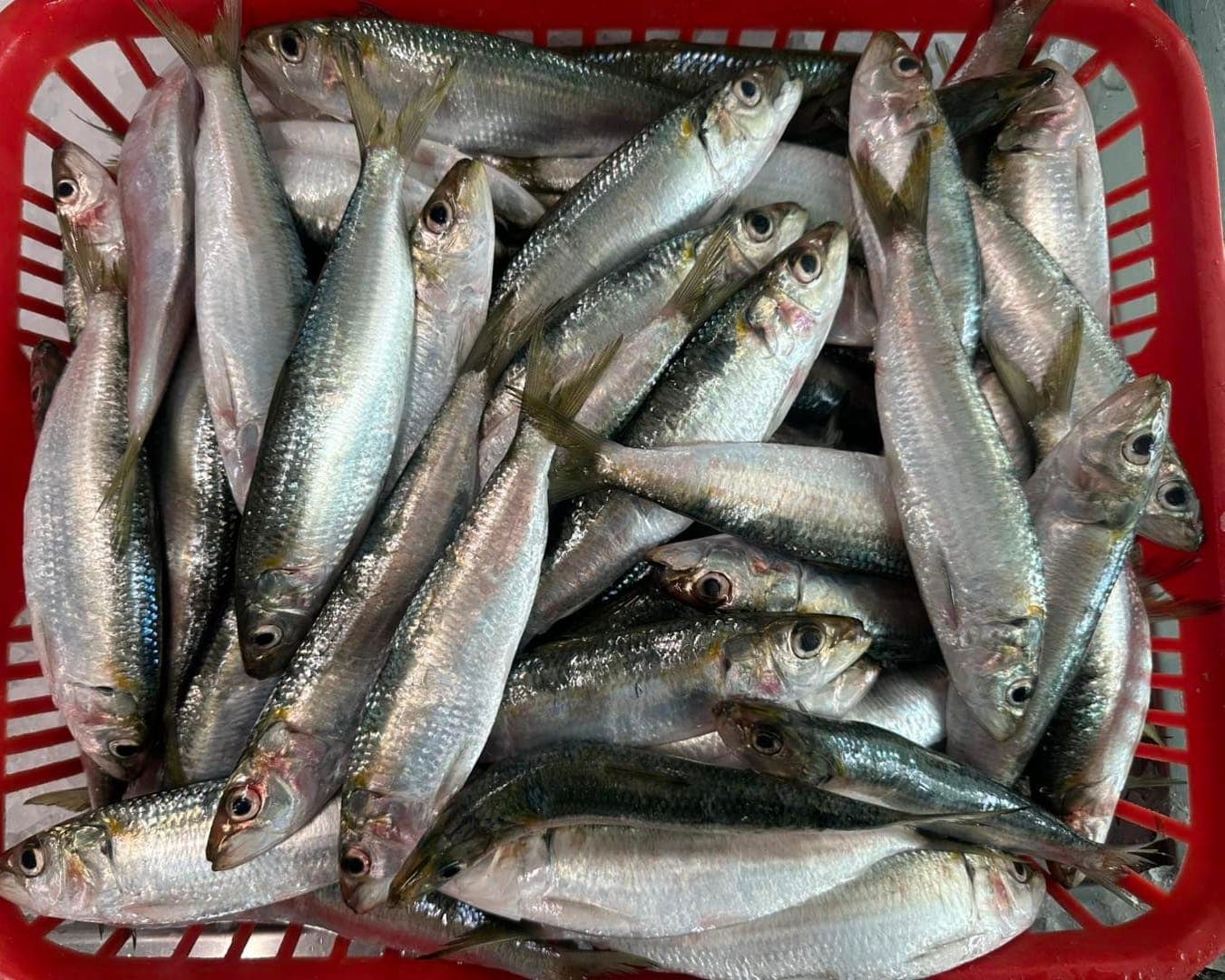
Atlantic herring is a silvery, oily schooling fish of the North Atlantic, and for centuries it was among the most important fish that northern Europe salted, smoked and traded. It still supplies smokehouses, marinade plants and canneries from Scotland to Poland, as well as importers in West Africa and Eastern Europe who buy it whole and frozen. Our frozen Atlantic herring page covers the whole round fish, fillets and butterfly cuts we offer.
This guide looks at the fish itself: how to recognize it and its look-alikes, how its separate spawning stocks shape the seasons, why fat and roe vary so much through the year, which market forms suit which products, and what the great herring cures actually involve. Grading by weight and fat measurement are covered on the product page, so they get only a brief mention here.
Key takeaways
- Atlantic herring is Clupea harengus; Pacific herring is a separate species and Baltic herring a smaller population sold under its own names.
- Herring are managed and traded by spawning stock, and each stock spawns at its own time of year.
- Fat and roe change sharply through the year, so specify stock and catch month along with size.
- Kippers, bloaters, buckling, maatjes and pickled herring each need a particular raw material, from fat feeding fish to whole ungutted herring.
What Atlantic herring is and how to recognize it
Atlantic herring is Clupea harengus, the best-known member of the herring family, Clupeidae. It is a slender fish with a rounded belly, a blue to greenish-blue back and bright silver sides, and it has no dark spots on the body or fins. FishBase gives a common length of about 30 cm and a maximum of about 45 cm, and individuals have been aged at 25 years.
Three details separate herring from its relatives in the hand. The scales along the belly form a keel, but a blunt one that feels fairly smooth to a fingertip, unlike the sharp, saw-edged keel of a sprat. The gill cover is plain, without the fine radiating ridges a pilchard shows. And the pelvic fins start behind the front of the dorsal fin, not ahead of it as in sprat.
Herring in the brackish Baltic Sea are smaller than their oceanic cousins and are often listed as a subspecies, C. harengus membras, although FishBase regards the herring subspecies as poorly defined and treats Atlantic herring as one species with several populations. Whatever their status, they trade under their own names: strömming in Sweden and silakka in Finland. Pacific herring, Clupea pallasii, is a separate species from the North Pacific that looks almost identical, so its origin has to come from the documents rather than from the fish.
| Fish | Scientific name | How to tell it from Atlantic herring |
|---|---|---|
| Pacific herring | Clupea pallasii | North Pacific species; nearly identical in appearance, so catch area on the paperwork is the practical check |
| Baltic herring | Clupea harengus (Baltic populations) | Same species, smaller fish from the Baltic, sold as strömming or silakka |
| European sprat | Sprattus sprattus | Smaller; pelvic fins begin ahead of the dorsal fin; sharp belly keel that catches a fingertip; canned as brisling |
| European pilchard | Sardina pilchardus | Three to five bony ridges radiating down the lower gill cover; last two anal fin rays enlarged |
| Shads | Alosa species | Deeper body and a distinct notch in the middle of the upper jaw, which herring lack |
Where Atlantic herring live and spawn
Atlantic herring range across the whole northern Atlantic. In the west they occur from southwest Greenland and Labrador south to South Carolina; in the east from Iceland and southern Greenland south to the northern Bay of Biscay, east to Spitsbergen and Novaya Zemlya, and into the Baltic. They feed in large schools in open water, mostly within 200 m of the surface, on copepods and other small plankton.
Herring are unusual among their relatives in spawning on the seabed. Each female lays sticky eggs that sink and attach to gravel, rock or, in the Baltic, to beds of seaweed, and the hatched larvae drift with the currents. Every population returns to its traditional grounds once a year over a short period, and because the populations spawn at different times, some herring somewhere are spawning in almost every month. These separate stocks are the units in which herring is managed and traded:
- Norwegian spring-spawning herring, also called Atlanto-Scandian herring, spawn off the Norwegian coast between Møre and Vesterålen from mid-February to mid-March, feed across the Norwegian Sea through the summer and gather in northern Norwegian waters for the winter.
- North Sea herring are mainly autumn spawners, a different rhythm from the Norwegian fish.
- Icelandic summer-spawning herring, as the name says, spawn in summer in Icelandic waters.
- Baltic herring include several spring- and autumn-spawning groups inside the Baltic Sea.
- North-West Atlantic herring are fished off Canada, in areas such as the Bay of Fundy and the Gulf of St. Lawrence, and off the northeastern United States in the Gulf of Maine and on Georges Bank.
In the North-East Atlantic, catch limits for each stock are set by the coastal states and the EU on scientific advice from ICES, the International Council for the Exploration of the Sea, while Canada and the United States manage the western stocks. Herring is a wild fish only; it is not farmed.
Herring seasons: fat, roe and catch timing
The same herring is a very different raw material depending on when it is caught. After spawning, a herring is thin and lean. Through spring and summer it feeds hard on plankton and lays down fat in the flesh and around the gut, and in the months before the next spawning that fat is drawn down as roe or milt develops. Across a year, the fat content of one stock can swing several-fold, which is why experienced buyers specify the stock and catch month, not just the size.
| Stage | Condition of the fish | Typical uses |
|---|---|---|
| Feeding, before the gonads develop | Fattest, softest flesh; little or no roe or milt | Maatjes, kippers, cold-smoked and marinated products |
| Pre-spawning (“full” herring) | Fat falling, roe or milt well developed | Salted whole herring, smoking, roe recovery |
| Spent, just after spawning | Lean, thin, firmer flesh | Frying, some canning, reduction to fishmeal |
Size grading follows the fish weight or the number of fish per kilogram, and our herring product page explains how fat measurements can accompany each lot. For transport, fatty herring is one of the fish most sensitive to cold-store temperature, because its fat oxidizes and turns rancid in warm or fluctuating storage; the points to agree with the shipping line are in our reefer and cold chain guide.
Market forms of Atlantic herring
Most herring moves frozen and raw, in forms chosen by the next processor rather than by the consumer:
- Whole round: the ungutted fish, block-frozen soon after landing. It is the cheapest form and the usual raw material for whole-fish smoking, salting and frying, especially in West and North African and Eastern European markets.
- Single fillets: each side cut away separately, skin-on or skinless, for marinating, frying and retail packs.
- Butterfly fillets: both sides left joined along the back after the head, guts and backbone are removed, so the fish opens flat for kippers, fried herring and many marinades.
- Roe and milt: recovered from full herring for processing, a by-product of pre-spawning catches.
- Salted herring: whole or gutted fish packed in barrels or tubs of salt, the oldest traded form and still common in Northern and Eastern Europe.
- Reduction: herring not sold for food goes to fishmeal and fish oil plants, and small herring are used as bait.
Smoking, curing and marinating are normally done near the end market, where recipes and taste preferences differ. Herring can share a reefer with other oily pelagic fish such as frozen mackerel, which many of the same smokehouses buy.
Classic herring cures and dishes
Herring’s fat makes it ideal for salting and smoking, and almost every country around the North Sea and the Baltic has its own way of preserving it. The names below are worth knowing because buyers use them to describe the raw material they need.
| Product | Where it comes from | How it is made |
|---|---|---|
| Kipper | Britain | Split down the back, gutted, brined and cold-smoked, then usually grilled or poached before eating |
| Bloater | Great Yarmouth, England | Whole herring, ungutted, lightly salted and cold-smoked |
| Buckling (Bückling) | Germany and Scandinavia | Whole herring hot-smoked, so it is cooked and ready to eat |
| Maatjes (matjes) | Netherlands and Germany | Fat young herring caught in early summer, gutted except for the pancreas and mild-cured in salt |
| Rollmops | Germany | Marinated fillets rolled around onion or gherkin and held in spiced vinegar |
| Bismarck herring | Germany | Flat fillets marinated in vinegar with onion |
| Inlagd sill | Sweden and Norway | Salt-cured herring pickled in a sweet-sour brine with onion and spices |
| Surströmming | Northern Sweden | Baltic herring fermented in a light brine and canned while still fermenting |
| Herring under a fur coat | Russia, Ukraine and Belarus | Salted herring layered under boiled potato, carrot and beet, bound with mayonnaise |
Maatjes owes its mild, buttery character to a technique Dutch tradition credits to Willem Beukelszoon, a fourteenth-century fisherman from Biervliet: the pancreas is left in the fish when it is gutted, and its enzymes slowly ripen the salted flesh. Fresh herring is also simply fried or grilled, or rolled in oatmeal and fried in Scotland, while Dutch maatjes is eaten as it comes, often with chopped onion. Raw and lightly cured herring needs a prior parasite-control freezing step in the EU and many other markets, as our product page explains.
Herring quality signs and common substitutions
Good frozen herring arrives bright and silvery, with firm flesh, intact bellies and white rather than yellow fat. Soft or burst bellies point to fish caught while gorging and frozen too slowly, while yellowing and a bitter, paint-like smell signal fat that has started to oxidize. The Clupeidae are also one of the fish families in which poor temperature control can lead to histamine formation, so time and temperature records from landing to freezing are part of any quality file.
The most common substitutions are quiet ones. Pacific herring may be offered in place of Atlantic herring, and Baltic herring in place of oceanic fish; neither is wrong if declared, but they behave differently in processing. In canned goods, small herring and sprats have long been sold under sardine-style names, such as sild and brisling, a story our sardine species guide unpacks. EU labels for fresh and frozen fish must show the commercial name, the scientific name and the catch area, which keeps the species and its origin visible.
If you are matching a particular cure, tell us the stock, catch month and fat range your recipe works with, and request a herring offer built on those points.
This guide is general trade information, not legal or regulatory advice. Requirements differ by market and change over time; confirm current rules with your customs broker or competent authority before ordering.