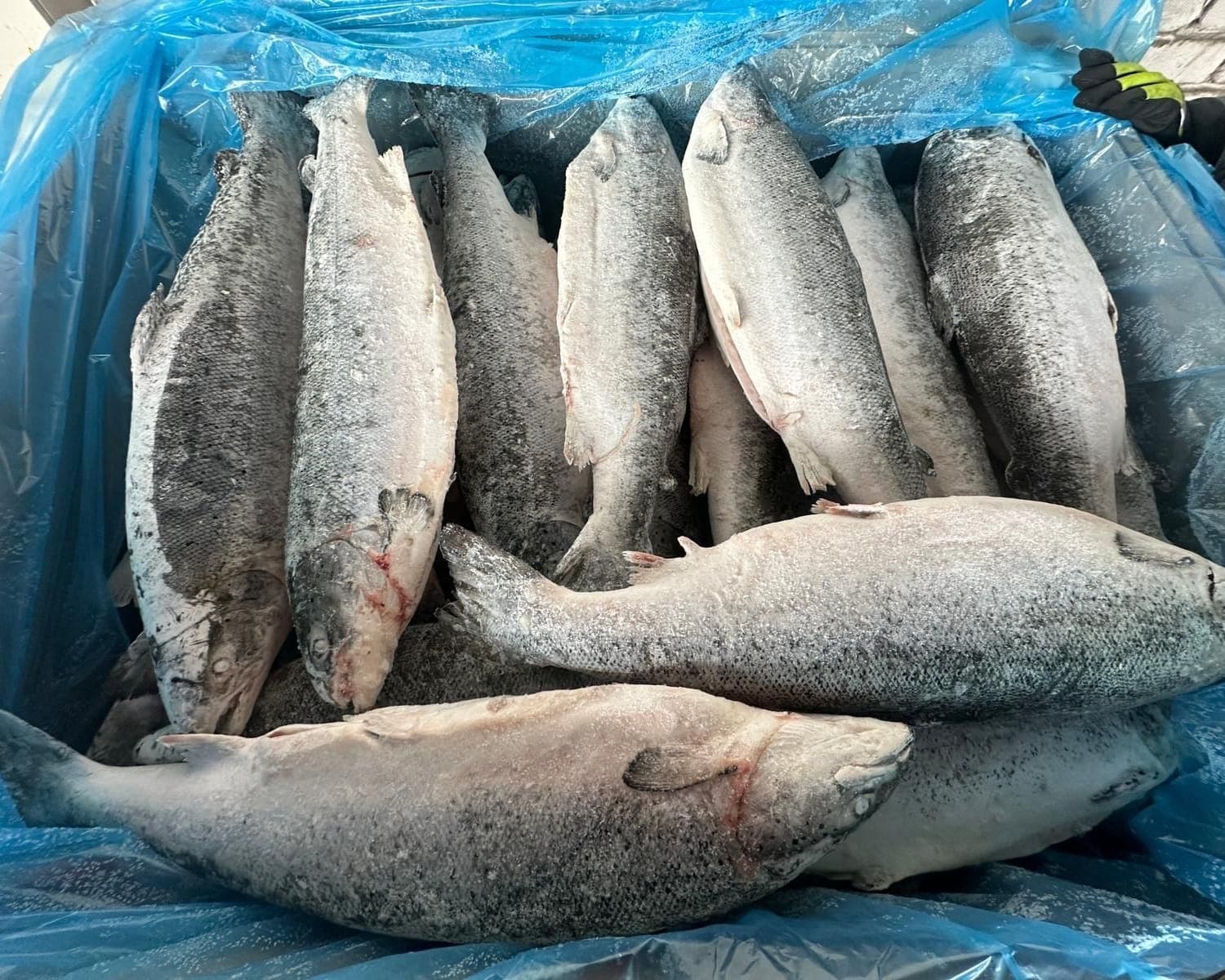
Atlantic salmon (Salmo salar) is the fish most seafood buyers mean when they order salmon without naming a species. It evolved in the rivers and seas of the North Atlantic, yet almost all of the supply in trade today is raised in sea pens, some of them on the far side of the equator in Chile and Tasmania. Our frozen Atlantic salmon page lists the cuts, size bands and farming countries we currently offer.
This profile covers the animal behind the product: how wild salmon live, why commercial supply is farmed, which countries produce it, and how it differs from the Pacific salmon species and from large sea-farmed rainbow trout. It also looks at the forms the fish is sold in, how kitchens use them, and the naming and substitution problems that buyers run into.
Key takeaways
- Atlantic salmon (Salmo salar) in international trade is almost entirely farmed; fishing for wild fish is banned in the US and small elsewhere.
- Norway and Chile lead production, followed by Scotland, the Faroe Islands, Iceland, Canada and Tasmania, and processing often happens in a second country.
- Pacific salmon and rainbow trout belong to Oncorhynchus; they differ in flesh, fat and season and need their own names on the label.
- Write species, farming country, cut and color score into the specification, and use DNA testing where substitution is a risk.
What Atlantic salmon is and how to recognize it
Atlantic salmon belongs to the salmon and trout family, Salmonidae, and to the genus Salmo, which it shares with the brown trout (Salmo trutta). The Pacific salmons sit in a separate genus, Oncorhynchus, together with rainbow trout, so in strict biological terms an Atlantic salmon is closer kin to a European brown trout than to a sockeye or a king salmon. Rainbow trout itself was once classed in Salmo and was moved to Oncorhynchus in 1989, which is why older references can be confusing.
A sea-run adult is blue-green or brownish on the back, bright silver on the flanks and white underneath, with a scattering of small black spots above the lateral line and usually none below it. As spawning approaches, the fish darken and lose their silver sheen, and males grow a hooked lower jaw known as a kype. Wild fish can exceed a meter in length: FishBase gives a maximum of 150 cm and a published record weight of about 47 kg, although most salmon returning to rivers are far smaller, and farmed fish are harvested long before they approach those sizes.
The life cycle of wild Atlantic salmon
The species is anadromous: it hatches in fresh water, feeds and grows at sea, and returns to fresh water to breed. Eggs are buried in gravel beds in cool, clear rivers, and the young, called parr, stay in the river for one to six years depending on how fast they grow. When ready for the sea they turn silver and become smolts, then migrate to feeding grounds in the North Atlantic, where they remain for one to four years.
Fish that come home after a single winter at sea are known as grilse and are smaller than salmon that stay out for two or more winters. Returning adults enter the rivers between early summer and late autumn and spawn in pairs over gravel riffles. Many die afterwards, but unlike the Pacific species a share survive; these spent fish, called kelts, drift back to sea, and a small proportion return to spawn again.
Wild Atlantic salmon is now a minor fishery. In the United States the remaining wild population, in Maine, is listed as endangered, commercial and recreational fishing for the species is prohibited, and NOAA Fisheries states that only farm-raised Atlantic salmon is found in US seafood markets. Catches elsewhere around the North Atlantic are small and tightly regulated, so for practical purposes international trade in Atlantic salmon is trade in farmed fish.
Where farmed Atlantic salmon comes from
Raising salmon to market size in sea cages began in Norway at the end of the 1960s, and Norway remains by far the largest producer, with Chile second. Scotland, the Faroe Islands, Iceland and Canada add substantial volumes, and Tasmania farms the species off southern Australia. Chile and Tasmania lie well outside the natural range; salmon were introduced there, and farming relies on cool, sheltered southern waters that suit the fish.
Farmed salmon start life in freshwater hatcheries. Once they have become smolts, typically weighing somewhere between 40 and 120 g, they are moved to net pens in the sea and grown on for up to about two years. FAO describes harvesting from about 2 kg upward, and most fish reach the market at roughly 4 to 6 kg. Because farms harvest throughout the year, farmed salmon has no closed season, although the sizes on offer depend on each farm’s stocking and harvest plan.
Two practical points follow. The species needs cold, well-oxygenated sea water, so commercial farming is concentrated at high latitudes in both hemispheres; a supplier in a warm-water country is normally processing salmon imported from one of the farming countries rather than raising it. And fish raised in one country are often cut, smoked or portioned in another, so the farming country and the processing country should both appear on the paperwork. Land-based farms that grow salmon in tanks are a newer and still small source.
Atlantic salmon vs Pacific salmon and trout
Five Pacific salmon species make up most of the North Pacific catch, all in the genus Oncorhynchus: chinook (also sold as king salmon), coho (silver salmon), sockeye (red salmon), pink (humpback salmon) and chum (keta salmon). Masu or cherry salmon is a sixth species of the western North Pacific, around Japan, Korea and the Russian Far East. These Pacific species die after spawning, in contrast with the Atlantic fish. Most Pacific salmon in trade is wild-caught off Alaska, Russia, Japan and Canada during seasonal runs, though coho and chinook are also farmed on a smaller scale.
The closest look-alike in frozen trade is not a Pacific salmon at all but rainbow trout (Oncorhynchus mykiss) grown to a large size in sea pens. Its sea-run wild form is the steelhead, and in the United States both “rainbow trout” and “steelhead” are acceptable market names for the species. Large sea-farmed trout has orange flesh and can pass for salmon once filleted. In 2018 a Chinese industry group standard that grouped rainbow trout under 三文鱼, the everyday Chinese word for salmon, drew strong public criticism; whatever local custom allows, the scientific name on the specification settles which fish you are buying.
| Fish | Scientific name | Main source in trade | Points for buyers |
|---|---|---|---|
| Atlantic salmon | Salmo salar | Farmed: Norway, Chile, Scotland, Faroe Islands, Iceland, Canada, Tasmania | Available all year; orange-pink flesh marbled with white fat lines |
| Chinook (king) salmon | Oncorhynchus tshawytscha | Wild North Pacific; some farmed | Largest Pacific species, with rich, high-fat flesh |
| Sockeye (red) salmon | O. nerka | Wild, mainly Alaska and Russia | Deep red, firm and leaner; seasonal supply |
| Coho (silver) salmon | O. kisutch | Wild North Pacific; farmed in Chile | Orange-red flesh with moderate fat |
| Pink and chum salmon | O. gorbuscha, O. keta | Wild North Pacific | Paler, leaner flesh for canning and processing; chum roe is the traditional source of ikura |
| Rainbow trout or steelhead | O. mykiss | Farmed, including large sea-farmed fish | Labeled as trout or steelhead, not salmon, under US FDA names |
Market forms and kitchen uses of Atlantic salmon
Salmon is cut into an unusually wide range of forms. Whole fish travel head-on and gutted, graded by weight; fillets are described by how far they have been trimmed, from a fillet that still carries its pin bones and belly fat to a skinless, fully cleaned loin; and portions, steaks, belly strips and trimmings are cut from both. Smokehouses turn fillets into cold-smoked salmon, cured and smoked without cooking, and hot-smoked salmon, which is cooked through in the smoker. Heads, frames and belly flaps also find buyers, particularly in East Asian cooking, where they go into soups, hot pots and grills. The product page explains the trim letters and color scores in detail.
- Raw: raw salmon became a regular sushi topping in Japan only after a Norwegian export campaign begun in the mid-1980s, and it is now a fixture of sushi counters worldwide. Whether it may be served raw without a prior freezing step depends on the parasite-control rules in the market where it is eaten.
- Cured: Nordic gravlax is cured raw with salt, sugar and dill, and cold-smoked salmon is salted, dried and smoked at low temperature.
- Cooked: the fat content keeps salmon moist when grilled, pan-roasted skin-side down, baked, poached or glazed teriyaki-style, and whole sides are baked for buffets.
- Processed: trimmings and smaller pieces go into fish cakes, pâtés, ready meals and rice-ball fillings.
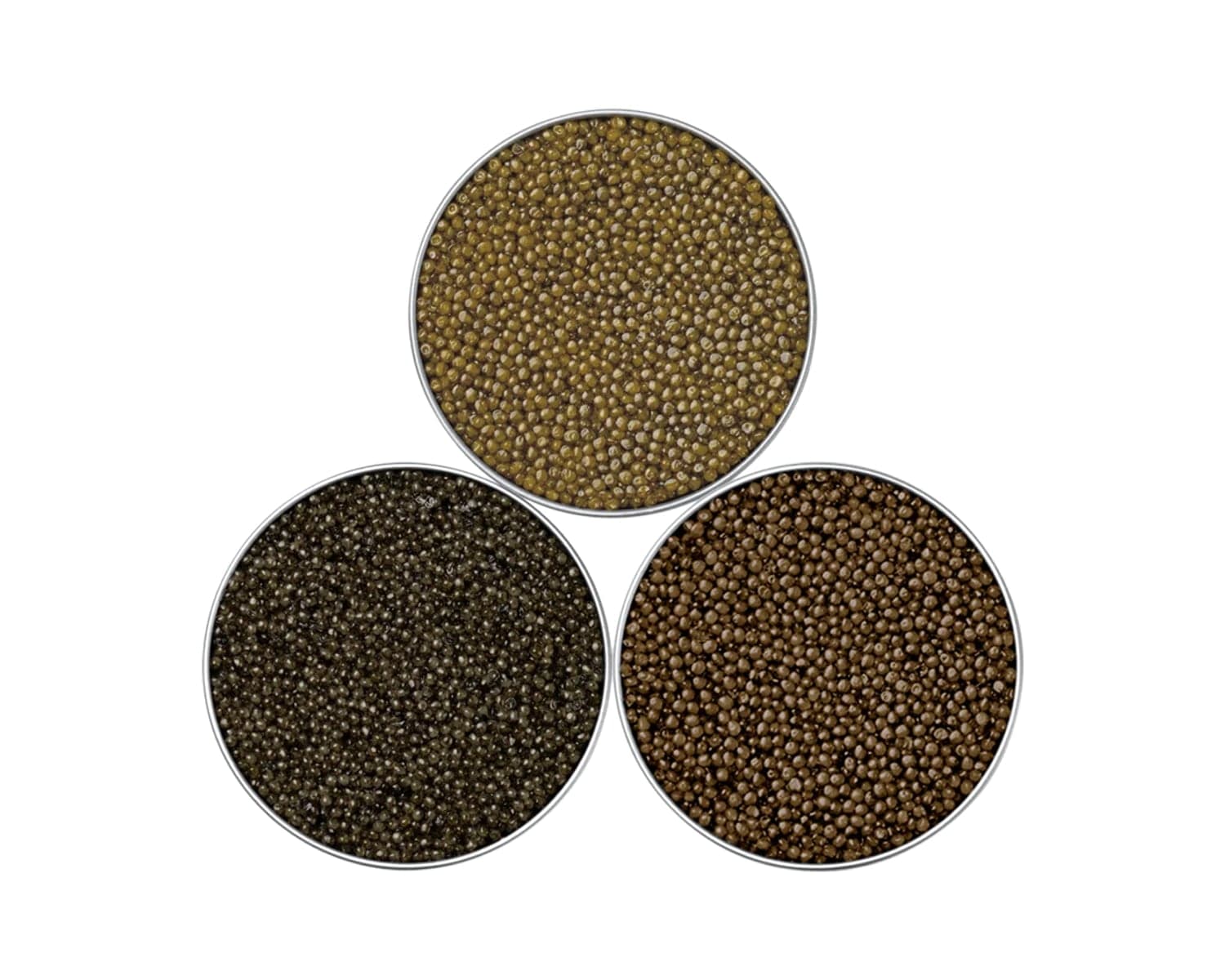
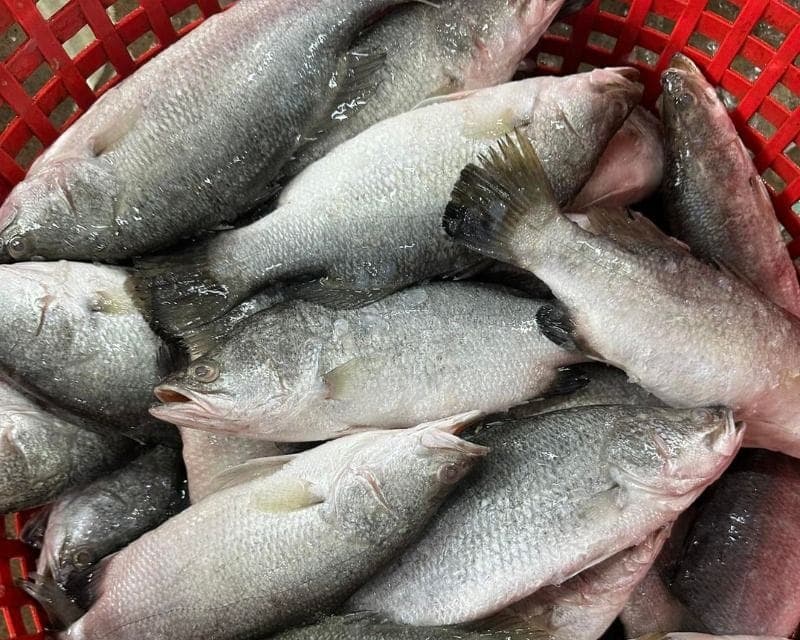
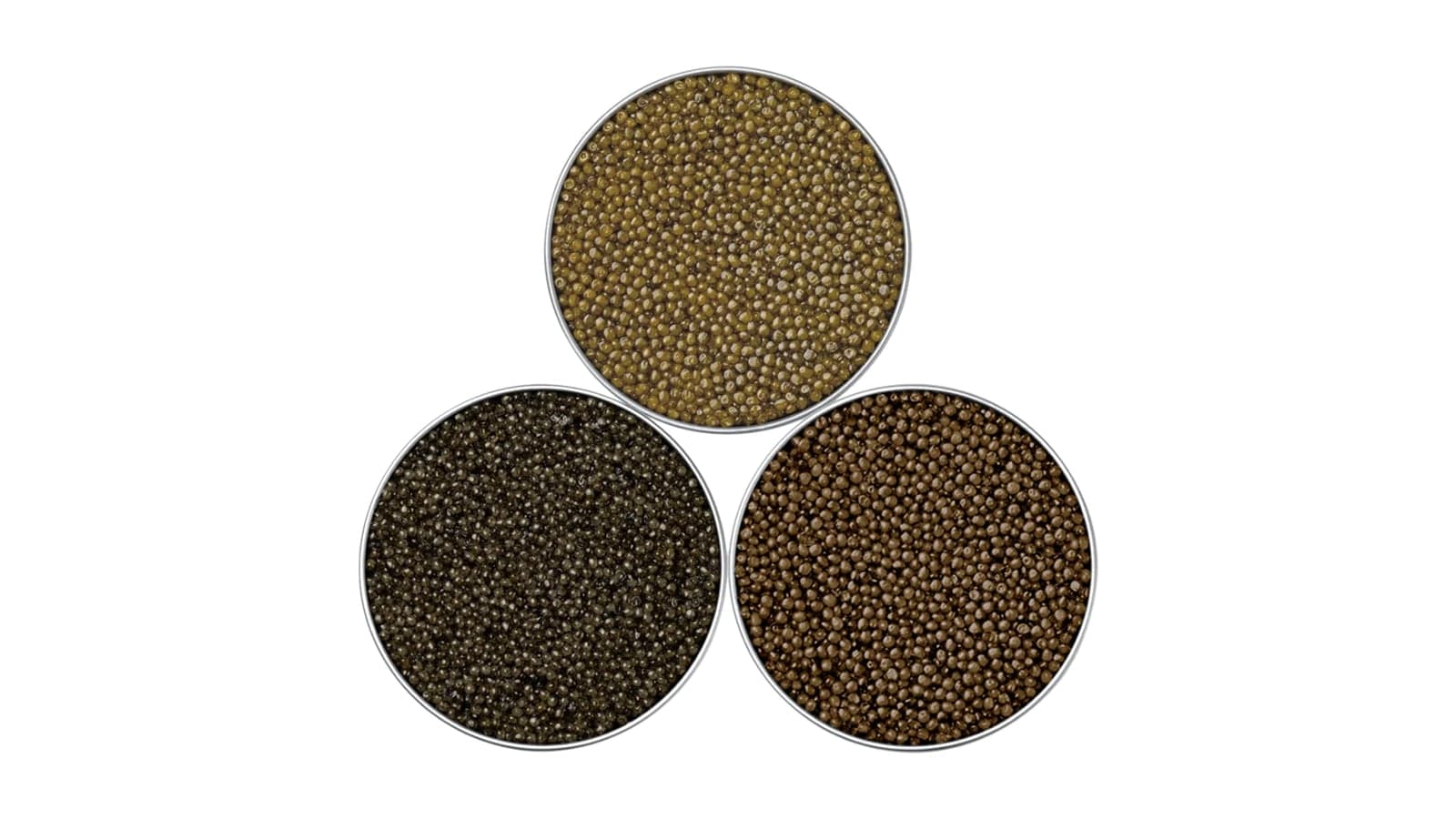
Farmed Atlantic salmon tastes rich and mild, with soft, moist flakes and white fat lines running between the muscle blocks. Wild Pacific species are generally leaner and firmer, with a stronger flavor in sockeye and a gentler one in pink salmon. Salmon roe is a separate product: Japanese ikura is traditionally made from the roe of chum, a Pacific species, and it is listed with other roes on our roe and caviar page. Kitchens that want a white-fleshed fish for similar dishes can compare the barramundi species guide and our frozen barramundi.
Salmon color, labeling and substitution
The orange-pink color of salmon flesh comes from carotenoid pigments, chiefly astaxanthin. Wild fish obtain it by eating crustaceans; farmed fish receive it in their feed, and the feed program sets the shade, which buyers specify against a color card. Some markets, the United States among them, require labels to say when the color came from feed.
Labeling rules generally expect three facts on a salmon pack: the species, whether it was farmed or caught, and the origin. EU rules for retail seafood ask for the commercial name, the scientific name, the production method and, for farmed fish, the country of farming. In the United States the FDA Seafood List gives “Atlantic salmon” as the market name for Salmo salar and assigns each Pacific species its own required name, such as sockeye or coho.
- Farmed sold as wild: US seafood-fraud surveys have found farmed Atlantic salmon sold as wild Pacific salmon. Wild sockeye and coho are leaner, deeper in color and thinner in their fat lines, but under a sauce the difference is easy to miss.
- Trout sold as salmon: sea-farmed trout is often harvested smaller than a 4–6 kg salmon, so its fillets tend to be smaller, yet size is not proof; a DNA test is the reliable check.
- One Pacific species for another: pink or chum offered as sockeye or coho. Color and fat lines give clues, and a laboratory can confirm the species.
Our guide to choosing premium seafood ingredients explains how to keep quality consistent between deliveries, and the reefer shipping guide covers holding temperatures, records and Incoterms for frozen fish programs. When your specification is ready, send it to us for a salmon quotation.
This guide is general trade information, not legal or regulatory advice. Requirements differ by market and change over time; confirm current rules with your customs broker or competent authority before ordering.