Rohu (Labeo rohita) and catla (Labeo catla) are large river carps of northern South Asia and, with mrigal, make up the group known as the Indian major carps. Across India, Bangladesh, Pakistan, Nepal and Myanmar they are among the most familiar freshwater fish on the table, sold whole at markets, cut into steaks for curry and frying, and bought by the head for special dishes. Farming has made them available year-round, and frozen supply now follows South Asian shoppers to the Gulf, the United Kingdom, North America and elsewhere.
This profile explains how to recognize rohu, catla and mrigal, where the fish live and how they are farmed, the names they go by and the dishes they are bought for. Sizes, cuts and the origins we supply are listed on our frozen rohu and catla product page.
Key takeaways
- Rohu, catla and mrigal are the Indian major carps, farmed together because each feeds in a different layer of the pond.
- Catla has a deep body, a huge head and an upturned mouth; rohu is slimmer, with a smaller head and the mouth set lower.
- Catla is now placed in Labeo; Gibelion catla and Catla catla are older names for the same fish.
- Most dishes use bone-in steaks and heads, so cut style, head and tail share and freshness matter more than fillet yield.
Rohu, catla and mrigal: the Indian major carps
All three belong to the carp family, Cyprinidae, and all three occupy a different layer of the same water. Catla feeds at the surface and in mid-water, the adults sieving zooplankton through long gill rakers. Rohu is a column feeder, grazing plant matter and fine plankton in the middle layers with thin, hair-like gill rakers. Mrigal (Cirrhinus mrigala) feeds near the bottom. That division is why farmers stock the three together: in one pond they share the food rather than compete for it.
| Feature | Rohu | Catla | Mrigal |
|---|---|---|---|
| Scientific name | Labeo rohita | Labeo catla (also Gibelion catla, formerly Catla catla) | Cirrhinus mrigala |
| Common names | Rohu or ruhi (both UK label names), rui (Bengali), rohi (Odia) | Catla, katla (Bengali), bhakur (Hindi, Odia and Nepali) | Mrigal |
| Shape | Streamlined, with an arched lower profile to the head | Deep body and a very broad head | Slender body and a smaller head |
| Mouth | Set low on a rounded snout | Wide and upturned, with a projecting lower jaw | Set low, suited to feeding near the bottom |
| Feeding zone | Middle of the water column | Surface and mid-water | Near the bottom |
| Largest recorded | About 2 m and 45 kg | About 1.8 m and 39 kg | About 1 m and 13 kg |
The names on the catla row need a word of explanation. For most of its history catla was the only species in its own genus, Catla, and it was later moved to Gibelion. The Catalog of Fishes and FishBase now place it in Labeo, alongside rohu. All three names refer to the same fish, and trade documents still use each of them.
How to tell rohu from catla
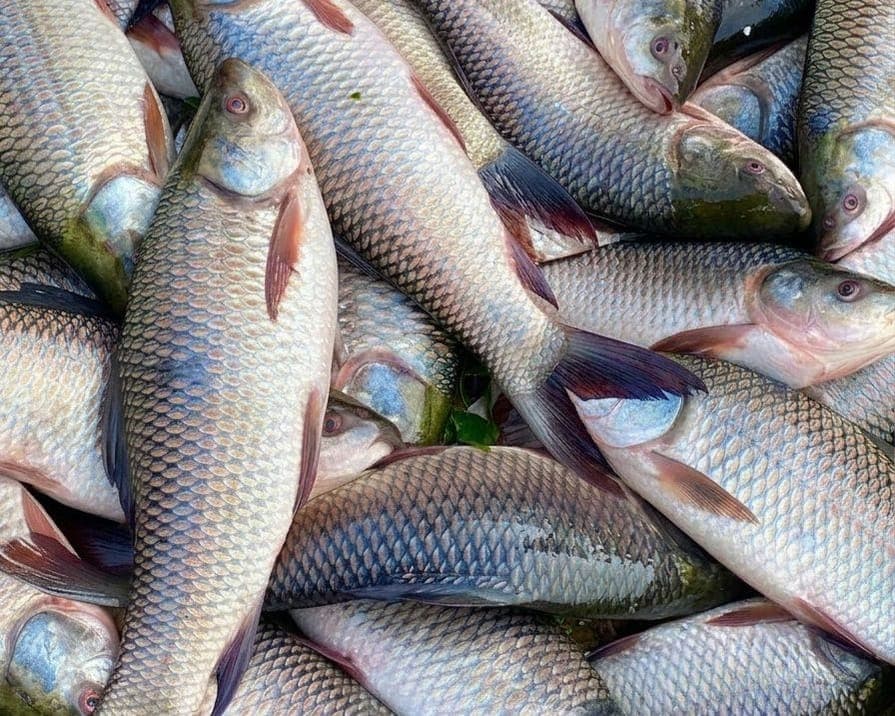
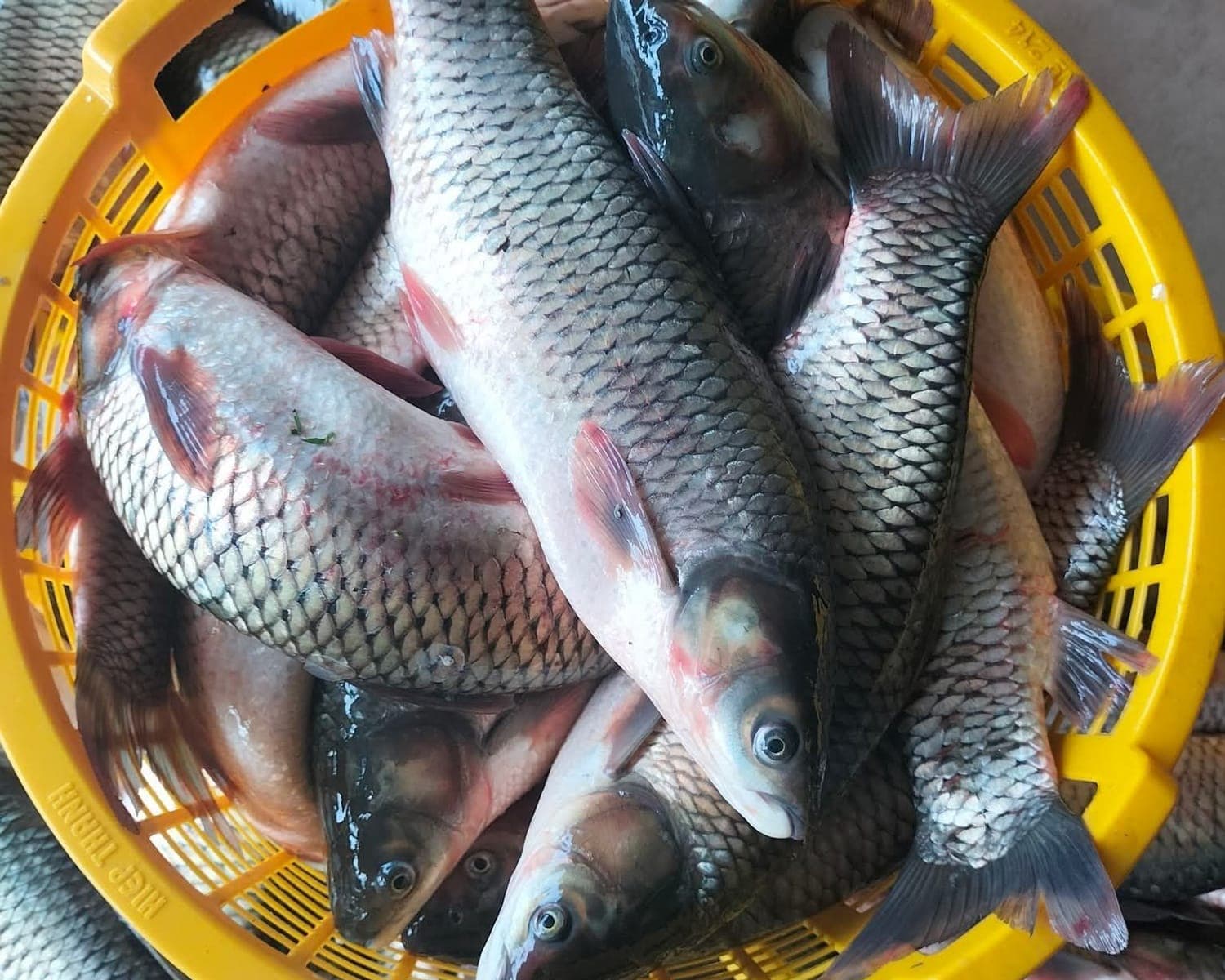
Side by side, the two are easy to separate. Catla is the heavyweight: a deep, broad fish whose large head takes up a striking share of its length, with a wide mouth that opens upward and long pectoral fins that reach back to the pelvic fins. The scales are large and grayish on the back, fading to a whitish belly. Rohu is slimmer and more streamlined, with a smaller head, a rounded snout and the mouth set lower. Its silvery scales are often tinged red at the center.
In steaks the difference shows in the cross-section: a catla steak is broader and deeper than a rohu steak from a fish of similar length, and the heads differ even more. Mrigal steaks are narrower again. Where whole fish arrive frozen with scales dulled, the head shape and mouth position remain the quickest guide. Catla’s huge head and upturned mouth recall the bighead carp, but catla carries conspicuously large scales where bighead’s are small, and its gray sides lack bighead’s dark blotches; our carp species guide covers common, grass, silver and bighead carp.
Where rohu and catla live and how they are farmed
Both species are native to the rivers of Pakistan, northern India, Nepal, Bangladesh and Myanmar, the great Indus, Ganges and Brahmaputra systems among them, and both have been introduced to reservoirs and farms well beyond that range. In the wild they spawn in flooded rivers during the southwest monsoon, and a single large rohu female can release more than two million eggs. Both species first mature at around two years of age.
In still ponds the fish do not breed on their own, so farms rely on hatcheries that induce spawning with hormone injections and raise fry for sale. Grow-out is mostly in earthen ponds, from village ponds in Bengal and Bangladesh to large commercial farms, and the classic stocking mixes catla, rohu and mrigal, often with Chinese carps such as silver, grass and common carp added to use the remaining food. India and Bangladesh are the largest producers, and Myanmar and Pakistan also farm the fish in quantity.
Because ponds are harvested in rotation and often partly, by netting out the larger fish and leaving the rest to grow, fresh supply runs through the year. Demand is not as even. In Bengal and Bangladesh, fish is central to festivals and family occasions, and the wedding gifts sent from the groom’s family to the bride’s traditionally include a large whole rui, often dressed up as a bride. Size matters to buyers as well, because only the biggest fish supply the large heads and wide steaks that some dishes call for.
Forms of rohu and catla in trade
In producing countries rohu and catla are sold mostly fresh, whole and on ice, and the fishmonger scales and cuts each fish to order. Export trade turns that service into frozen products that match the home cut:
- Whole round fish, scale-on, for buyers who want to judge the fish by its scales and cut it themselves.
- Gutted fish, scaled or scale-on, for shops and restaurants that cut steaks on site.
- Steaks, cross-cut through scaled, gutted fish in the style of the home market, with the share of head and tail pieces agreed in advance.
- Heads, catla above all, for fish-head rice and lentil dishes.
Bengali cooks also prize the roe of ripe females, which they mix with onion and spices and fry as fritters (macher dimer bora). The product page explains our sizes, steak specifications and packing. Rohu and catla are frozen and shipped like other whole and cut fish, and can share a container with frozen carp from the same origin. Temperature records and claim evidence for frozen loads are covered in our reefer shipping and Incoterms guide.
How rohu and catla are cooked
Both have mild, slightly sweet white flesh with fine bones, and both are cooked mostly as bone-in steaks so the flesh holds together and the bones can be picked out at the table. Rohu is the everyday fish, finer in texture; catla is meatier, with the head treated as a delicacy. Recipes for the fish are old: a twelfth-century Sanskrit text, the Manasollasa, describes rohu marinated with asafoetida and salt, dipped in turmeric water and fried.
- Bengal and Bangladesh: macher jhol, a light, everyday curry with potato; kalia, a richer onion, ginger and garam masala gravy for guests; doi maach, cooked in yogurt; and steaks rubbed with turmeric and salt and fried crisp as maach bhaja.
- Fish-head dishes: muri ghonto, catla or rohu head cooked with fragrant rice, and macher matha diye dal, lentils enriched with a fried fish head.
- Odisha and Bihar: machha besara, fish cooked in a mustard paste (besara), in Odisha; in Bihar, rohu from the Mithila region is prized for its flavor, and in 2022 the state government announced plans to seek a geographical indication for it.
- Andhra Pradesh and Telangana: chepala pulusu, a tangy tamarind fish curry.
- Punjab and Pakistan: steaks coated in gram-flour batter with carom seed and chili and deep-fried.
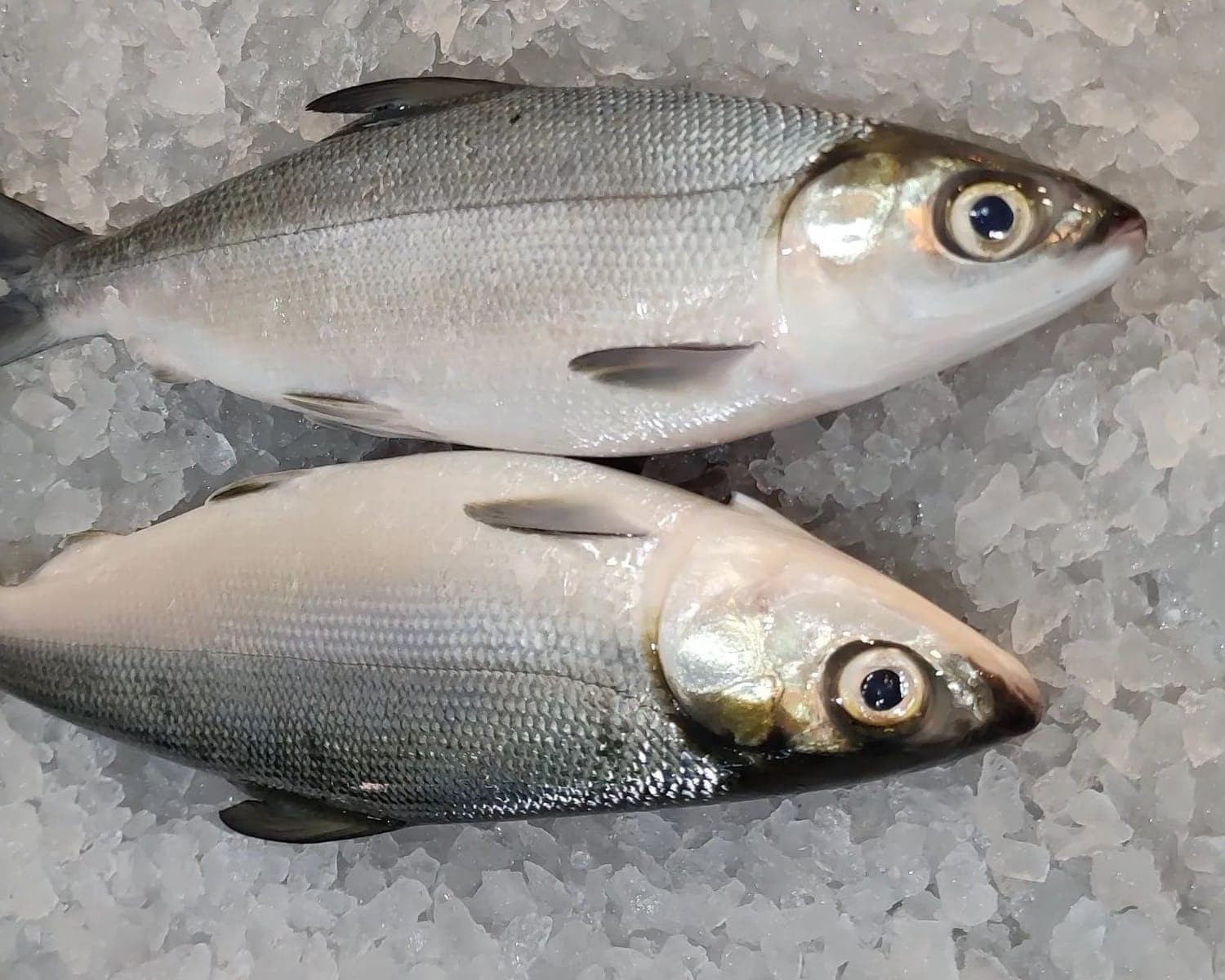
Cooks outside South Asia can treat rohu like other mild white freshwater fish, but the bones make whole steaks a better choice than fillets. Among other farmed fish, tilapia and pangasius come as mild boneless fillets, while milkfish has fine intermuscular bones like rohu, which its producers remove by hand to make boneless product.
Rohu and catla quality and import notes
South Asian buyers judge these fish closely. Whole fish should have shiny, tightly attached scales, a firm body that springs back when pressed, red gills and an intact belly. Steaks should be evenly cut, with firm flesh that does not flake apart on thawing and no muddy smell. A small piece fried with turmeric and salt is the simplest test of taste, because pond fish can carry an earthy note when farms skip holding them in clean water before harvest.
As farmed fish, rohu and catla must meet each importing market’s residue limits for veterinary drugs, and labels in markets such as the EU and UK must carry the scientific name, production method and country of origin. Farmed carp raised from fry fall outside the EU catch certificate scheme, though country and plant eligibility still apply. Rules change, so ask your broker to confirm the current position for your market. For a price on a mix of species, sizes and cuts in one container, request an offer for rohu and catla.
This guide is general trade information, not legal or regulatory advice. Requirements differ by market and change over time; confirm current rules with your customs broker or competent authority before ordering.