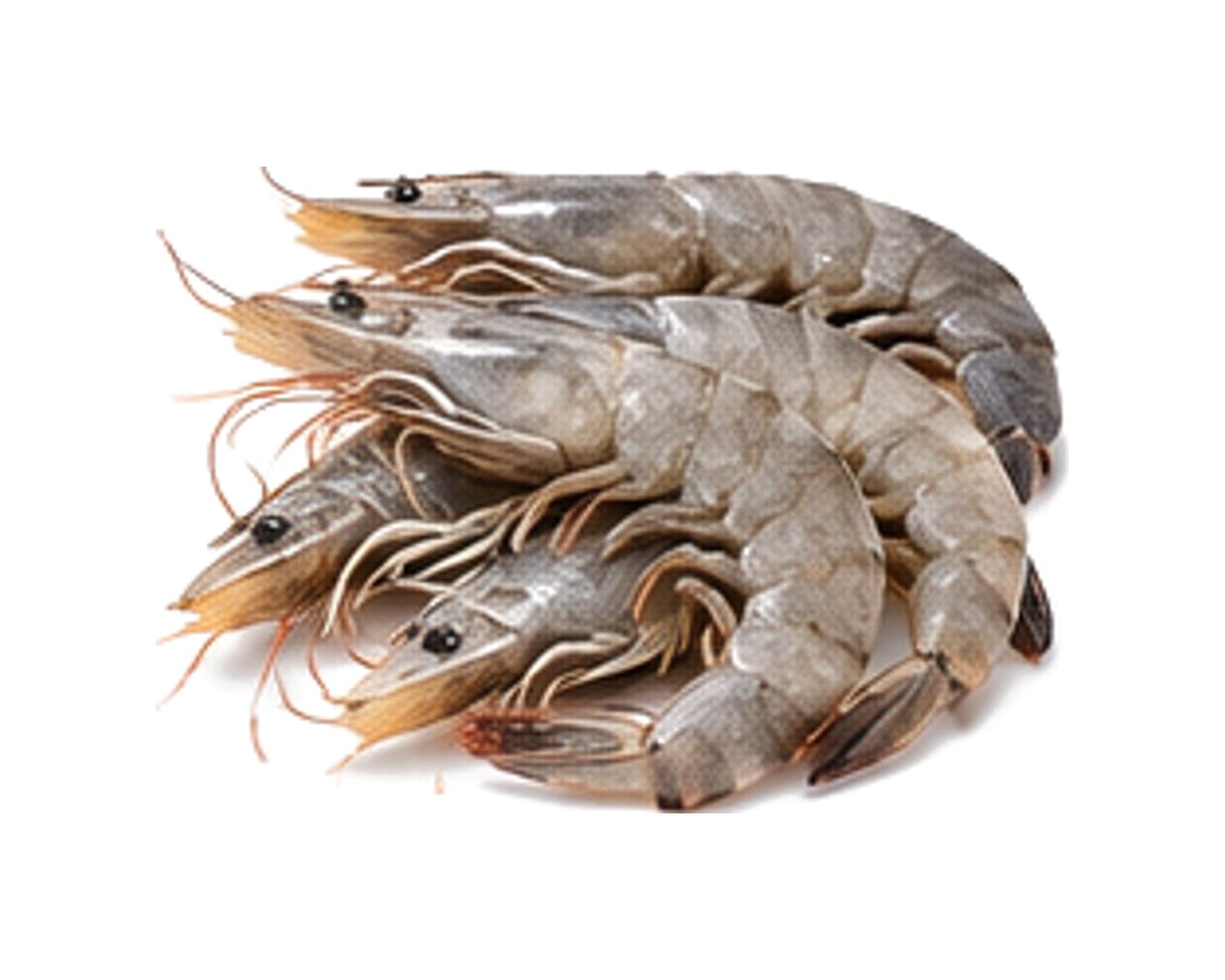
Frozen & Live Seafood
Large Shrimp and Prawns
Argentine red, black tiger and vannamei, by count per kg or lb
Frozen
Farmed giant freshwater prawn (Macrobrachium rosenbergii) from Thailand and partner origins in South and South-East Asia, supplied head-on, headless or peeled, IQF or block-frozen, with count, glaze and any sulfite treatment declared per lot.
Indicative; confirmed per lot on each quotation.
The giant freshwater prawn is the big-clawed river prawn of Thai, Bangladeshi, Indian and Malaysian cooking: grilled whole over charcoal, simmered in coconut curries or baked in a clay pot with glass noodles. It is a different animal from the marine shrimp that dominate the frozen trade, growing in fresh water and carrying a large head, long claws and a sweet, softer-textured tail. Buyers who know it order it by name, and the head-on prawn is a menu feature in its own right, which is why the head and claws need as much care in processing as the tail.
Macrobrachium rosenbergii is farmed in earthen ponds across South and South-East Asia. Thailand has a long-established farming sector that supplies both domestic buyers and export packers, and partner origins include Bangladesh, where the prawn is known as golda, India, Vietnam and Malaysia, while China is a large producer for its home market. Each offer gives the country and farm area. Trade names need care: in India the species is often sold as scampi, a word that UK and many European buyers reserve for Nephrops norvegicus, the langoustine, so labels and invoices carry the scientific name to keep the two apart.
Formats are head-on shell-on (HOSO), headless shell-on (HLSO) and peeled, either peeled and deveined (PD) or peeled undeveined (PUD), frozen IQF or in blocks. Head-on prawns are graded by pieces per kilogram, for example 6/8, 8/12, 13/15 and 16/20, with larger grades in limited supply, and headless and peeled product by count per pound or kilogram. Because the head and claws make up a large share of body weight, especially in mature blue-claw males, a headless or peeled count moves much further from the head-on grade it came from than it would in marine shrimp, and tail yield per kilogram of whole prawn is lower than for marine shrimp of similar size. Our guide to frozen shrimp count, glazing and net weight shows how these figures interact.
Freshwater prawns need fast handling. Digestive enzymes from the head can soften the tail meat if the prawns are not chilled and frozen promptly, giving the mushy texture buyers complain about, so packers are asked to ice-chill at harvest and freeze without delay. Lot checks, arranged on request, cover black spot and darkened heads, loose or dropped heads, broken claws and legs, soft shells from recent molting, an earthy or muddy taint, count accuracy and glaze. Any sulfite used against black spot is declared, and farmed lots can be tested for veterinary drug residues against your destination’s limits. For marine species in the larger counts, see large shrimp and prawns.
Specification sheet
Indicative values. Final specifications are confirmed per lot on the quotation and certificate of analysis.
| Species | Macrobrachium rosenbergii (giant freshwater or giant river prawn) |
|---|---|
| Origin | Pond-farmed in Thailand; Bangladesh, India, Vietnam, Malaysia as partner origins |
| Cuts | HOSO, HLSO, PD, PUD; raw |
| Head-on count | Typically 6/8, 8/12, 13/15, 16/20 pcs/kg; larger by availability |
| Freezing | IQF or block, with the prawn glaze stated as a share of gross weight |
| Additives | Sulfite treatment declared on the offer; untreated lots on request |
| Lot checks | On request: black spot, loose heads, broken claws, soft shell, earthy taint, texture |
| Residues | Per-lot veterinary drug residue testing on request, to destination limits |
| Shelf life | Commonly 18–24 months at -18 °C, per the packer’s label |
| Documents | Origin authority health certificate, certificate of origin, prawn residue reports where tested |
| Minimum order | From one pallet per grade, combinable with other frozen shellfish in a mixed reefer; full containers for regular programs. |
| Lead time | Usually 2–5 weeks from confirmed specification for Thai-farmed prawns; partner-origin lots and the largest head-on grades can take longer, depending on harvest timing. |
FAQ
The large head contains a digestive gland whose enzymes can migrate into the tail muscle and break it down if the prawns are not chilled and frozen quickly after harvest, or if frozen prawns are thawed and held too long. Once the defect has set in, it cannot be reversed. Packers are asked to chill prawns in ice slurry at the pond, process them the same day and freeze them promptly, and a thawed sample from the lot can be cooked and checked on request. In your own kitchen, thaw only what will be cooked that day.
They are not comparable. In this species the head and claws carry much of the weight, so removing them changes the count far more than it does for marine shrimp. A head-on grade such as 8/12 pieces per kilogram is a large, showy prawn, yet the same animals sold headless yield much less tail meat per piece than the head-on grade suggests. Specify the cut together with the count, and compare offers on the net weight of the format you will actually use.
Use the scientific name, Macrobrachium rosenbergii, together with the commercial name your market accepts, such as giant freshwater prawn or giant river prawn. Avoid ‘scampi’ on European labels: although the word is used for this species in Indian trade, UK and many EU buyers understand it to mean Nephrops norvegicus, and the difference matters under misleading-labeling rules. In the EU, labels also show the production method (farmed), the country of production, any sulfite above the declaration threshold and the net weight excluding glaze.
Some packers dip prawns in a sulfite solution to slow black spot, the darkening that starts at the head and shell joints after harvest. Where it is used, the treatment is stated on the offer, and residues above the destination’s threshold must appear on the label because some consumers react to sulfites. Untreated prawns depend more on fast freezing and an unbroken cold chain to stay clear of black spot. Testing for veterinary drug residues can be arranged per lot for markets that require it, with results tied to the lot code.
Related
Frozen & Live Seafood
Argentine red, black tiger and vannamei, by count per kg or lb
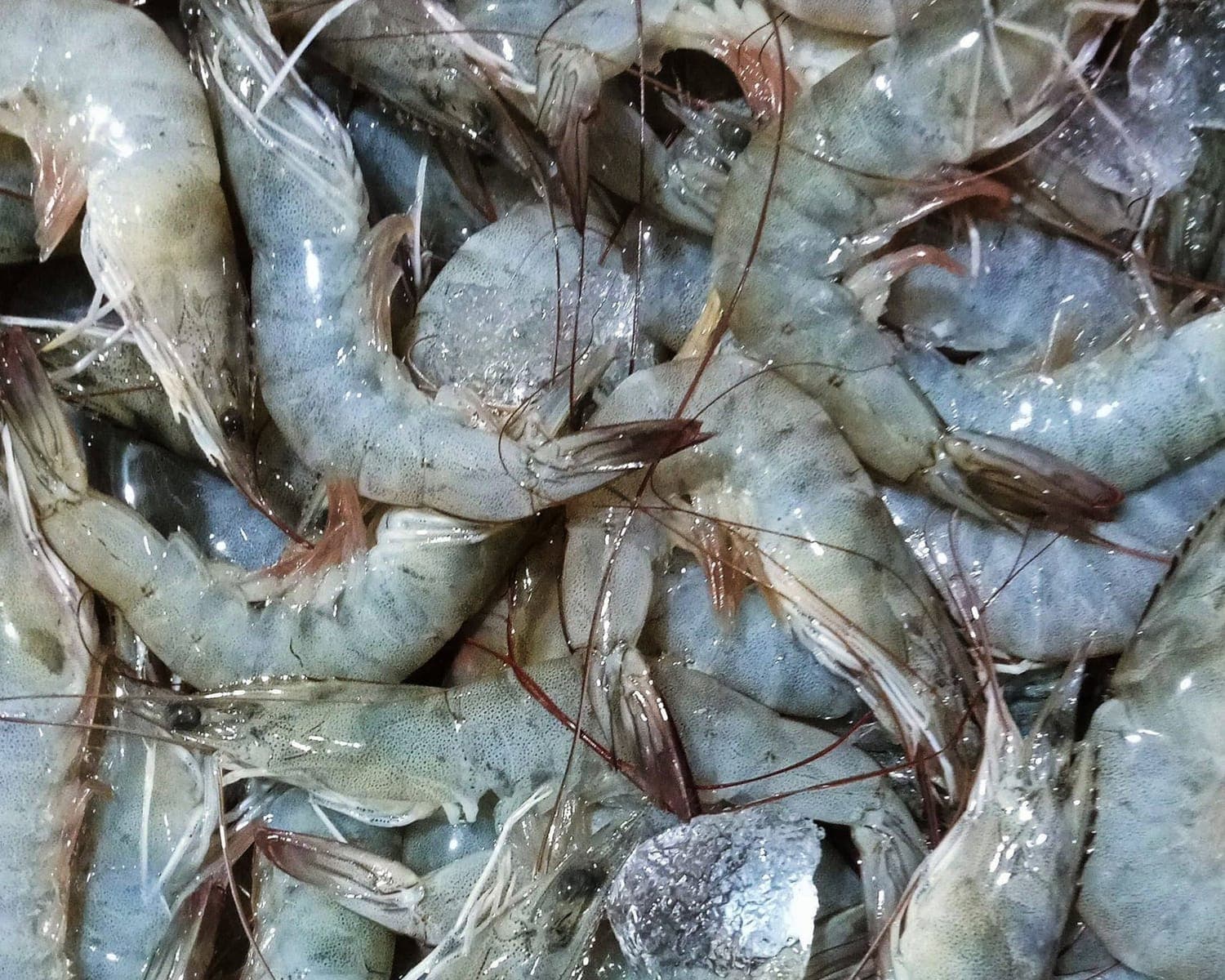
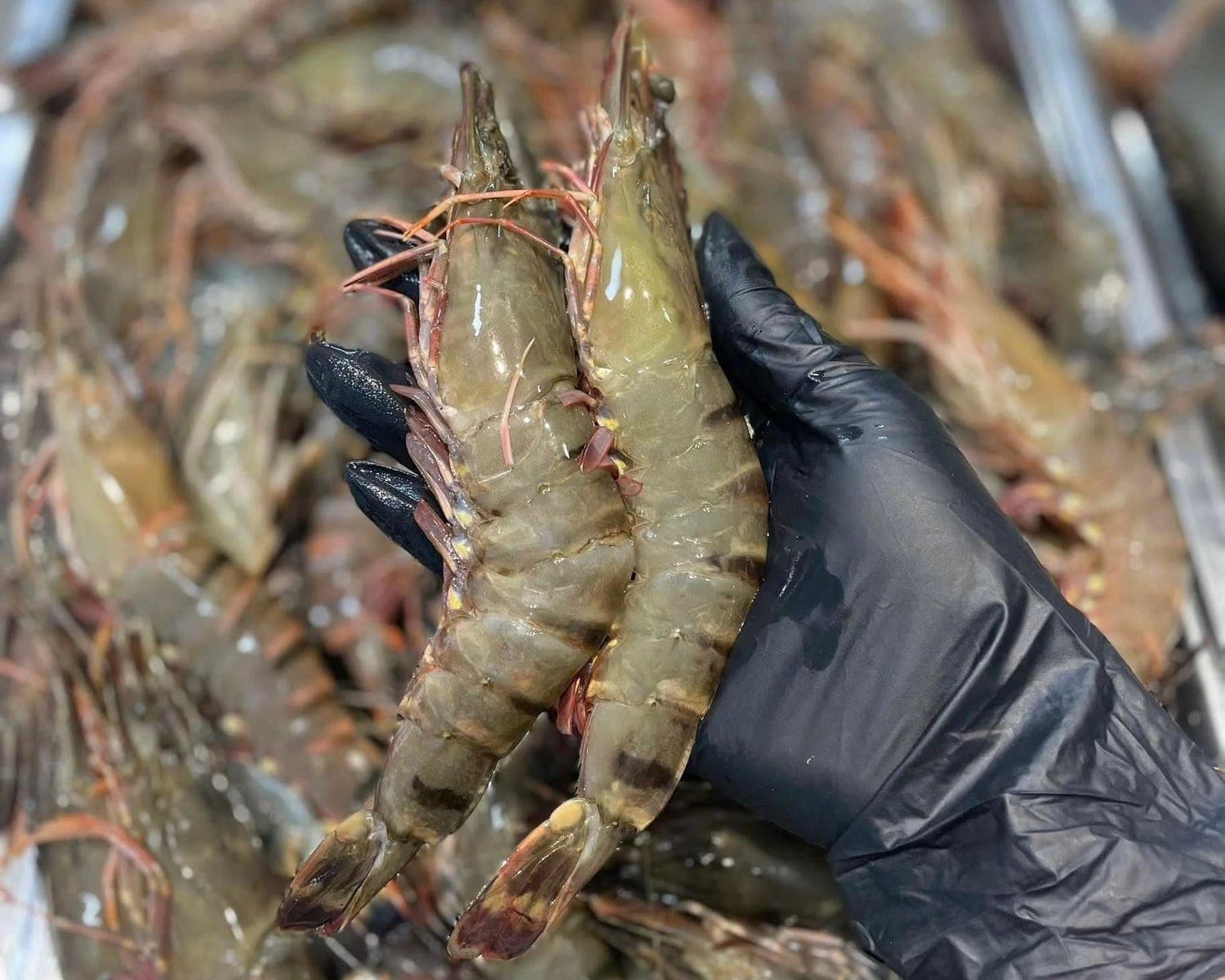
Species Profiles6 min read
A river prawn whose head can rival its tail in size and whose biggest males carry long blue claws. How the species lives, how Asia farms it, why handling matters and how Thai and Bengali kitchens cook it.
Read the guide
Buying Guide7 min read
How to specify and check frozen shrimp: species and cuts, count notation per pound or per kilogram, glaze and net weight, IQF and block formats, defects, treatment declarations and an arrival routine.
Read the guide
Import & Compliance8 min read
A logistics guide for seafood buyers: reefer and dry-container shipping, temperature records, air freight for chilled and live product, where Incoterms 2020 place cost and risk, and the evidence a claim needs.
Read the guideRequest a quote
Share your target grade, packing, volume and destination. We confirm availability, documentation for your market and a formal quotation, usually within one business day.