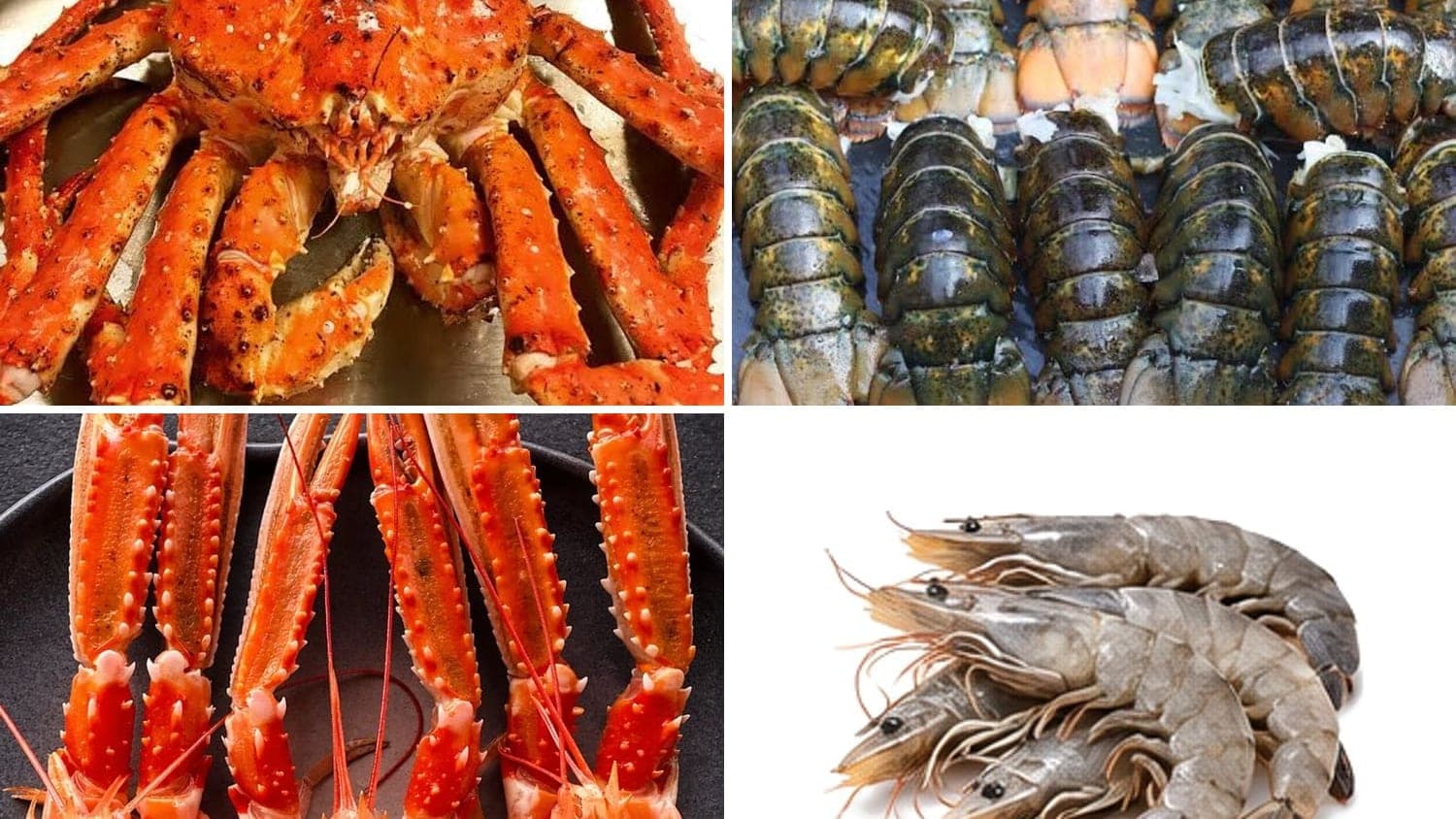
Lobster is one word on a menu for two quite different families. Clawed lobsters carry meat in heavy front claws as well as in the tail, while spiny and rock lobsters have no large claws at all and are bought for the tail. The two groups come from different oceans and fisheries, travel differently and go by names that mislead across languages. Our lobster page covers the live and frozen formats we source to order for both.
This profile covers the animals: the families and the main commercial species, how they live and grow, where they are fished and in which seasons, the names used in different markets, how kitchens cook clawed and spiny lobster, and the crustaceans most often mistaken for them, from langoustines to slipper lobsters.
Key takeaways
- Clawed lobsters (Homarus) carry meat in claws and tail; spiny and rock lobsters (Panulirus, Jasus, Palinurus) have no large claws and are sold mainly for the tail.
- American lobster ranges from Labrador to North Carolina, while spiny lobsters come from warm and temperate waters from the Caribbean to Australia, New Zealand and Japan.
- Homard, bogavante and astice mean clawed lobster; langouste, langosta and aragosta mean spiny lobster.
- Langoustines, slipper lobsters and freshwater crayfish are different animals and should be sold under their own names.
Clawed lobsters and spiny lobsters: two different families
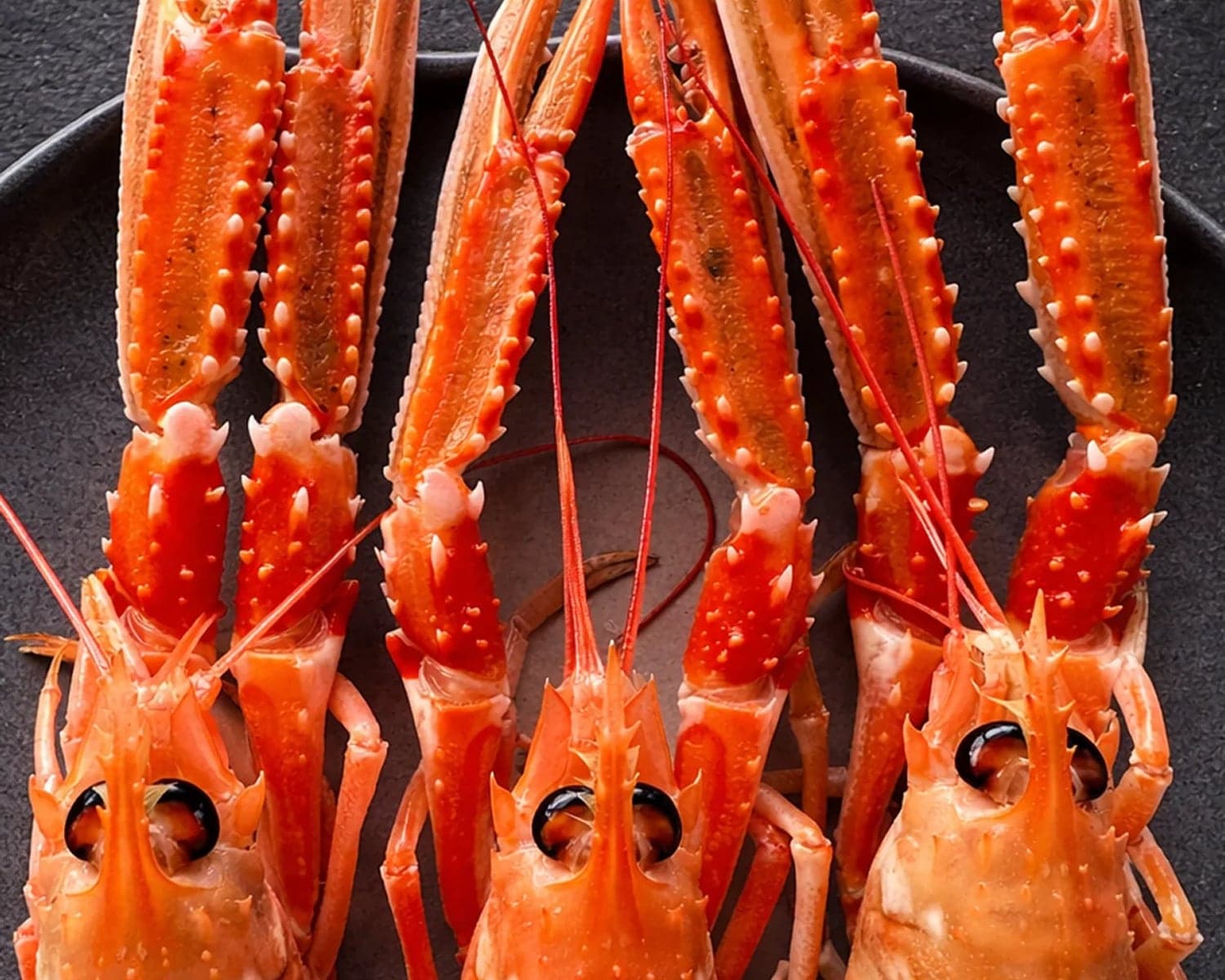
Clawed lobsters belong to the family Nephropidae, which also includes the langoustine. Their first pair of legs ends in large, unequal claws, a heavy crusher and a finer cutter, and their antennae are long and thin. The two big commercial species are the American lobster of the Northwest Atlantic and the European lobster of the Northeast Atlantic and Mediterranean, close relatives that look much alike apart from color.
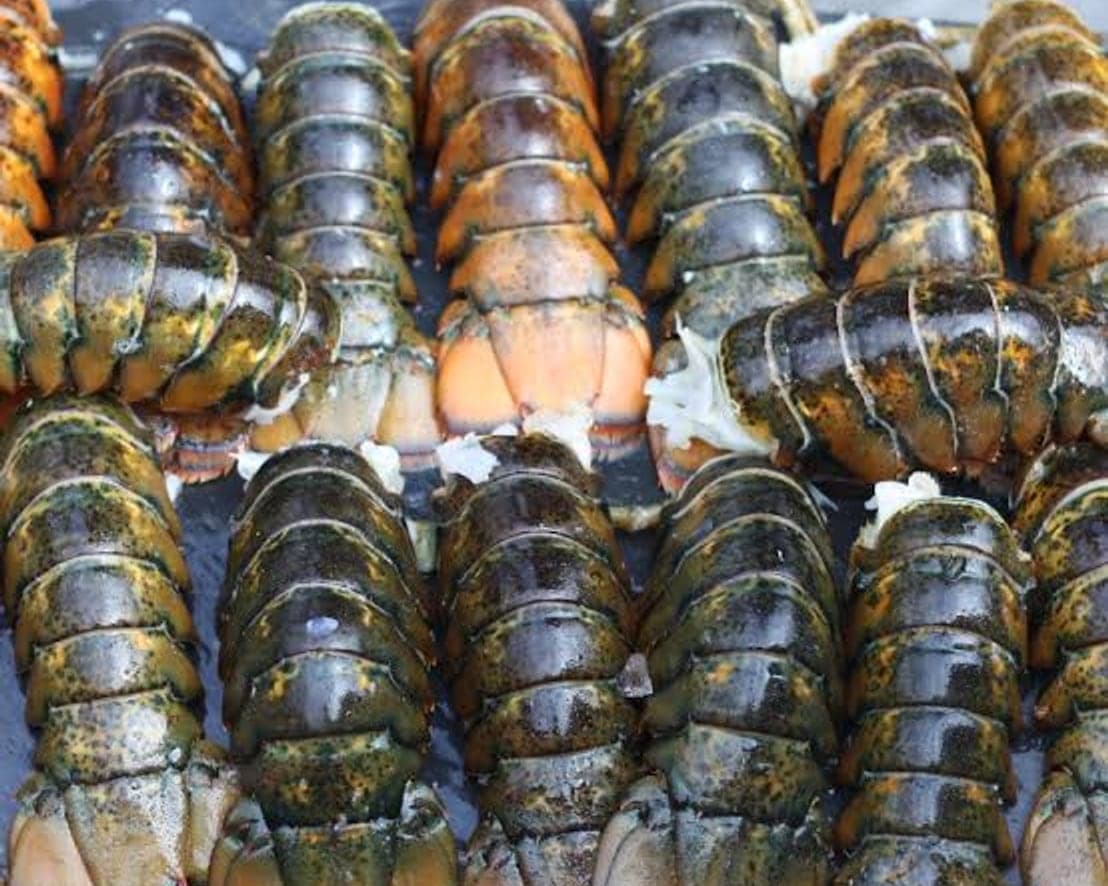
Spiny lobsters, family Palinuridae, have no large claws. Instead they carry a pair of long, thick, spiny antennae, and nearly all of their meat sits in the tail. In Australia and New Zealand the group is usually called rock lobster. A third family, the slipper lobsters (Scyllaridae), has neither claws nor long antennae; theirs are flattened into broad plates at the front of the head.
Chinese usage reflects the same divide. Chinese references describe the spiny lobsters as the true 龍蝦 and point out that the American lobster, sold as 波士頓龍蝦 (Boston lobster) or 緬因龍蝦 (Maine lobster), belongs to a different family despite the name.
The main lobster species in trade
| Species | Scientific name | Group | Where it lives | Notes |
|---|---|---|---|---|
| American lobster | Homarus americanus | Clawed | Northwest Atlantic from Labrador to Cape Hatteras, most abundant from Maine to New Jersey | Olive-green to greenish-brown alive, red when cooked; also called Maine lobster |
| European lobster | Homarus gammarus | Clawed | Eastern Atlantic, Mediterranean and Black Sea, usually shallower than 50 m | Dark blue before cooking; smaller volumes than American lobster |
| Caribbean spiny lobster | Panulirus argus | Spiny | North Carolina to Texas, Bermuda, the Caribbean and south to Brazil | Harvested mainly for tails; also called Florida lobster and, locally, crawfish |
| Western rock lobster | Panulirus cygnus | Spiny | Found only off Western Australia | Also listed as Australian spiny lobster |
| Southern rock lobster | Jasus edwardsii | Spiny | Rocky reefs of southern Australia and New Zealand, down to about 200 m | Called crayfish or koura in New Zealand and cray in Australia |
| Ornate spiny lobster | Panulirus ornatus | Spiny | Shallow Indo-West Pacific coasts, often near river mouths and reefs | A large tropical species, reaching about 50 cm in total length |
| Japanese spiny lobster | Panulirus japonicus | Spiny | Western Pacific coasts of Japan, Korea, Taiwan and China | Ise-ebi in Japanese; 日本龍蝦 in Chinese |
| Common spiny lobster | Palinurus elephas | Spiny | Northeast Atlantic from Scotland to the Canary Islands, and the Mediterranean | The classic langouste of French and Mediterranean menus |
Our sourcing covers American and European lobster, Panulirus spiny lobsters and southern rock lobster. The common spiny lobster of Europe is listed because it gives several European languages their word for spiny lobster in general.
How lobsters live and grow
Lobsters live on the seabed and grow by molting. NOAA notes that an American lobster molts some 20 to 25 times over five to eight years before it is mature and of legal size, that the largest recorded animals weighed around 20 kg (44 lb), and that some may live to about 100 years, though age is hard to measure. A female carries from 5,000 to more than 100,000 eggs under her tail for nine to eleven months. Most live American lobsters are olive-green or greenish-brown, and only cooking turns them red.
The European lobster is a nocturnal, territorial animal of rock crevices and hard bottoms, carrying its eggs for 10 to 11 months; SeaLifeBase records a maximum age of 72 years. Warm-water spiny lobsters grow quickly by comparison. Caribbean spiny lobster reaches harvest size in about two years, and its eggs hatch into larvae that drift in the open ocean, as do those of the western rock lobster, which spends around ten months as a drifting larva before settling on shallow reefs. Southern rock lobster lives in groups on rocky reefs and feeds at night.
Molting matters to buyers because a newly molted lobster has a thin shell and less meat, and it travels poorly. American lobster is sold as hard-shell or soft-shell for that reason, and the shipping and cold-chain guide covers the air routing that live lobster depends on.
Where lobster is fished and in which seasons
Most commercial lobster is wild-caught, mainly in baited traps, with divers taking spiny lobster in some warm-water fisheries. Most lobster fisheries combine minimum sizes with protection for egg-bearing females, and many add closed seasons:
- American lobster, United States: managed by the Atlantic coastal states in state waters and by NOAA Fisheries in federal waters, within the framework of the Atlantic States Marine Fisheries Commission, with minimum and maximum carapace sizes by area. Egg-bearing females must be released, and in most areas they are marked with a V-notch in the tail fan first. New England landings peak from May to November.
- American lobster, Canada: Fisheries and Oceans Canada manages the Atlantic fishing areas, which open at different times of year, so Canadian supply rotates through the calendar.
- European lobster: smaller trap fisheries along rocky coasts, with Britain, Ireland, Norway and France among the sources.
- Caribbean spiny lobster: in United States waters of the Gulf and South Atlantic the season is closed from 1 April to 5 August, and fresh product runs from August to March. Caribbean nations and Brazil run their own seasons.
- Australia and New Zealand: western and southern rock lobster fisheries, each managed with minimum legal sizes.
Import rules can reach back into these fisheries. The United States, for example, applies minimum sizes to imported Caribbean spiny lobster, prohibits imports of egg-bearing females or females stripped of eggs, and requires imported tail meat to be whole with the shell attached. Rules differ by destination, so check current requirements for the species and origin before contracting.
Lobster names by language and market
Most European languages keep separate words for clawed and spiny lobster, and confusing them is an easy translation error to make on menus and invoices.
- French: homard for clawed lobster (homard européen, homard américain); langouste for spiny lobster.
- Spanish: bogavante for clawed lobster; langosta for spiny lobster.
- Italian: astice for clawed lobster; aragosta for spiny lobster.
- Portuguese: lavagante for clawed lobster; lagosta for spiny lobster.
- English: lobster for both, with spiny lobster, rock lobster and, in Britain and Florida, crawfish for the clawless kind.
- New Zealand and Australia: crayfish, cray or, in Māori, koura for southern rock lobster.
- Japanese: ise-ebi for the Japanese spiny lobster.
So a Spanish langosta or French langouste is a spiny lobster, not the clawed animal an English speaker may picture, and “crayfish” means rock lobster in New Zealand but a freshwater crustacean in most other places. For the freshwater animal, see our crawfish page.
How lobster is cooked and served
NOAA describes both American lobster and Caribbean spiny lobster as mild and sweet; American lobster meat is firm and somewhat fibrous, and Caribbean spiny lobster meat is firm. Clawed lobster gives three kinds of meat, from the tail, claws and knuckles, which is why it is often served whole, while spiny lobster is mostly a tail product.
- Clawed lobster: steamed or boiled whole, split and grilled, served as lobster thermidor, the French dish of lobster meat in a rich sauce returned to the shell and browned, simmered into bisque from the shells, or packed into the lobster rolls of New England.
- Chinese kitchens: live lobster steamed, or cut and wok-fried.
- Spiny lobster: grilled or broiled tails, and, in some Asian markets, raw slices from live lobster.
- Processed formats: frozen tails for foodservice and retail, cooked claw and knuckle meat for rolls and salads, and raw whole lobster loosened from the shell by high-pressure processing for chefs who want to cook it their own way.
Live lobster should be kept cool and damp and cooked promptly, and all lobster should be cooked to the temperature your market’s food safety rules require. For matching species and format to a dish and a price point, see our guide to choosing premium seafood for restaurants and retail.
Lobster look-alikes: langoustine, slipper lobster and crayfish
- Langoustine (Nephrops norvegicus): a slim, pale orange member of the clawed lobster family from the Northeast Atlantic and the Mediterranean, also sold as Norway lobster. It is much smaller and sold mainly whole or as tails; see our langoustine page and the langoustine species guide.
- Slipper lobsters (Scyllaridae): clawless, with flat, plate-like antennae, sold in Australia as Moreton Bay and Balmain bugs. They are valued in their own right but should be sold under their own name, not as lobster tails.
- Freshwater crayfish: smaller relatives from rivers, lakes and farm ponds, such as the red swamp crawfish, Procambarus clarkii, sold whole cooked or as tail meat.
- Rock lobster versus spiny lobster: not a look-alike but a naming point; the two terms describe the same family, Palinuridae.
For live programs, routing and holding facilities decide what is possible as much as the species does. To check what a season can offer, share the species, size and delivery airport you have in mind.
This guide is general trade information, not legal or regulatory advice. Requirements differ by market and change over time; confirm current rules with your customs broker or competent authority before ordering.