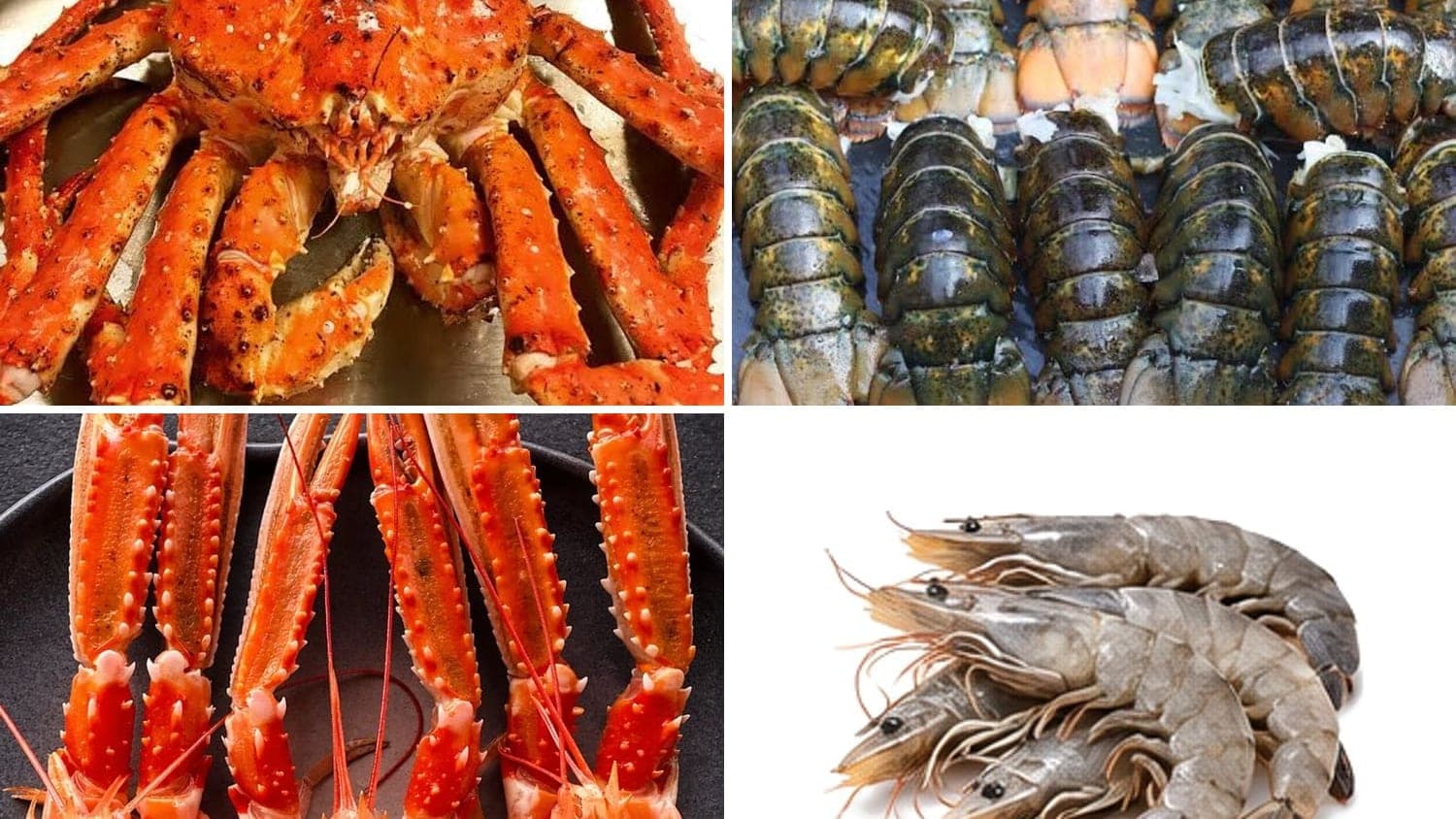
Snow crab is one of the most widely traded cold-water crabs, the animal behind the clusters on buffet counters, in crab boils and in retail freezer cabinets. Its scientific name, Chionoecetes opilio, gives the trade its shorthand, opilio, and separates it from the larger bairdi or tanner crab and from the deep-water red snow crab, which are different species. Our snow crab page describes the opilio and bairdi formats and grades we source to order.
This profile is about the animal: its biology and the unusual way it stops growing, the names it carries in Canada, Japan, Korea and elsewhere, where it is fished and in which months, how kitchens use it, and how to tell it from its relatives. Clusters, size bands, meat fill and catch documents are covered in our king crab and snow crab buyer’s guide.
Key takeaways
- Snow crab (Chionoecetes opilio) is a true crab of the spider crab superfamily, living in near-freezing water across the North Pacific, Arctic and Northwest Atlantic.
- It stops growing at a terminal molt and females stay small, so fisheries land males only, in Canada from 95 mm shell width.
- Queen crab, crabe des neiges, zuwai-gani, matsuba-gani and daege all refer to the same species.
- Bairdi (tanner) and red snow crab (C. japonicus) are separate species and should be labeled under their own names.
What snow crab is: a cold-water relative of the spider crabs
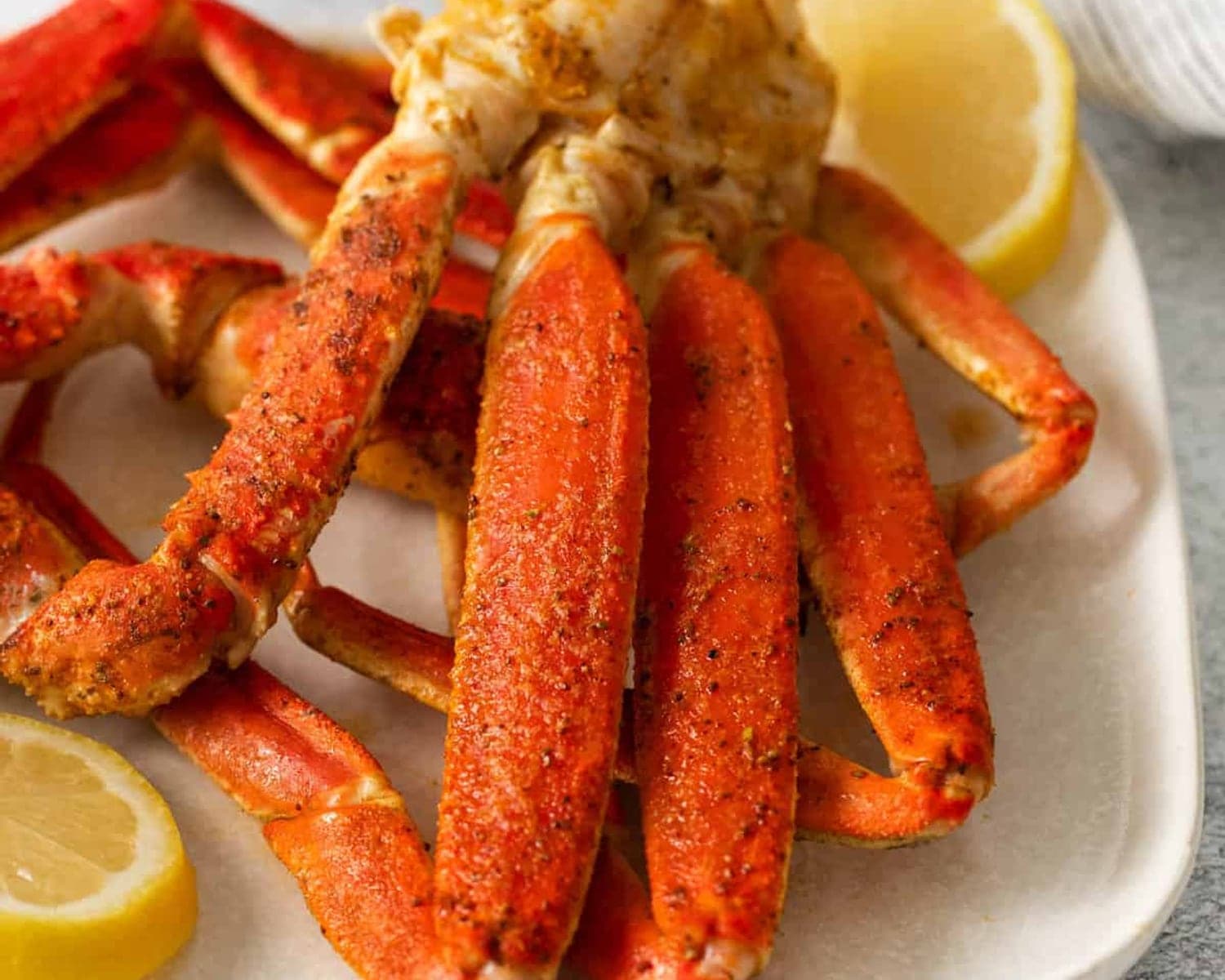
Snow crab is a true crab, in the infraorder Brachyura, and belongs to the spider crab superfamily Majoidea, in the family Oregoniidae. Behind a pair of fairly slender claws it carries four pairs of long walking legs, the source of the leg meat that defines the product. The World Register of Marine Species lists English names such as Atlantic snow crab, queen crab and opilio tanner crab for it.
It is very much a cold-water animal. SeaLifeBase records it on fine mud, sand and gravel from a few meters down to about 1,400 m, usually between 100 and 300 m, and Fisheries and Oceans Canada notes that it prefers water colder than 3 °C. Its range covers the North Pacific, including the Sea of Japan, the Bering, Chukchi and Beaufort seas off Alaska, and the Northwest Atlantic from Greenland and Labrador to the Gulf of St. Lawrence and Nova Scotia.
In the 1990s the species turned up in the eastern Barents Sea, first recorded on the Goose Bank in 1996, and it has since spread west toward Norwegian and Svalbard waters. Norwegian vessels were fishing it commercially by 2013, which is why Norway now appears among snow crab origins alongside Canada, Alaska and Greenland.
Snow crab biology: the terminal molt and male-only fisheries
Snow crabs grow by molting, but unlike king crabs or lobsters they stop at maturity. Females make a final molt when they develop the wider abdomen used to carry eggs, which happens below about 95 mm of shell width. Males stop growing at a last molt that gives them large claws, and Fisheries and Oceans Canada records mature males anywhere between about 40 and 150 mm across. A crab that matures small stays small for the rest of a life that NOAA puts at up to about 20 years.
The size gap between the sexes shapes every fishery. Alaskan males reach about 15 cm (6 in) across the shell while females seldom exceed about 7.5 cm (3 in), so commercial fishing lands males only. Canadian fisheries land males of at least 95 mm carapace width and target hard-shelled crab, and in the Bering Sea males must meet a minimum size set under Alaska’s crab management.
A recently molted crab keeps a soft shell for months, carries little meat and is not the fishery’s target. In Atlantic Canada, fishing grids are closed during the season when soft-shelled crabs show up in catches in high numbers. Molting is also one reason meat fill varies between landings and through a season, and the buyer’s guide shows how to check fill on a thawed sample.
Snow crab names in different markets
Snow crab travels under many names, and several of them are regional brands for the same species rather than different animals.
| Market or language | Name used | Notes |
|---|---|---|
| North American trade | Snow crab; queen crab | Queen crab has long been used in eastern Canada and appears on some labels |
| Alaska | Opilio | Trade shorthand that separates it from bairdi |
| French (Canada and France) | Crabe des neiges | Standard French name |
| Spanish | Cangrejo de las nieves | Standard Spanish name |
| Norwegian | Snøkrabbe | Used for the Barents Sea catch |
| Japan | Zuwai-gani | Mature males carry regional brands: matsuba-gani in the San’in region, echizen-gani in Fukui and taiza-gani in Kyoto’s Tango area |
| Korea | Daege (대게) | Closely tied to the east coast ports of Yeongdeok and Uljin |
| Chinese trade | 雪蟹 | Literally “snow crab” |
Marketing also applies “snow crab” to other members of the genus Chionoecetes, so the scientific name should travel with the trade name on offers, cartons and labels.
Where snow crab is fished and when
All commercial snow crab is wild-caught, mostly with baited pots, though some Asian fisheries also use bottom trawls. Seasons are set around molting and mating and, in some areas, around whale protection, so each region keeps a recognizable calendar:
- Atlantic Canada: in the southern Gulf of St. Lawrence, fishing generally starts in April or May as soon as the ice clears and runs into early summer. Newfoundland and Labrador, Nova Scotia and the other Gulf areas set their own seasons, and fishing grids can close at short notice when North Atlantic right whales are sighted.
- Eastern Bering Sea, Alaska: the season opens in mid-October, but most of the catch has traditionally been landed between January and April. After the stock collapsed following a marine heat wave, the fishery was closed for the 2022/23 and 2023/24 seasons and reopened in October 2024 on a small quota under a rebuilding plan; each season’s quota since then has been set from that year’s survey.
- Greenland and Norway: Greenland fisheries and, since the early 2010s, Norwegian vessels working the Barents Sea.
- Japan: the Sea of Japan season opens in early November, and branded males such as matsuba-gani are on sale from November to March.
- Korea: east coast ports such as Yeongdeok and Uljin land daege through the colder months.
Quotas in every region are reset from surveys, and the Bering Sea collapse showed how quickly a large stock can change. Most snow crab is cooked and frozen soon after landing and then crosses oceans in reefer containers, so our guide to shipping seafood by reefer is worth reading before a first container program.
Bairdi, red snow crab and other look-alikes
The genus Chionoecetes contains seven species, all loosely known as snow or tanner crabs. Three are easily confused in trade:
- Bairdi or tanner crab (C. bairdi): a larger North Pacific species, heavier in the cluster and thicker in the leg. Where its range overlaps opilio in the Bering Sea the two interbreed, and Alaskan rules classify a hybrid by appearance, as bairdi if it fits that description and as opilio if it does not. Bering Sea bairdi openings depend on each year’s survey, so the quota can change sharply from one season to the next.
- Red snow crab (C. japonicus): a deep-water species of the Northwest Pacific, mainly the Sea of Japan, recorded from about 120 to 2,700 m and usually found between 1,000 and 1,500 m; in Japan it is sold as beni-zuwai-gani. Korean fisheries researchers identify the red crab of the East Sea, hongge, as this species. It should be labeled as red snow crab, never simply as snow crab.
- Kasumi-gani: a Japanese regional brand that refers to red snow crab, not to opilio, so it should not be read as another name for zuwai-gani.
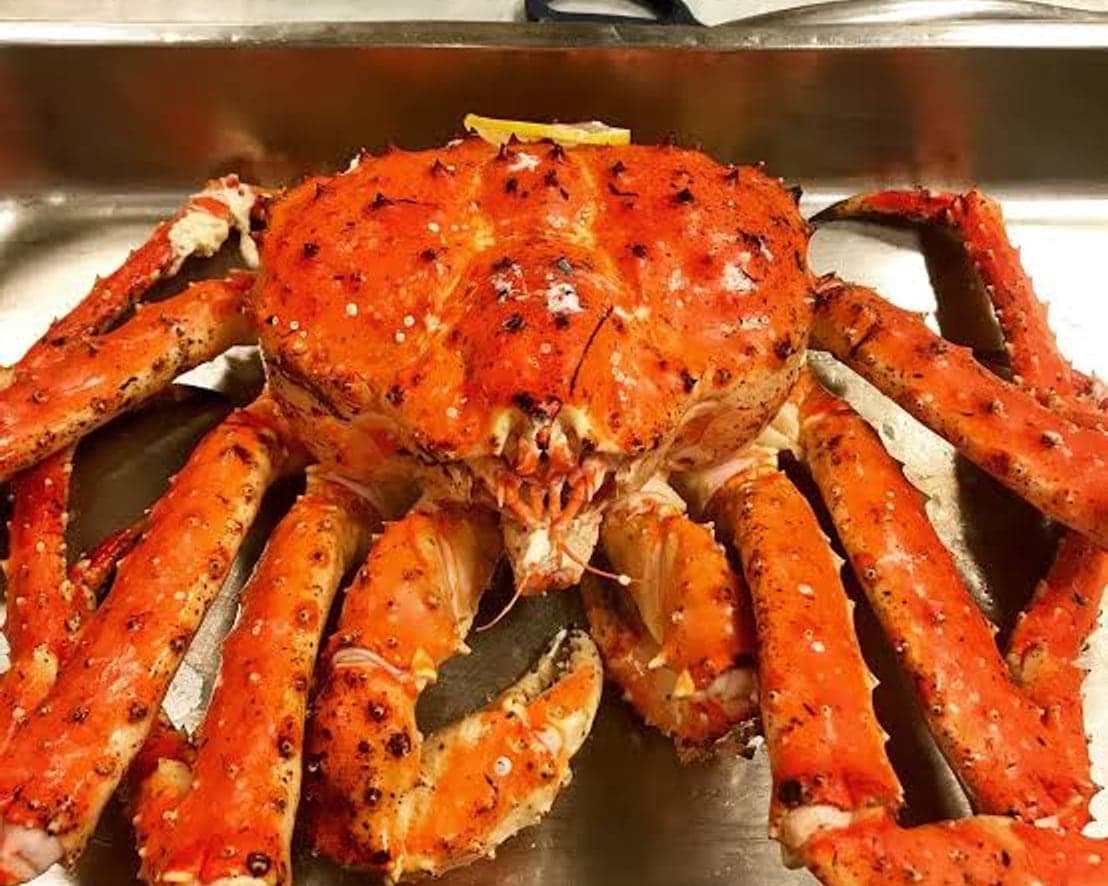
Outside the genus, snow crab is most often set beside king crab, a heavier anomuran with only three visible pairs of walking legs; our king crab species guide explains the difference.
How snow crab is eaten
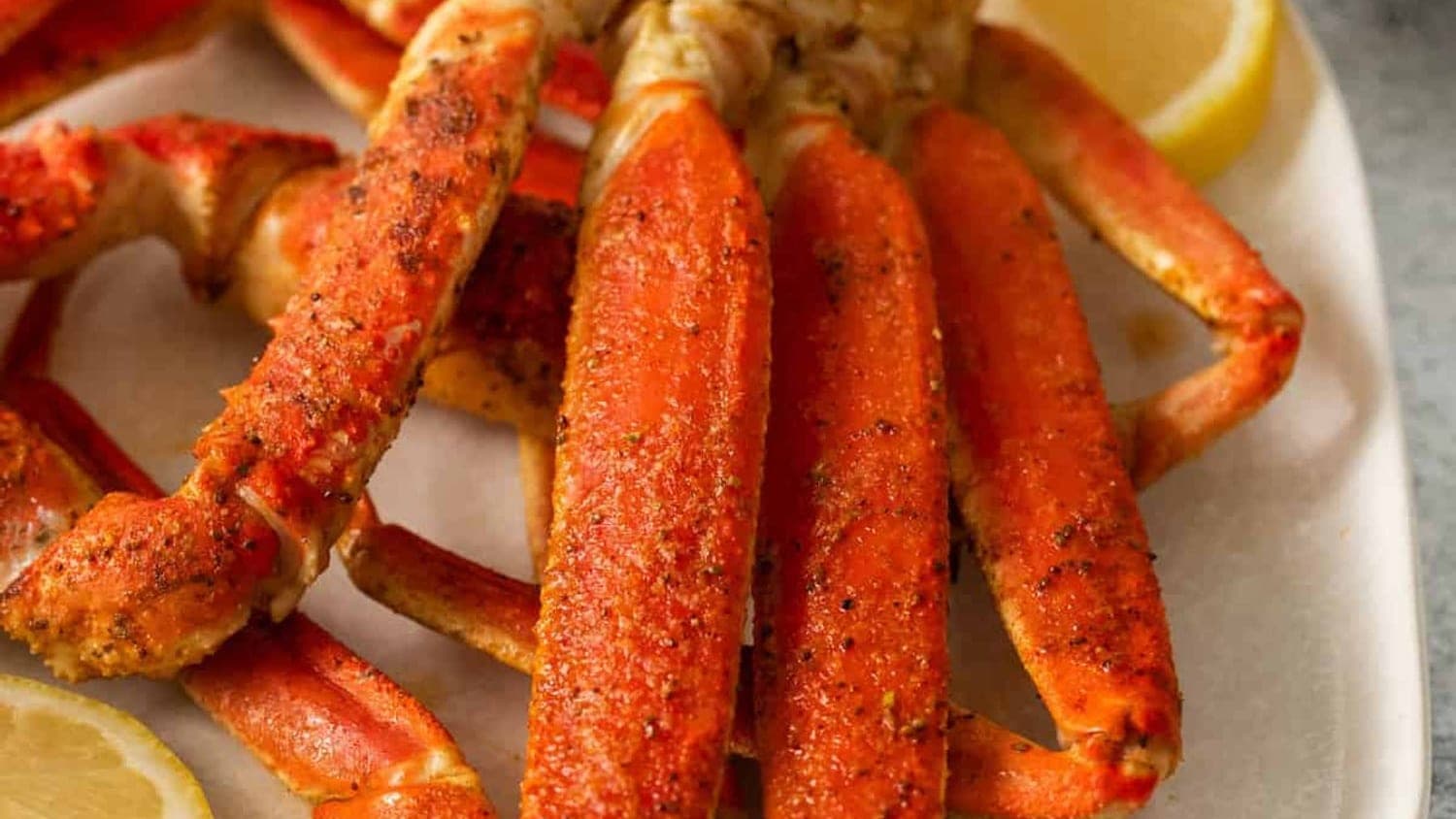
Snow crab meat is sweet and delicate, with a flaky, fibrous texture, and the long leg sections yield clean pieces that slide out of a cracked shell. Most export product is cooked in brine and frozen as clusters, so service is a matter of thawing and warming.
- North America: steamed clusters with butter in seafood restaurants and on buffets, spiced crab boils, chilled legs with cocktail sauce, and leg meat in crab cakes, salads and dips.
- Japan: whole branded males boiled in winter, crab hot pot (nabe) and leg meat for sushi.
- Korea: whole daege steamed at coastal restaurants, with fried rice served in the emptied shell.
- China and Southeast Asia: clusters for hot pot, seafood platters and buffet counters.
The thin legs that make snow crab easy to eat also make it easy to overcook: a few minutes of steam is usually enough for cooked clusters, and longer heating dries the meat. To plan a seasonal program around a particular origin and grade, ask us which snow crab fisheries are open for your delivery window.
This guide is general trade information, not legal or regulatory advice. Requirements differ by market and change over time; confirm current rules with your customs broker or competent authority before ordering.