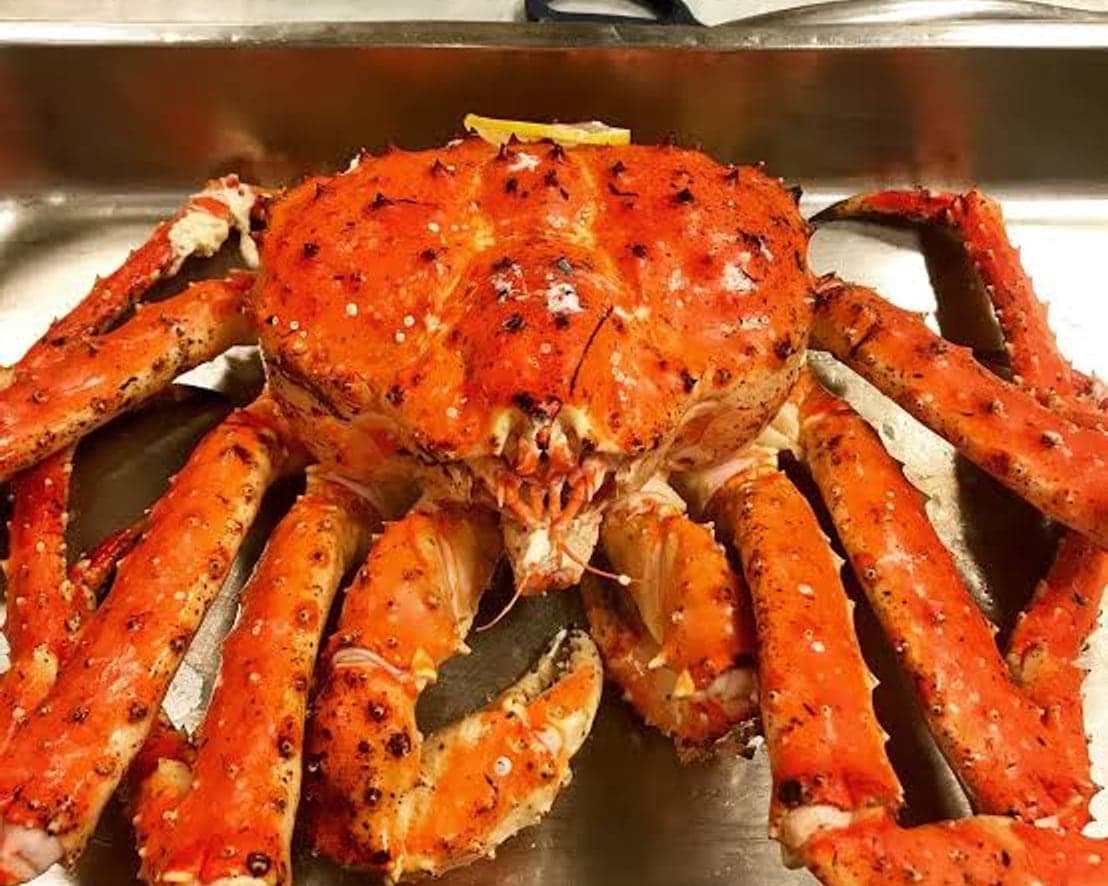
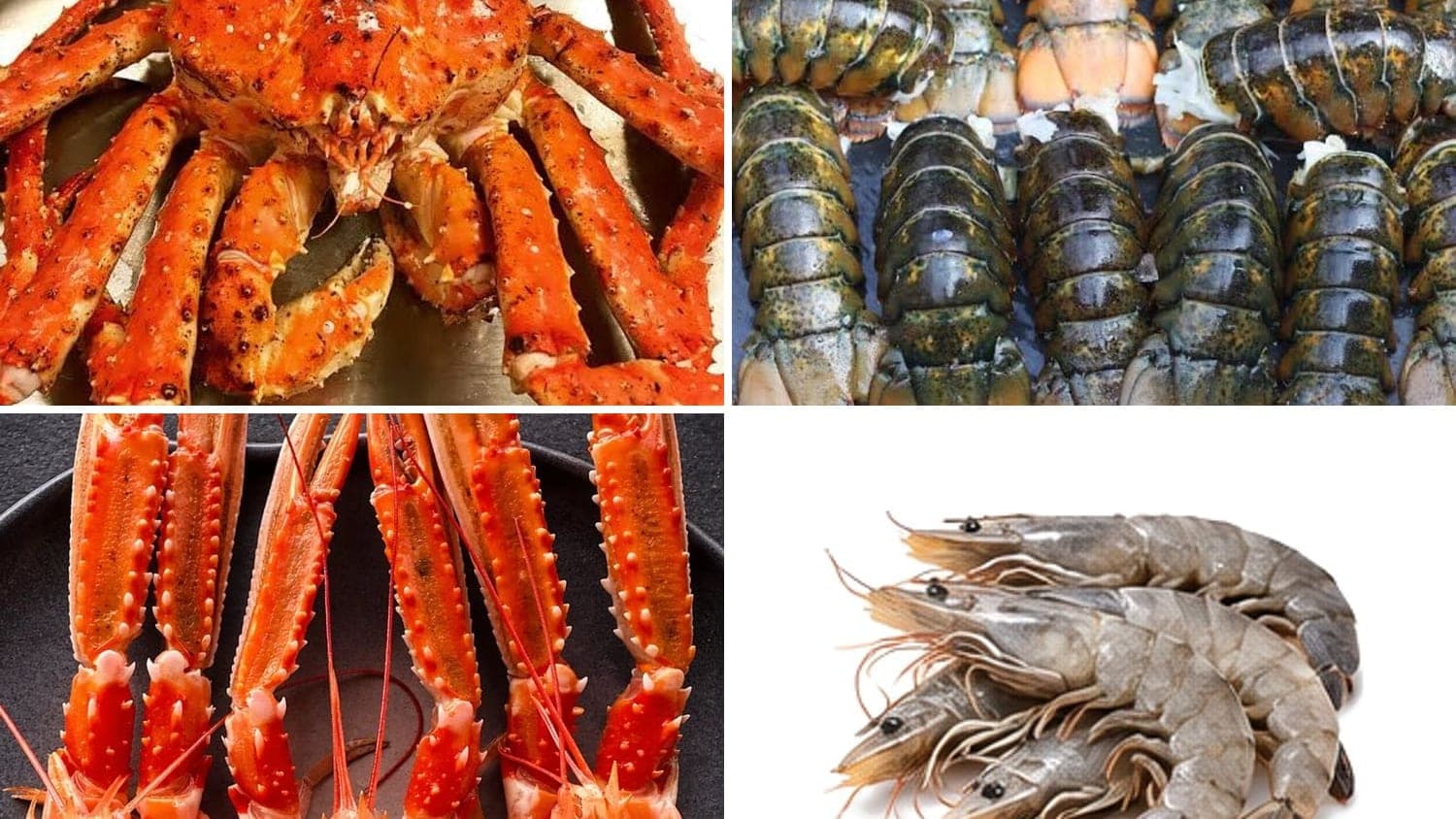
King crab is the giant of the crab trade, bought for legs that can span well over a meter on a large red male. The name, though, covers several species from different oceans and depths, each with its own size, shell color, meat yield and fishing calendar, and a menu or carton that says only “king crab” leaves those differences unstated. Our king crab page sets out the species, formats and grades we source to order; this profile is about the animals themselves.
We look at what separates king crabs from true crabs, the species that matter commercially, how red king crab grows and how it came to live in European waters, where and when the main fisheries operate, how kitchens serve it, and the crabs most often confused with it. Grading, glaze, meat fill and catch documents are covered in our king crab and snow crab buyer’s guide, so they appear here only in passing.
Key takeaways
- King crabs are anomurans related to hermit crabs: claws plus three pairs of walking legs, with a fifth pair hidden under the shell.
- Red king crab is the largest species; golden is the smallest of the Alaskan three, blue is scarce, and southern king crab comes from Chile and Argentina.
- Barents Sea red king crab descends from a 1960s Soviet transfer and is the same species as Alaskan red king crab.
- Openings and quotas follow surveys and can change sharply between years, so confirm the open fisheries and the species on the carton before planning a menu.
What makes a king crab different from a true crab
King crabs make up the family Lithodidae, part of the Anomura, the group that also contains the hermit crabs. Their crab-like body evolved separately from that of the true crabs (Brachyura), and molecular studies place them close to hermit crab relatives. For a buyer this is more than a curiosity, because it explains the most reliable field mark: the number of legs you can see.
Viewed from above, a king crab shows a pair of claws and three pairs of walking legs, eight legs in all. The fifth pair is tiny and folded under the rear of the shell, inside the gill chamber, where it is used for cleaning rather than walking. A true crab such as snow crab, or the horsehair crab sold in Japan as kegani, shows four pairs of walking legs behind its claws. Japanese references make the same point about tarabagani, noting that it appears to have only eight legs where an ordinary crab shows ten, and grouping it with the hermit crabs.
The king crab species in commercial trade
The family contains many species, but a handful supply nearly all of the crab that reaches international buyers. The table lists them with the names you are likely to meet on offers and in the markets that buy them.
| Species | Scientific name | Other names | Where it is fished | How it differs |
|---|---|---|---|---|
| Red king crab | Paralithodes camtschaticus | Kamchatka crab; tarabagani (Japan) | North Pacific from Korean and Japanese waters to Alaska; an introduced stock in the Barents Sea | Largest of the group, with the thickest legs; burgundy alive, deep red once cooked |
| Blue king crab | Paralithodes platypus | Aburagani (Japan) | Scattered stocks off Hokkaido, in the Sea of Okhotsk, along Siberia and around Alaskan islands | Close to red in size and build, from small fisheries with irregular openings |
| Golden king crab | Lithodes aequispinus | Brown king crab | Deep slopes from Japan through the Aleutian Islands to British Columbia | Gold to orange shell, slimmer legs and a deeper habitat; the smallest of the three Alaskan species |
| Southern king crab | Lithodes santolla | Centolla; centolla patagónica | Southern Chile, including the Strait of Magellan and the Fuegian fjords, and Argentina | The South American counterpart of red king crab, recorded at up to about 8 kg |
| Hanasaki crab | Paralithodes brevipes | Hanasakigani (Japan) | Eastern Hokkaido, mainly around Cape Nosappu off Nemuro, and Russian waters to the north | A close relative of red king crab in the same genus, with short, thick legs; the name is usually traced to Hanasaki, a place name in Nemuro |
| Centollón | Paralomis granulosa | Softshell red crab | Southern Chile and Argentina, including the Beagle Channel, and the Falkland Islands | A smaller lithodid fished alongside centolla, to be sold under its own name |
Our own sourcing covers red, golden and blue king crab, with southern king crab on request; the others are listed because they turn up in market reports, menus and photographs.
Red king crab biology: size, growth and an Arctic transplant
Red king crab is the reference species for the whole family. Alaskan fishery biologists record males of up to about 11 kg (24 lb), with a shell up to about 28 cm and a leg span of around 1.5 m; females stay much smaller, at up to about 4.8 kg. The live animal is dark red to burgundy. It occurs from the shoreline down to about 180 m and deeper, with young crabs sheltering in shallow, complex habitat and adults feeding further out on the continental shelf.
Like every crustacean, it grows only by molting. Juveniles molt often in their first years and less often after that. Adult females must molt before they can mate, while adult males often skip a molt and keep the same shell for a year or two, which affects how full their legs are when they are caught. Crabs mature at around four to five years, females brood their eggs under the tail flap for about a year, and the largest individuals are thought to reach 20 to 30 years of age.
The species is native to the North Pacific, from Korean and Japanese waters past Kamchatka and through the Bering Sea to Alaska and British Columbia. Its European population is the result of a deliberate transfer. During the 1960s, Soviet scientists released larvae, juveniles and adult crabs from the Far East into bays on the Murmansk coast to start a new fishery, and the crabs later spread west along the coast into Norwegian waters.
Norway manages the crab on two tracks. East of 26°E, roughly the longitude of North Cape, catches are limited by quota, and Norway has also set a small separate quota for female crabs there, which is unusual among king crab fisheries. West of that line, fishing is left open to slow the crab’s spread along the coast. Barents Sea crab is the same species as Alaskan red king crab, so “Norwegian” and “Alaskan” on a carton describe the origin, not a different animal.
Where king crab is fished, and when
Commercial king crab is caught with baited pots set on the seabed, and most fisheries keep only males above a minimum size. Seasons are timed around molting and mating, and quotas are recalculated from surveys, so supply arrives in pulses rather than evenly through the year. The main sources:
- Alaska: Bristol Bay red king crab is generally landed between October and January, and that fishery stayed closed for the 2021/22 and 2022/23 seasons because surveys found too few mature females. Golden king crab is fished along the Aleutian chain in a long season that opens in August. The directed fishery for Pribilof Islands blue king crab was closed in 1999 as that stock declined, and the St. Matthew Island stock has also spent long periods closed.
- Norway: red king crab from the Finnmark coast of the Barents Sea, under the two-zone system described above.
- Russian Far East: large red king crab fisheries in the Sea of Okhotsk and around Kamchatka, supplying Asian markets with live and frozen crab.
- South America: southern king crab from Chilean Patagonia and from Argentina, where the fishery on the Argentine side of the Beagle Channel was closed in the 1990s after the stock collapsed.
- Japan: a small domestic catch, mainly in the Sea of Okhotsk off Hokkaido, and the regional Hanasaki crab from around Nemuro; Japan also imports king crab, including from Russia.
Origin also decides where a lot can be sold, because some importing markets restrict crab by where it was caught; our buyer’s guide covers those rules and the catch documents behind them. Frozen crab crosses oceans in reefer containers, and our guide to reefer shipping and cold-chain terms explains how temperature records and Incoterms protect a long voyage.
How king crab is cooked and served
King crab meat is white with a red-tinged surface and a rich, sweet flavor, and it comes away from the shell in large pieces. Most frozen king crab is cooked in brine at the plant, so kitchen work is usually reheating rather than cooking: legs are steamed, grilled or baked just long enough to warm through, or thawed and served cold.
- North American and European restaurants: split or whole legs with drawn butter and lemon, chilled legs on seafood towers, and shelled merus meat in salads, pasta and crab cocktails.
- Japan: whole crab boiled in salted water or steamed, shelled meat in vinegared dishes and sushi, and canned crab meat.
- Chinese cooking: meat in soups, egg dishes and fried rice, and live crab steamed to order where restaurants keep tanks.
Golden king crab, smaller and slimmer in the leg, suits buffets, mixed platters and dishes where the meat leaves the shell before serving; red king crab is the one bought for whole-leg presentation. When the decision is about cost per plate rather than species, our guide to choosing premium seafood for restaurants and retail works through the numbers.
King crab look-alikes and labeling pitfalls
Most confusion around king crab comes from three sources: related species priced differently, other crabs with similar legs, and products made to resemble crab meat.
- Golden sold as red: golden king crab is smaller, with slimmer legs and a gold to orange shell, and it trades at a lower price. A lot offered as red should be checked on leg thickness and on the scientific name printed on the carton.
- Blue mixed with red: after cooking, blue king crab looks much like red and is often packed with it. Where your labeling rules need the exact species, ask for the two to be declared separately; Japan, for example, does not allow aburagani, its name for blue king crab, to be sold as tarabagani.
- Centollón sold as centolla: in southern South America, Paralomis granulosa is fished alongside southern king crab. It is a different species and should carry its own name.
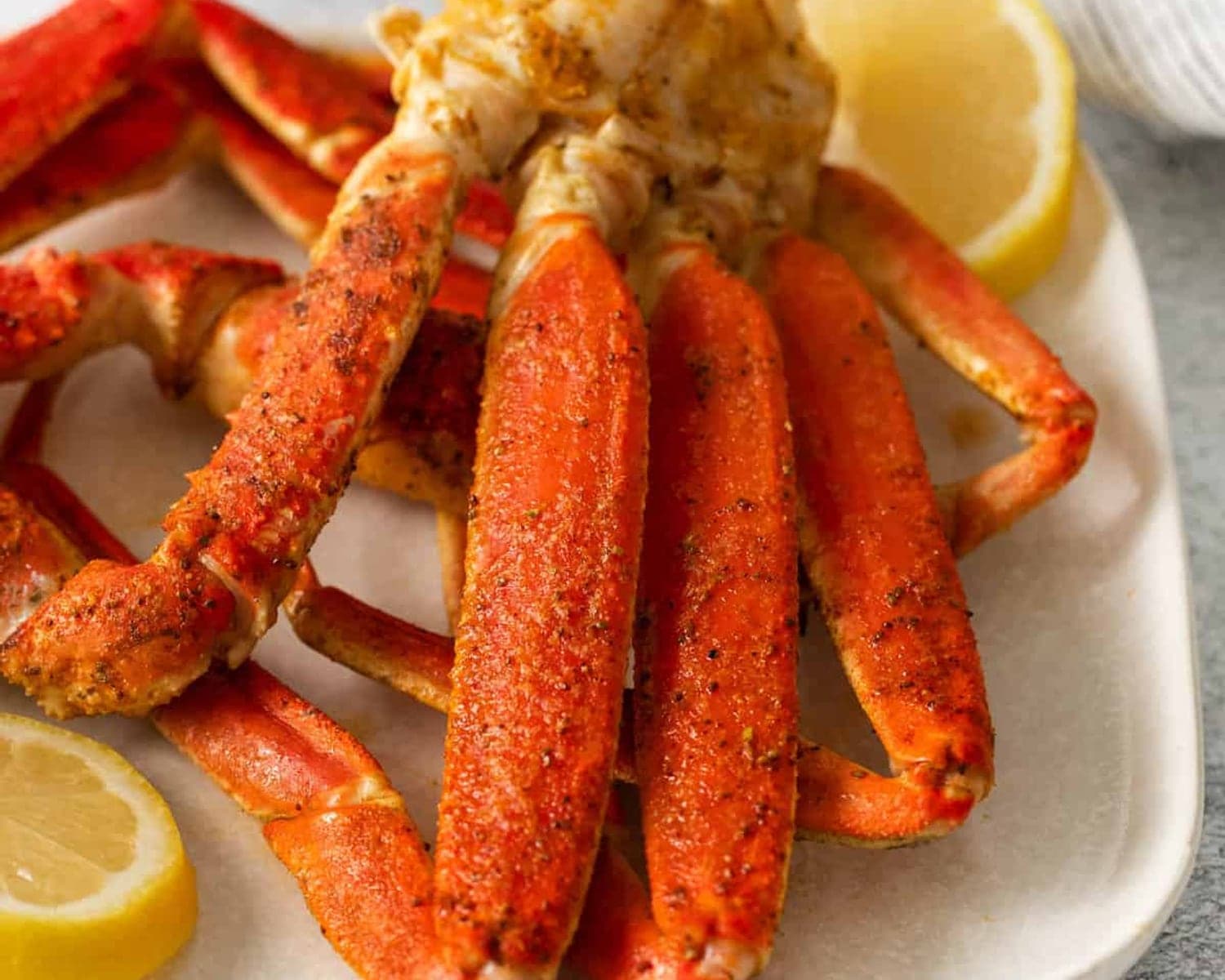
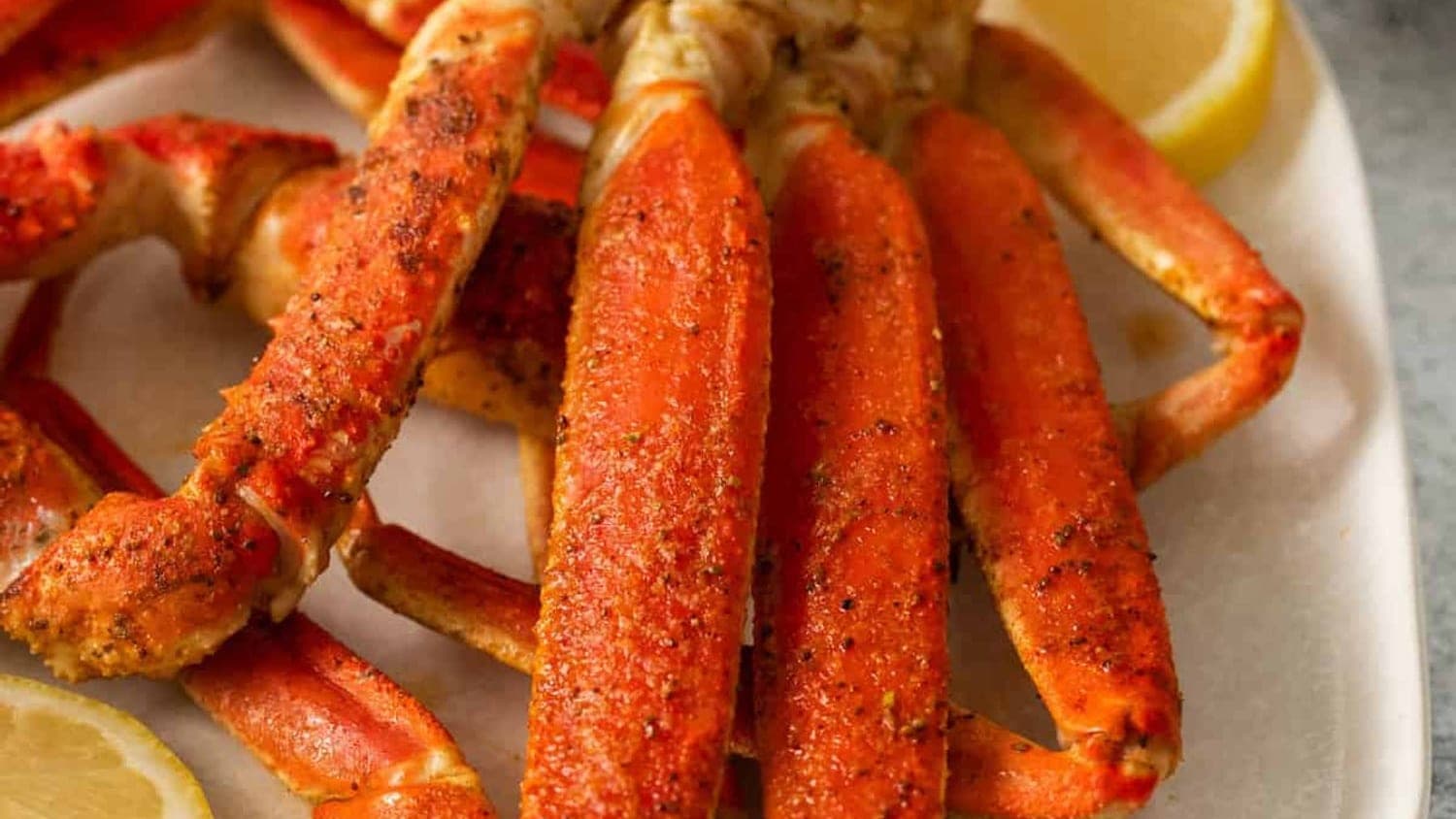
- Snow crab: a true crab with four pairs of long, slender walking legs and a thinner shell, holding far less meat per leg. Our snow crab species guide covers it in detail.
- Imitation crab: sticks and leg-style pieces made from fish surimi are shaped and colored to look like king crab meat. They are a legitimate product, sold as surimi crab sticks, but they must never be described as king crab.
Species, fishing area and the form of the crab are the three facts that settle most disputes. If you need a particular species or origin for a coming season, send us the dish, grade and volume and we will check which fisheries can supply it.
This guide is general trade information, not legal or regulatory advice. Requirements differ by market and change over time; confirm current rules with your customs broker or competent authority before ordering.