- Private-label packing
- Export documentation
Frozen & Live Seafood
Geoduck Clam: Live by Air and Frozen Siphon Meat, Sourced to Brief
BSA Food Products sources Pacific geoduck clam to a written brief, live by air where the destination accepts it and frozen as whole clam or siphon meat, graded by weight and siphon color with harvest-area test results referenced in the paperwork.
- Pacific geoduck, wild dive-caught or farmed
- Live by air where the route and import rules allow
- Graded by clam weight and siphon color
- Frozen whole clam, siphon meat and sashimi slices
- Harvest-area PSP results referenced per lot
- Mortality allowance agreed in writing for live orders
Product Specifications
Indicative; confirmed per lot on each quotation.
- Origin
- British Columbia, Washington State and Alaska for Pacific geoduck, with Mexican or New Zealand Panopea species offered separately on request; harvest tract or farm confirmed per lot.
- Grade / Size
- Live clams by individual weight band (roughly 0.5–1.5 kg, or pound equivalents) and by siphon grade from pale ivory to dark; frozen meat by piece weight or slice size.
- Form & Processing
- Live, held in clean seawater and packed cold and damp for air freight; or frozen as whole clam, skinned siphon meat or sliced siphon, with glaze declared.
- Storage
- Live geoduck kept cold and damp at the temperature advised by the harvester, away from fresh water, and used promptly or moved to chilled seawater holding; frozen product at -18 °C or colder and thawed in the refrigerator.
- MOQ
- Live geoduck by full air shipment on a confirmed route; frozen product typically from one pallet per format and grade.
- Lead Time
- Typically 2–4 weeks for a live consignment once the route and permits are set up, with a first shipment taking longer; frozen product 3–6 weeks.
Product overview
Geoduck is one of the largest burrowing clams in the world, a long-necked bivalve whose siphon is sliced thin for sashimi, blanched for hot pot or stir-fried with ginger and spring onion. Demand centers on Chinese, Japanese and Korean restaurants, where the live animal is often displayed before cooking. Supply is limited by dive-fishery quotas and farm harvest plans, so geoduck is one of the items covered by our request-only sourcing service and is never held in stock; each order is sourced against your brief and the harvest calendar.
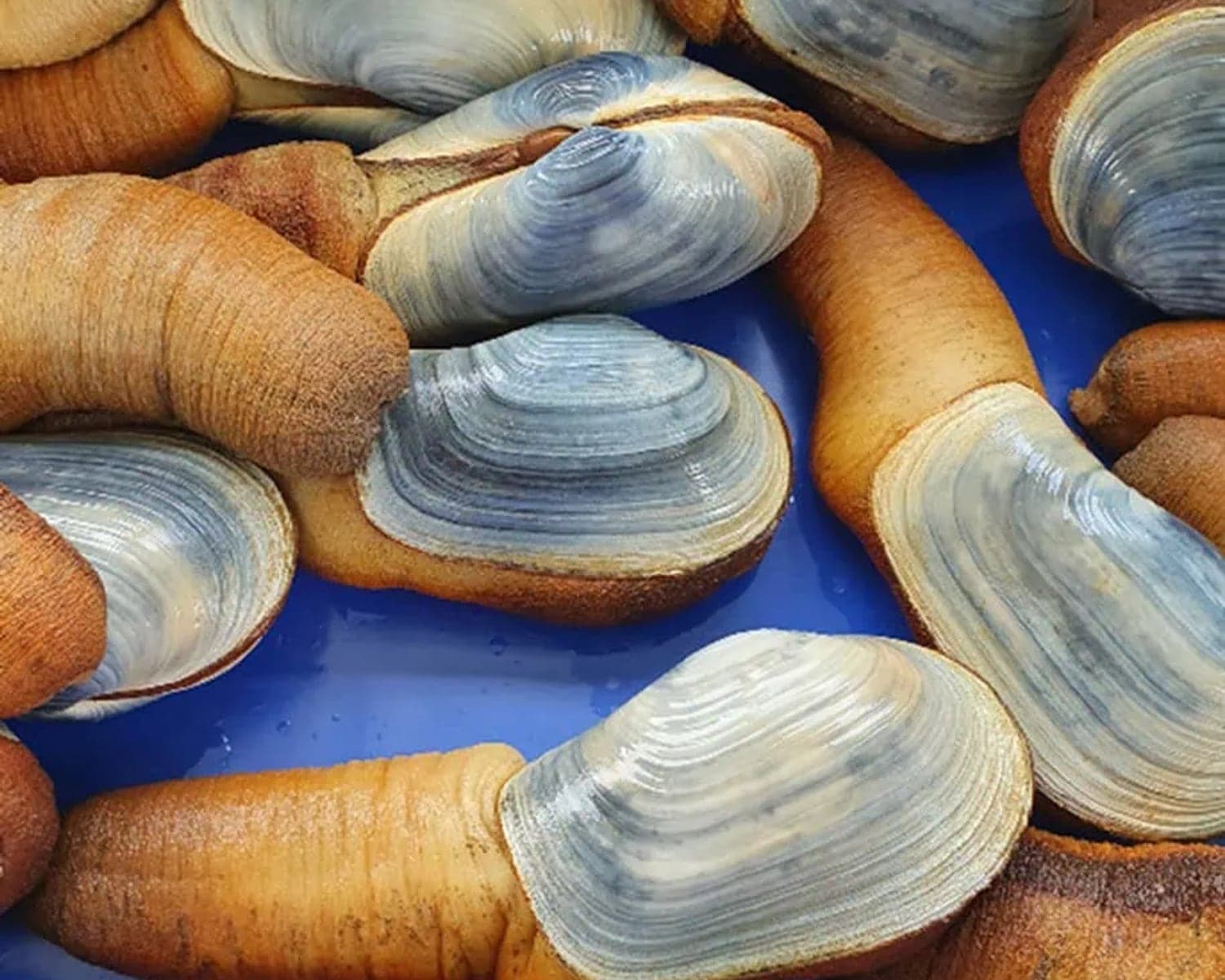
Commercial geoduck is mainly Panopea generosa, harvested by divers from sandy and muddy seabed along the Pacific coast of North America. British Columbia and Washington State supply the bulk, from wild dive fisheries and from intertidal and subtidal farms, with further volume from Alaska; related Panopea species from Mexico or New Zealand are named separately when offered. Each wild harvest tract is surveyed and tested before it opens, and farmed clams are harvested to plan, which spreads supply across the year. Offers name the harvest area or farm, whether the clams are wild or farmed, and the harvest date, because many buyers grade and value geoduck by origin.
Grading starts with weight, typically in bands between roughly 0.5 kg and 1.5 kg per clam or the pound equivalents, and then turns to the siphon. Pale ivory or creamy siphons command the top grades in most Asian markets, darker or yellowish necks fall into lower grades, and the siphon should be full, firm and responsive to touch. Shell damage, gaping and broken necks are graded out. Live geoduck travels out of water in insulated boxes kept cold and damp, and its survival window depends on temperature, handling and total transit time, so the route is checked before any quotation.
Frozen geoduck opens markets that do not accept live bivalves or that lie too far away for a reliable live route. Formats include whole frozen clam, skinned siphon meat and sliced siphon for sashimi service, with glaze declared. Live logistics follow the pattern of our live abalone program: a feasibility check of route and permits first, a written mortality allowance, and photographs of each box on opening. Paralytic shellfish toxin results for the harvest area are referenced in each lot’s paperwork, in line with the record-keeping described on our export quality assurance page.
Specification sheet
Geoduck Clam: full specification
Indicative values. Final specifications are confirmed per lot on the quotation and certificate of analysis.
| Species | Panopea generosa; other Panopea species declared separately when offered |
|---|---|
| Production | Wild dive fishery or farmed, stated for each consignment |
| Origin | British Columbia, Washington, Alaska; harvest tract or farm named |
| Formats | Live; frozen whole; skinned siphon meat; sliced siphon |
| Grading | Clam weight band plus siphon color and firmness |
| Biotoxins | PSP results for the harvest area, plus microbiology where your market requires it |
| Live packing | Insulated boxes, cold and damp with gel ice, kept clear of fresh water |
| Frozen details | Glaze declared; net weight shown without ice |
| Documents | Shellfish health certificate from the origin authority, harvest-area records, certificate of origin, air waybill |
| Minimum order | Live geoduck by full air shipment on a confirmed route; frozen product typically from one pallet per format and grade. |
| Lead time | Typically 2–4 weeks for a live consignment once the route and permits are set up, with a first shipment taking longer; frozen product 3–6 weeks. |
FAQ
Geoduck Clam: questions from buyers
Why does siphon color matter so much for geoduck?
In the main Asian markets, a pale ivory or creamy-white siphon signals a premium clam for sashimi, while darker or yellow-brown siphons are valued less, even though eating quality can be similar. Color varies with harvest area, sediment and the individual animal, so it cannot be fixed by the supplier. We describe the siphon grade on every offer and, where the harvester provides them, share photographs of representative clams from the lot before you confirm.
Which markets accept live geoduck?
Acceptance depends on the importing country’s rules for live bivalve molluscs and on the sanitary arrangements it holds with the origin. Some markets require an import permit and specific health attestations, some limit live bivalves to approved harvest areas, and some have suspended geoduck from particular areas for periods after a test finding. Tell us your arrival airport and intended use, and our export specialists will check whether a live route is possible before quoting.
How are geoduck harvest areas tested?
Wild geoduck tracts and farm beds are monitored by the origin’s shellfish authority, with paralytic shellfish toxins (PSP) the main concern, and harvesting stops when results exceed the permitted level. Many shipments also carry microbiological results, and some destinations ask for additional contaminant testing. We reference the harvest-area results in the documents for each lot and can arrange further testing against your market’s limits when it is required.
When is frozen geoduck the better choice?
Frozen geoduck makes sense when your market does not accept live bivalves from the available origins, when the route is too long for the animals to arrive in good condition, or when you need sliced siphon for sushi and hot pot service in steady volume. Freezing slightly softens the crunch of the siphon compared with live product, so restaurants that display geoduck often keep live supply for the dining room and use frozen meat for set menus.
Related
Related products
Frozen & Live Seafood
Frozen Abalone
Farmed abalone in-shell, shucked or braised, sized per kilogram
Frozen
Frozen & Live Seafood
Frozen and Chilled Shellfish
Scallops, clams, mussels, oysters and whelk, IQF and half-shell
Frozen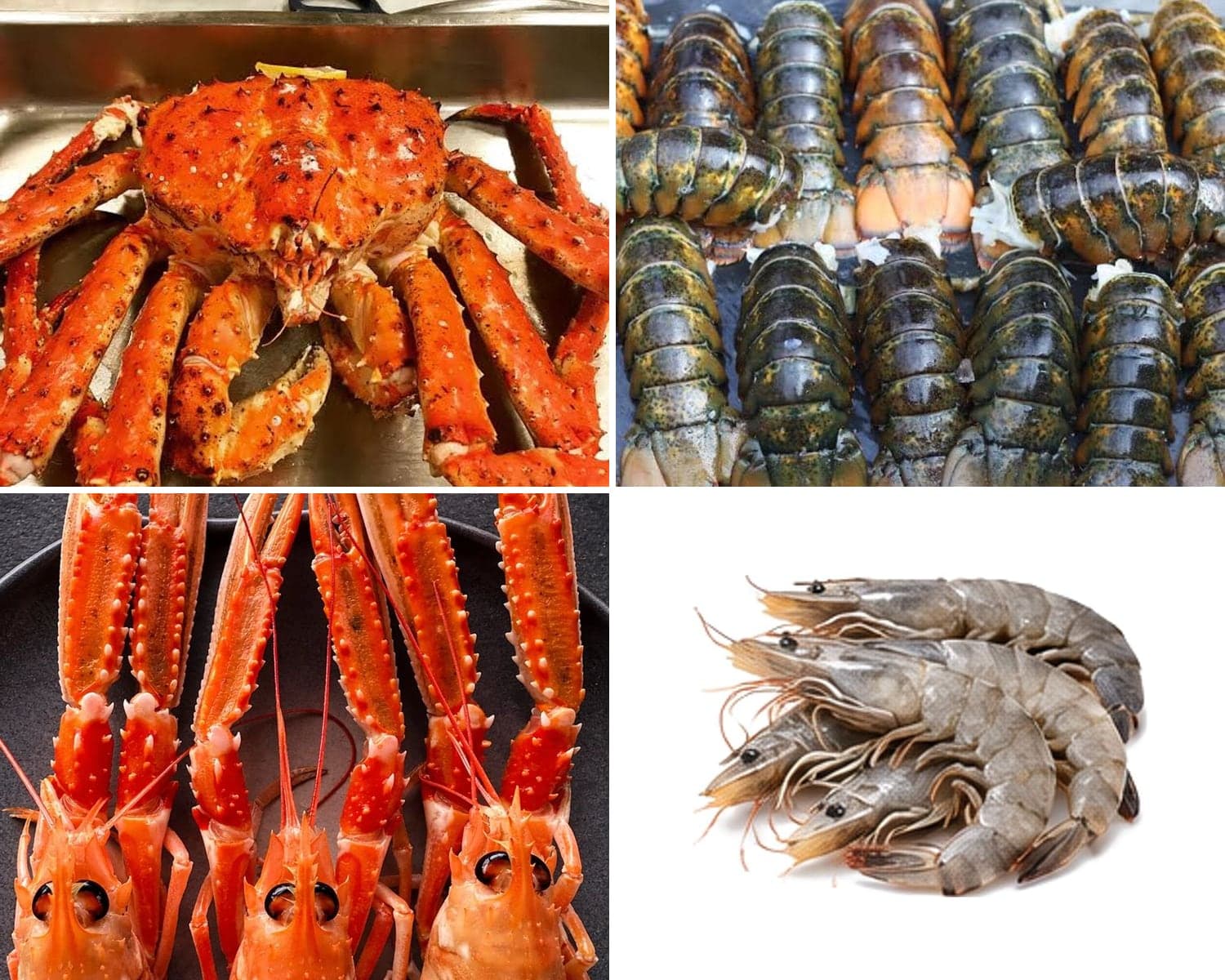
Frozen & Live Seafood
Selected Premium Marine Products
Crab, lobster, langoustine, geoduck and shrimp, sourced to brief
Frozen
Buyer guides
Species Profiles6 min read
Geoduck (Panopea generosa): Profile of the Giant Pacific Clam
What geoduck is, how it lives buried for a century or more, where commercial supply comes from, what Chinese and Japanese markets call it, and how cooks prepare the siphon.
Read the guide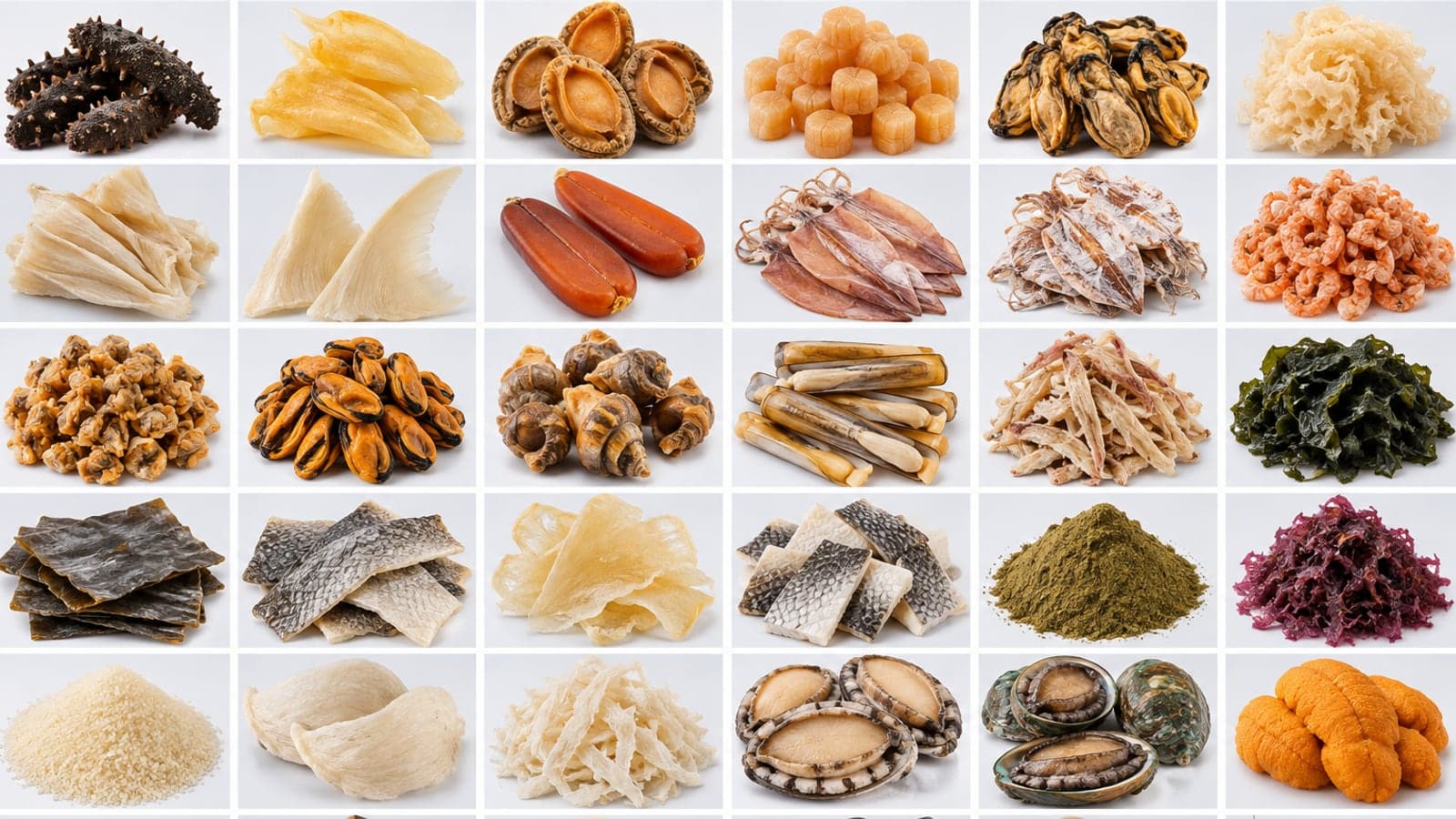
Import & Compliance7 min read
What Importers Need to Know Before Ordering Dried Seafood
The market-access, species, documentation, classification and commercial checks an importer should complete before placing a first order for dried seafood.
Read the guide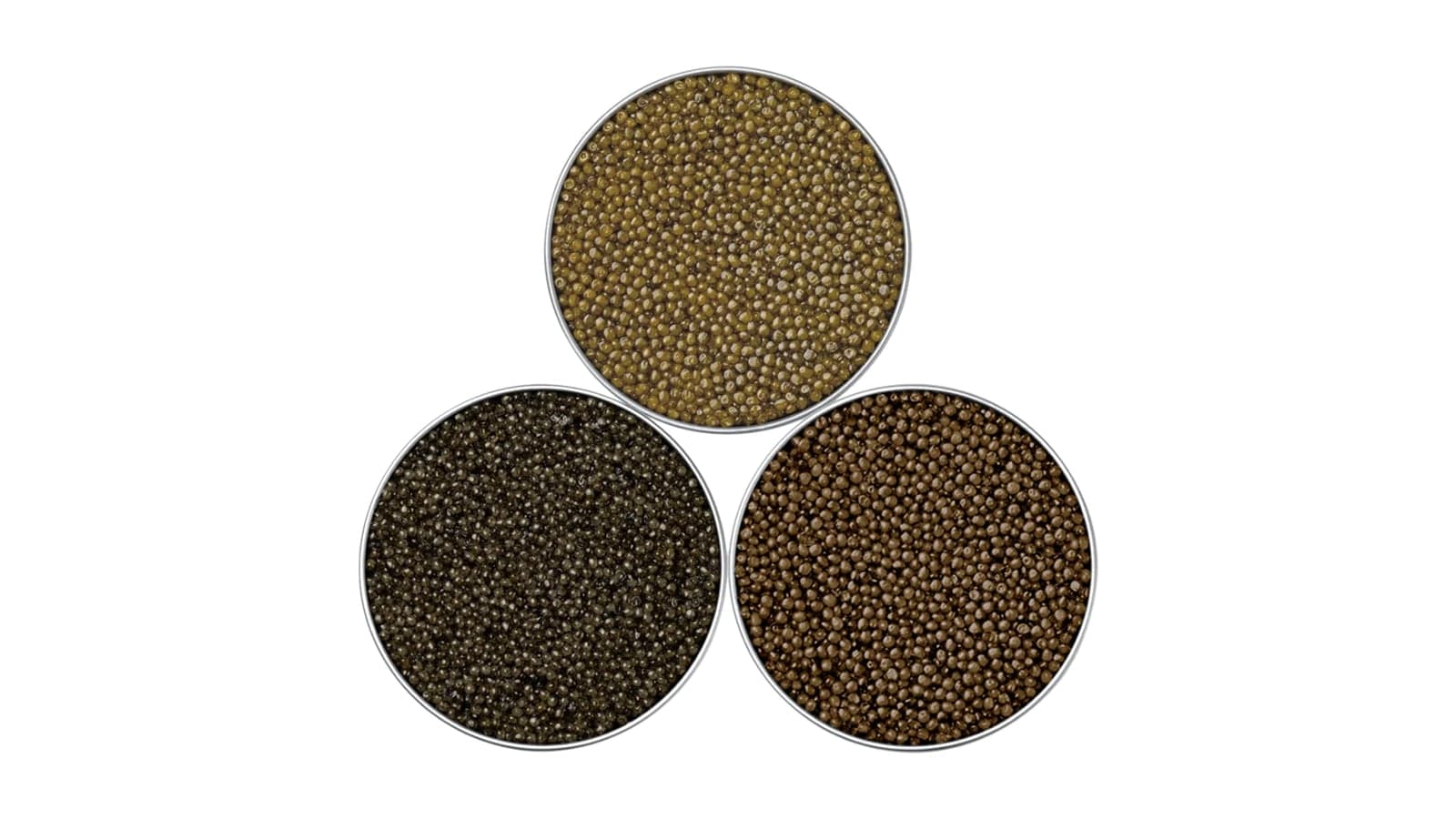
Buying Guide7 min read
Choosing Premium Seafood Ingredients for Restaurants and Retail
How chefs, foodservice buyers and brand owners match grade and format to the application, compare suppliers on cost per portion, and keep quality consistent across orders and channels.
Read the guide
Request a quote
Request a quote for geoduck clam
Share your target grade, packing, volume and destination. We confirm availability, documentation for your market and a formal quotation, usually within one business day.
- Grade, size or count required
- Packing format and labeling language
- Estimated volume and order frequency
- Destination port or airport and Incoterm
- Reference: Geoduck Clam