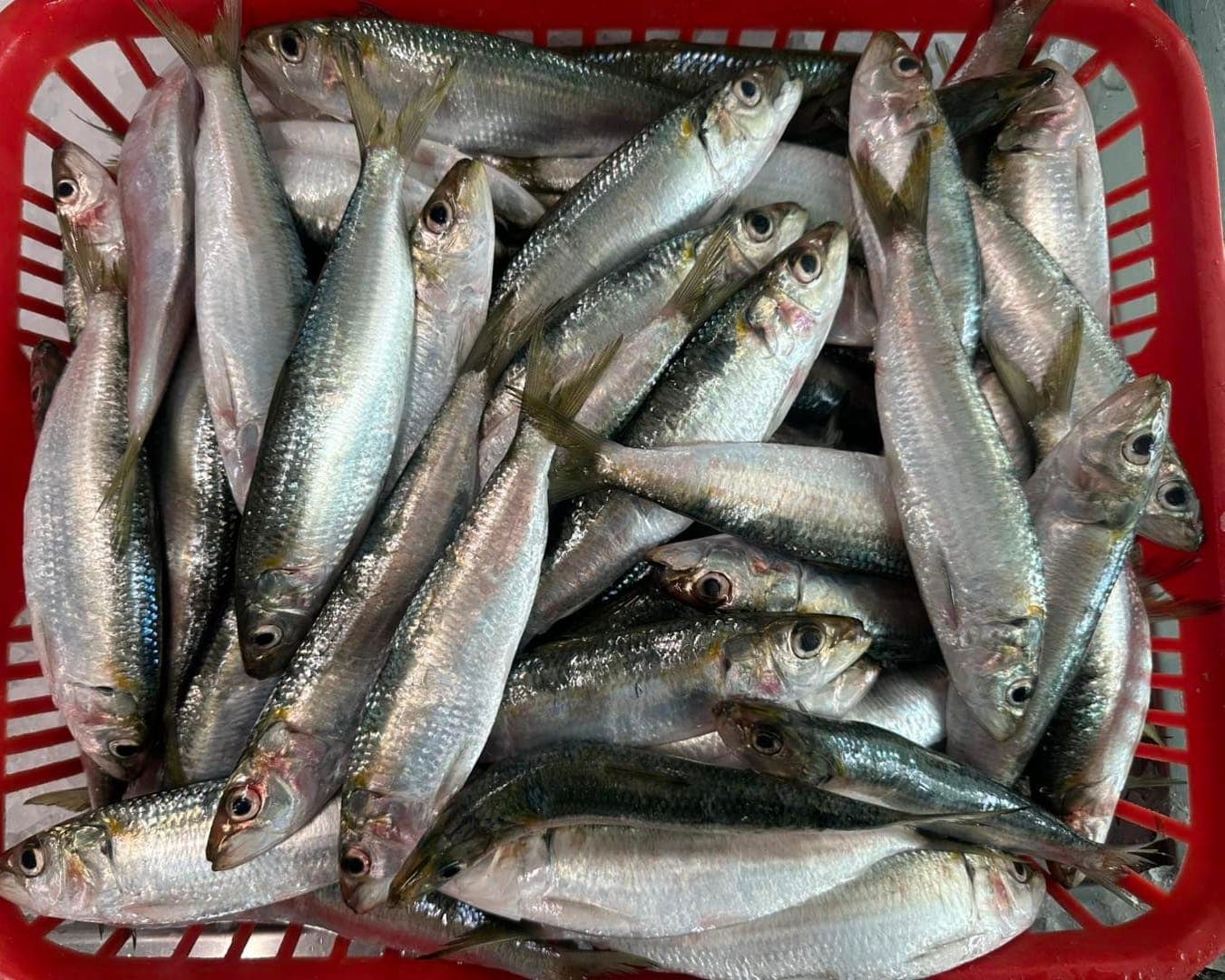
“Mackerel” is a name shared by several quite different fish in the family Scombridae. The temperate mackerels of the genus Scomber, Atlantic and chub mackerel among them, are the oily fish of the big Norwegian, Japanese and South American fisheries. The small tropical mackerels of Rastrelliger, chiefly Indian and short mackerel, are everyday fish around the Bay of Bengal, the Gulf of Thailand and the Indonesian archipelago. The Spanish and king mackerels of Scomberomorus, also known as seerfish or kingfish, are large, toothy fish sold mostly as steaks.
Our frozen mackerel range centers on Indian and short mackerel, with Scomber mackerel quoted separately on request; Scomberomorus species are not part of it and appear here so buyers can tell the groups apart. This guide covers identification, names in the main markets, where each group is caught, market forms and kitchen uses, and the labeling points that keep the species straight.
Key takeaways
- Mackerel covers three scombrid groups: temperate Scomber, tropical Rastrelliger, and the large Spanish and king mackerels of Scomberomorus.
- Atlantic mackerel has no swim bladder and an unmarked belly; chub mackerels have a swim bladder, and the Atlantic and spotted chub mackerels have marked bellies.
- Indian and short mackerel are small plankton feeders with long gill rakers, and they form the core of our frozen mackerel range.
- Horse and jack mackerels are not true mackerels, and “kingfish” can mean three different fish, so always specify by scientific name.
Three groups of fish called mackerel
| Group | Main traded species | Where it lives | Size | Typical forms and uses |
|---|---|---|---|---|
| Temperate mackerels (Scomber) | Atlantic mackerel S. scombrus; chub mackerel S. japonicus; Atlantic chub mackerel S. colias; spotted chub or blue mackerel S. australasicus | Temperate and warm-temperate seas of the Atlantic and Pacific | Up to about 60 cm; commonly about 30 cm | Whole frozen, fillets, smoked, canned, salted; saba in Japan |
| Tropical mackerels (Rastrelliger) | Indian mackerel R. kanagurta; short mackerel R. brachysoma | Warm coastal waters of the Indo-West Pacific | Up to about 35 cm; commonly 15–25 cm | Whole round, gutted, steamed, fried, curried, salted and dried, canned |
| Spanish and king mackerels (Scomberomorus) | Narrow-barred Spanish mackerel S. commerson; king mackerel S. cavalla; Atlantic Spanish mackerel S. maculatus; Japanese Spanish mackerel S. niphonius | Tropical and warm coastal waters worldwide | S. commerson to about 240 cm; king mackerel to about 184 cm | Steaks and cutlets, fresh or frozen; salted and dried |
Fish sold as horse mackerel or jack mackerel, such as the Trachurus species, are not mackerels at all but members of the jack family, Carangidae. Wahoo (Acanthocybium solandri), by contrast, is a scombrid closely related to the Spanish mackerels, though it is always sold under its own name.
Atlantic and chub mackerel: the Scomber species
Scomber mackerels are slim, torpedo-shaped fish with a row of finlets behind the dorsal and anal fins and a green-blue back crossed by dark, wavy or zigzag bars. Atlantic mackerel (Scomber scombrus) has bars that run obliquely to almost vertical with little waviness, an unmarked silvery belly and no swim bladder. Chub mackerel (S. japonicus) has a swim bladder and more undulating bars, and its Atlantic counterpart, now generally treated as a separate species, S. colias, has small spots or broken wavy lines on the belly. The spotted chub or blue mackerel (S. australasicus), found from Australia and New Zealand north to Japan, also has a speckled belly.
Atlantic mackerel lives on cold and temperate shelves on both sides of the North Atlantic and in the Mediterranean. It winters in deeper water, moves inshore in spring, spawns in batches through spring and summer, and then feeds heavily, so its fat content climbs through summer into autumn. That is why the Northeast Atlantic fishery concentrates on autumn fish: Norway’s main season runs from about September to November, when the fish are at their richest.
Chub mackerel supports large purse-seine fisheries in the Pacific, off Japan and along the Pacific coast of South America, where Chile and Peru call it caballa. Atlantic chub mackerel is caught on both sides of the warmer Atlantic and in the Mediterranean.
In Japan, chub mackerel is masaba and spotted chub mackerel is gomasaba, named for the sesame-like speckles on its belly, while imported Atlantic mackerel, much of it from Norway, is sold as taiseiyō saba, “Atlantic saba”, and treated as a separate fish. European names for Atlantic mackerel include maquereau in French, caballa in Spanish, sgombro in Italian, Makrele in German, makreel in Dutch and uskumru in Turkish.
Indian and short mackerel: the tropical Rastrelliger
Rastrelliger mackerels are deeper-bodied than Scomber and lack its wavy back bars. Their most distinctive feature is inside the mouth: very long, finely bristled gill rakers, visible when the mouth is open, which they use to strain plankton from the water. Short mackerel even has an intestine more than three times its body length, suited to a diet with a large share of phytoplankton.
Indian mackerel (R. kanagurta) is the slimmer of the two, with narrow dark lines along the upper body that look golden in fresh fish and a black spot on the body near the lower edge of the pectoral fin. Short mackerel (R. brachysoma) is markedly deeper, its head no longer than the depth of its body. Indian mackerel reaches about 35 cm and is common at 25 cm, while short mackerel is commonly 15 to 20 cm.
Indian mackerel ranges across the Indo-West Pacific from South Africa and the Red Sea east to Indonesia and north to China and the Ryukyu Islands, and it has entered the eastern Mediterranean through the Suez Canal. Short mackerel is more restricted, from the Andaman Sea through Thailand, Indonesia and the Philippines to Fiji, and tolerates the slightly brackish water of estuaries. Both are coastal schooling fish caught by purse seines, encircling gillnets, lift nets and fixed traps, and Indonesia, Thailand, India, Malaysia and the Philippines are long-standing major producers. Thailand closes parts of the Gulf of Thailand each year during spawning, which shapes when fresh-caught Thai fish are available.
Local names are many. In Thailand short mackerel is pla thu; in Malaysia both species are kembong and in Indonesia kembung; Filipino markets call Indian mackerel alumahan and short mackerel hasa-hasa; and Indian markets sell Indian mackerel as ayala or bangda.
Spanish mackerel, king mackerel and seerfish
Scomberomorus species are long, compressed, fast predators with jaws full of sharp, flattened triangular teeth, and they grow far larger than other mackerels. The narrow-barred Spanish mackerel (S. commerson) of the Indo-West Pacific has thin, wavy vertical bars on silvery sides, rising in number with size from about 20 in a 40 cm fish to as many as 65, and reaches about 240 cm. It is the seer fish or king seer of South Asia, tenggiri in Indonesia and Malaysia, tanigue in the Philippines, walu in Fiji and insi in Thailand.
In the western Atlantic, king mackerel (S. cavalla) reaches about 184 cm and 45 kg; adults have plain silvery sides, and the lateral line drops sharply below the second dorsal fin. The smaller Atlantic Spanish mackerel (S. maculatus), at most about 90 cm, has around three rows of round dark spots, orange in life, along its sides. Japan’s sawara is S. niphonius, with young fish sold as sagoshi.
Kingfish is the trap name in this group. In the United States it means king mackerel, it is also a trade name for narrow-barred Spanish mackerel, and the yellowtail kingfish of Australian and New Zealand markets is a jack, Seriola lalandi, not a mackerel at all. These fish are sold mostly fresh or as frozen steaks and cutlets, fried or grilled across South and Southeast Asia, curried in South India and Sri Lanka, and salted and dried in many coastal markets.
How mackerel is sold and cooked
- Whole round, block-frozen or IQF: for wet markets, canneries, smokehouses and wholesalers that cut their own fish.
- Gutted, or headed, gutted and tail-off (HGT): less waste and lower freight for buyers who clean fish anyway.
- Fillets and butterfly cuts: for retail packs, grills and ready meals.
- Smoked: hot-smoked Scomber fillets, often peppered, are a Northern European staple.
- Canned: in brine, oil or tomato sauce, from both Scomber and Rastrelliger.
- Salted and dried: for Asian and African markets; see our salted and dried fish range.
The rich, oily flesh of Scomber mackerel suits strong heat and sharp flavors. Japanese cooks salt-grill it as saba shioyaki, simmer it in miso as saba no misoni, and cure fillets in salt and vinegar for shime saba and the pressed battera sushi of Osaka. Istanbul sells grilled mackerel in bread from boats and street stalls, and British, Dutch and Scandinavian kitchens smoke, pickle or grill it and serve it with mustard, horseradish or gooseberry.
Tropical mackerel is smaller and milder and is more often cooked whole than filleted. In Thailand, pla thu is steamed and sold in small bamboo baskets, then fried and eaten with chili relish; in Kerala, ayala is fried in a spice paste or simmered in coconut or tamarind curries; and across Indonesia, Malaysia and the Philippines it is grilled, fried or cooked in sour broths.
Mackerel often shares containers and customers with frozen sardines and Atlantic herring, and the sardine species guide covers those small pelagic fish.
Quality and labeling: keeping mackerel species apart
All mackerels are oily scombrid fish, and two things go wrong when they are handled warm or stored badly: histamine forms in the flesh, and the fat oxidizes, turning yellow and rancid. Fast chilling at sea, quick freezing, a protective glaze or vacuum pack and a steady -18 °C or colder guard against both. Fat content also swings with the season, so an autumn Atlantic mackerel and a lean spring fish caught after spawning cook and smoke very differently. Buyers usually check:
- The genus and species on offers, catch documents and cartons, with the scientific name
- Size by fish weight or count per kilogram, measured after deglazing
- Belly condition: firm and intact, not soft or burst
- Skin color, eyes and gills after thawing, and any yellowing of the fat
- Histamine results linked to the lot code
Labeling rules make the species matter. EU labels must carry the commercial name with the scientific name, the catch area and the gear category, and Japanese retailers keep masaba, gomasaba and imported Atlantic saba apart. Because Scomber and Rastrelliger differ in size, fat, flavor and value, a lot that mixes them, or a translation that turns one into the other, causes trouble at every step.
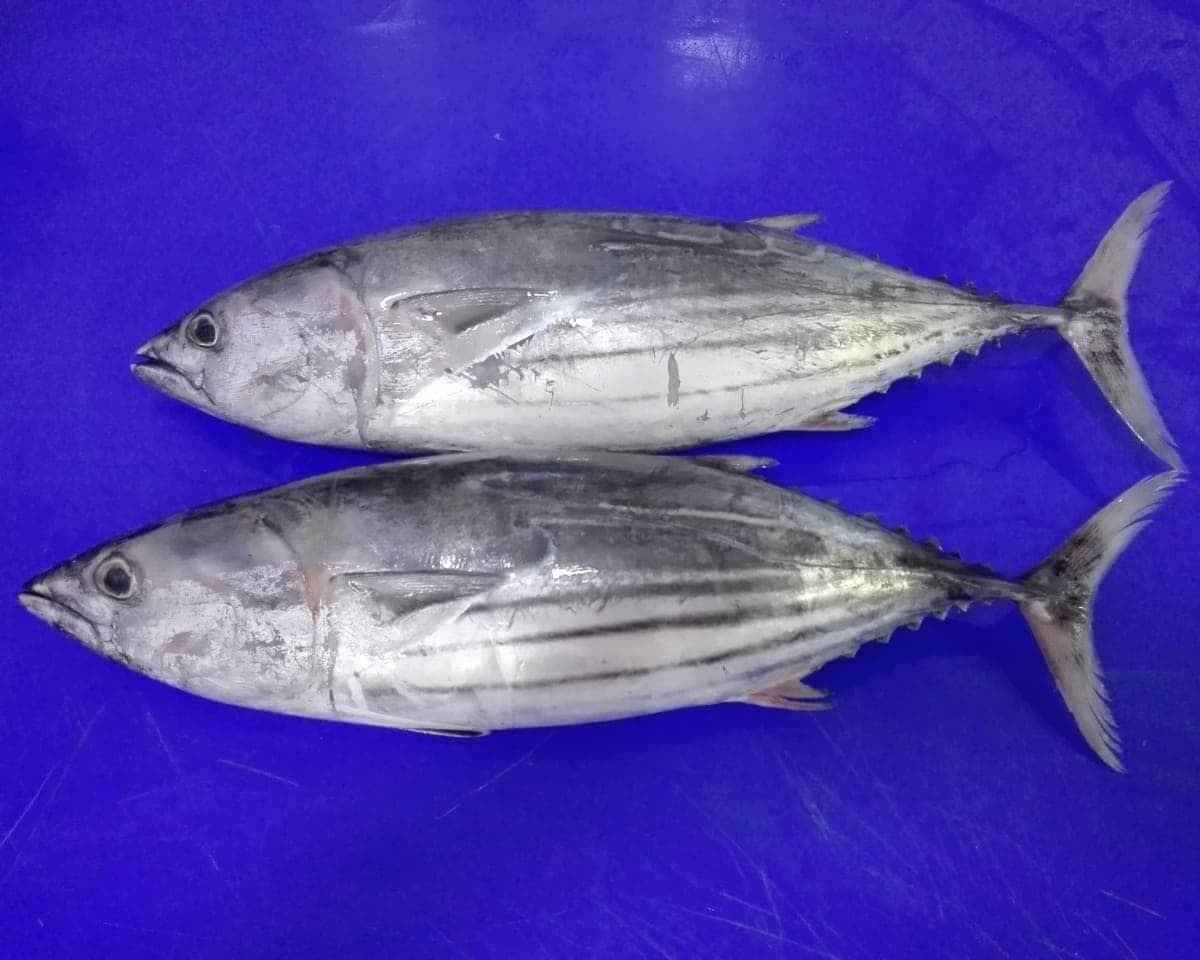
The tunas are close relatives of the mackerels, and the skipjack tuna species guide shows how the same family traits play out in a larger fish. For frozen shipments, the reefer shipping guide covers set points and temperature records, and you can ask for Indian or short mackerel by size band, naming the cut and the destination.
This guide is general trade information, not legal or regulatory advice. Requirements differ by market and change over time; confirm current rules with your customs broker or competent authority before ordering.