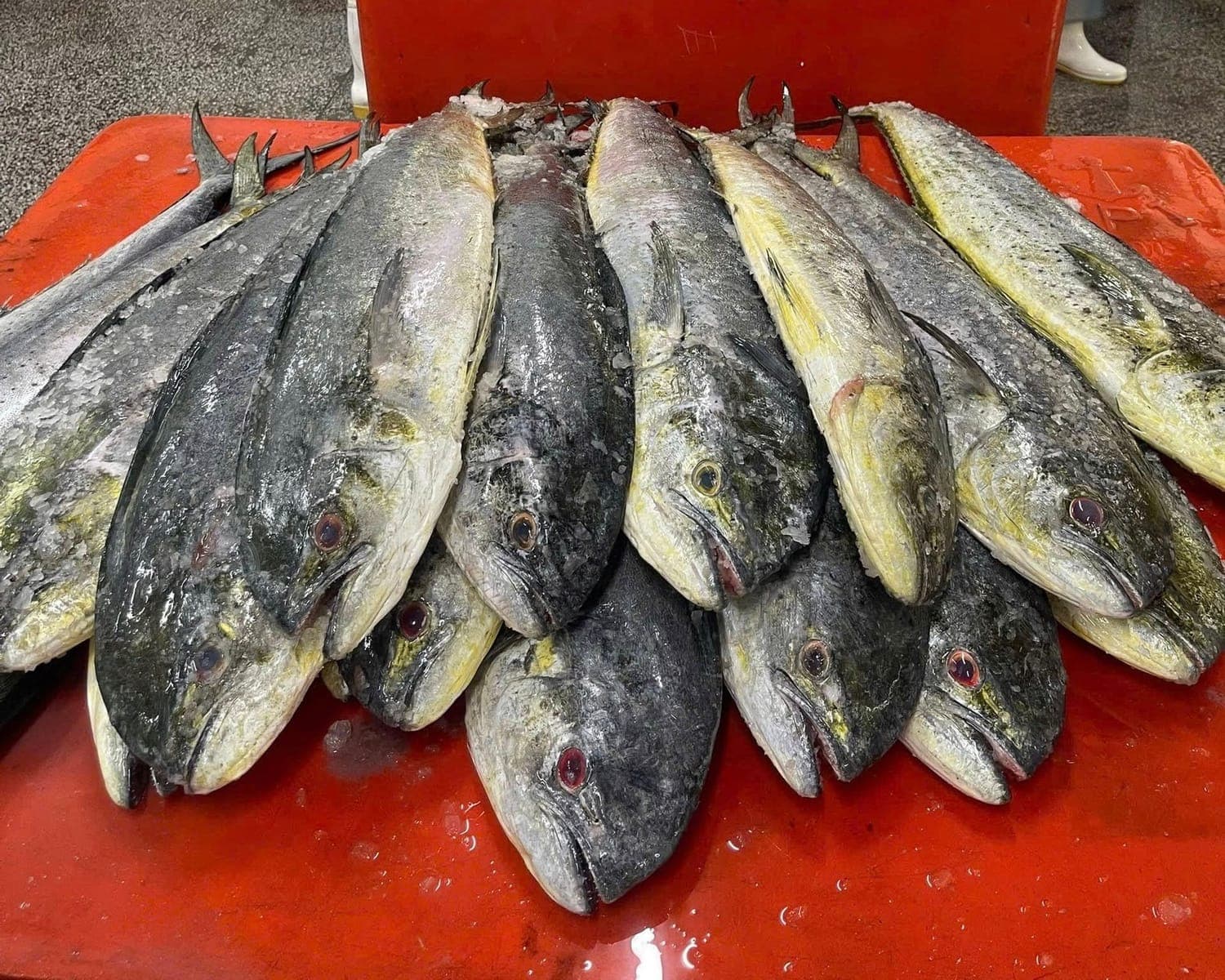
Mahi-mahi (Coryphaena hippurus) is an ocean fish saddled with a confusing English name. It is also called dolphinfish, or simply dolphin, yet it has nothing to do with the marine mammal. It is a fast-growing predator of warm open seas, caught in every tropical ocean, and its mild, lean, fairly firm flesh has made it a staple of North American grills and fish tacos. Our frozen mahi-mahi page covers the fillets, portions and steaks we source from partner packers.
This profile explains what the fish is and how to identify it, including how to tell it from its smaller relative, the pompano dolphinfish; what it is called in Peru, Malta, Japan and Hawaii; where supply comes from and in which months; and how it is cooked. Fillet grades and packing are set out on the product page.
Key takeaways
- Mahi-mahi, dolphinfish and dorado are one species, Coryphaena hippurus, which has no connection with dolphins.
- It grows extremely fast and lives only about five years, and supply follows regional seasons such as Peru’s October-to-April fishery.
- The smaller pompano dolphinfish is told apart by fewer dorsal fin rays, a deeper body and a broad, square tongue tooth patch.
- Quality depends on rapid chilling after capture; look for pink to tan flesh, a red bloodline and no off odors on thawing.
What mahi-mahi is, and why it is called dolphinfish
Mahi-mahi belongs to the Coryphaenidae, a small family of just two species: the common dolphinfish, which supplies nearly all of the trade, and the smaller pompano dolphinfish (Coryphaena equiselis). Mahimahi is its Hawaiian name and dorado its usual Spanish one. FishBase lists it as common dolphinfish, and older English sources simply say dolphin, the root of the mix-up with the mammal; North American retailers generally prefer the Hawaiian name to avoid it.
Living fish are strikingly colored, electric blue-green on the back and gold to silver on the sides with scattered dark and light spots, but the colors fade almost as soon as the fish dies. The body is long and compressed, ending in a deeply forked tail, and a single dorsal fin runs from above the eye almost to the tail, carrying 58 to 66 soft rays. A long, concave anal fin mirrors it underneath. Mature males develop a prominent bony crest that gives them a tall, blunt, nearly vertical forehead, while females keep a more rounded head.
Mahi-mahi biology: fast growth and a short life
Mahi-mahi is among the fastest-growing fish in the sea. NOAA Fisheries notes that it can pass 4 feet (about 1.2 m) in its first year, can reproduce at four to five months old and lives for up to about five years. The largest fish reach around 2 m and 40 kg, though commercial fish are mostly much smaller. Females are believed to spawn every two to three days over a long season, which in warm waters may last all year.
It lives in tropical and subtropical waters of the Atlantic, Indian and Pacific oceans, usually where surface water is between about 21 and 30 °C, and it is fished in the Mediterranean as well. Mahi-mahi hunt near the surface for small fish, squid and crustaceans, and they gather beneath anything that floats: weed lines, logs, debris and the rafts fishers set out to attract them. Malta’s kannizzati, floats dressed with palm fronds and anchored with limestone blocks, are a traditional example of such a device.
Mahi-mahi and the pompano dolphinfish compared
The pompano dolphinfish is smaller and is frequently mistaken for a young or female common dolphinfish. The differences are anatomical and easiest to check on whole fish.
| Feature | Common dolphinfish (mahi-mahi) | Pompano dolphinfish |
|---|---|---|
| Scientific name | Coryphaena hippurus | Coryphaena equiselis |
| Dorsal fin rays | 58–66 | 52–59 |
| Body depth in adults | Less than 25% of standard length | More than 25% of standard length |
| Tooth patch on the tongue | Small and oval | Broad and square |
| Pectoral fin | Longer than half the head length | About half the head length |
| Maximum size | About 210 cm | About 146 cm |
| Place in the trade | Main commercial species in all warm oceans | Minor commercial catch |
Where mahi-mahi comes from, and when
Mahi-mahi is caught by longline, troll and handline, by nets set around floating objects, and as a bycatch of longline fisheries for tuna and swordfish. The frozen fillet trade relies on wild fisheries, with much of the volume coming from the small-boat longline fleets of Peru and Ecuador and more from Central America, Taiwan, Indonesia, Vietnam, Sri Lanka and India. Because each region fishes it at a different time of year, buyers who need fish all year draw on several origins.
| Origin | Local name | Main gear | Season and rules |
|---|---|---|---|
| Peru | Perico | Surface longline | Season set by the ministry of production, recently 1 October to 30 April, with a 70 cm minimum fork length and a catch limit for each season |
| Hawaii (US) | Mahimahi | Longline, mostly as a non-target catch, and troll | Landed most of the year, with peaks in March–May and September–November |
| US Atlantic coast | Dolphin | Line gear | Managed under a federal dolphin and wahoo plan with catch limits and, in some areas, minimum sizes |
| Malta | Lampuki | Surrounding nets set around kannizzati floats | 15 August to 31 December, the open period for dolphinfish fishing on floating devices |
| Japan | Shiira | Purse seines set around bamboo rafts, set nets and line gear | Mainly summer and autumn, varying by region |
In the Mediterranean the General Fisheries Commission for the Mediterranean (GFCM) fixes the season for fishing dolphinfish on floating devices; elsewhere management is mostly national rather than through the tuna commissions. Peru’s ministry of production sets the season, minimum size and catch limit and can shift the dates on the advice of its marine research institute, and the United States manages its Atlantic and Pacific fisheries under separate federal plans. Dates and limits change from one season to the next, so confirm the current rules for each origin before planning a program.
Mahi-mahi market forms, flesh and flavor
Raw mahi-mahi is pinkish to grayish-white with a band of darker meat along the lateral line, and it cooks to off-white with large, moist flakes. NOAA describes the taste as sweet and mild, and trimming away the dark meat makes it milder still. The flesh is lean and fairly firm, firm enough for the grill but less dense than swordfish or tuna, which makes it a neutral base for strong seasoning.
- Whole fresh fish: sold through local markets in producing countries and islands.
- Frozen fillets: skin-on, skinless or deep-skinned, the last with the dark layer under the skin taken off; the core of the export trade.
- Portions and steaks: cut from large fillets to fixed weights for restaurant chains and retail packs.
- Headed and gutted fish: frozen at origin for processing elsewhere.
- Salted and dried fish: made in parts of Japan.
Fillets are graded by weight, in pounds for the North American trade, and bigger fillets yield thicker, more even portions. The product page lists the fillet bands and portion sizes we offer.
How mahi-mahi is cooked
In the United States mahi-mahi is above all a grill fish: grilled or blackened fillets, fish tacos with cabbage and lime, fish sandwiches and sheet-pan dinners. Its mild taste carries jerk seasoning, chili rubs, citrus marinades and fruit salsas well. The skin is thick and tough and is usually removed before cooking.
In Malta the lampuki season is a fixture of the autumn table: the fish is baked into torta tal-lampuki, a pie with vegetables, olives and capers, or fried and served in a tomato sauce with capers, olives and herbs. In Japan, very fresh shiira is eaten as sashimi, and it is also fried or cured with salt and vinegar. Because the flesh is lean, it dries out quickly; cook it just until it turns opaque and flakes, while meeting the internal temperature your market’s food rules require.
Quality, histamine and names on the mahi-mahi label
Like the tunas, mahi-mahi can form histamine, and both US and EU rules treat it as a histamine-forming fish. That puts the weight on fast chilling or freezing after capture and on records that prove it, since freezing cannot reverse damage done while a fish sat warm. The visible signs of a well-handled lot are pink to light tan flesh, a red bloodline rather than a brown one, little gaping, and no off odor as the fish thaws.
Names are the other trap. Dorado is Spanish for mahi-mahi but is also the name of a South American river fish (Salminus brasiliensis), and dorada, one letter apart, is the Spanish market name for gilthead sea bream (Sparus aurata), a different fish entirely. Specify Coryphaena hippurus and the confusion disappears.
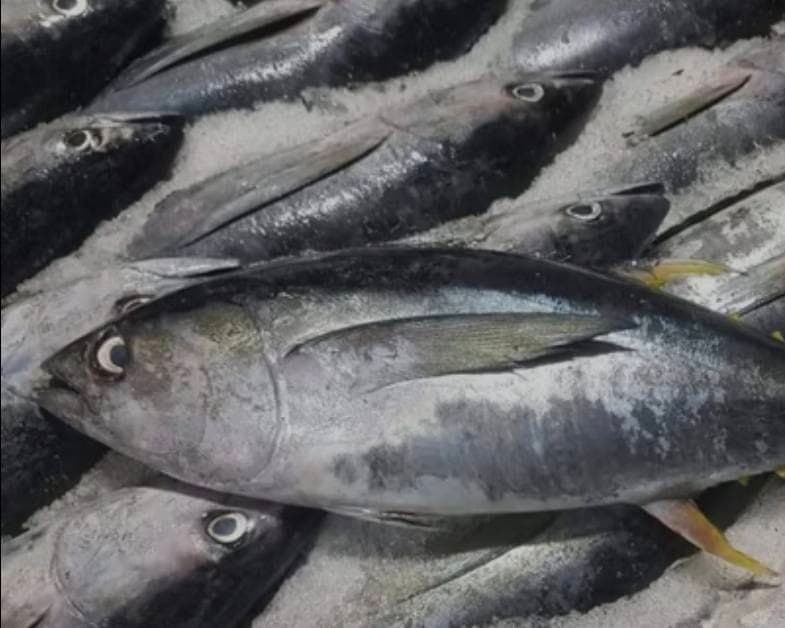
Kitchens that want a denser steak fish beside mahi-mahi usually turn to frozen swordfish or yellowfin tuna, and the swordfish species guide profiles the first of them. For programs that combine origins across seasons, the reefer shipping guide covers the cold chain, and you can share your annual volumes and portion sizes so we can plan origins around the calendar.
This guide is general trade information, not legal or regulatory advice. Requirements differ by market and change over time; confirm current rules with your customs broker or competent authority before ordering.