- Private-label packing
- Export documentation
Frozen Fish
Frozen Mahi-Mahi (Dolphinfish): Fillets, Portions and Steaks
BSA Food Products sources wild-caught mahi-mahi through partner packers in the Eastern Pacific and Asia, supplied frozen as skin-on or skinless fillets, fixed-weight portions and steaks, with catch documentation and histamine testing arranged for each lot.
- Wild-caught Coryphaena hippurus from Pacific and Indian Ocean fisheries
- Skin-on, skinless and deep-skinned fillets by weight band
- Boneless portions by ounce band or to a fixed weight
- Decomposition checks and arranged histamine testing per lot
- Fishing area, vessel flag and processing country declared
- Origins combined across seasons for year-round programs
Product Specifications
Indicative; confirmed per lot on each quotation.
- Origin
- Wild-caught in the Eastern Pacific (Peru, Ecuador and Central America) and in Asian and Indian Ocean fisheries (Taiwan, Indonesia, Vietnam, Sri Lanka and India), sourced through partner packers; catch area, vessel flag and processing country declared per lot.
- Grade / Size
- Fillets by weight (e.g. 1–3 lb, 3–5 lb, 5 lb up, or metric equivalents); portions by ounce band (2–4, 4–6, 6–8, 8–10, 10 oz up) or fixed weight; steaks by thickness and weight.
- Form & Processing
- Skin-on, skinless or deep-skinned fillets with pin bones removed, boneless portions and loin steaks; IQF or individually vacuum-packed and frozen, with glaze declared where used.
- Storage
- Keep at -18 °C or colder; thaw in the refrigerator and hold thawed fish at 0–4 °C, since warm holding after thawing adds to histamine risk.
- MOQ
- First orders can be a pallet per size; regular restaurant and retail programs usually run by 20 ft or 40 ft reefer, booked ahead of the main fishing seasons.
- Lead Time
- Typically 4–6 weeks from packers holding stock; securing new-season production for a program can take longer.
Product overview
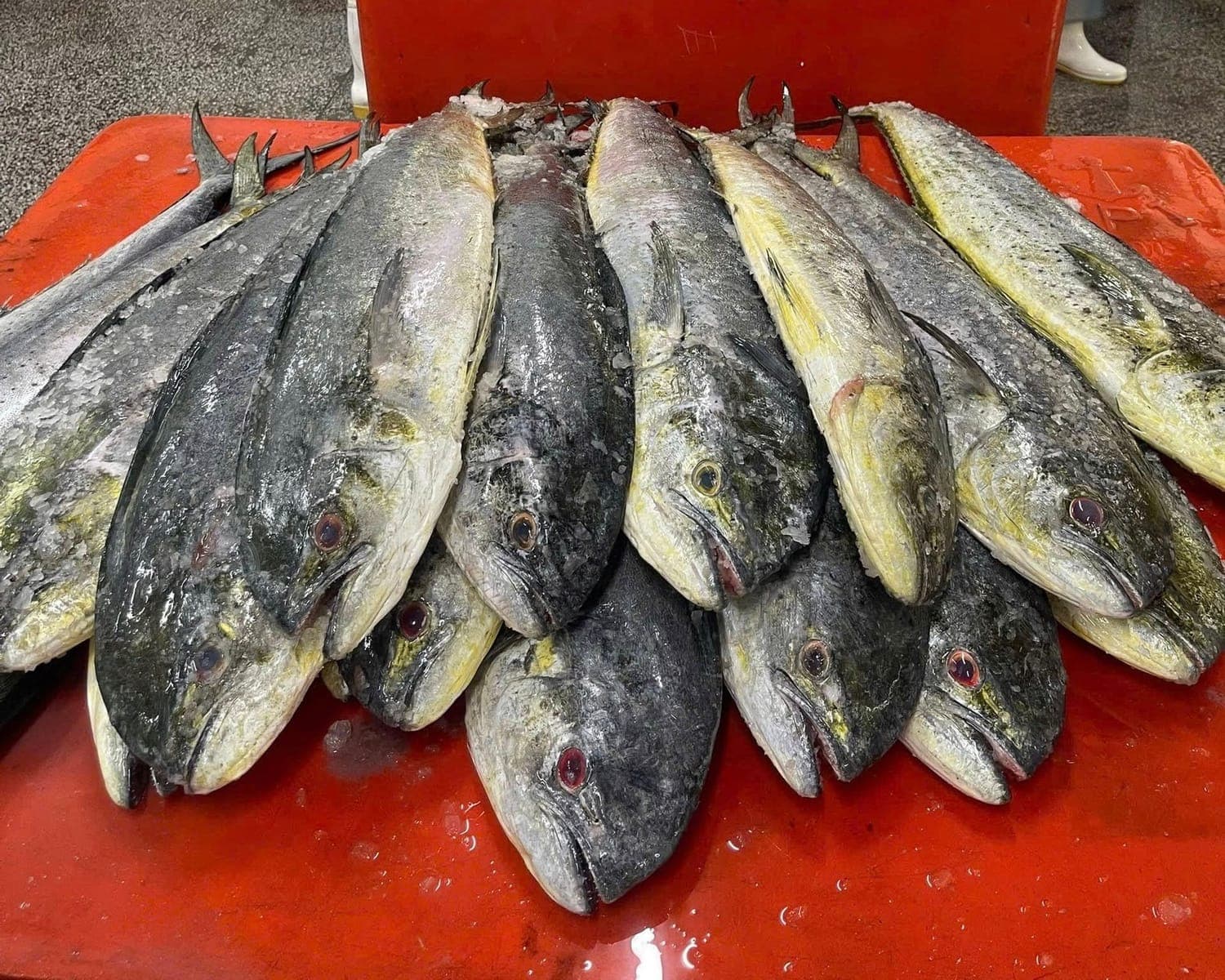
Mahi-mahi (Coryphaena hippurus), also called dolphinfish or dorado, is a fast-growing, short-lived predator of warm open oceans worldwide. It is a fish, unrelated to the marine mammal, and the Hawaiian name mahi-mahi took hold in North American trade partly to avoid that confusion. It is caught by longline, troll and other line gear, by drift gillnet in parts of the Indian Ocean, and also taken alongside tuna. Artisanal longline fleets in Peru and Ecuador supply much of the frozen fillet trade, with further volume from Central America, Taiwan, Indonesia, Vietnam, Sri Lanka and India. Mahi-mahi is not a Thai product: we source it through partner packers, and each offer states the fishing area, vessel flag and the country where the fish was filleted, which is sometimes a third country.
Fillets are graded by individual fillet weight, usually in pounds for the North American trade, for example 1–3 lb, 3–5 lb and 5 lb and up, and they are sold skin-on, skinless, or deep-skinned, which also strips off the dark bloodline lying under the skin. Portions are cut from fillets to ounce bands such as 4–6 oz or 6–8 oz, or to a fixed weight for restaurant chains, and are trimmed boneless with the bloodline removed or left in as agreed. Steaks are cut across the thick loin end. Packers in the main origins also freeze headed and gutted fish for re-processing, which we can quote on request.
Histamine is the hazard that defines mahi-mahi quality. Its flesh contains free histidine, which bacteria turn into histamine if the fish is not chilled quickly after capture, and once formed, histamine is not destroyed by freezing or cooking. Control therefore starts on the boat with prompt icing or onboard freezing, continues through temperature records at landing and processing, and ends with sensory checks for decomposition and laboratory histamine tests arranged for each lot. Buyers also look for pink to light tan flesh, a red rather than brown bloodline, no off odor on thawing, little gaping or bruising, and an even glaze or tight vacuum pack without freezer burn.
The United States is the largest market for frozen mahi-mahi, buying fillets and portions for grilled and blackened fish, fish tacos and sandwiches, and retail freezer bags of skinless portions; the US market page covers the import side. Caribbean, Middle Eastern and Asian hotel kitchens buy portions for grills and buffets. Eastern Pacific landings are strongly seasonal, so year-round programs usually combine origins and book production ahead. Kitchens with a mixed fish menu often pair mahi-mahi with frozen Atlantic salmon or red snapper, and our guide to reefer shipping and the cold chain explains how temperature records follow the container.
Specification sheet
Frozen Mahi-Mahi: full specification
Indicative values. Final specifications are confirmed per lot on the quotation and certificate of analysis.
| Species | Coryphaena hippurus (mahi-mahi, dolphinfish, dorado), wild-caught |
|---|---|
| Fishing area | Eastern Pacific, western and central Pacific, Indian Ocean; FAO area and flag per lot |
| Gear | Longline, troll, gillnet or other gear, declared with the catch documents |
| Forms | Skin-on, skinless or deep-skinned fillets, boneless portions, loin steaks |
| Fillet size | 1–3 lb, 3–5 lb, 5 lb up, or metric equivalents |
| Portion size | 2–4, 4–6, 6–8, 8–10 and 10 oz up, or fixed weights to order |
| Histamine | Lot testing arranged against the destination’s limits, plus a sensory decomposition check |
| Shelf life | Typically 18 months at -18 °C or colder, or as dated by the mahi-mahi packer |
| Documents | EU catch certificate where required, health certificate, certificate of origin, packing list; mahi-mahi histamine report where testing is arranged |
| Minimum order | First orders can be a pallet per size; regular restaurant and retail programs usually run by 20 ft or 40 ft reefer, booked ahead of the main fishing seasons. |
| Lead time | Typically 4–6 weeks from packers holding stock; securing new-season production for a program can take longer. |
FAQ
Frozen Mahi-Mahi: questions from buyers
How is histamine controlled in frozen mahi-mahi?
Histamine forms when fish are left too warm after capture, so the controls are about time and temperature from the moment the fish is landed on deck. We ask packers for evidence of prompt icing or onboard freezing, receiving temperatures and processing records, and each lot is checked for signs of decomposition, with laboratory histamine testing arranged against your destination’s limits. Because freezing does not remove histamine already formed, no amount of care later in the chain can rescue a badly handled fish, which is why the records from the vessel matter.
What fillet and portion sizes of mahi-mahi are available?
Fillets are usually graded 1–3 lb, 3–5 lb and 5 lb and up, with larger fillets giving thicker, more uniform portions. Portions are cut in ounce bands from 2–4 oz to 10 oz and up, or to a fixed weight such as 6 oz for chains that need exact plate costs. Tell us the cut, skin and bloodline preference and the tolerance you need, and the offer will specify them, along with how portions are packed.
Is mahi-mahi related to dolphins?
No. Mahi-mahi is a ray-finned fish of the family Coryphaenidae, and despite the name dolphinfish it has no connection with the marine mammal. Retailers in North America generally prefer mahi-mahi on labels to avoid confusion, while dorado is common in Spanish-speaking markets. Since names differ by language, the scientific name appears on every invoice and carton.
When is mahi-mahi in season?
It depends on the origin. Eastern Pacific supply from Peru and Ecuador is concentrated in part of the year, while Asian and Indian Ocean fleets follow different seasonal patterns, so a year-round program usually draws on more than one area. Frozen stock held by packers smooths the gaps, but prices and sizes shift with each season. For regular volumes, share your annual requirement early and we will plan origins around it.
Related
Related products
Buyer guides
Species Profiles6 min read
What Is Mahi-Mahi? A Profile of the Dolphinfish
Dolphinfish, dorado, perico, lampuki: one fast-growing ocean fish with many names. How to recognize mahi-mahi, where and when it is caught, and how it is cooked.
Read the guide
Import & Compliance8 min read
Shipping Seafood: Reefer Containers, Cold Chain and Incoterms
A logistics guide for seafood buyers: reefer and dry-container shipping, temperature records, air freight for chilled and live product, where Incoterms 2020 place cost and risk, and the evidence a claim needs.
Read the guide
Buying Guide7 min read
Choosing Premium Seafood Ingredients for Restaurants and Retail
How chefs, foodservice buyers and brand owners match grade and format to the application, compare suppliers on cost per portion, and keep quality consistent across orders and channels.
Read the guide
Request a quote
Request a quote for frozen mahi-mahi
Share your target grade, packing, volume and destination. We confirm availability, documentation for your market and a formal quotation, usually within one business day.
- Grade, size or count required
- Packing format and labeling language
- Estimated volume and order frequency
- Destination port or airport and Incoterm
- Reference: Frozen Mahi-Mahi