Mantis shrimp turn up on menus from Hong Kong seafood halls to Tokyo sushi counters and Italian fish markets, yet the animal is neither a shrimp nor a prawn. It belongs to Stomatopoda, a crustacean order of its own, and the commercial catch comes from a few burrowing species that live on soft, muddy seabeds close to the coast. Supply comes from wild fisheries, and the species, formats and grades we offer are listed on our frozen mantis shrimp page.
This profile explains what sets stomatopods apart from true shrimp, which species reach the market and what they are called in Chinese, Japanese, Korean and Mediterranean trade, how they live, when they are caught and how different cuisines prepare them. It closes with the look-alikes and naming traps that most often lead to labeling errors.
Key takeaways
- Mantis shrimp are stomatopods, a crustacean order separate from shrimp, crabs and lobsters, and the commercial species are burrowing spearers.
- Oratosquilla oratoria supplies East Asian markets, Harpiosquilla raphidea the large tropical grades and Squilla mantis the Mediterranean.
- Chinese, Japanese and Italian market names do not map one-to-one onto species, so the scientific name belongs on every document.
- Roe-bearing females in spring and China’s summer fishing moratorium shape availability from northern waters.
What a mantis shrimp is
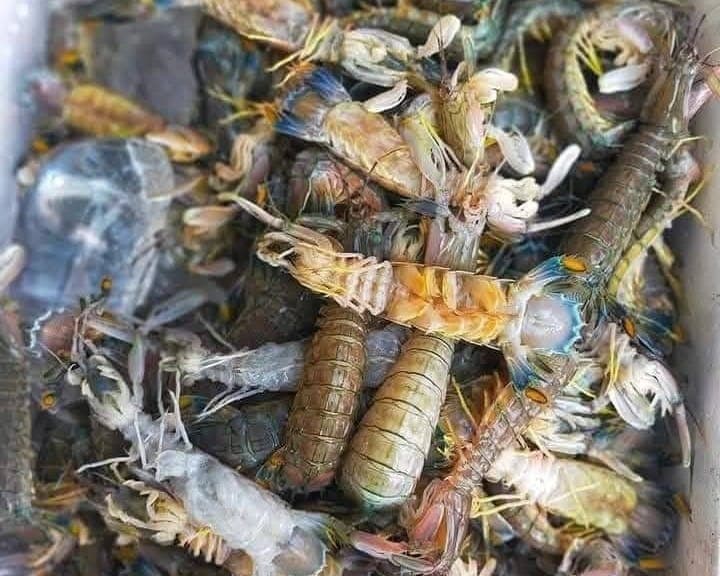
Stomatopods are crustaceans, like shrimp, crabs and lobsters, but they sit outside the order Decapoda that holds all three. The body is built around a long, flattened, segmented abdomen ending in a broad tail fan, while a short carapace covers only the front part of the body. The eyes sit on mobile stalks, and the most striking feature is a pair of large folding claws held under the head like the forelegs of a praying mantis, which gives the animal its English name.
Biologists sort mantis shrimp by how they use those claws. Spearers carry rows of sharp spines on the last segment, dig burrows in sand or mud and ambush soft-bodied prey such as fish and shrimp from the burrow entrance. Smashers carry a hammer-like club instead, shelter among rock, coral or rubble and break open snails and other hard-shelled prey. The species that matter commercially are spearers, mostly from the superfamily Squilloidea; the brightly colored smashers familiar from reef photographs and aquariums play no part in the food trade.
Two practical points follow for anyone handling the product. The claws and the spines along the tail are sharp enough to cut skin, so whole animals are handled with gloves. And despite their separate order, mantis shrimp are crustaceans for allergen labeling, treated the same way as shrimp and crab.
Commercial mantis shrimp species and their names
Three species account for most of the mantis shrimp that buyers meet, each tied to a different region. They differ sharply in size, and size largely decides how each one is sold.
| Species | Range and habitat | Maximum size | Market names |
|---|---|---|---|
| Oratosquilla oratoria, Japanese mantis shrimp | Western Pacific from Vietnam to northern Japan and south to the Philippines; burrows in mud in sheltered bays and estuaries, recorded from about 10 to 100 m | About 18.5 cm | Shako (Japan); 口虾蛄 and 皮皮虾 pipixia (China); 갯가재 gaetgajae (Korea) |
| Harpiosquilla raphidea, giant harpiosquillid mantis shrimp | Indo-West Pacific from Pakistan to China and south to Indonesia; shallow muddy bottoms and estuaries, with commercial fisheries in Indonesia, Malaysia and Thailand | About 36 cm, the largest known squilloid | Giant mantis shrimp in English-language trade |
| Squilla mantis, spottail mantis shrimp | Mediterranean and the eastern Atlantic from the Gulf of Cádiz to Angola; muddy bottoms, mostly shallower than 50 m | About 20 cm | Canocchia or pannocchia (Italy); galera (Spain); squille (France) |
Chinese names need care. 口虾蛄 is the standard name for O. oratoria and 皮皮虾 the everyday name across much of the country, while 濑尿虾, the Cantonese term used in Guangdong and Hong Kong, covers more than one mantis shrimp species. In Japan, shako means O. oratoria. In Italy, the Tuscan name cicala di mare is also applied to Scyllarus arctus, a small slipper lobster that has nothing to do with stomatopods.
Genetic studies have found separate northern and southern lineages within O. oratoria, and the species has also been recorded as an introduction in Australia and New Zealand. Asian catches also contain smaller squillids landed alongside the main species, and these should appear on documents under their own scientific names rather than disappearing into a generic description.
How mantis shrimp live and breed
Commercial mantis shrimp are animals of soft ground. O. oratoria digs burrows in mud, stays hidden through much of the day and is most active at night, when it hunts crustaceans, molluscs, worms and small fish. Squilla mantis lives in burrows on the sandy and muddy bottoms of the Mediterranean and nearby Atlantic, and the giant tropical species is taken from comparable muddy coastal grounds.
Breeding explains the premium paid for roe-bearing females. In O. oratoria, the female spawns inside her burrow, presses the eggs into a thin disc within a day and tends the mass with her small mouthpart appendages until the larvae hatch. The larvae then drift in the plankton for roughly one to two months, passing through eleven stages before they settle. Females full of ripening roe are taken from spring into early summer, and that is when Japanese cooks consider shako at its best.
The spawning calendar is not fixed. In Tokyo Bay, mature females have been found from March to September, and spawning has shifted from a single spring peak to two periods, in spring and summer, with the summer spawning now producing most of each year’s young. Buyers should expect roe content to vary by fishing ground and year rather than follow a set date.
Where mantis shrimp are caught, and when
O. oratoria is the main mantis shrimp of China’s coastal fisheries, taken in quantity from the Bohai, Yellow and East China Seas, and it is also fished around Korea and Japan. It is taken by bottom trawl, gillnet and other coastal gear, often as part of a mixed catch of bottom-living species.
In northern waters, regulation shapes the season as much as biology does. China’s annual summer fishing moratorium starts on 1 May across the Bohai, Yellow, East China and South China Seas and, depending on the sea area and type of gear, runs into August or September. Fresh supply from those waters is thin during the closure, and frozen stock carries the market until boats return. The dates are confirmed each year, so check them when planning a program.
The giant tropical species supports small-scale fisheries in Southeast Asia, worked mainly by small bottom trawlers and gillnetters. At Kuala Tungkal in Jambi, Indonesia, for example, most of the catch is exported to Hong Kong and Taiwan. Squilla mantis is caught with trawls, trammel nets, pots and beach seines and sold fresh in Mediterranean markets, notably in Spain and along the Ligurian and Adriatic coasts of Italy.
Market forms and how kitchens cook mantis shrimp
Near the fishing grounds, mantis shrimp are often sold live or very fresh, because the tail meat softens quickly after death. International trade depends on frozen product in three main forms:
| Form | What it is | Typical kitchen use |
|---|---|---|
| Whole, raw or cooked | The complete animal, frozen on trays or in interleaved layers to protect the spines | Frying with salt and pepper, steaming, boiling and hot pot, with diners peeling at the table |
| Half-cut | Split lengthwise through the tail and cleaned so the meat is exposed | Grilling, baking with garlic, buffets and seafood platters |
| Peeled meat | Tail meat removed from the shell, raw or after brief cooking | Sushi, fried rice, dumplings, omelets and salads |
In Japan, shako is a traditional Edomae sushi topping, and it is almost always served cooked rather than raw. The animals are boiled briefly and left to steep in their cooking liquid, usually based on soy sauce, mirin and water, and the finished nigiri is often brushed with nitsume, the sweet reduced sauce also used on eel. Pieces with the roe still attached are a seasonal specialty.
Chinese cooking treats mantis shrimp as a shared dish eaten with the hands. Hong Kong and Guangdong restaurants serve it fried with salt and pepper or steamed whole, and diners crack the shell themselves. Across Southeast Asia the larger tropical animals are grilled or stir-fried, and in the Mediterranean Squilla mantis goes to local fish markets as a fresh product. Whatever the cuisine, cooking times are short, because the thin tail meat dries out quickly once overcooked.
Mantis shrimp look-alikes, quality signs and labeling
Several animals share a name, a menu slot or a market stall with mantis shrimp, and each needs to be kept distinct on documents:
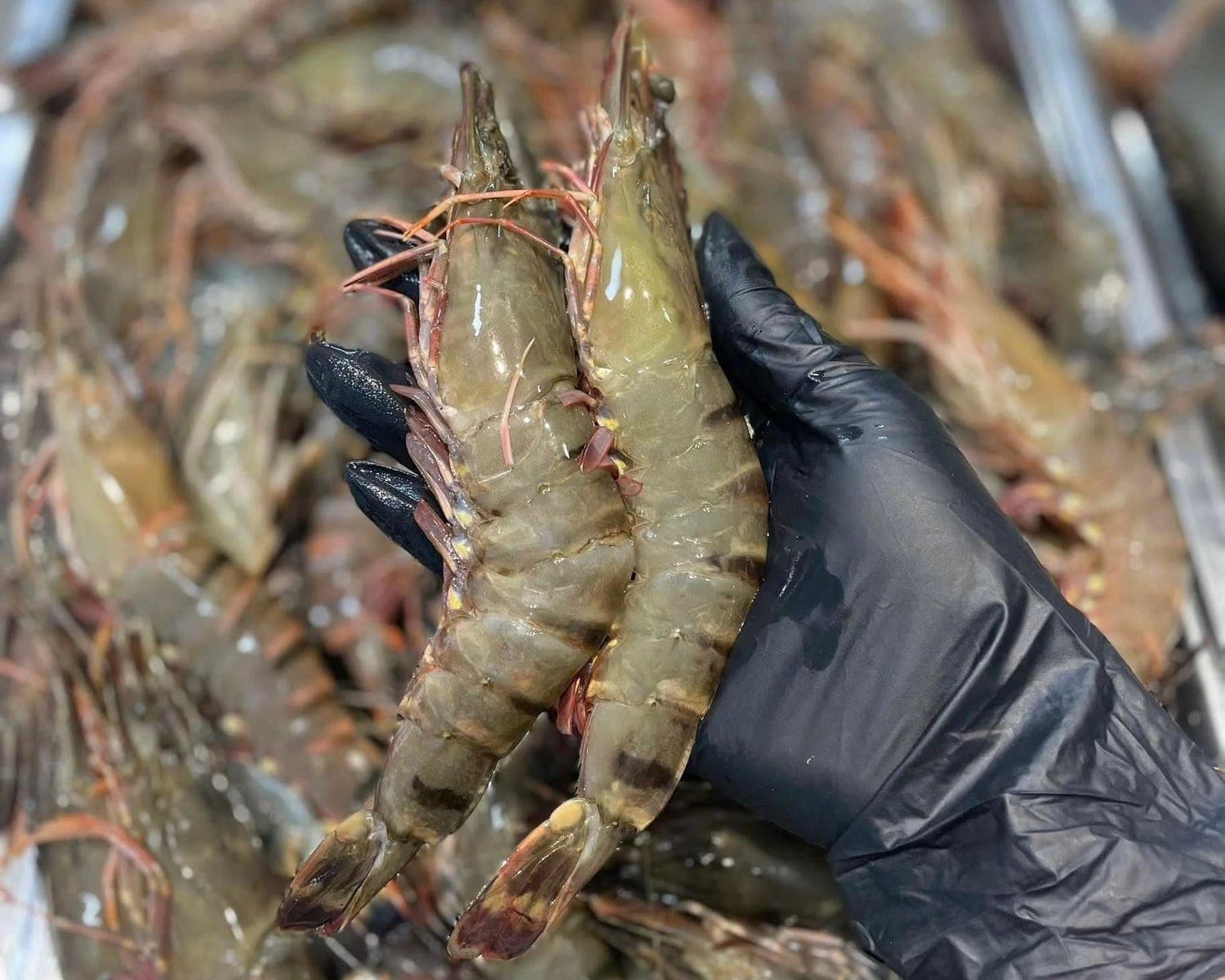
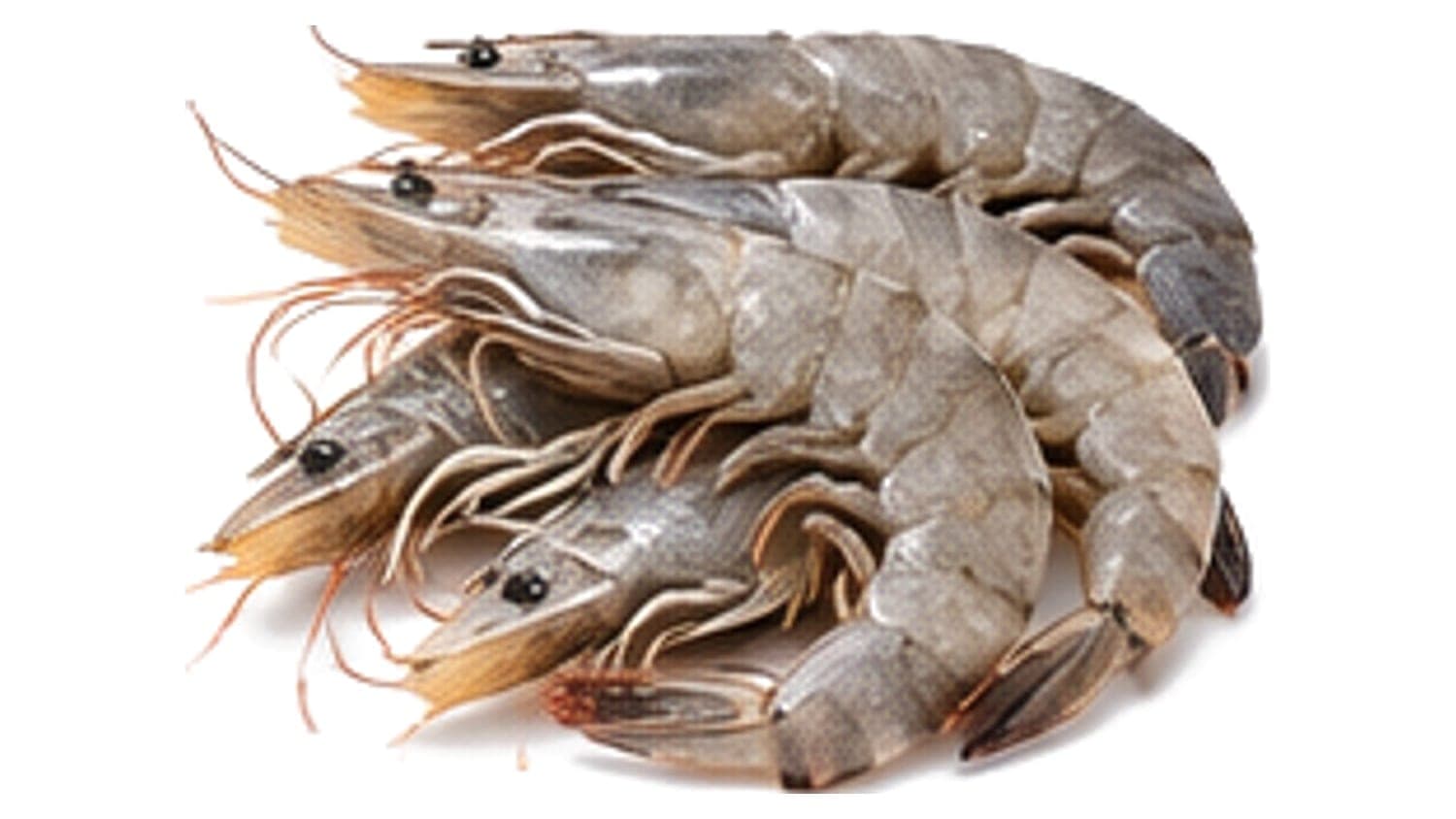
- Shrimp and prawns: decapods with a carapace covering the whole head and thorax and no folding claws. Calling mantis shrimp simply “shrimp” or “prawn” on a label misdescribes the animal.
- Slipper lobsters: flattened decapods with plate-like antennae, one of which shares the Italian name cicala di mare with Squilla mantis.
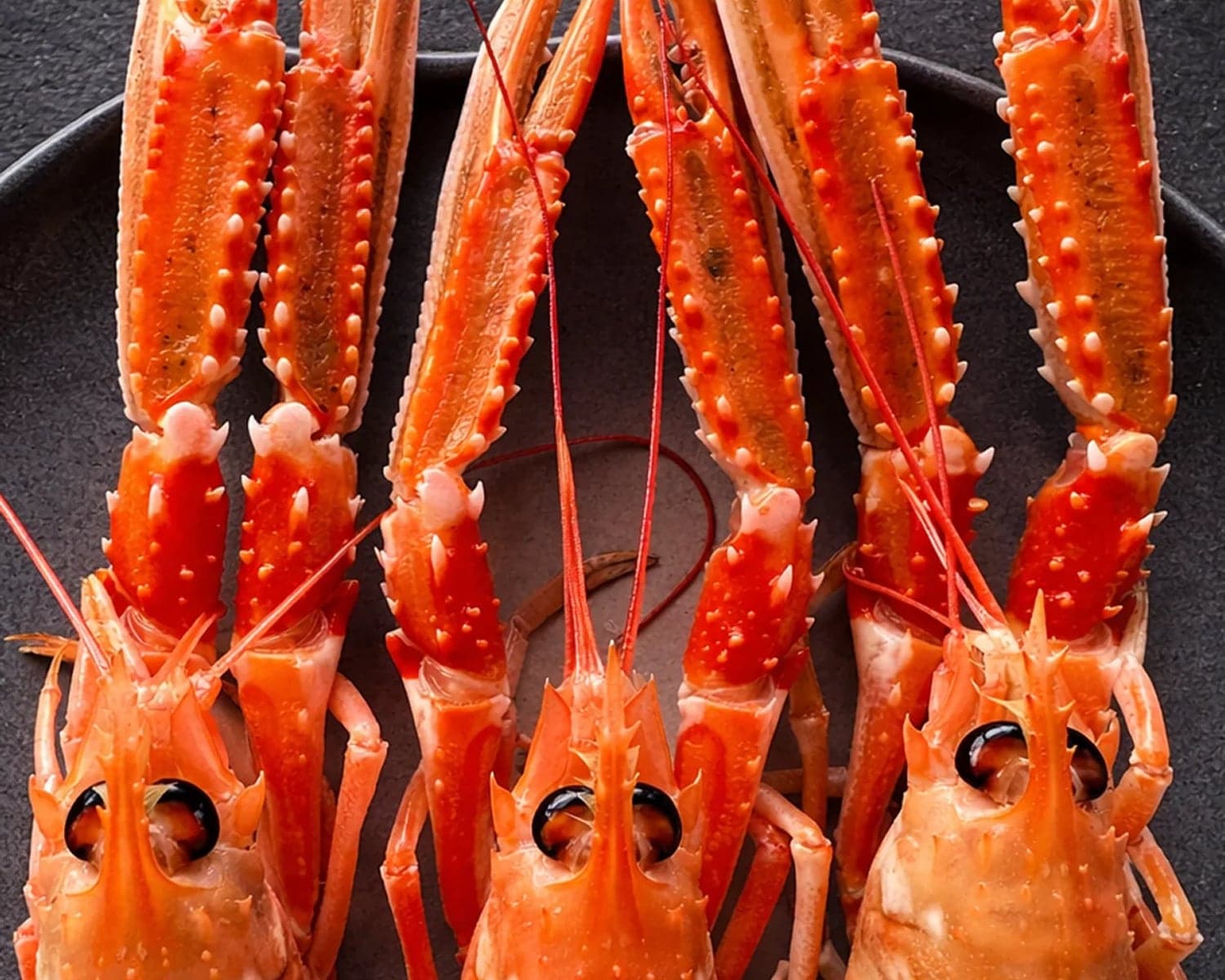
- Langoustine: often compared with mantis shrimp for sweetness and texture, but a separate decapod, Nephrops norvegicus, with true claws; see our langoustine species guide and the langoustine product page.
- Other squillids: smaller mantis shrimp from mixed catches, which should be declared under their own species names rather than blended into a lot.
Quality depends far more on handling than on species. Freshly molted animals have thin shells and slack, watery meat, and a visible gap between meat and shell usually means the catch waited too long before freezing. A full tail with firm, glossy meat and a clean sea smell marks a good lot. The deglazing and counting methods in our frozen shrimp specifications guide apply to mantis shrimp without change.
Because supply is wild, consignments for the EU need a catch certificate under its rules on illegal fishing, and other markets have traceability requirements of their own. Carry the scientific name on every offer and invoice so the label can use whichever market name your authority accepts, and confirm current documentary rules for your destination before shipment. To compare species and grades for a particular dish, ask us for a quotation by species and size.
This guide is general trade information, not legal or regulatory advice. Requirements differ by market and change over time; confirm current rules with your customs broker or competent authority before ordering.