Yellowfin tuna (Thunnus albacares) is a large tuna of tropical and subtropical seas and one of the most widely traded tunas for fresh and frozen loins. Its lean, deep-red meat is the everyday sashimi and poke tuna of many markets and the steak tuna of grill menus, and smaller fish caught by purse seiners also go into cans as light tuna. We supply frozen yellowfin tuna as loins, saku blocks, steaks and portions.
This guide covers the animal behind those cuts: the features that identify yellowfin and separate it from bigeye and albacore, the names that make offers confusing from one language to the next, where the fish is caught and how the stocks are managed, the forms it is sold in, the color-treatment question, and how kitchens in Japan, Hawaii and elsewhere prepare it.
Key takeaways
- Yellowfin is known by its long yellow fins and finlets, slender body and smooth liver; bigeye and albacore livers are striated.
- French albacore, Portuguese albacora and Hawaiian ahi can all mean yellowfin, while English albacore is Thunnus alalunga, so check the scientific name.
- Longline and handline fish supply sashimi and steaks; purse-seine yellowfin goes mostly to canning.
- Ultra-low frozen loins keep their red color for raw use; carbon monoxide and filtered-smoke treatments are not permitted in every market, so the treatment status should be stated on the documents.
How to identify yellowfin tuna
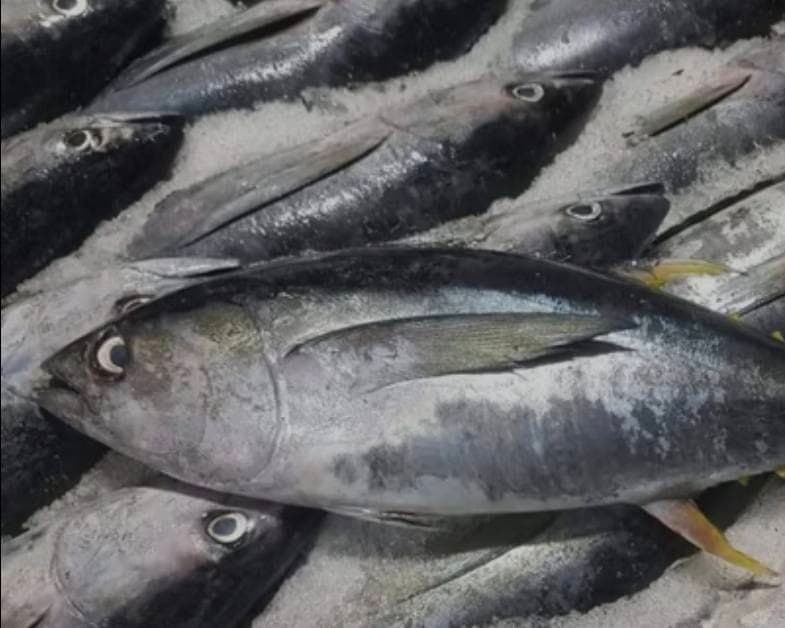
Yellowfin is a slender, streamlined tuna with a small head and eye. The back is metallic blue-black, a golden band runs along the flanks, and the belly is silvery. The name comes from the fins: the second dorsal and anal fins are yellow, and the finlets behind them are bright yellow with narrow black edges. In large adults, from about 120 cm, the second dorsal and anal fins grow into long, curved sickles that can reach a fifth of the fork length.
Other checks help with smaller fish. The pectoral fin usually reaches the start of the second dorsal fin but not past the end of its base. Young fish show broken vertical lines across the lower sides and belly, which fade as they grow. Inside, the underside of the liver is smooth, without the fine striations of a vascular network that bigeye and albacore livers show.
Yellowfin can exceed 2 m. The largest recorded fish measured 239 cm to the fork and weighed about 200 kg, though the species is common to around 150 cm and most fish landed are smaller. It matures at roughly 1 m, grows quickly, and spawns throughout the year in the warm core of its range, with peaks during the summer months of each hemisphere.
Yellowfin, bigeye, albacore and skipjack compared
Yellowfin is traded alongside three other tunas, and small fish of the Thunnus species in particular can be hard to separate on deck or at the plant.
| Species | Key features | Main trade uses |
|---|---|---|
| Yellowfin (Thunnus albacares) | Slender body; long yellow second dorsal and anal fins in large fish; yellow finlets edged black; smooth liver | Sashimi, poke and steaks from line-caught fish; canning from purse-seine fish |
| Bigeye (Thunnus obesus) | Deeper, rounder body; larger head and eye; pectoral fin long in mid-sized fish; striated liver | Sashimi and steaks, mainly from longline fisheries |
| Albacore (Thunnus alalunga) | Very long pectoral fins, about 30% of fork length or more; striated liver; white rear edge to the tail | The only species that may be sold as white canned tuna in the US; also fresh and frozen loins |
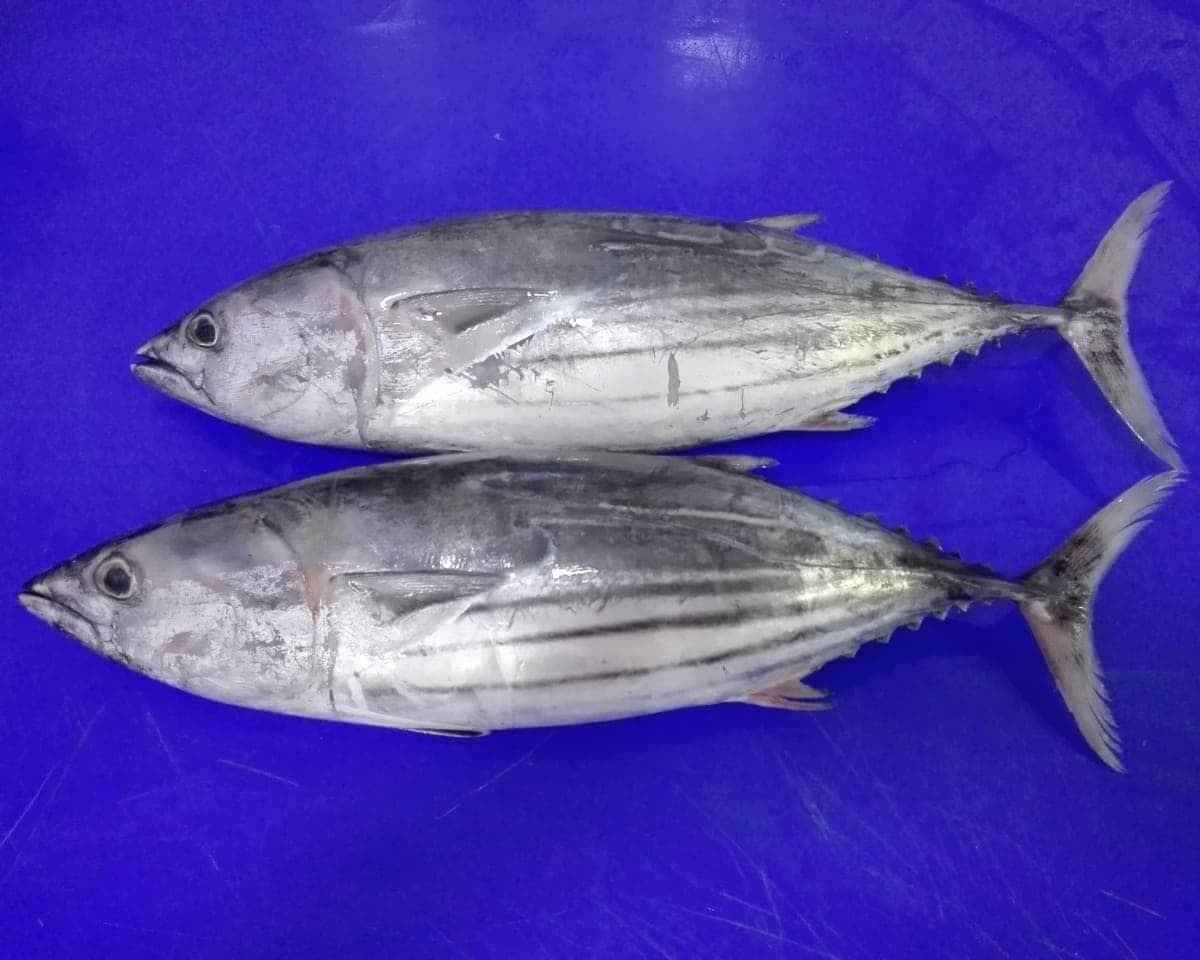
| Skipjack (Katsuwonus pelamis) | Small; 4–6 dark stripes on the belly; no swim bladder | Canned and pouched light tuna, katsuobushi |
In purse-seine catches, juvenile yellowfin and bigeye of a few kilograms are caught together, and telling them apart depends on body shape, eye size and pectoral fin details that are easy to misread. The skipjack tuna species guide covers that mixed purse-seine catch from the skipjack side.
Yellowfin tuna names: ahi, kihada, albacore and rabil
Few fish change their names as treacherously across borders. FAO’s standard names are yellowfin tuna in English, albacore in French and rabil in Spanish, while the English word albacore means a different fish, Thunnus alalunga, which French calls germon and Spanish atún blanco. In Portugal and Ecuador albacora usually means yellowfin too, Brazil’s standard name for it is albacora-de-laje, and yet in Chile albacora is a name for swordfish.
| Language or market | Yellowfin is called | Watch out for |
|---|---|---|
| English | Yellowfin tuna | Albacore in English is Thunnus alalunga |
| French | Albacore; thon à nageoires jaunes | Germon is the French name for albacore |
| Spanish | Rabil; atún aleta amarilla in much of Latin America | Atún blanco is albacore |
| Portuguese | Albacora; atum-albacora | Read albacora in context, since its meaning shifts by country |
| Chile | Atún aleta amarilla | Albacora is a local name for swordfish |
| Japanese | Kihada; young fish are kimeji | Maguro is the general word for tuna |
| Hawaiian | Ahi | Hawaiian markets apply ahi to bigeye as well |
In Japan yellowfin is usually sold as kihada maguro. In Hawaii it is ahi, a name that local markets also use for bigeye, so an “ahi” loin can be either species unless the label or document says which.
Where yellowfin tuna comes from and how it is caught
Yellowfin lives in tropical and subtropical waters of the Atlantic, Indian and Pacific oceans, but not in the Mediterranean. It keeps to warm upper waters: tagged fish spend most of their time in the top 100 m, and low oxygen at depth limits how far down they go. Schools form by size, often mixed with skipjack, and gather around floating objects; in the eastern Pacific, large yellowfin frequently travel with schools of dolphins.
Different gears produce different products. Longliners, historically led by fleets from Japan, Korea and Taiwan, catch large, deep-swimming adults one by one, and together with the handline and troll fisheries of Southeast Asia and the Indian Ocean they supply most of the fish for sashimi and steaks. Purse seiners catch surface schools, including younger fish mixed with skipjack, freeze them in brine and sell most of that catch to canneries. Pole-and-line and handline fishing remain important in several island fisheries.
Four regional bodies manage yellowfin: IATTC in the eastern Pacific, WCPFC in the western and central Pacific, IOTC in the Indian Ocean and ICCAT in the Atlantic. Depending on the ocean, their measures include catch limits, closed periods for purse seiners, limits on FADs and registers of authorized vessels, all reviewed against regular stock assessments. Because the rules change, check the current position for the ocean named on each catch document.
Fresh, frozen and canned: how yellowfin is sold
Fresh yellowfin is shipped whole, gilled and gutted, often by air, and buyers judge each fish from a slice or core taken from the tail or body before it is cut. Frozen yellowfin moves as loins, saku blocks, steaks, portions and cubes, and the freezing temperature decides the use. Fish frozen and held at around -50 to -60 °C keeps its red color for raw service, while fish blast-frozen and kept at -18 °C stays sound for cooking but slowly turns brown. Smaller purse-seine fish go into cans and pouches.
The belly of a large yellowfin carries more fat than the loin above it and is sometimes sold separately, but yellowfin as a whole is leaner than bigeye or bluefin. Japanese sushi counters therefore use it mostly as akami, the lean red meat, rather than as fatty toro.
One practice needs a clear explanation. Carbon monoxide, or filtered wood smoke with most of its flavor removed (often sold as “tasteless smoke”), binds to the red pigment in tuna muscle and fixes a bright cherry-red color that survives frozen storage. The treatment changes appearance, not freshness: a treated loin no longer reveals through its color how old it is or how it was stored. Treating fish with carbon monoxide gas is not permitted in the EU, Japan or Canada, and fish imported into the EU are routinely screened for it. The United States treats filtered smoke as generally recognized as safe for tuna, so filtered-smoke loins are sold there, and buyers should confirm with their advisers how such fish must be labeled.
How chefs prepare yellowfin
Raw preparations show yellowfin at its best. In Japan it is sliced for sashimi and nigiri; in Hawaii it is cubed for poke with soy sauce, sesame oil, onion and seaweed; and Western menus serve it as tartare, crudo and carpaccio. Fish for raw service should come from lots handled for that purpose, and many markets set specific rules for fish served raw, which your food safety team should confirm.
Cooked, yellowfin is a steak fish. Thick steaks are seared hard and left rare in the center where the market’s rules allow, because the lean meat turns dry and gray when cooked through; the same approach suits seared tataki-style loins and sesame-crusted slices. It grills well on skewers, takes marinades built on soy, citrus, chili or miso, and in Indian Ocean and Southeast Asian kitchens goes into curries and stews in chunks.
Canned yellowfin, sometimes packed in olive oil, goes into salade niçoise, pasta and antipasti. Swordfish and mahi-mahi often share grill menus with yellowfin steaks, and the swordfish species guide explains how that fish differs in texture and use.
Judging yellowfin quality and avoiding mix-ups
- Color: bright, even red to pink without brown edges, holding its color after thawing in ultra-low lots
- Clarity: translucent rather than opaque meat, a sign of careful handling after capture
- Fat: visible fat lines in belly sections, with leaner loins from the back
- Texture: firm meat without gaping between muscle layers or soft patches
- Bloodline: deep red, not brown or black
- Treatment status: stated on the documents, never assumed from color
Substitution risks follow the names. Bigeye and yellowfin can be swapped under the shared ahi label, a French offer for “albacore” (yellowfin) can be misread in English as Thunnus alalunga, and lower loin grades can be presented as higher ones. DNA species testing settles doubts that documents and appearance cannot. For matching grades and cuts to dishes, see choosing premium seafood ingredients for restaurants and retail, and when you know what you need, request an offer for loins or saku stating the cut, freezing temperature and treatment status.
This guide is general trade information, not legal or regulatory advice. Requirements differ by market and change over time; confirm current rules with your customs broker or competent authority before ordering.